Energy prices and their impact on the renovation rate
Text Eva Goossens

Many energy renovations do not require planning permission
Have high gas and electricity prices since mid-2021 accelerated the energy renovation of our housing stock? This is certainly an interesting subject for research, particularly in light of ambitious climate targets. A publication by Prof. Johan Albrecht of UGent suggests not. Embuild raises a few points.
“The renovation rate barely responds to exceptionally high energy prices”, reads the headline of a publication (17/2/2023) by Johan Albrecht, senior fellow and founding member of Itinera and professor of environmental economics at Ghent University. In the first ten months of 2022, the number of renovations granted planning permission was actually slightly lower than in the same period of 2021. Apparently, neither these extreme price fluctuations nor fifteen years of government support measures have been able to bring about a structural acceleration in the renovation rate. According to Embuild Vlaanderen, permitted renovations provide only a partial picture when assessing households’ response to gas prices over such a short period. Other indicators offer a more nuanced view: applications for the Flemish government’s ‘Mijn Verbouwlening’ have been rising since September 2022. In addition, nearly 100,000 solar panel systems and more than 33,000 home batteries were installed last year.
Not requiring planning permission
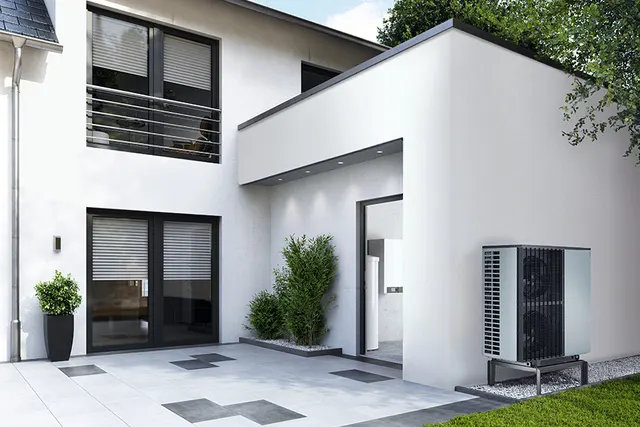
Embuild points out that renovations granted planning permission account for only a limited share of all energy renovations. Most do not require planning permission. In most cases, walls, roofs and floors can be insulated without a permit. Nor is planning permission required for PV systems, heat pumps or the installation of a ventilation system. This is also noted in Prof. Albrecht’s publication: “It is not possible, however, to turn an energy-label E home into a nearly zero-energy building with a small renovation project. Small-scale renovations matter, but they are not enough to meet the climate ambitions for 2050.”
Lagging behind reality
Finally, Embuild says that figures for renovations granted planning permission lag behind reality. Publication of the figures is delayed by three months. In addition, the process from applying for planning permission to receiving approval also takes three months. Permitted renovations generally involve major works that require careful preparation and the involvement of an architect, which can also take several months. Finally, Embuild Vlaanderen points to the renovation obligation for new owners, introduced in January 2023. Director-general Marc Dillen: “Most households will now do better than renovating to EPC label D, since the Flemish government recently announced the tightening schedule for the coming years, leading towards label A.” To be continued, no doubt. •
Question about this story? Ask your question
Keep following this
Get an email when a new story is published. No account needed.
- ThemeGiving existing buildings a new future
- SubjectSustainable energy