Wine climate cabinets are finding their place in the modern kitchen
Text Kris VandekerckhoveImage ATAG / Louwers Mediagroep

The kitchen is increasingly competing with the wine cellar. Wine lovers want their favourite bottles not only kept in the right conditions, but also close at hand when they entertain. This opens up opportunities for kitchen designers to bring functionality, technology and a personal sense of home together. But what makes a good wine climate cabinet, and how do you integrate one into a kitchen design?
“Where functionality used to come first, people now want their interiors to reflect who they are,” says Caroline Dries, commercial manager at Brio Group. “Passions such as wine, gastronomy and design are increasingly taking pride of place in the home. For interior designers, the challenge is to translate these personal interests into well-considered bespoke solutions.” Wine climate cabinets fit perfectly with this trend. Not everyone has a suitable wine cellar, and as homes become more compact, available space is increasingly important. What is more, the kitchen has evolved into a central living space where people cook, eat and entertain.

More than a fridge for wine
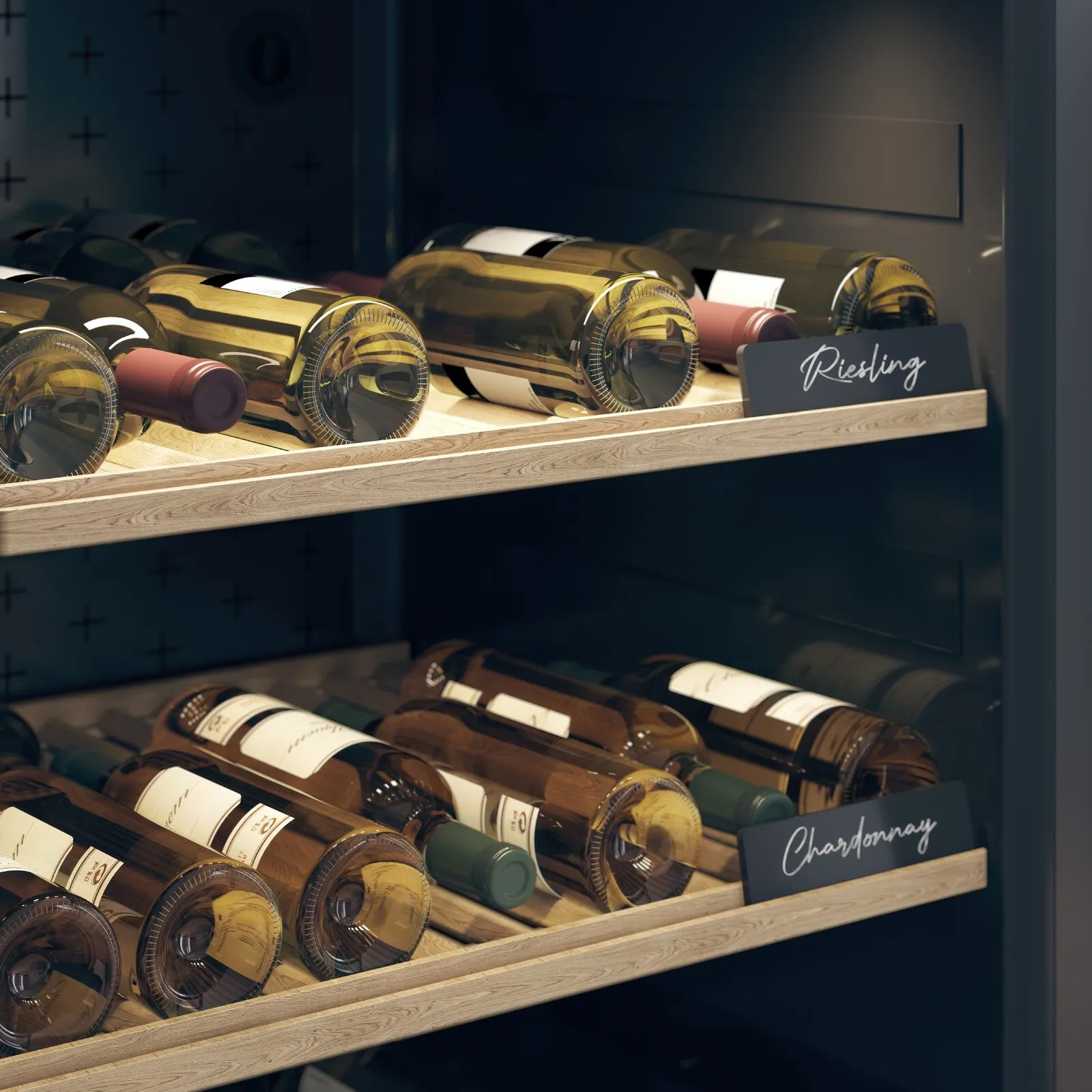
However, not every appliance that holds wine bottles is suitable for storing them properly. Kris Foucaert, Product Training & Experience Center Expert at ATAG België, distinguishes clearly between three categories. “A wine cooler is essentially a fridge adapted for storing bottles. A wine storage cabinet recreates the conditions of a good wine cellar. A wine climate cabinet goes a step further, with one, two or even three temperature zones. This allows you to store different wines and keep them at the right serving temperature.”
That distinction matters, stresses sommelier and wine expert Sepideh Sedaghatnia: “People sometimes invest a considerable amount of money in fine bottles, but overlook how important storage conditions are. Temperature fluctuations, vibrations and UV radiation can affect the quality of wine.”
Humidity also plays a part. An environment that is too dry can cause natural corks to dry out, risking oxidation. If humidity is too high, labels can be damaged and mould can develop. Foucaert also points to odour filters, which ATAG wine climate cabinets use to help prevent unwanted smells from penetrating the cork.

From compact built-in units to statement pieces
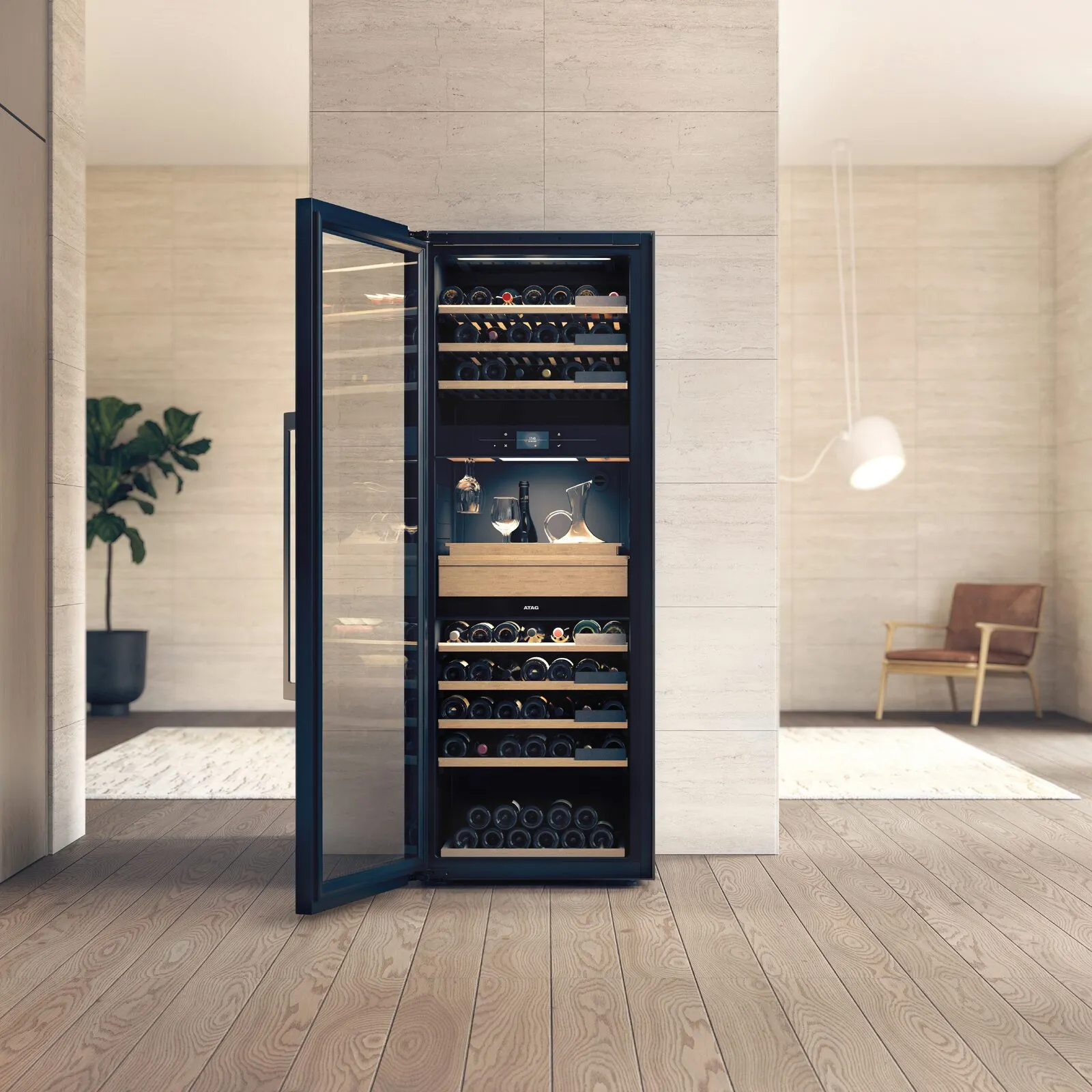
The wide range of built-in options is particularly appealing to kitchen designers. Wine climate cabinets come in sizes ranging from around 45 centimetres to two metres in height. A compact model can be integrated beneath the worktop, while larger versions can take pride of place in a run of cabinets.
“A popular size fits beneath the worktop, just like a dishwasher,” explains Foucaert. “You replace a 60-centimetre cabinet module with a wine climate cabinet. This makes it relatively easy to integrate a solution into an existing kitchen too.”
Capacities also vary considerably, from small appliances holding just a few bottles to models with room for an extensive wine collection. Dries says a wine cabinet does not necessarily have to be a striking design feature. “The important thing is for it to form a seamless part of the overall living concept. Sometimes it even becomes a dedicated wine corner where residents can entertain guests.”

The customer comes first
Ultimately, the added value lies not only in the appliance, but above all in how it suits the people who live there. Someone who regularly entertains has different needs from someone who mainly wants to store bottles for longer periods.
Foucaert illustrates this with a real-life example. A wine lover kept hundreds of bottles in a perfectly equipped cellar, but every time guests visited, he would disappear downstairs with them to choose a wine. His partner eventually gave him a wine climate cabinet for the living space. Not because the wine needed better storage, but so that everyone could enjoy the moment together.
“As a kitchen designer, take the time to get to know your customer properly,” Foucaert concludes. “Don’t immediately ask what furniture or appliances they want, but find out how they want to live.”
And that is precisely the essence of contemporary bespoke design. A wine climate cabinet is therefore more than an additional kitchen appliance. It shows how a personal item can earn a fully-fledged place in kitchen design.
Een zakelijke vraag aan Brio Group? Get in touch
Companies in this story

Keep following this
Get an email when a new story is published. No account needed.
- ThemeKitchens and bathrooms as architecture
- SubjectBathrooms & kitchens
- CompanyBrio Group