Thermochromic glazing for greater summer comfort
Text Marlies DecavelImage UHasselt/TNO
From winter insulation to summer comfort
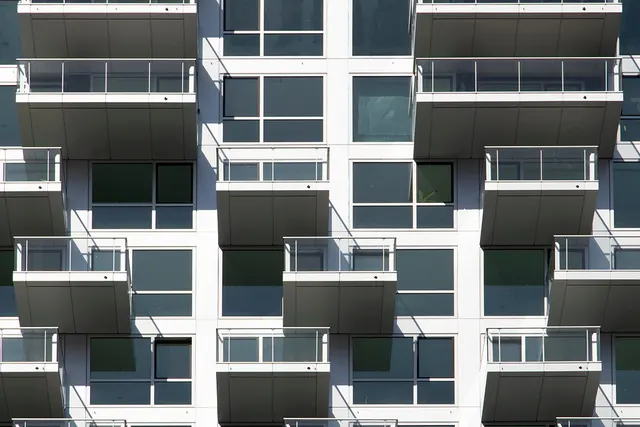
Glass is generous. It brings daylight deep into buildings, blurs the boundaries between indoors and out, and gives façades a light appearance. But a warmer climate is creating a new challenge for our love of glass. Prof. Dr Pascal Buskens, visiting professor at UHasselt and principal researcher at TNO, says the construction sector needs to rethink its approach to glazing. Research into thermochromic coatings is delivering a building solution that will soon reach the market, giving architects an additional design tool.
Over recent decades, high-performance glazing has evolved with one aim: to retain as much as possible of the heat generated indoors. This has led to energy-efficient buildings, but higher outdoor temperatures, longer heatwaves and generous areas of glazing call for a change of approach. Demand for cooling and summer comfort is consequently rising. Glazing accounts for a significant share of a building’s energy consumption and cooling demand. “You can let heat in and then use air conditioning to pump it back out. But it makes much more sense to stop excess solar heat at the façade in the first place,” says Prof. Dr Pascal Buskens, visiting professor at UHasselt and principal researcher at TNO, the Netherlands Organisation for Applied Scientific Research.
In response, UHasselt, TNO, imec and several industrial partners launched a joint research project. The researchers aim to better prepare buildings for a warmer climate without compromising transparency or architectural freedom.
A coating that switches automatically
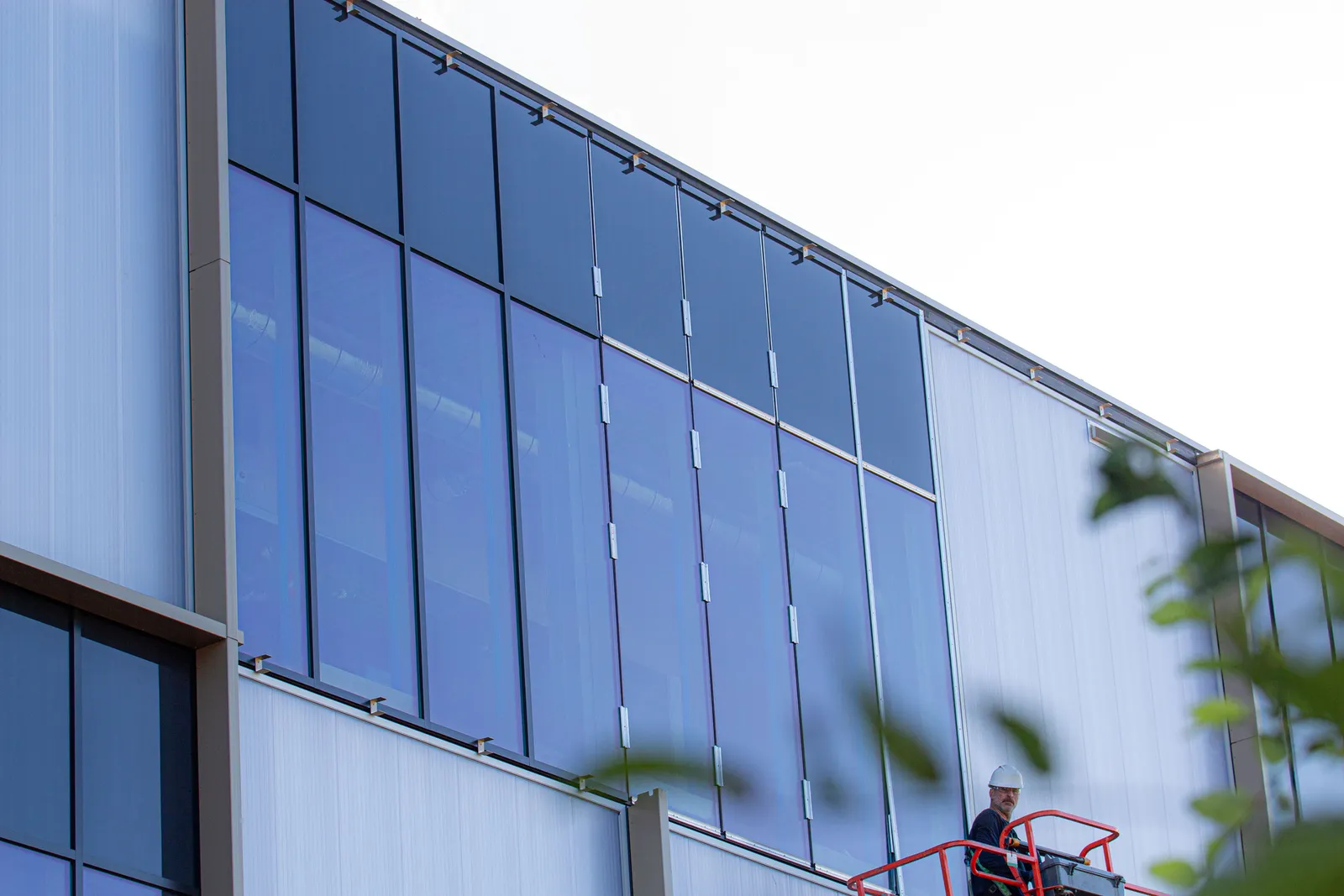
To achieve this, the researchers developed a thermochromic coating on the inner face of the outer pane. While the existing low-e coating limits heat loss in winter, this additional layer controls the passage of solar heat. At lower temperatures, it lets the heat through. When the glass warms to 21 °C, the coating automatically reduces heat transfer. “During warm periods, indoor temperatures can be up to five degrees lower than with conventional glazing,” says Buskens. “This improves comfort and reduces the need for active cooling.” The coating acts only on the infrared part of the solar spectrum. No electronics, sensors or controls are involved. Because the glass remains clear, daylight levels are unchanged.
From research to construction practice
The coating was developed through close collaboration between fundamental and applied research. UHasselt investigated how thermochromic pigments behave and how quickly they switch. TNO then translated this knowledge into an industrial production process and validated performance in test buildings. The coating has already been produced on several hundred square metres of glass on an industrial production line. This move into practice is crucial, Buskens stresses: “Research only has societal value when it is put to practical use. That is what we are working towards now. Commercialisation is expected later this year, meaning window manufacturers will soon be able to include the technology in their offering for residential and non-residential buildings.”
Architects will help shape what comes next
The next step will take place at the drawing board, in consultation with engineering consultancies, glass manufacturers and clients. “If architects know about this option, they can integrate it into their designs,” Buskens concludes. “That will also help grow demand in the market. Thermochromic glazing gives architects another way to reconcile light, comfort and energy performance in a warmer climate.”
The coating is likely to reach the market in early 2027. If specifiers start including it in discussions and designs now, scientific research will find its way into construction practice sooner. Thermochromic glazing will thus gradually become a new standard for buildings that better reconcile light, comfort and climate resilience.
Question about this story? Ask your question
Keep following this
Get an email when a new story is published. No account needed.
- ThemeBuilding envelopes for a changing climate
- SubjectSustainable construction