Make climate-conscious choices
Text Eva GoossensImage MVRDV
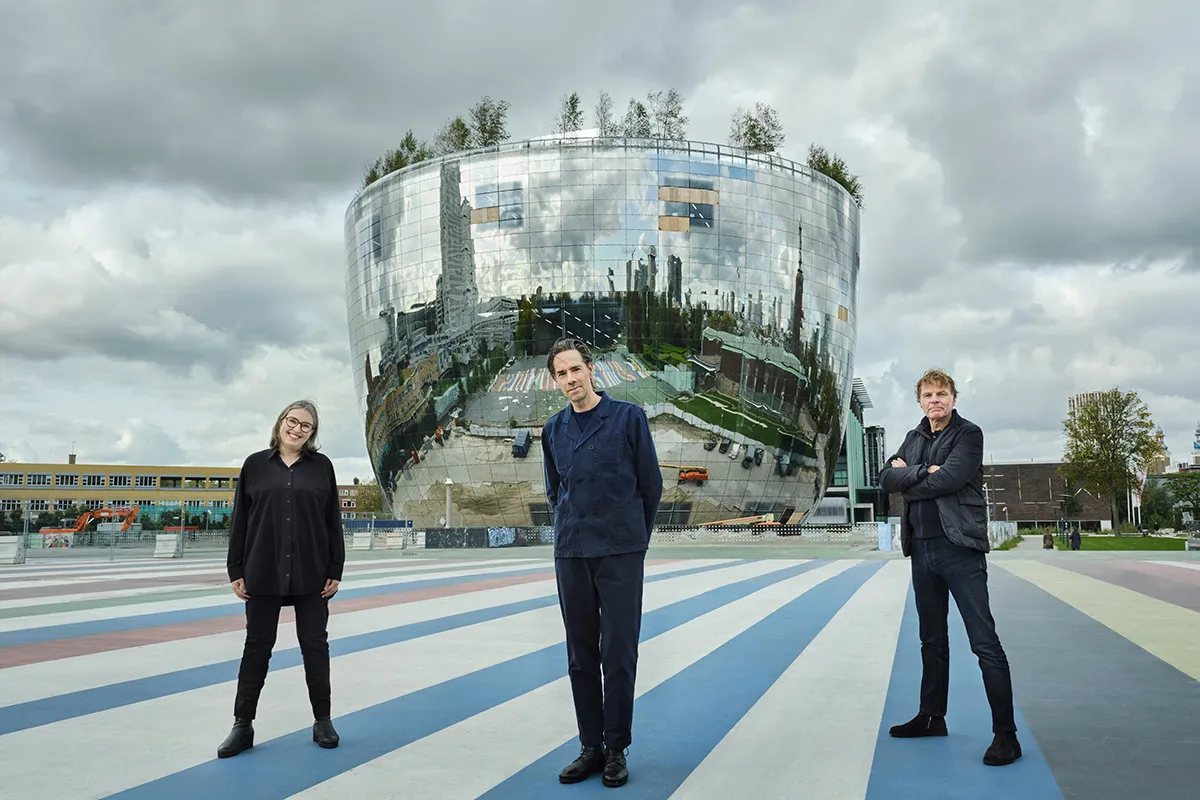
“CarbonSpace helps architects take embodied carbon into account from the outset”
MVRDV introduces CarbonSpace, a free web tool that helps architects calculate and reduce the embodied carbon emissions of their designs at an early stage. It also makes it possible to compare different design options in terms of their climate impact. The internationally renowned practice invites professionals from across the construction sector to test the tool and share feedback, helping to refine and further develop it.
MVRDV is an internationally renowned architecture practice, founded in Rotterdam in 1993. The team now has more than 300 employees and offices in Shanghai, Paris, Berlin and New York. The integration of sustainability, innovative technologies and digital design methods is central to its design philosophy. The new CarbonSpace software was developed by MVRDV NEXT, the practice’s research and innovation team, which focuses on technology-driven innovation, together with Studio AvW.
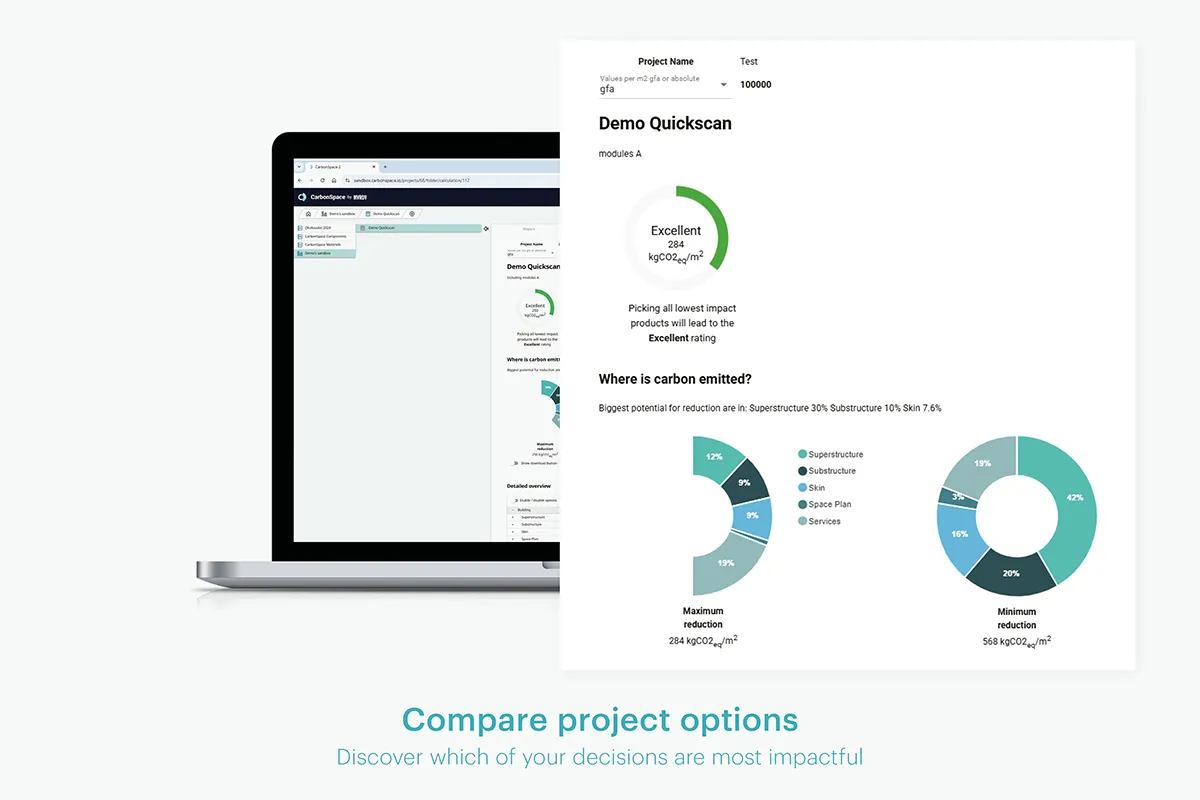
From day one
Despite growing awareness, reducing CO₂ emissions remains a challenge. Many existing calculation tools rely on detailed models and expensive databases. MVRDV developed CarbonSpace as a practical tool for designers. Rather than focusing on detailed calculations at the end of the design process, the software provides an early indication of a design’s potential CO₂ emissions. “CarbonSpace won’t solve the climate crisis on its own, but it does help architects take embodied CO₂ into account from day one and make informed choices,” says Sanne van der Burgh, head of MVRDV NEXT. “We want to give designers the confidence to take action without waiting for perfect data. Just as importantly, we want to develop a shared language around CO₂, so we can work together more effectively, learn from one another and make smarter decisions as a sector.”
Linked to an international CO₂ database
CarbonSpace links data such as floor and façade areas or the volume of a foundation to an international CO₂ database. This database is a simplified version of the German government’s open-source Ökobaudat system. The tool includes libraries of commonly used building components and materials, making it possible to produce quick estimates. Design teams can therefore see how systems, building elements and materials affect the CO₂ footprint. At MVRDV, this has already led to a strong focus on lightweight design as a key factor in reducing embodied CO₂. CarbonSpace also enables the practice to intervene during the design process if sustainable choices risk being compromised by concessions. Designers can extend the capabilities of CarbonSpace through a freely accessible API, which allows them to connect the software to programmes such as Rhino and Revit, or send data to Microsoft PowerBI to create useful data visualisations.
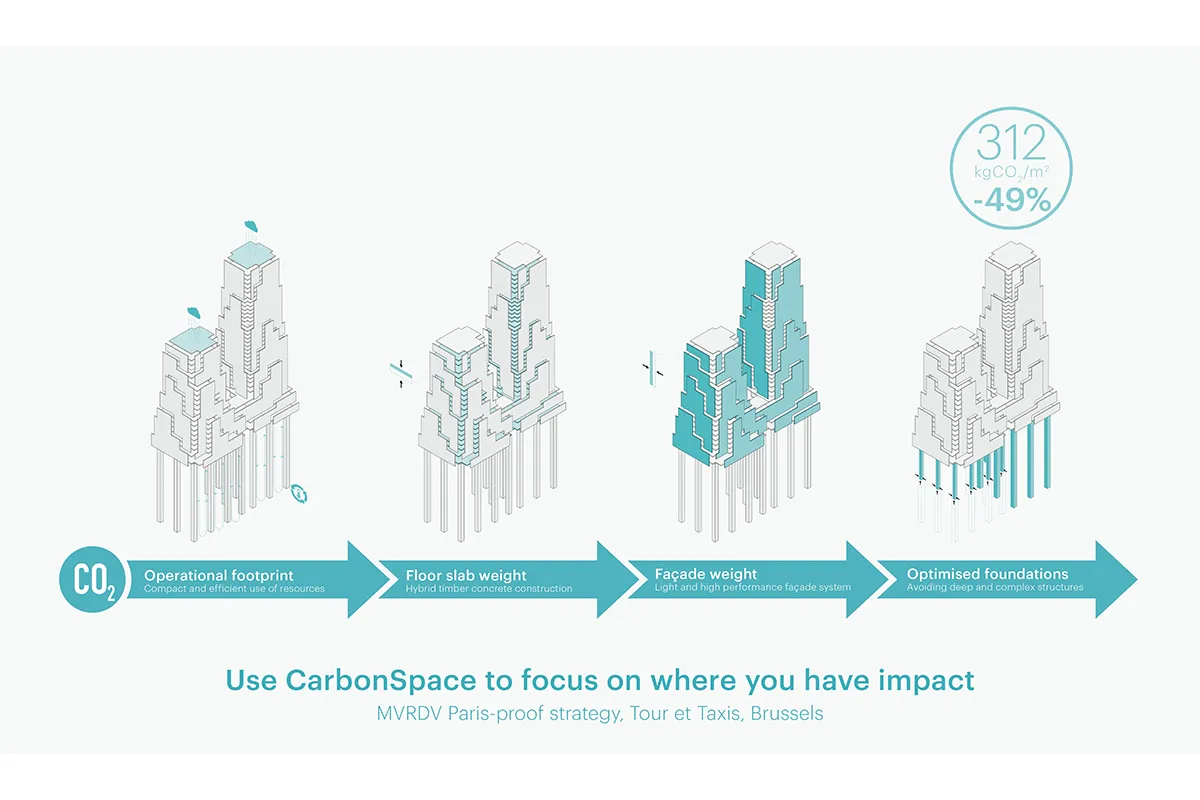
Carbon Race
MVRDV invites partners across the construction sector to use, test and improve the tool. As well as free access, designers can take part in the Carbon Race. This public dashboard encourages friendly competition and shows collective progress towards designs with minimal CO₂ emissions. The tool is already being used by architects, engineers, educational institutions and sustainability consultants. CarbonSpace is also at the heart of a new partnership between MVRDV and the international high-rise organisation CTBUH, which uses the tool to make fair comparisons between high-rise projects. CarbonSpace, available at carbonspace.earth, is offered as a public beta and, of course, complies with GDPR. Neither MVRDV nor other users of the software have access to user data or
design information.
Question about this story? Ask your question
Keep following this
Get an email when a new story is published. No account needed.
- SubjectSustainable construction