








Circular construction with aluminium: SAPA and Hydro on Close the Loop
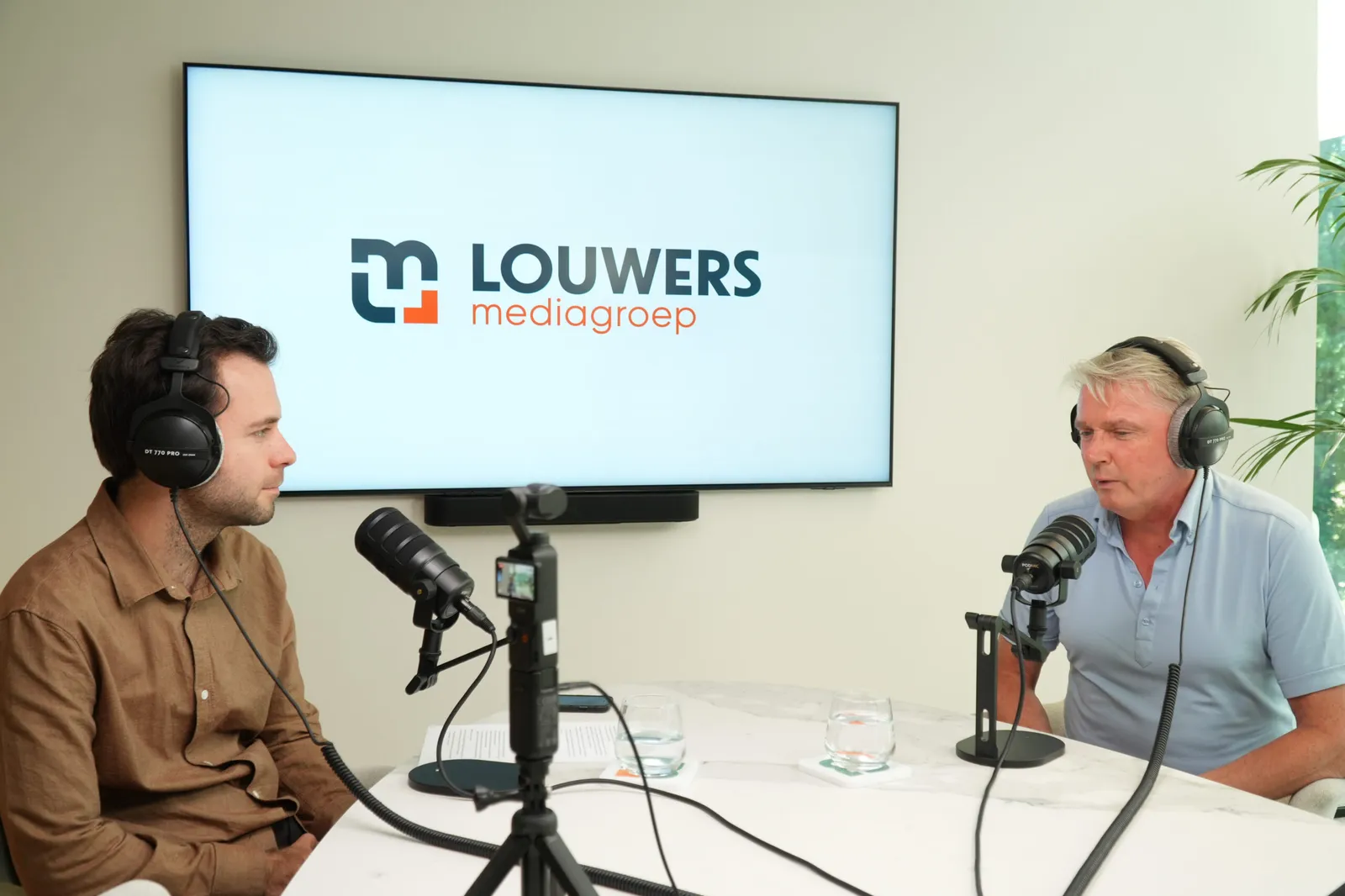
How do you make aluminium truly circular? Danny Decaluwaert of Hydro Building Systems explains how SAPA collects and sorts aluminium offcuts and old window profiles through Close the Loop, then reuses them to make high-quality profiles with Hydro CIRCAL.
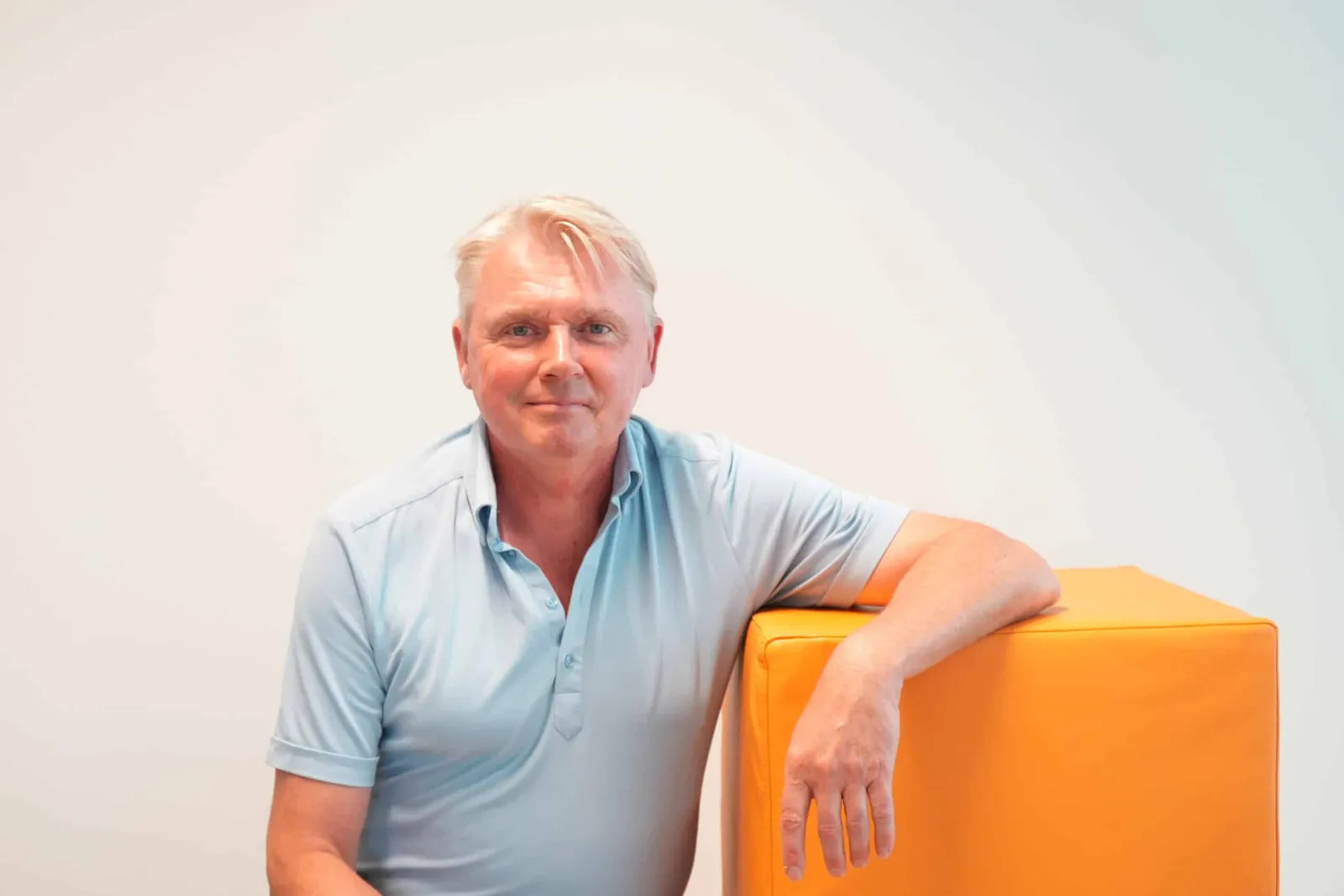
Full transcript
All chapters (30)
- Circularity and Close the Loop by Hydro
- From construction to circularity
- Sustainability as a conviction
- Hydro and its Norwegian roots
- Hydro and the entire aluminium value chain
- Aluminium production powered by renewable energy
- Aluminium as a circular material
- Recycling without downcycling
- Sustainability as a business strategy
- From CIRCAL to Close the Loop
- Hydro CIRCAL 75R and 100R
- Scrap as a valuable energy source
- The idea behind Close the Loop
- Bringing the supply chain on board
- An intensive process behind the scenes
- Pre-consumer and post-consumer scrap
- CIRCAL’s CO2 footprint
- Bringing scrap streams back into the loop
- Removing paint and purifying aluminium
- The purity of the material stream
- An integrated recycling chain
- From scepticism to enthusiasm
- Taking the hassle out of it for customers
- What the construction industry can learn from Close the Loop
- Building differently and designing for disassembly
- Why circular success stories matter
- Sustainability is not a marketing story
- Claims need to be substantiated
- Rolling out Close the Loop further
- Closing remarks
Circularity and Close the Loop by Hydro
Bavo Boutsen Welcome to a new podcast, this time focusing on circularity in the construction sector. There is a world of difference between calling a material recyclable and actually processing it into high-quality products again. That is why SAPA, the trading name of Hydro Building Systems Belgium, developed Close the Loop by Hydro. Through this system, aluminium offcuts and old window profiles are collected from customers, sorted and reprocessed into aluminium for new profiles. The project is therefore about the entire chain, not just the material. The question is: how do you organise a closed loop? And, above all, how do you get customers and suppliers on board? I’m going to discuss this with Danny Decaluwaert, circularity expert at SAPA. Welcome, Danny.
Danny Decaluwaert Thank you.
From construction to circularity
Bavo Boutsen Circularity in the construction sector is a hot topic. How did you get into this field?
Danny Decaluwaert Well, I’ve worked in construction all my life. So I’ve known it from the foundations up, you could say. I started out in concrete.
Bavo Boutsen Literally?
Danny Decaluwaert Yes, literally. In concrete. And then I worked for several companies doing different things in the construction process. That was always a conscious choice on my part, because when I stand up for something, I make my choices deliberately. I choose a company. Having stood up for it, then going to work for a competitor always strikes me as a little odd. That may be naïve of me, but I personally think it’s very important to be, and remain, honest. I’ve now been with Hydro Building Systems for almost eight years, working for the SAPA brand. How did I get involved in circularity? Well, it’s hugely important in construction. Just look at how much waste there is on every building site. Container after container leaves, filled with waste that is very difficult to recycle. There are certainly valuable materials in there. Processing it is labour-intensive and very expensive. That’s why construction is still responsible for a large share of what is known as landfill: construction waste that can’t actually be recycled.
Read the full transcriptCollapse transcript28 more chapters
Sustainability as a conviction
Bavo Boutsen So it really comes from a personal conviction and commitment?
Danny Decaluwaert Yes, but it’s also a conviction held by the company itself. As I said, I’ve worked for several companies. Sustainability, and the impact an activity has on the environment, are so important that we have to reduce that impact.
Bavo Boutsen Before we get into the full story behind Close the Loop, perhaps you could tell us a little about your company. You have SAPA, the trading name, and Hydro, the group. Who exactly are you?
Hydro and its Norwegian roots
Danny Decaluwaert Norwegians may be a little reserved, but they’re very straightforward. When they set themselves goals, they pursue them. They’re also very conscious of their impact on the environment. You only have to visit Norway to see where things stand. You don’t see much litter or anything like that. They care deeply about their surroundings and have a great deal of respect for them. Norway also has very low CO2 emissions. I think they may even be negative because they have so much energy. In that respect, of course, they’re very fortunate. They have a lot of energy that can be generated in a carbon-neutral way. The weather isn’t always great, as I’ve found out for myself. It can rain quite a lot there. But it’s a unique country with a unique mindset, and that’s very much in evidence.
Bavo Boutsen So you work in construction, of course, but you’re also partly an energy company.
Hydro and the entire aluminium value chain
Danny Decaluwaert Yes, Hydro is an aluminium group. It does everything you can imagine doing with aluminium. It’s not just involved in construction. We have Building Systems, which is our construction business, but many colleagues work in automotive or supply products such as chillers for air-conditioning systems. The scope is very broad. Hydro is a very large group, one of the world’s biggest aluminium producers, active throughout the entire aluminium value chain. That includes everything from mining bauxite in our own operations. This also shapes the company’s mindset, because if you operate a mine, you have a responsibility towards the surrounding area. You extract bauxite ore from the ground. That means destroying a habitat. There’s no point pretending otherwise. That’s the truth.
Bavo Boutsen And that doesn’t happen in Norway, does it?
Danny Decaluwaert No, not in Norway. It’s in Brazil. There’s a whole cluster there in Paragominas. Alumina is the refined product made from bauxite. Bauxite is a kind of red earth found relatively close to the surface, with the thickest deposits around the equator. It’s one of the most abundant raw materials in the environment, so there’s a lot of it. It’s processed into alumina, which you can compare to very fine white sand. Alumina is the basic raw material that goes into smelters, that’s what they’re actually called, where, with a few other additives and a great deal of electricity, it is finally turned into aluminium. Last year, I had the opportunity to visit one of Hydro’s factories in Norway, Karmøy. I can tell you, it’s hugely impressive to see all those smelters lined up. It’s heavy industry, no doubt about it.
Aluminium production powered by renewable energy
Bavo Boutsen So the enormous amount of energy required is entirely green in Norway’s case?
Danny Decaluwaert Hydro’s production in Norway is powered by renewable energy. So, alongside Hydro Aluminium, there’s Hydro Energy. Hydro Energy has enormous hydropower capacity. Hydro actually takes its name from hydropower. That was the company’s foundation. And, of course, you need a lot of energy to make aluminium.
Aluminium as a circular material
Bavo Boutsen That’s the starting point. But the story is really about reusing aluminium that’s already in circulation.
Danny Decaluwaert Aluminium is a metal. And all metals have the property that, if you recycle them to a high standard, you can reuse them for the same purpose as the original product.
Bavo Boutsen In other words, it’s ideally suited to circular use?
Danny Decaluwaert Aluminium certainly is. It lasts a very long time and can be purified again perfectly. That purification is extremely important because, for example, exterior joinery has a finish on it. Usually that’s paint, but it can also be anodising. Anodising is less problematic. Paint, in particular, is a problem. It has to be removed. The aluminium needs to be purified thoroughly to get it back to its original purity, because you don’t want substances in the aluminium that reduce its quality.
Recycling without downcycling
Bavo Boutsen So the key to all this is getting the entire process right so the material can be reused in a circular way without losing quality. It mustn’t be downcycled into an inferior product. That’s not the idea.
Danny Decaluwaert No. Metals are perfectly suited to recycling without downcycling. That doesn’t mean all metals are recycled. A lot of them are downcycled too.
Bavo Boutsen But you don’t do that?
Danny Decaluwaert We turn extrusion profiles back into extrusion profiles. That’s really the whole story behind Close the Loop. It was already happening. Close the Loop is about bringing our customers into the process. Who are our customers? Hydro Building Systems’ customers are SAPA fabricators, companies that work with SAPA profiles. I’ve been very interested in sustainability from the moment I started at Hydro. I’ve immersed myself in it, and believe me, Hydro gives you every opportunity to do that.
Bavo Boutsen Because it’s so deeply embedded in the company’s DNA.
Sustainability as a business strategy
Danny Decaluwaert It’s completely embedded. Our previous CEO came up with a phrase that I’ve often used: “Sustainability is not part of our strategy, it is our strategy.” Sustainability has become a catch-all term. Everything is sustainable, if you believe what you read, but that’s just words on paper. In reality, it can be disappointing. That’s not the case at Hydro. When we communicate something, it’s been thoroughly researched and certified by third parties. Everything has to be independently verified, including the figures.
Bavo Boutsen And that still doesn’t happen nearly enough.
Danny Decaluwaert I don’t think it happens at all in most cases. That’s a major problem. I’ve developed a habit of looking behind every figure to find out what it actually represents. And believe me, the result is often disappointing.
From CIRCAL to Close the Loop
Bavo Boutsen Let’s look more closely at Close the Loop. It starts with your company’s strong commitment to this and your efforts to bring customers into the story.
Danny Decaluwaert Where did it come from? Well, a little over seven years ago, Hydro Building Systems Benelux decided that we would work exclusively with Hydro CIRCAL 75R. What is CIRCAL 75R? We have a range of recycled aluminium, made mainly from post-consumer aluminium. That’s very important. We’re talking about old aluminium from windows, doors and façade systems that have had a service life of 40, 50 or 60 years, or even longer, and are then recycled and reused for the same purpose. CIRCAL was already in place. The story began at Hydro Clervaux. They were the first to start developing and producing the whole CIRCAL range.
Hydro CIRCAL 75R and 100R
Danny Decaluwaert What is CIRCAL 75R? It is aluminium from old windows, doors and façade systems that has been recycled to a high standard and made into new windows, doors and façade systems. CIRCAL 75R contains at least 75% high-quality recycled post-consumer scrap, with the same quality as primary aluminium. In fact, it is a little more. If you look at the EPD, it is 81%. The rest is pre-consumer scrap and a very small fraction of primary aluminium. We can also use CIRCAL 100R for projects on request. That is 100% post-consumer scrap. Why is post-consumer scrap important? First, to keep it here. Post-consumer and pre-consumer scrap: aluminium, like any metal, still has value at the end of its life. It is bought up and shipped away. But a lot of aluminium is shipped east.
Bavo Boutsen And from the point of view of circularity and sustainability, that is something you do not want?
Scrap as a valuable energy source
Danny Decaluwaert When you buy old aluminium or aluminium scrap, you are essentially buying a significant amount of energy. You do not need to use much energy to turn it back into aluminium. You need only 5% of the original energy to turn old aluminium or pre-consumer scrap back into aluminium for use again. Aluminium is highly sought-after as scrap because it is very valuable.
Bavo Boutsen In a sense, it is much easier, cheaper and more worthwhile to make something again from aluminium that has already been used than to mine it yourself.
Danny Decaluwaert Then you do not have to go through the whole supply chain, and you can get aluminium back very quickly.
Bavo Boutsen But in reality, that was still happening too little?
Danny Decaluwaert The EU wants to change that and ensure that we can keep that aluminium here. But it was also leaving our loop. So we buy scrap on the scrap market to make our CIRCAL. But our customers also have scrap, of course. And I thought it was a bit pointless to send that scrap to the scrap market first, only for us to buy it back. Our lorries always return to the HQ in Landen, so they could easily bring things back with them.
The idea behind Close the Loop
Bavo Boutsen Yes, so it came from the idea that, okay, this is our company philosophy, but we are not actually putting it into practice 100% yet.
Danny Decaluwaert No, that was basically it.
Bavo Boutsen Or throughout our entire supply chain.
Danny Decaluwaert It actually came about through a course I was able to take and a final project I had to do for it. My final project was Close the Loop by Hydro. I worked out exactly how we could launch it. By the way, I got good marks from the jury. But then our boss, Johan De Clerck, said: “Blimey, why don’t you put it into practice?”
Bavo Boutsen So the idea began on paper. But that is one thing. Then the real work starts, turning it into practice.
Bringing the supply chain on board
Danny Decaluwaert Then I had to call on my sales skills again, because you have to get other people on board to make it happen. So, with some trepidation, I first approached the supply chain team to see if they were interested. I have to say, they really embraced the idea. They helped organise everything and worked out exactly how to make it all run smoothly, without having to spend a fortune, as part of our existing system, and safely. And, of course, scrap can contain other things. There can sometimes be a piece of glass in it if it is post-consumer scrap. All the processing has to be done safely. We take workplace accidents very seriously and monitor them closely. So all our processes have to be extremely safe.
An intensive process behind the scenes
Danny Decaluwaert The supply chain team was involved in that too. They met every two weeks with the person appointed in the meantime to be responsible for circularity in the north. We held fortnightly meetings to review progress. It was quite an intensive process at first. Then, of course, we also had to involve our customers. I have always given a lot of presentations, including at SAPA events and the like, on sustainability. It was the perfect opportunity to bring our customers into the sustainability story. Over time, they really got to grips with it and responded with great enthusiasm. It became a bit like a snowball rolling down a hill. It kept getting bigger and rolling faster. In fact, at one point we had to tell our customers to take it slowly, so that everything could be handled properly.
Pre-consumer and post-consumer scrap
Bavo Boutsen So a whole system has been set up. If we take a closer look, what does that system look like today?
Danny Decaluwaert The system is built around the different scrap streams, which we keep separate. That is very important. For us, pre-consumer scrap is not the same as post-consumer scrap.
Bavo Boutsen In line with the philosophy that we do not downcycle?
Danny Decaluwaert Yes, we do not downcycle, and we do not mislead people either. If it is pre-consumer scrap, I think it is a bit of a stretch to say that it is all decarbonised and has a perfect environmental impact. That is not Hydro’s view. I think that is the right approach too. It may not be the easiest, because you always have to explain it. Ultimately, you make aluminium or a product to use it. You do not make a product for it to end up as production scrap. That just makes sense to me. So you want as little production scrap as possible. What we mainly focus on is post-consumer scrap. That is what we communicate when we talk about the CO2 footprint of our aluminium.
CIRCAL’s CO2 footprint
Danny Decaluwaert For CIRCAL 75R, it is 1.86 kilos. The European average is over 10 kilos, for goodness’ sake. So we do much better, but that figure is based solely on the post-consumer scrap content. We do not present the pre-consumer scrap in CIRCAL as decarbonised, even though it is in there too, of course. But in many industries, all scrap is lumped together.
Bavo Boutsen So you make that distinction?
Danny Decaluwaert Yes.
Bavo Boutsen The separate portion that is used for circular purposes is then collected again. You have a whole logistics plan for that.
Bringing scrap streams back into the loop
Danny Decaluwaert So we have these two streams: post-consumer scrap and pre-consumer scrap. Pre-consumer scrap is essentially waste from our customers. It could be leftover profile offcuts or a window that was made incorrectly, all sorts of things. That pre-consumer scrap also goes back into our loop, but is not considered decarbonised. It would be a bit silly to produce aluminium and say: “Yes, we do not want that.” Aluminium is aluminium. Post-consumer scrap requires much more intensive processing. In any case, the paint has to be removed from the profiles.
Bavo Boutsen How do you remove the paint?
Danny Decaluwaert Paint contains substances, for example, that you do not want in your remelt, because they can cause corrosion problems later on.
Bavo Boutsen And how does the separation process work? Not just for the paint, but for all the other materials?
Removing paint and purifying aluminium
Danny Decaluwaert It is a thermal process, not a chemical one. It happens at the smelter, where the paint is removed in a kind of centrifuge, if you like, which spins as hot air is blown through it at 800 degrees. The paint burns off. The cement industry is happy to take the dust. They always like having very fine dust to process in cement. And we are left with pure aluminium with no paint residue.
Danny Decaluwaert But if I can return to post-consumer scrap, it requires much more intensive processing. With pre-consumer scrap, you know what it is. In many cases, it is simply pieces of profile with no thermal break. If there is a thermal break, that has to be removed too, of course. Post-consumer scrap is a different story because it is a mixed stream. It comes from windows. A window contains all sorts of components that are not necessarily made from the alloy we need. There is a very intensive process to get to pure aluminium. The material is turned into aluminium chips, which are each individually scanned to identify the correct alloy.
Bavo Boutsen So they are checked to see if they can be used?
Danny Decaluwaert Is this the right alloy? Other alloys are ejected and sent through a different recycling stream. We really want pure aluminium for extrusion.
The purity of the material stream
Bavo Boutsen So it is not just a matter of…
Danny Decaluwaert No. Glass is another area, for example, where a lot still needs to be done. Glass manufacturers are working on it too. But it all has to be very pure. To give you a simple example, aluminium scrap that we process must not contain a drinks can. If there is one in there, all the red warning lights come on, because it is really dangerous. The furnace could simply explode.
An integrated recycling chain
Bavo Boutsen Collecting scrap from fabricators and customers, sorting it in great detail and then being able to remelt it: this has been a project years in the making.
Danny Decaluwaert Hydro was already working on this because the whole CIRCAL story revolves around it. We have now simply added something to it. That is the advantage of being a fully integrated group that produces everything in-house. You can just go to your colleagues and say: “Look, I can collect this scrap from my customers. Can you process it?”
Bavo Boutsen And now… It is up and running, so we can call it a success. Looking back, what was the biggest obstacle in setting up the whole chain?
From scepticism to enthusiasm
Danny Decaluwaert Perhaps the customers’ lukewarm response at the start. Yes, I can be a bit of a nag. I keep at it and never give up. Their initial scepticism turned into a very positive attitude. We have an SAV meeting a few times a year, a SAPA Aluminium Vakman meeting. I have to say, the last time I spoke about Close the Loop there, the response was overwhelming. People from the supply chain said: “Right, now it’s really taken off.” Some people are quicker to get on board.
Bavo Boutsen But they are, of course, essential.
Danny Decaluwaert They are essential, because they will show others that it works. I can name names. Ramen Dexters was the first. I have worked very closely with them on projects. They were quick to get on board. You can see that it actually makes things a little easier in their production process. Instead of cutting the aluminium up and putting it in a large container, we simply take the bins away.
Taking the hassle out of it for customers
Bavo Boutsen It also makes things easier for the customer.
Danny Decaluwaert It’s a way of taking the hassle out of it for customers. They no longer have to put out containers and arrange for them to be collected.
Bavo Boutsen Because you come and collect them?
Danny Decaluwaert We simply collect them whenever the small bin is full and replace it with an empty one. So I have to say, it started with Ramen Dexters, then ALU2+ and ALU-VAN DE PUTTE, and now they’re all starting to join in. Just look at the list of SAPA Aluminium Vakman members taking part in the whole initiative. And I have to say, I’m… My colleagues have helped a lot too. They’ve taken me along to explain it to customers. And yes, I have to say, the whole company has got behind it. And credit where it’s due: the supply chain team made it happen, so we can use it and do so safely.
What the construction industry can learn from Close the Loop
Bavo Boutsen And if we take a step back, it’s a huge success story, and it depends on a logistics chain. But what do you think is the deeper message behind it?
Danny Decaluwaert That the construction industry can do much more to make circularity a reality. True circularity would mean, for example, reusing old windows and doors. I can’t say it’s impossible, but I don’t know whether architects are keen to bring back colours from 20 or 30 years ago. On top of that, aluminium is really the part that will last the longest. Windows also have seals, rubber components and moving parts such as hinges. They don’t last forever. There are acoustic and stability requirements to meet. So reusing them isn’t going to be that simple. Unless it’s for your chicken coop or something. But fitting out large projects with old windows and doors, I don’t know. I don’t think so. But metal can be reused in a very economical way. And I think that could perhaps be a learning process for other materials too.
Building differently and designing for disassembly
Danny Decaluwaert There’s still a lot of work to do on demountable connections. We just need to make sure we use the right products for tomorrow’s buildings. The products we’ve used for years aren’t necessarily the right ones… I have my own views on that. I won’t go into them, because I might get people’s backs up. But I think we need to build differently, considering which products we use for each application.
Bavo Boutsen Is that possible?
Danny Decaluwaert Yes, absolutely.
Bavo Boutsen It’s definitely achievable. It’s very complex, but it can be done.
Danny Decaluwaert We’ll need a lot more prefabrication. A lot more will have to happen in the factory. Yes, that’s also inextricably linked to the shortage of people willing to work in construction, because it’s still, in most cases, a physically demanding job.
Why circular success stories matter
Bavo Boutsen And why is it important to tell success stories like this, to talk about them?
Danny Decaluwaert It’s becoming something that building owners are paying more attention to. I can see that there’s a seed there, but the plant still has a long way to grow. There’s a huge amount of scrap in old buildings. Let’s keep that scrap here. Let’s process it here to a high standard. I think everyone has a responsibility in this. It’s not easy to secure scrap from a project, because it’s valuable and everyone will try to get their cut. That’s the economy, and you can’t get away from it. But I think we should also consider what impact we can have on reducing the construction industry’s footprint.
Sustainability is not a marketing story
Bavo Boutsen Yes, and sustainability is another issue we can’t ignore. It’s often used as a marketing tool by many players today.
Danny Decaluwaert Sustainability isn’t handled by our marketing department. It’s genuinely at the heart of Hydro as a company. As I said, that has to do with the fact that mining has a significant impact on the environment. But it means that, as a company, you take a different approach to the world. Hydro has also been working for many years to restore former mining sites. The results are monitored. That has now become a substantial report. You can call that marketing, but it contains figures. Marketing is important, but it needs to be evidence-based. So when we make a claim, for example about our CIRCAL 75R, which contains at least 75% post-consumer scrap, everything we put on the market under SAPA is either that or REDUXA 4.0, which is primary aluminium with a low carbon footprint. So we’re focusing on CIRCAL 75R. It’s third-party certified, it has an EPD, and anyone can check that.
Claims need to be substantiated
Bavo Boutsen But that’s still… The evidence is often very much lacking elsewhere.
Danny Decaluwaert Yes, I won’t speak for others, but since joining Hydro I’ve developed a bit of a handicap: sometimes what you find is disappointing, or you find nothing at all.
Bavo Boutsen Yes, the claims people make.
Danny Decaluwaert So when we say something, and this may be a drawback, the story is never short. If I have to explain the whole story to an architect or a building owner, I need at least an hour. Otherwise, they won’t get it. Close the Loop is one example. Decarbonisation is genuinely of paramount importance to us. It’s deeply embedded in the company. We report to Oslo, our head office, on how we’re progressing towards 2030, when Hydro has set itself the target of cutting CO2 emissions by a further 30%. So it’s really monitored. It’s genuinely embedded in the company.
Rolling out Close the Loop further
Bavo Boutsen What about Close the Loop specifically?
Danny Decaluwaert Yes, Close the Loop. We want all our customers to take part. They haven’t all joined yet, but I’m hopeful it won’t take much longer. Belgium is a pilot. We’re one of the pilots in the European organisation, alongside our German and Italian colleagues. Our colleagues abroad are learning from what we’re doing here, and our circularity manager tells us it’s going really well and that the process was implemented without too many problems. I have to say, that surprised me. And credit where it’s due. It was the supply chain team who worked on this, but also the safety team. When the whole company gets behind something, you can make it happen.
Closing remarks
Bavo Boutsen That’s a lovely message and a great goal to end on. And you’ve already shown that it can be done, and that the next steps will work too. But I’d like to thank you very much for this conversation.
Danny Decaluwaert My pleasure.
Bavo Boutsen And from me, thank you for listening.
Keep following this
Get an email when a new story is published. No account needed.
- ThemeCircular construction and material awareness
- SubjectGeneral







