From regulation to design challenge
Text Eva Goossens
An architectural perspective on permeable paving
The Flemish Rainwater Ordinance and stricter water management rules are sometimes seen as a brake on creativity. Design and sustainability are not always on the same side. And yet! There are now various paving alternatives that reconcile functionality, sustainability and design. An architectural perspective on permeable paving in 2025.
For architects, regulations pose a technical challenge not only in the public realm, but also at residential scale. When a new driveway, terrace or car park is laid, and often when one is renovated or extended, sufficient provision must be made for water infiltration on the site. With extreme weather becoming increasingly common, managing rainwater intelligently is more urgent than ever. Alongside traditional solutions such as gravel, crushed stone and conventional grass pavers, there are also systems that add architectural value in aesthetic terms.
Permeable pavers
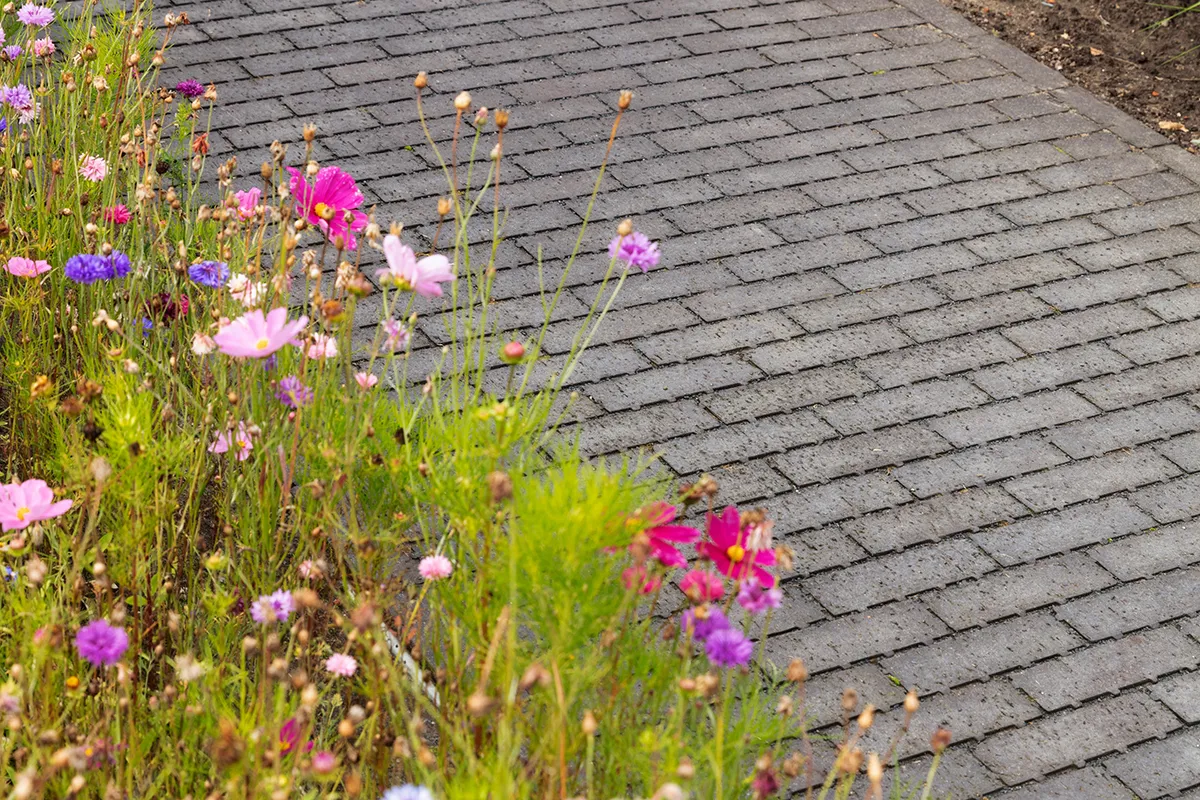
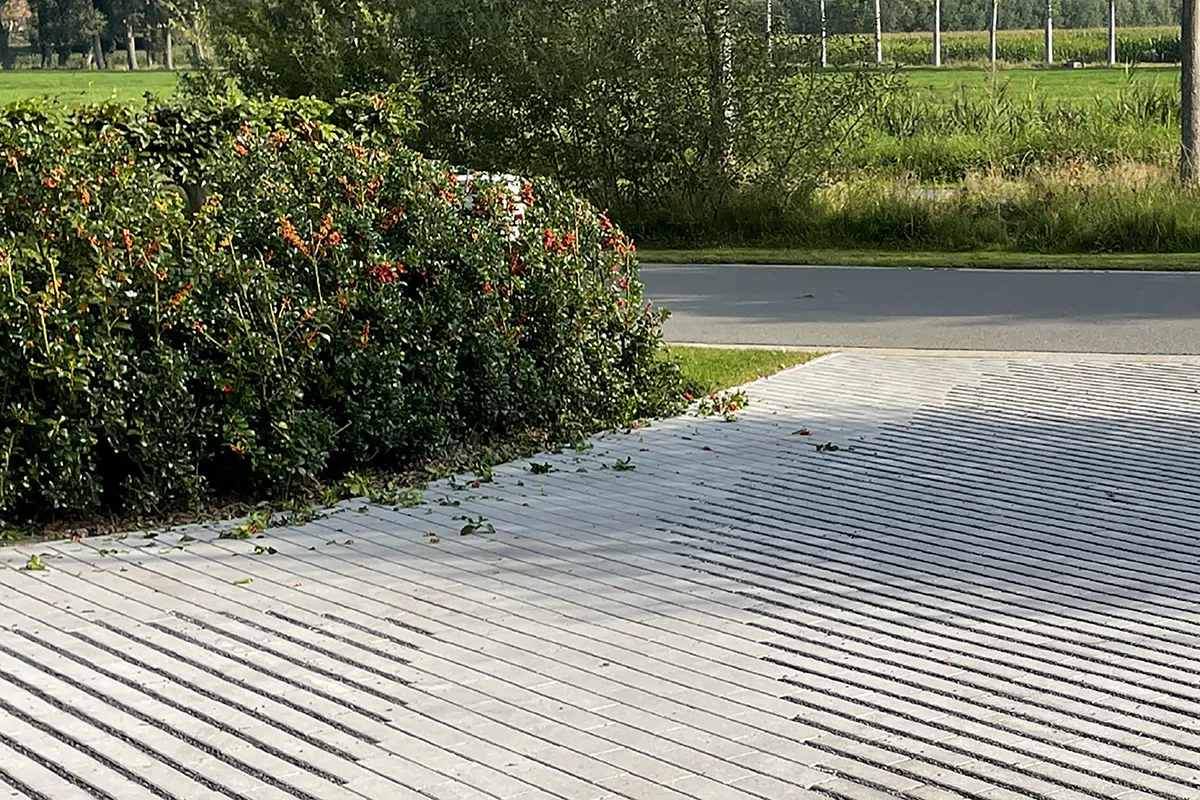
The average Fleming feels right at home with pavers on the driveway. The solution is to choose permeable versions with built-in spacers, combined, of course, with a free-draining sub-base. They are now widely available, both in concrete and authentic clay, and in a range of sizes and colours. The selection continues to grow, responding to demand for aesthetically pleasing alternatives and greater sustainability. Lower clay pavers are now available, requiring less material and thereby reducing both the environmental footprint and the cost. Renovating an existing paved driveway, path or terrace? Reusing the pavers is, of course, the most environmentally friendly option.
Loose spacers also make it possible to lay reclaimed pavers correctly, keeping the joints sufficiently open to meet the requirements of Flemish infiltration standards. One important point: the effective open area is also determined by the size of the paver. The larger the paver, the fewer joints per square metre, and therefore the smaller the open surface area.
Creative patterns
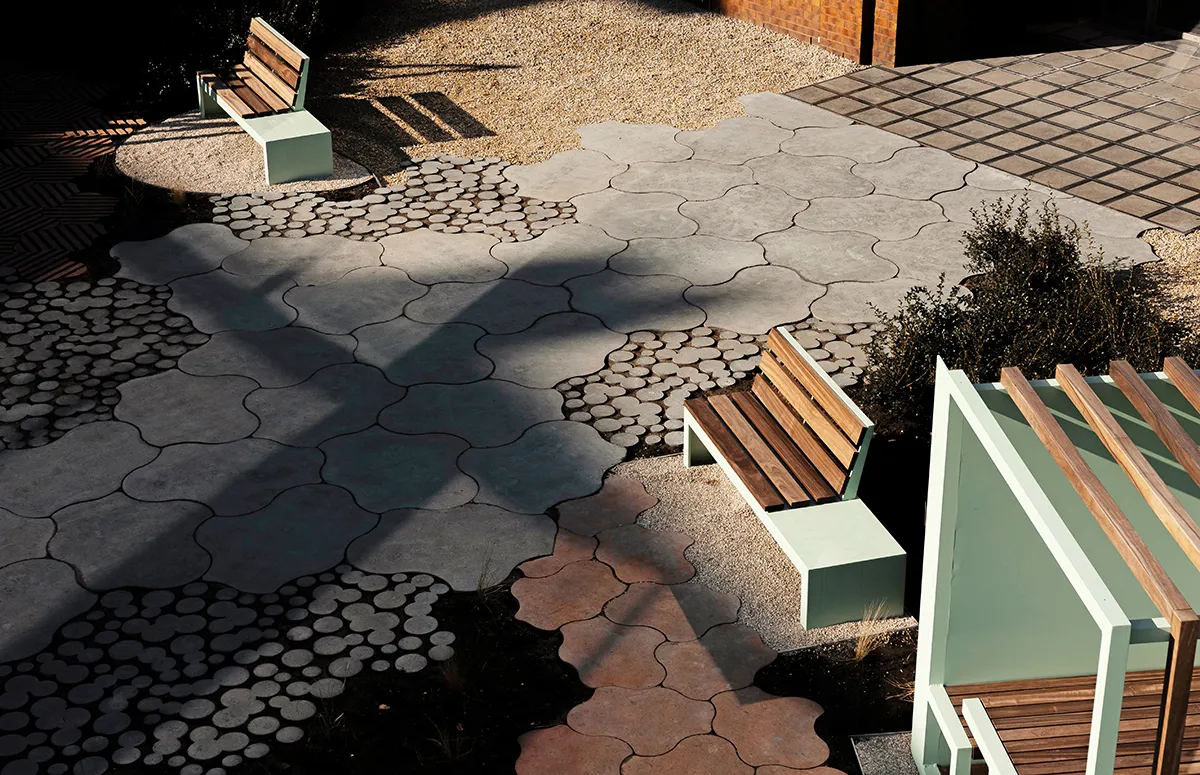
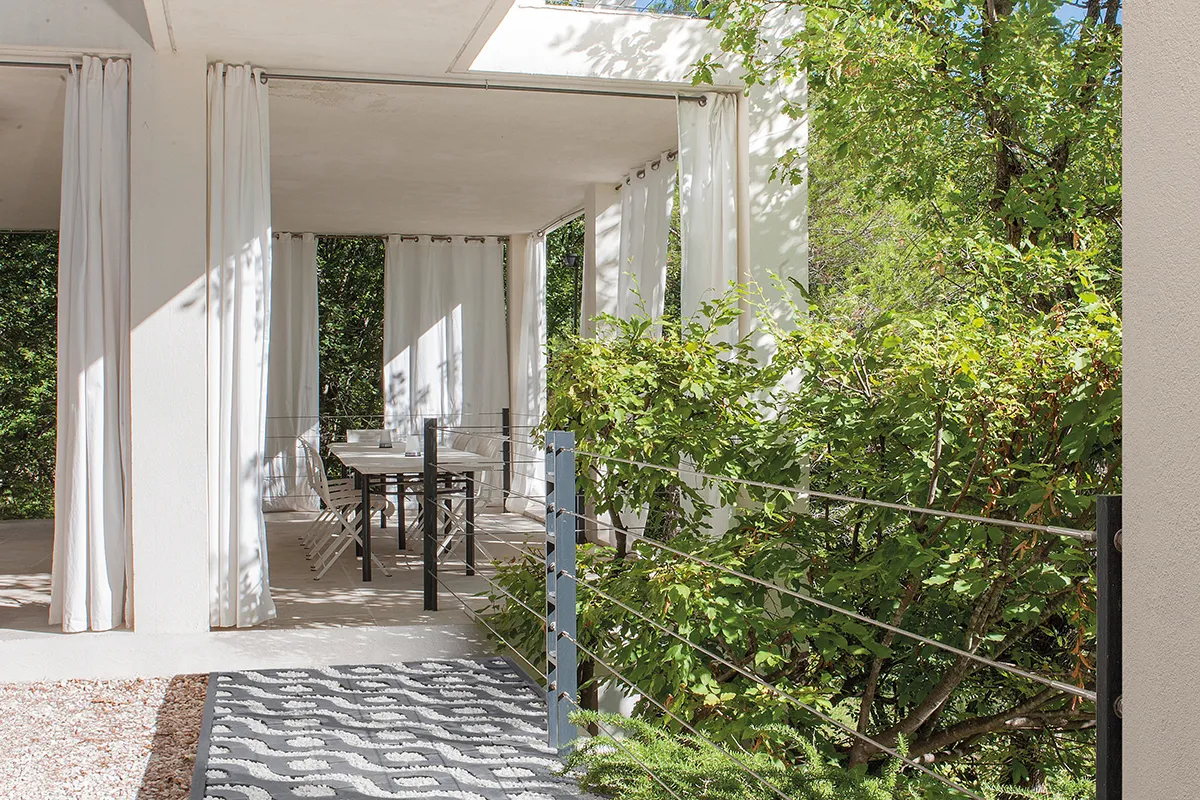
Permeable and original? The two can certainly go together. As well as pavers, there are various concrete elements and grass pavers that lend themselves to creative patterns, including in residential settings. They give a driveway or terrace its own distinctive character. Grass pavers are now available in versions that offer not only functionality but also more distinctive design appeal. The load-bearing capacity of the concrete structure goes hand in hand with considerable freedom in design and infill: traditional grass or gravel, but also a variety of herbs or clovers. Each project can thus have its own distinct look.
Aggregates with a binder
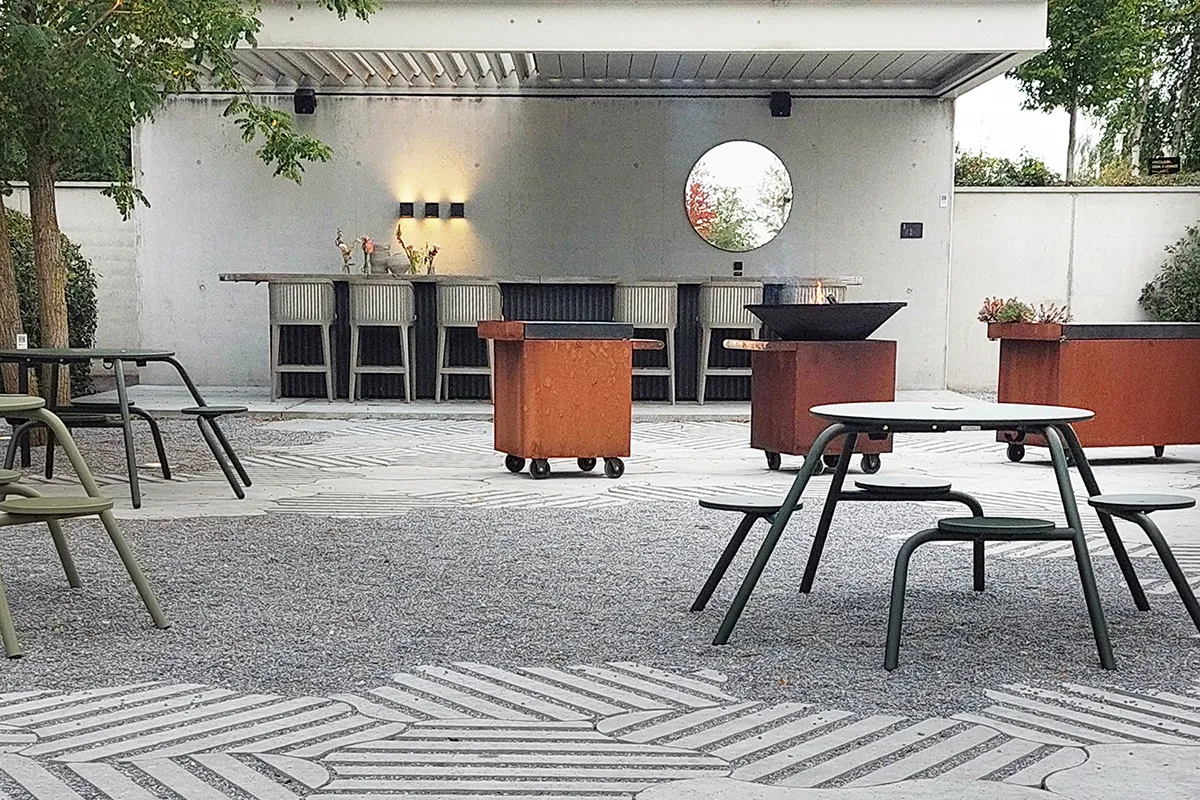
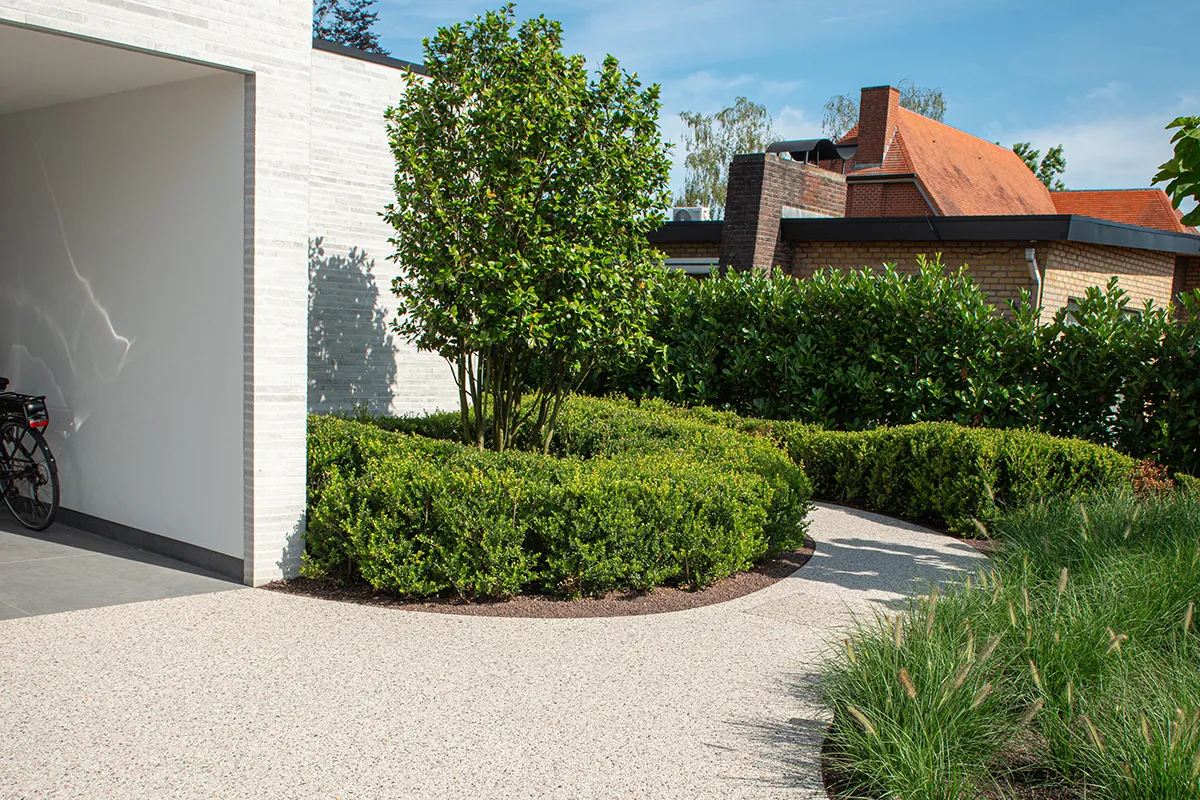
Alongside permeable paving, there are also water-permeable alternatives. One example is surfacing made from aggregates bound together with a binder such as resin or polyurethane. The result is neither loose crushed stone or gravel nor paving with open joints, but a solid, even layer that still allows water through. The design can be tailored entirely to the designer’s wishes: seamless, available in a wide range of colours and, if desired, featuring graphic patterns or even logos. The paths can follow organic forms that complement the architecture and garden. The result is an exceptionally sleek surface that remains functional. This water-permeable surfacing also helps limit weeds, provided it is brushed regularly or washed down gently. Water management is no longer a constraint, but a source of inspiration for architectural design in which ecology and aesthetics go hand in hand.
Question about this story? Ask your question
Keep following this
Get an email when a new story is published. No account needed.
- SubjectSustainable construction