








Eric Soors (META) on sustainable building, architecture competitions and affordable housing quality
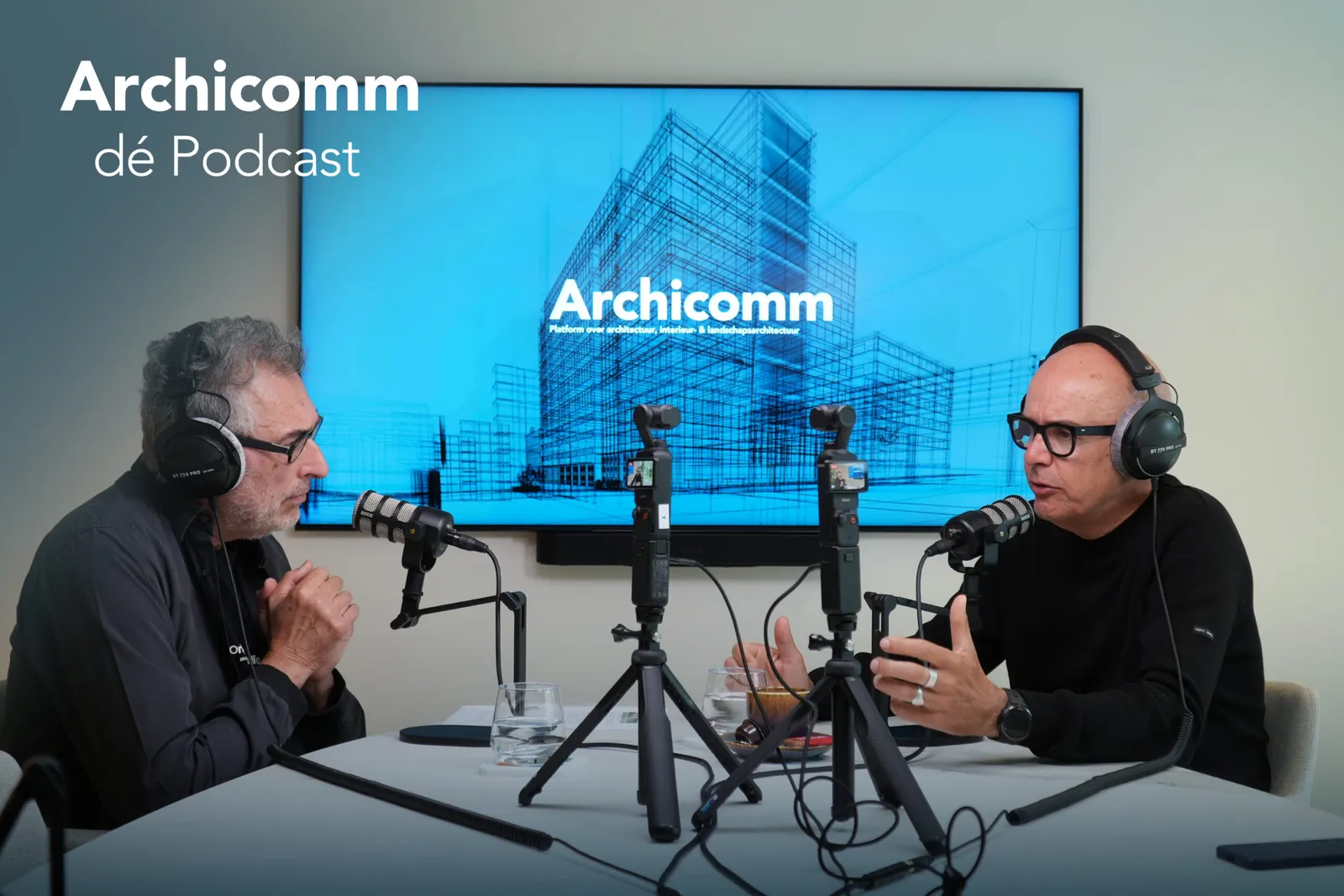
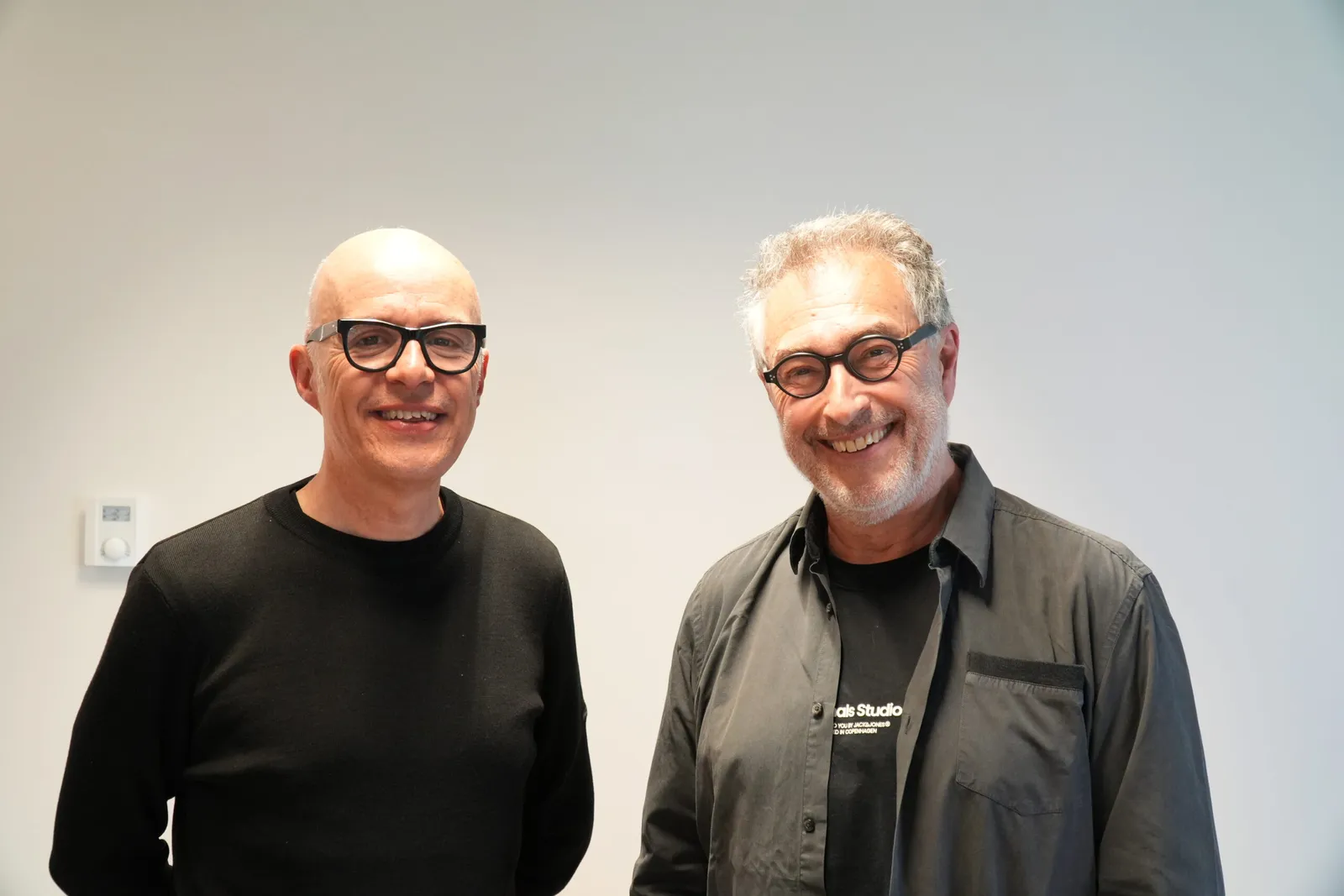
How do you design architecture that works not only today, but will still be relevant 400 years from now? In this episode of the Archicomm Podcast, Patrick Retour welcomes architect Eric Soors, co-managing director of META Architectuurbureau in Antwerp. They discuss architecture as a craft, sustainable and circular construction, architecture competitions, affordable housing quality and high-profile projects such as the Bruges Meeting & Convention Centre (BMCC), the redevelopment of the former teacher training college site in Lier and modular social housing in Willebroek. An engaging conversation about design quality, construction logic and the future of living and building in Flanders.
Full transcript
All chapters (28)
- Introducing Eric Soors and META
- Architecture awards and competitions
- The beginnings of META
- Architecture as a craft
- Architecture as a craft
- Patience and perseverance
- Social sustainability
- How META works
- The size of the practice
- Competitions and shortlisting
- META projects
- Bruges Meeting & Convention Centre
- Preserving the existing trees
- The exhibition hall as a covered square
- Acoustic panels and multifunctional use
- Redevelopment of the former teacher training college site in Lier
- The next phases in Lier
- Modular social housing in Willebroek
- 36 modular homes
- Project on Antwerpse Steenweg in Oostakker
- Programme and construction
- Cost-effective building
- Laziness as a virtue
- The logic of construction
- Jo Crepain as mentor
- Sustainability and circularity
- The future of META
- Closing remarks
Introducing Eric Soors and META
Patrick Retour Hello everyone, welcome back to another episode of the Archicomm podcast. This is our second episode in a row. They’re all available to listen to on Spotify, and we have plenty more episodes lined up. So keep listening. We’re on a roll and really getting into our stride. Today, we’re joined by an architect from an Antwerp practice. They create gems of projects, eye-catching buildings, showstoppers, architecture to die for. And it hasn’t just caught our eye. It has also come to the attention of the people handing out architecture awards. I’m delighted to introduce Eric Soors from META. Welcome to the table, Eric.
Eric Soors Thank you.
Architecture awards and competitions
Patrick Retour What prestigious architecture awards have you won? What titles have you recently added to your list of achievements?
Eric Soors It’s something that’s changed over the years. In the past, there were more awards for completed projects, and we were actually better at those. Once a building is standing and people can see it, we do very well in competitions and awards. We’ve won quite a few. The Belgian Building Awards, and a few others whose names escape me at the moment. But we regularly enter competitions. They’re still a way of securing new commissions today, and those are competitions too. The award is the commission, in that case, and it’s always nice to win work that way.
Patrick Retour You have to put yourself forward, enter, and then win, whether it’s awards or commissions. It takes energy, effort and perhaps money too. You have to keep at it. But you’ve won a whole host of awards. Most recently, one for the redevelopment of the former teacher training college site in Lier. And, if I’m not mistaken, a social housing project in Willebroek too. We’ll come back to that shortly. I think it’s great that your work gets noticed and that you win these awards. I really admire that. Keep up the good work.
Read the full transcriptCollapse transcript26 more chapters
The beginnings of META
Patrick Retour Now, META. Niklaas Deboutte and Eric Soors, you’re both founders, architects and directors. You’ve been involved with META from the outset. How did it all come about? How did it grow? And, by the way, what does META stand for? What you do is mega, but what is META?
Eric Soors Erik Wieërs, our former Flemish Government Architect, was also there at META’s inception. Erik was a philosopher too, having studied philosophy. He was a very good writer and, when META was founded, he also wrote a manifesto. That was entirely his doing, and it’s something we still use today. The META manifesto is on our website, and we still find it very relevant and interesting as a kind of design framework, something to guide us in our day-to-day practice. We return to it because it contains ideas that are genuinely interesting and relevant.
Architecture as a craft
Patrick Retour Does it say, for example, that you see architecture as a craft requiring skill? That’s a core idea, isn’t it?
Eric Soors Yes, that’s right. Designing is work. And, of course, you get better at it over the years. A good plan takes attention, craftsmanship and skills that you learn along the way and develop over time. That’s why we see it as a kind of craft.
Architecture as a craft
Patrick Retour It seems obvious, but it’s not something that happens by itself.
Eric Soors No, it takes work. Hard work. Hard work not only to come up with a good plan, but to get it built too. There are many steps to take. First, you need to get your client on board and bring them along with you. Then there’s the planning authority, as they’re called, which also has to be on board. And then it has to be realised and built. You have to make sure the contractor builds it the way you want. All of that takes a great deal of energy and time, as well as stamina over the long haul.
Patience and perseverance
Patrick Retour It’s not just about having stamina, though. You strike me as a very patient man. You have to be, you have to keep going.
Eric Soors Yes, it takes patience and a lot of perseverance too. You need stamina, and you have to be in good shape, so to speak.
Patrick Retour You look pretty fit.
Eric Soors That’s right. I’m working on it.
Social sustainability
Patrick Retour META’s aim, as I see it, is to give every design its own unpredictable history and future. That’s what I see in your work. These are buildings that go on to lead lives of their own. You set things in motion, but that’s just the starting point. Then, of course, come the people who live and work in them, and that’s when they really begin to take on a life of their own. That must be rewarding.
Eric Soors Yes, that’s right. We think about sustainability on several levels. The last one is social sustainability. That’s the point at which the project, the building, the home, whatever it may be, is occupied and the user makes it their own. And that’s a good thing. They come to think of it as a truly special building, a special space. They want to cherish it and look after it. That’s social sustainability. It matters too, because they’ll then think about the building and its maintenance. It will be able to live on and continue to do so. That’s another form of sustainability.
How META works
Patrick Retour Eric, creating such fantastic results is a team effort, of course. Can we talk about that? Could you tell us a bit about META’s distinctive way of working?
Eric Soors Yes, I’m not sure what’s so distinctive, but one important thing for us is that we work in tandems, for example. More experienced people work with younger colleagues. A junior and a senior work together on a project. Niklaas and I also try to keep an eye on all the projects at a kind of meta level.
Patrick Retour But perhaps it is distinctive that you’re both directors and remain involved in every project, each with your own focus. The design stage is perhaps more Niklaas Deboutte’s area, while you specialise in the technical side and overseeing the work. Well, that may be a bit of an oversimplification.
Eric Soors Yes, but it’s not always like that, of course. But yes…
Patrick Retour You’re involved in every project. You always know what’s what, because things can sometimes be different elsewhere. But in your case, you do stay well informed about what’s going on and what’s at stake.
Eric Soors That’s also possible because of the size of the practice.
The size of the practice
Patrick Retour Yes, of course. Keep it that way.
Eric Soors Well, no. For a while we were a team of twenty or twenty-five, and you do feel that collaboration changes and the structure becomes different. There’s more hierarchy too. Now we’re a team of ten to twelve.
Patrick Retour Did you consciously decide to scale down a bit?
Eric Soors No, it just evolved that way. It wasn’t a conscious choice. We just went with the flow, really. It also has to do with competitions. Sometimes you win more, so you need extra people. The economic climate is different today too. We see that in other architecture practices as well. Everyone is being very cautious.
Competitions and shortlisting
Patrick Retour One more thing about competitions, perhaps. Winning awards or not winning them. How does the process work in practice? I sometimes wonder how many firms enter, how they shortlist them, and whether the best one wins.
Eric Soors Yes. All right, we’re not going to answer that. Let’s park the last question.
Patrick Retour Okay, fair enough, fair enough. You do win quite often, though, don’t you?
Eric Soors It does happen.
Patrick Retour You’re the best. All right, jokes aside.
Eric Soors Competitions take a lot of commitment. They have an economic cost, but morale matters too. It’s important to win a competition now and then. But you have to recharge each time. You really have to go all out and give everything you’ve got to win a commission. It’s an area where we’re becoming more selective than we used to be, because you can’t keep recharging and aiming for a peak with every competition. There are simply too many.
META projects
Patrick Retour It’s no mean feat to achieve a built result that everyone can get behind, time and again. It takes creative courage and the determination to pursue quality consistently and persistently. That’s how things work at META. As usual on the podcast, we’ll take a look at some of your projects too. We’ll visit them virtually and try to paint a picture for listeners, so they can imagine what you’ve been creating. They look magnificent, with such presence. These are projects that really make a statement, and we want to bring them to life in words.
Patrick Retour We’re looking at a real architectural statement for the city of Bruges: the congress and exhibition centre you’ve built. That was another competition you won.
Eric Soors Yes, that’s right.
Bruges Meeting & Convention Centre
Eric Soors Yes, that’s right. It was a design-and-build competition, as they call it. First, you have to get through an initial selection based on applications. You enter as a team comprising a contractor, a main contractor, a developer and an architect. The City of Bruges then selects the teams. Five teams were shortlisted to go through to the next stage and develop a fully worked-up design. At that point, the contractor also had to submit its price. The City of Bruges had set a ceiling for the price, so you couldn’t exceed it. But, of course, price was important and one of the key criteria for the award, alongside the design and all the functions set out in the brief. The brief, the schedule and the budget were all important. And we did win.
Eric Soors Together with MBG as main contractor, and with our partner architect Eduardo Souto de Moura from Porto, Portugal. We worked very well together. Eduardo is a very likeable and approachable person. He is also well known worldwide, as one of the Pritzker Prize winners. He received the Pritzker Prize in the 2010s, the Nobel Prize of architecture. So, during a short period of a few months in the competition phase, we worked together on a design with the contractor at the table, calculating the budget. These are very intensive processes. And yes, we managed to win. Then came the construction phase. That was partly during Covid. But it was a very special and unique collaboration, both because of the design-and-build formula and because of our collaboration with Eduardo, which we value very highly. It also looks as though we will be able to continue working with him on a future project.
Preserving the existing trees
Patrick Retour A great project to add to your portfolio, Eric. Congratulations. Another striking feature is all those old trees along the street. You left them untouched. The neighbourhood has remained as it was, but it has gained a new heart: the timeless architecture of your congress and exhibition centre. Everything else has stayed the same. And we can see nature and architecture in beautiful harmony. It’s wonderful.
Eric Soors Yes, that was a given for us from the outset. All the trees had to be preserved. That was no easy task. They are fifty-year-old beech trees lining the square, and the building had to be slotted in among them. We managed it. And today, it really enhances the views of the building and the way it is perceived. It almost looks as though the building has been here for much longer.
Patrick Retour It looks as though it has always been there.
Eric Soors But nothing could be further from the truth. No, it’s lovely to see. Yes, it matters.
The exhibition hall as a covered square
Eric Soors Another thing we did there: alongside the conference facilities, there is an exhibition function, with a large exhibition hall. That exhibition space covers 4,500 square metres, which is quite large for a city-centre location. We are still in the heart of Bruges, as they call it. But an exhibition hall might only be used for half the year.
Eric Soors Our plan was to open the exhibition hall up to the neighbourhood. The entire ground floor is glazed, with large doors that can be opened. As architects, our ambition was for it to function as a covered square. When no events are taking place, local residents could use it, including those who might experience some nuisance at other times.
Patrick Retour Does that happen, then? Have local people embraced the idea?
Eric Soors Unfortunately not. We haven’t managed to make it happen yet. The City of Bruges isn’t quite ready for that. It’s not so straightforward, of course; it does require some attention. The doors would have to be opened and closed again each morning and evening. But it’s possible. I don’t think many actual neighbourhood activities have taken place yet, though.
Acoustic panels and multifunctional use
Patrick Retour That could still happen. When there’s an exhibition, there are panels to close everything off, so the neighbours are never affected by noise. Is that right?
Eric Soors Yes, the first requirement for the exhibition hall was that it should also be able to host concerts. That’s what the panels are for. Sometimes they are used to screen off areas visually for exhibitions, but they are primarily acoustic panels. Concerts by Clouseau and Niels Destadsbader have already taken place there, and they work well.
Eric Soors So, technically, it’s quite remarkable: the hall is open to the neighbourhood, yet a concert can take place there the next day, in the middle of a densely populated residential area. And it works.
Patrick Retour It’s a truly versatile hall. And alongside it, there’s an impressive auditorium overlooking the square, with lots of glass. It can of course be blacked out when a performance begins. So yes, the building offers a great many possibilities.
Eric Soors Yes, I still follow it on social media, and it’s lovely to see how well it is being used. It’s great to see events taking place there every week and every month.
Redevelopment of the former teacher training college site in Lier
Patrick Retour Let’s head down to Lier, another award-winning project of yours. The former teacher training college site is being redeveloped. It’s also a long-term project. A lot has already been done, but there’s still a way to go. It’s going to be wonderful. I think it will be a village within the city, with lots of greenery, space and openness, while still offering plenty of opportunities for people to live well.
Eric Soors Yes, it’s a very special place in the heart of Lier, next to Sint-Gummaruskerk. It was a site that wasn’t very well known, even to me or to many local residents. It’s a former teacher training college, more than a hundred years old, with the characteristic school architecture arranged on a very orthogonal plan, with playgrounds at the time.
Eric Soors We are now going to restore and renovate part of it, and add some new-build elements. The playgrounds will generally become shared gardens. It’s a very special project, and another long-term undertaking. More than a hundred homes will be developed and brought to market in stages.
The next phases in Lier
Patrick Retour I thought it was 140 residential units, that’s what I heard somewhere.
Eric Soors Thank you.
Patrick Retour What you’re doing with it is wonderful. You can already see that. It’s gradually taking shape. It’s becoming a real meeting place for the neighbourhood and for all of Lier, a place to be in my view. Where are we now? What still needs to happen?
Eric Soors There is one more building by us. We are working there with BOB361, an architecture firm from Brussels, who have just completed the latest phase. We have already completed some conversion work and delivered a cohousing project. Now an L-shaped building still needs to be built in the inner area. It will be a new-build project. The developer is still considering which apartment typologies would be best to bring to market there.
Eric Soors So it’s an ongoing process. It takes a very long time. But we’re seeing the same thing in other projects: schemes of this scale are being split into several phases because the market has simply cooled.
Modular social housing in Willebroek
Patrick Retour But we have every confidence in it. We’re looking forward to seeing the final result with you, and we’ll certainly come back to it later. Great. Shall we talk briefly about two upcoming projects in Willebroek? Modular social housing in timber.
Patrick Retour Yes, social housing is very close to my heart. I believe everyone has the right to luxurious, comfortable homes and good build quality. You offer that to the widest possible audience, and I think that deserves real credit. Modular construction and timber construction also appeal to me enormously. Could you explain some of the benefits, especially for the environment and people’s budgets?
Eric Soors That’s right. I think the client, Wonen in Vlaanderen, wanted above all to make up for a shortfall in social housing construction. Modular and prefabricated construction can help with that.
Eric Soors The idea is to build timber modules in a workshop, then transport them to the site and install them in a particular configuration. Timber is ideally suited to this. It allows you to build more cheaply and more quickly.
Eric Soors That’s the purpose of these competitions, as there are several of them. We are working with Cordeel, Blaton, Ampoule and so on as the partner architect. We are now involved in a series of competitions, all conceived in the same way, using prefabricated modular units that can be configured in different ways depending on the context.
Patrick Retour Excellent.
Eric Soors It’s a very good way to deliver these homes quickly and at low cost. In Willebroek, we have now won one of the first projects. There have been others since.
36 modular homes
Patrick Retour There will ultimately be 36 modular homes on the site. You’re increasing density, but at the same time creating breathing space and green space. That’s what makes it so good.
Eric Soors Yes, it’s interesting to see how you can create compelling configurations with a module like this. We have also ensured that each corner has a living room with dual aspect, and that the terraces, which are fitted afterwards, don’t overlook one another. The views are kept open. That’s why the layout includes that twist.
Eric Soors So the idea is to build these homes quickly.
Project on Antwerpse Steenweg in Oostakker
Patrick Retour Now to Oostakker. Another project in the pipeline, which we can also read more about in the article that will appear, or has appeared, in issue two of the 2026 volume of Archicomm magazine. Do make sure to read it.
Patrick Retour You can find out more about how it came about and how it will develop. This is the project on Antwerpse Steenweg in Oostakker, a wonderful new-build scheme with 67 residential units.
Patrick Retour What I find so beautiful about it is that the façade is majestic. You’ve worked creatively with the composition of the façades in a playful way. There’s a rhythm to it, and that really catches my eye. I’d also like to know what it will be like inside. I can see what it looks like from the outside, but what will the interiors be like?
Eric Soors Yes, it’s a special location. It’s on Antwerpse Steenweg, the road from Ghent to Antwerp, in Oostakker. It’s a very interesting road.
Eric Soors But the site is special because it also borders on a patch of natural landscape at the rear, where the scout hall is located.
Patrick Retour There’s an opening in the middle, a passage through to that green space and the residential neighbourhood behind it.
Eric Soors That’s right.
Patrick Retour Another brilliant idea.
Eric Soors But yes, it takes some thought to find a way to open up that area behind, as well as to provide access for the residents of the complex itself. The façade is long on the other side too, 80 metres long.
Eric Soors We have also broken it up architecturally so that it reads as four volumes. We are still working on it. We will submit the planning application shortly. We’ll finish it in different façade materials, so that it reads as a group of separate volumes. And in the centre, there will be a clear passage linking through to the green space at the rear.
Programme and construction
Patrick Retour When will this project finally spring up like a mushroom? Have you already put everything out to tender and subcontracted, or are you still looking for partners to work with?
Eric Soors For the developer, this will be a conventional tender, so to speak. We will submit the planning application this summer, ahead of construction. It has already been through a long process. These things are always very complex.
Eric Soors Preparing a planning application usually takes longer than the permit approval process itself. But that’s beside the point. We then need to agree with our developer on how he sees the project timeline, because he has another development lined up after this one. So we see him creating competition for himself.
Patrick Retour This will be another META building where people can enjoy stylish living. And affordable, too. It’s good to hear that at a time like this.
Eric Soors Hopefully.
Cost-effective building
Patrick Retour Eric, before we finish, I’d like to talk about the principles of cost-effective building that underpin META. Could we run through them again? They’re clearly very important in achieving those impressive results and keeping everything affordable for everyone.
Eric Soors That’s right. We do have a number of principles that we return to and work with. The idea of using the structural shell as the finished product is one of them. We try to use the shell as a finished product.
Eric Soors That calls for a little extra attention, extra detailing and extra commitment from the contractor. But as architects, we look at it too: how can we eliminate finish layers? In this way, ecology and economy go hand in hand, and the result is something quite special.
Eric Soors The structural shell is used as the finished product. Concrete, brick and timber can be left exposed, but in the right way. That’s very important. It takes attention and knowledge, and it takes the contractor’s energy, so to speak, to think it through with us.
Laziness as a virtue
Patrick Retour Laziness is a virtue for you, too?
Eric Soors Yes, laziness as a virtue, as a design principle. It sounds strange.
Patrick Retour It’ll become clear in a moment what we mean by that.
Eric Soors The idea is to think carefully and get it right. To look for one detail, so to speak, one window solution, for example, and repeat it. To find savings through repetition, rather than trying to reinvent the wheel every time.
Patrick Retour Yes, exactly. So at META, you pursue rigorous efficiency to achieve affordable building quality. I can only applaud that.
Eric Soors Yes, the logic of construction plays a part in that too. You need to understand how a building is put together, and ensure that its load-bearing elements are logically arranged. You shouldn’t need to resort to unusually expensive measures to make something work. It’s about clear, well-organised structures, structures that can also be reused. The architect’s responsibility for sustainability. You say: right, we have a clear, neutral structure. We have a core containing the lift and stairs, in the right place, with the service risers alongside. Around that is an envelope, a façade, which also aims to be timeless. The fit-out is then secondary, and even unimportant.
The logic of construction
Patrick Retour In other words, the contractors you work with don’t raise an eyebrow. They think: this all makes sense, we understand it, it’s our language, we can make it happen in practice.
Eric Soors Yes, that’s a very apt observation. Exactly.
Patrick Retour Of course, there are always problems, but this approach can help you avoid a lot of them.
Eric Soors That’s very well put. It’s something we often hear: contractors notice that the architect knows what they’re talking about. I don’t want to sound pretentious, but that really is the case.
Jo Crepain as mentor
Patrick Retour How did you gain that practical, on-site experience? Are you someone who’s good with your hands, too?
Eric Soors No, I don’t know.
Patrick Retour That comes with experience, too.
Eric Soors It comes with experience, but it was there from the very beginning, too. Niklaas and I paid attention to it from the start. Yes, that’s part of it. And perhaps it also has something to do with our mentor during our traineeship. We both did our traineeships with Jo Crepain.
Patrick Retour Yes, I had the chance to meet him once.
Eric Soors Really?
Patrick Retour Yes, it was a wonderful meeting. It’s etched in my memory. Really, I’ll never forget it.
Eric Soors Yes, he was very involved in the building process itself, too. I have to say I learnt more about the profession from him than at school. Not just in terms of construction, but also organisation. He was a really good manager. So there’s that. We also picked up those first seeds there, so to speak, of the logic of construction.
Sustainability and circularity
Patrick Retour One last thing, Eric. Sustainability is on everyone’s lips. But you were already building sustainably avant la lettre. That philosophy took hold at your practice a long time ago. You’re pioneers, you’ve championed sustainability and circularity. That’s right, isn’t it?
Eric Soors Yes, I think so. Sustainability has become a buzzword. Today, you have to talk about circularity. It comes back to what I said earlier. The architect’s role in sustainable building lies in the design. Building services and so on are for the engineers. But the neutrality, the sound structure that’s been worked out, the clear structure, the core in the right place, the envelope around it: that’s the architect’s most important contribution to sustainable building. Then you try to create a building that its users will accept, cherish and look after. And I think that means you’ve done a very good job as an architect. The building services that come with it are the engineers’ responsibility. They matter too, but they change quickly. We need to make sure that the buildings we put up can still be standing in 400 years, to quote Bob.
The future of META
Patrick Retour That’s a fitting note to end on. But I have one last question. What does the near future hold for META? Plenty of work in the pipeline?
Eric Soors We can’t complain. We have several distinctive projects in the pipeline that we’re currently preparing. I can’t say too much about them yet. But I’m very confident that good times lie ahead. It’s been a difficult time for many architecture practices, but I feel we’ve reached a turning point and can look to the future positively.
Closing remarks
Patrick Retour We’ll keep following the story at Archicomm-magazine and, of course, on our podcast. Thank you to our guest today, Eric Soors of META. What we take away from today is that META stands for designing with clarity and building with clarity. Clear, but not self-evident. Sustainability and circularity go hand in hand with originality. And, last but not least, affordability. We can only admire that and applaud it.
Patrick Retour My name is Patrick Retour, and as always, I’m your regular host and moderator. You’ll hear me again soon for the next instalment of our podcast. Best wishes, and see you soon.
Keep following this
Get an email when a new story is published. No account needed.
- ThemeFrom vision to built project
- SubjectGeneral







