Sustainable and innovative initiatives using circular timber
Text Eva GoossensImage Bosq, Recuplan
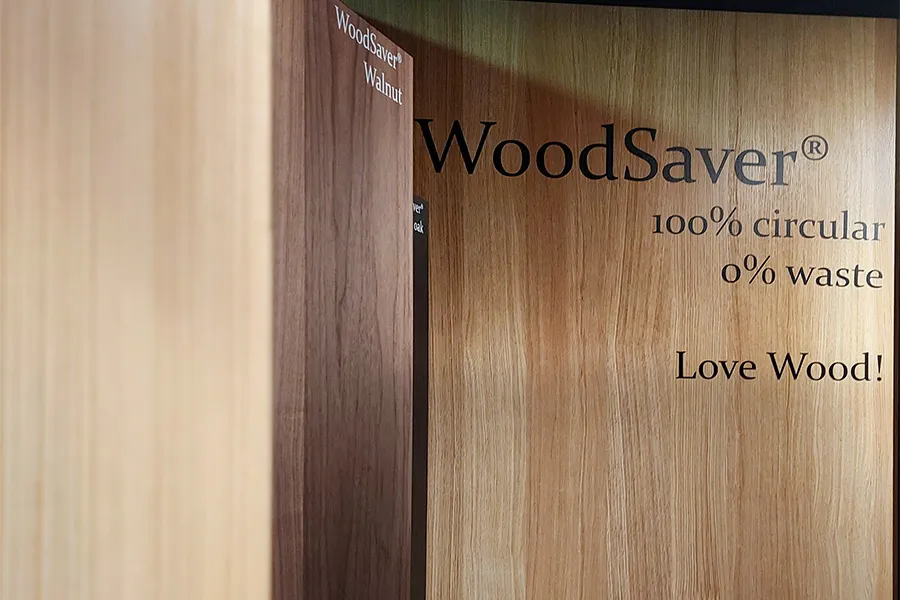
Greater circularity is essential. But as an architect or interior designer committed to doing the right thing, can you find the right materials? We went looking and found two young initiatives, very different yet related in some respects, that bring timber and circularity together perfectly. They give timber, a noble and valuable material, the respect it deserves. And that can only be welcomed.
Making careful use of what nature provides, and timber in particular, is the common ground between WoodSaver by Bosq, a new 100% circular product, and Recuplan, a circular timber yard and building materials market, a new initiative. The circle is complete because Bosq, a timber veneer expert with extensive experience, is also one of Recuplan’s partners.
Turning timber offcuts into a new veneer product
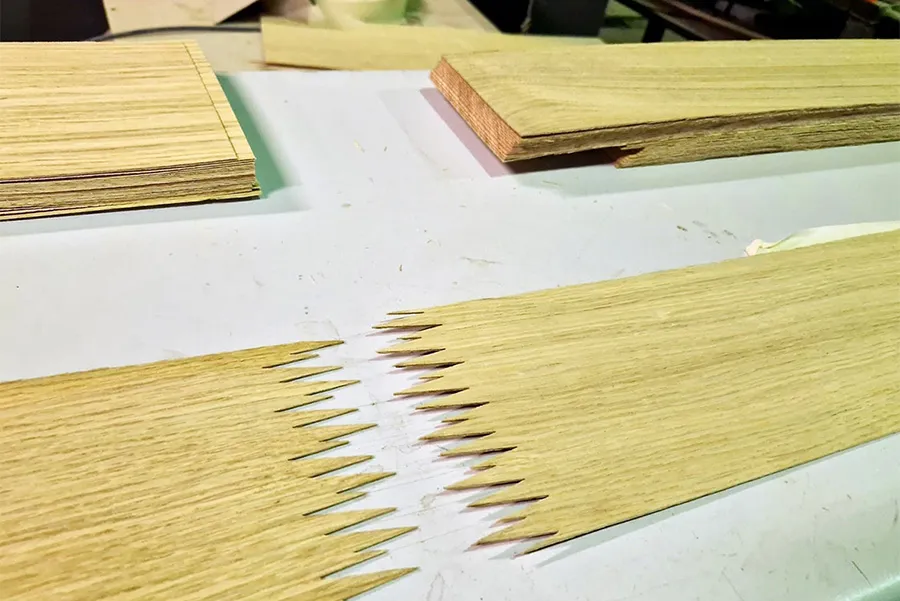
First up is WoodSaver, developed by Bosq. The company is part of the Bulo group and grew out of Leysen Wood Trading and Van Vaek Meubelen, together bringing more than 100 years of experience in the timber trade. WoodSaver is an innovative veneer product made from timber offcuts. Instead of disposing of the short lengths of waste timber generated in every production run, or processing them into a waste stream, they are joined using an invisible finger joint. The result is a new, long panel that retains the veneer’s intrinsic value and all its characteristics.
100% circular
Bert Leysen, Bosq’s ‘woodlover’, who has had a long career as a timber buyer, explains: “We are always looking for the finest timber and the most beautiful logs. When these are made into veneer, we have to take account of the standard dimensions of sheet materials. The result is a great deal of waste, sometimes as much as 40% of a log. Of course, this is recycled, for example into particleboard, but in doing so you lose the timber’s intrinsic value. It is a form of downcycling, and I felt there had to be a better way. Together with a machine builder specialising in finger joints, we explored the possibilities. How could we turn short lengths of veneer into longer ones, so we could offer them as full-fledged veneer with a continuous grain? The result is WoodSaver. This allows us to recover 20 to 25% of the waste timber.”
It is worth noting that while end consumers will notice little or no difference compared with full-length veneer, a trained professional eye will spot the discreet finger joint. “That is not a drawback in itself,” says Bert Leysen. “It is part of the charm of working with a 100% circular product.” When can we expect the product to reach the market? “The final machine tests are under way, but production will start very soon.”
Circular building materials market and timber yard
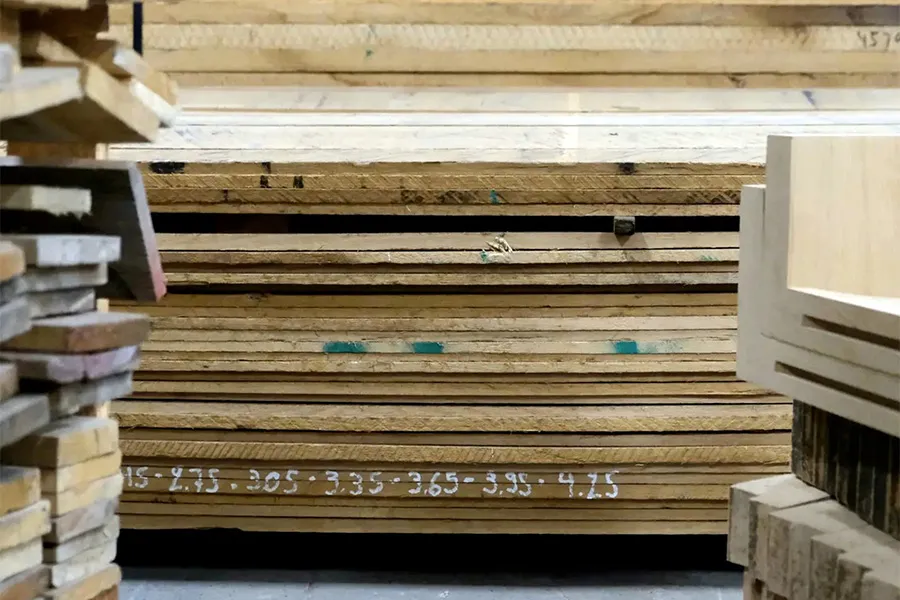
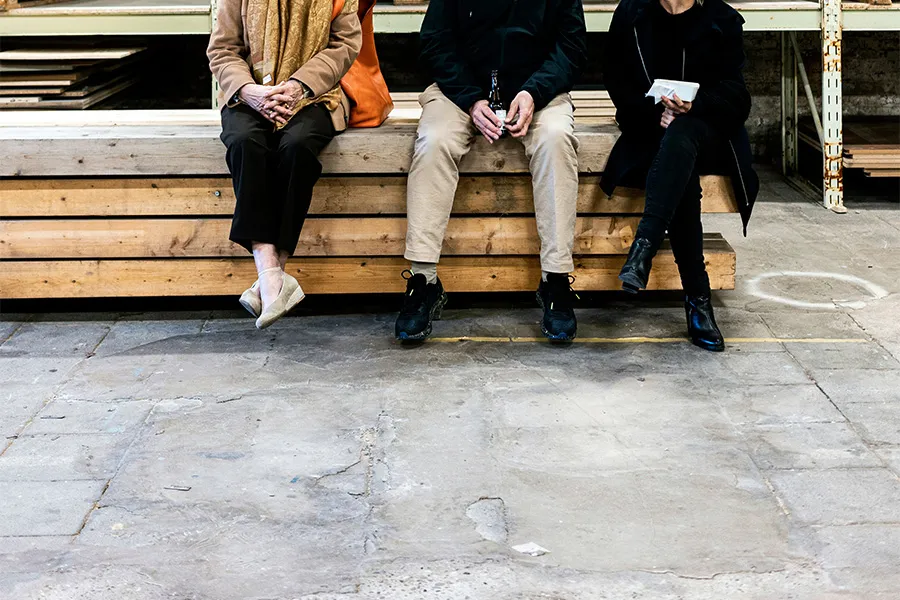
Our story moves almost seamlessly from Bosq to Recuplan, the circular timber merchant in Mechelen, of which Bosq is also a partner. Recuplan grew out of Ecoso, specifically from the woodworking workshop of this social employment project. The initiative aims to prevent timber from ending up in landfill prematurely by collecting, processing and reselling both structural timber and sheet materials. Recuplan employee Bert Vanhooff says: “Alongside surplus stocks, we also offer timber from locally felled trees. Unsold solid-wood furniture from Ecoso’s Cirkels charity shops is also dismantled, sawn and planed into planks.” Linne Bastiaensen adds: “At Recuplan, we are always looking for innovative ways to deal with residual streams. Together with A-Kwadraat, a social enterprise in Gierle, we are working to make sheet materials from offcuts.”
The building materials market is open to private customers, but increasing numbers of architects and other professionals are also finding their way to Recuplan. A B2B newsletter keeps them informed about new, large lots that can be reserved. Bert Vanhooff concludes: “Architects are always enthusiastic visitors. To complete a project entirely with circular materials, it is important that everyone is on board: the client, contractors and installers. It takes some flexibility, but the results are worth it.” Recuplan is a local circular timber merchant, and similar initiatives can be found elsewhere in the country. Buurman in Antwerp and the Materialenbank in Leuven are two examples.
Question about this story? Ask your question
Keep following this
Get an email when a new story is published. No account needed.
- ThemeCircular construction and material awareness
- SubjectSustainable & circular