Thermal breaks
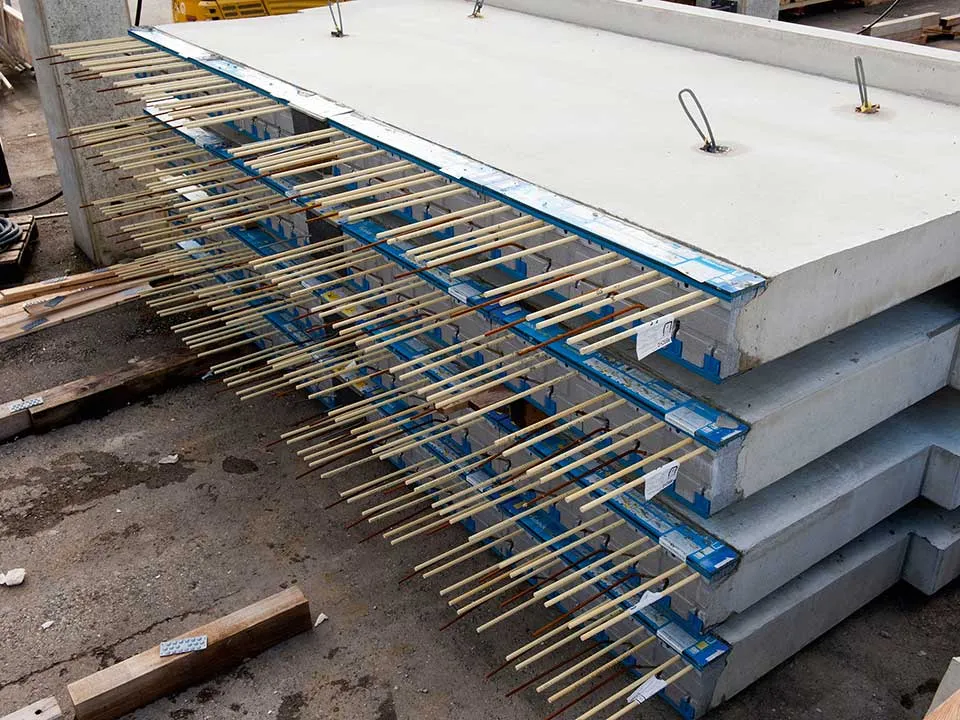
Thermal-bridge-free connections for cantilevered building elements.
Tighter energy regulations pose a challenge for many architects. Schöck, an innovator in anchoring systems and reinforcement technology, knows this only too well. With Schöck Isokorb® CXT, the international brand presents a thermal break that outperforms all its predecessors in terms of energy efficiency. This structural anchoring system for thermally separating cantilevered building elements is also cost-effective. The secret behind this new generation of structural connections? Glass fibre, and the expertise to make the most of this material.
For Schöck, innovation is both a business philosophy and a core activity. This international company, with 14 branches worldwide and around 1,000 employees, innovates with a focus on quality and sustainability. This ethos is also upheld by its Belgian branch. Schöck also aims to be an expert construction partner, including when it comes to solving complex building challenges. Through its Engineering department, the company can provide architects with extensive support throughout the entire construction process, including when using the new Schöck Isokorb® CXT.
Extremely low thermal conductivity
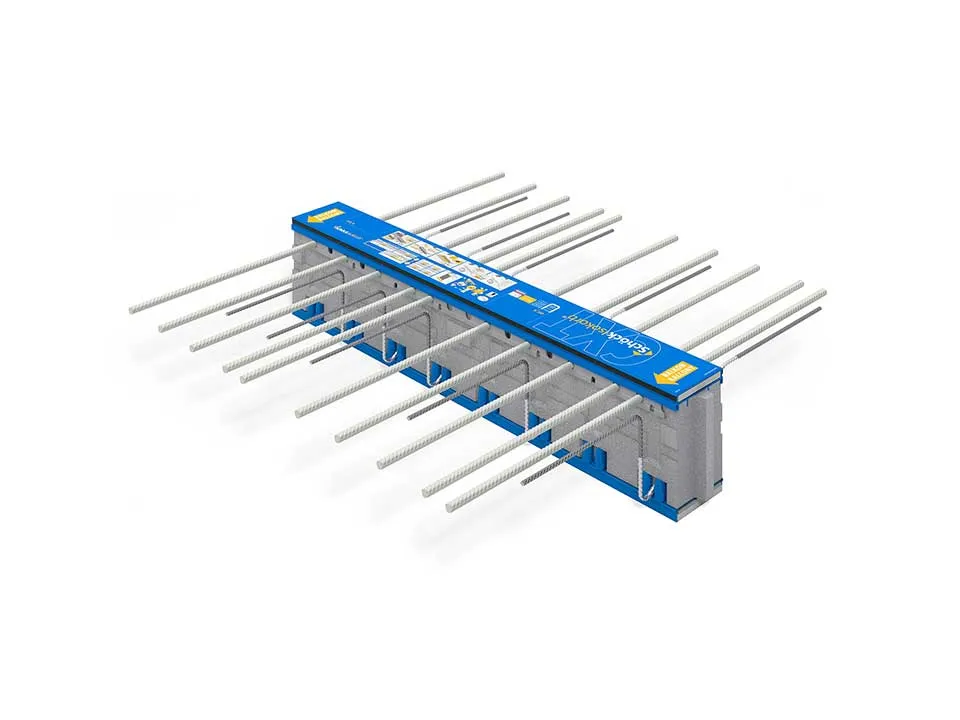
The new Isokorb® CXT is not Schöck’s first foray into this field. Over the years, the Schöck Isokorb® product range, with reliable solutions for thermally separating balconies and access galleries, among other things, has grown considerably. The aim is to offer high-quality, ready-to-use products that minimise heat loss and the adverse effects of thermal bridges in cantilevered building elements. In response to stringent energy regulations, Schöck investigated how it could do even better. The answer: Isokorb® CXT. What is new? The steel tension bars have been replaced by Schöck Combar®, a glass-fibre composite, glass fibres bonded with vinyl ester resin, with extremely low thermal conductivity (λ 0.7 W/mK) and consequently excellent thermal insulation properties. Combar® itself is not new and has been used for years as concrete reinforcement and in anchoring systems for sandwich walls. This new application is what sets it apart and opens up new possibilities.
Certified quality
With Isokorb® CXT, it is still possible in 2021 to create EPB-compliant structural connections. Thermal bridges are minimised, energy efficiency is optimised and penalty points are avoided. This innovation is certified by the German PassivHaus Institut and has been awarded an EPD, or Environmental Product Declaration. The element is also certified with technical approval from the DIBt and is available in a fire-resistant version (REI120). There are further benefits too. The material is lighter and more compact, making it easier to handle and transport. The compact Isokorb® CXT requires less storage space and is easier to install with prefabricated balconies and access galleries. On-site use has also been optimised. The glass-fibre material is corrosion-resistant, so a thin concrete cover is sufficient. Finally, replacing steel with glass fibre has cut CO2 emissions during production by 27 per cent. Energy-efficient and sustainable, for the buildings of today and tomorrow.
Question about this story? Ask your question
Keep following this
Get an email when a new story is published. No account needed.
- ThemeBuilding envelopes for a changing climate
- SubjectProjects