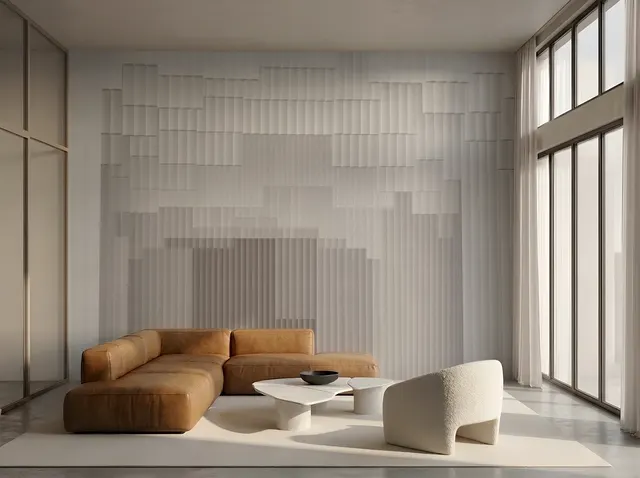
Wall solutions for improved room acoustics
Wellbeing at home and at work is shaped by many factors, and room acoustics are an important one. Sleek interiors dominated by hard materials can create disturbing reverberation, compromising acoustic comfort. In this article, we look at some innovative or distinctive sound-absorbing wall solutions that tackle unwanted reverberation.

Reverberation is a sound phenomenon caused by repeated reflections off ceilings, walls and objects. As these reflections are heard after the original sound, they create noise. This can make the original sound harder to understand. Reduced concentration and increased stress are other possible negative consequences. The aim, then, is to keep reverberation time and sound pressure in the room within acceptable limits, taking into account the room’s size and function. The targeted use of sound-absorbing materials can help. This time, we focus mainly on wall solutions, sometimes in combination with the ceiling. Of course, this does not rule out combining different options, including acoustic wall, ceiling and floor solutions, as well as lighting, textiles, fixed or mobile screens, furniture and more.
Acoustics as a service
Want to compare materials using figures? One option is the absorption coefficient (αW), which indicates a material’s ability to absorb sound. This value always ranges from 0 to 1: the closer it is to 1, the greater the absorption capacity. A wall’s absorption capacity is calculated by multiplying this coefficient by the wall area. What becomes clear is that the amount of material required to optimise the acoustics in a room is still often underestimated. It is also worth noting that a material’s sound absorption can vary depending on the sound frequency. The position of the absorbent material also plays a part. A private home calls for a different approach from, say, an office bustling with activity throughout. In the latter case, it is important to distribute the absorbent material and use enough of it. In a home, a more targeted approach is possible, for example, with a wall solution by the dining table or in the sitting area.
In short, room acoustics are a specialism in their own right, and it is only logical that they are increasingly being offered as a service.
Acoustic app
As part of this concept of ‘acoustics as a service’, MonaVisa presents a handy app, although it is limited to its own product range. MonaVisa specialises, among other things, in Clipso acoustic stretch ceilings and walls, made from micro-perforated polyester fabric with sound-absorbing insulation behind it. How does the app work? It starts with entering the room’s dimensions and the materials used for each wall, the floor and the ceiling. Windows and curtains can also be added. In the next step, you add ‘absorbers’. For each wall and the ceiling, you can set the type of fabric and the desired insulation thickness. The acoustic app calculates the current reverberation time and the positive effect of adding acoustic stretch ceilings and walls.
New spray-applied plasters
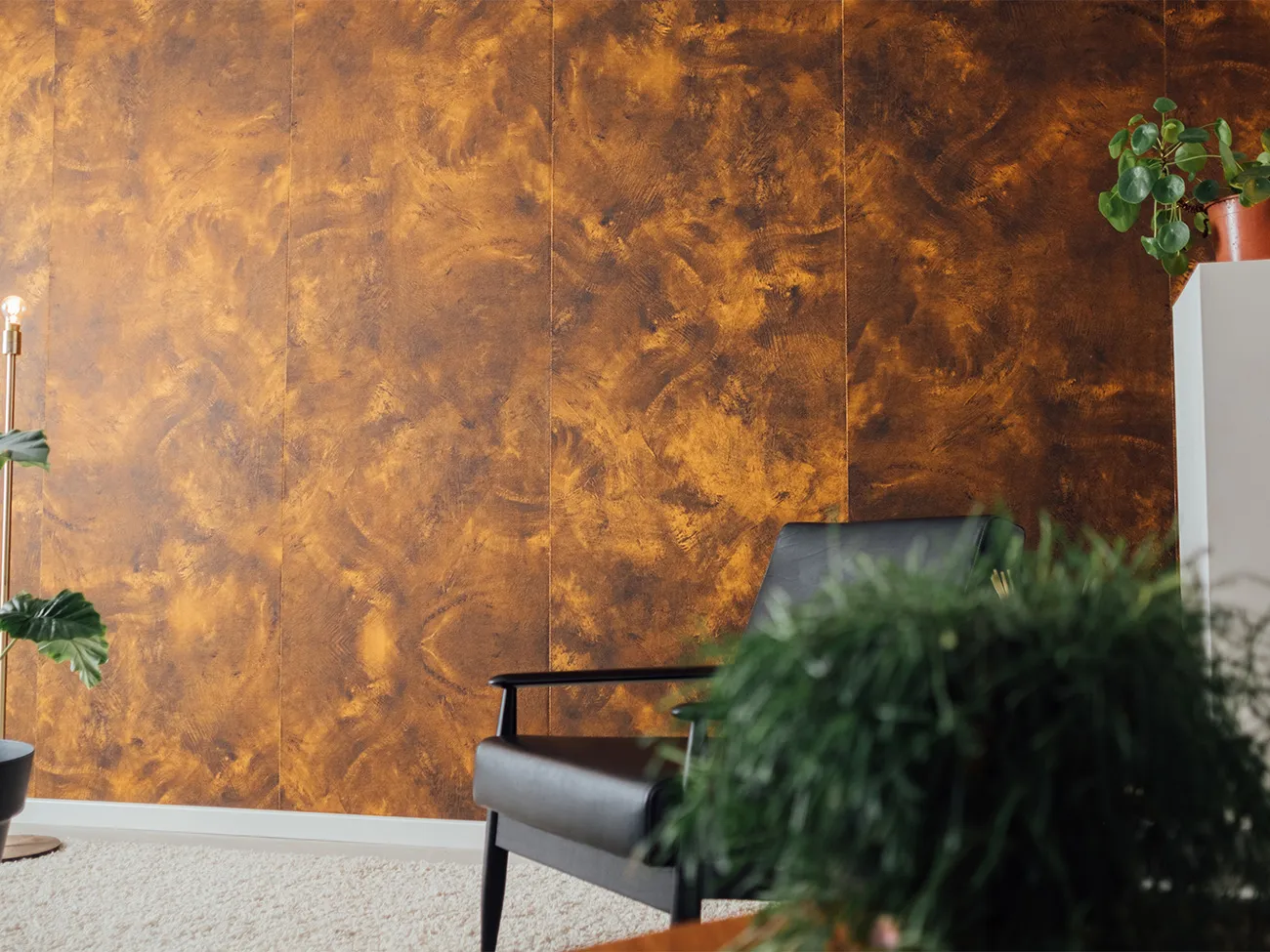
Alongside stretch walls and ceilings, the range of acoustic and, in particular, sustainable spray-applied plasters is also growing. New from Asona is Sonaspray SP Eco, a medium-textured spray-applied plaster made from 100 per cent post-consumer recycled paper. It is Cradle to Cradle certified, offers excellent acoustic performance and can be applied up to 45 millimetres thick. Acosorb, meanwhile, has launched the new AcoSpray Demin-line, a strong, sound-absorbing spray-applied plaster made from natural cellulose and denim fibres. This is also a Cradle to Cradle solution, with a distinctive appearance, available in several colours.
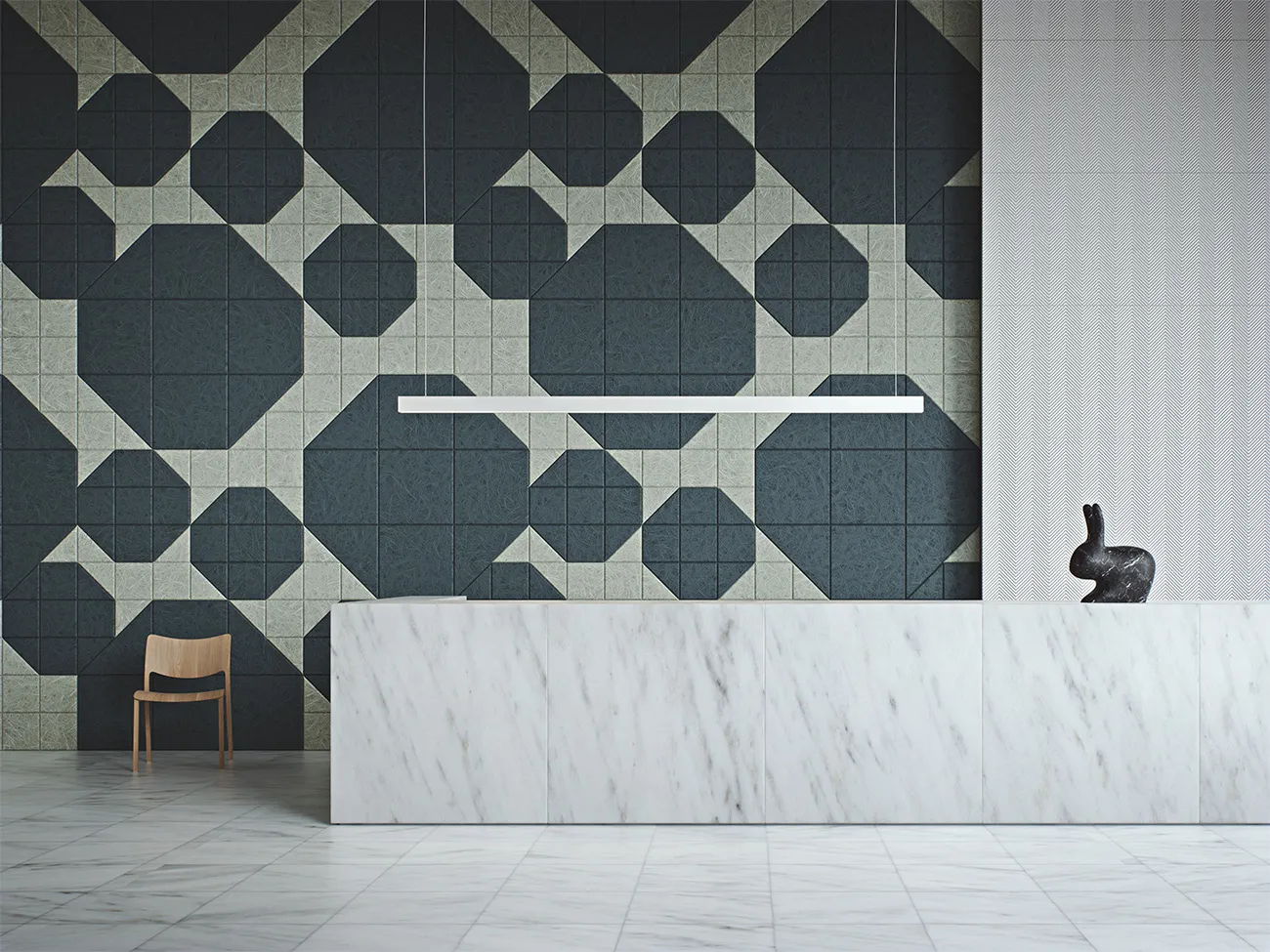
Wall coverings with an acoustic focus
While some acoustic absorbers are designed to blend into the background, others are made to stand out: high-design ‘acoustic absorbers’ that elevate an interior. New from Cras is Acousticode, which combines thermally treated wooden connector profiles with strips of acoustic felt. Acousticode is part of WOW!’s ‘code’ collection, short for Wood on Walls. This means Acousticode can easily be combined with other solutions in a similar aesthetic, even outdoors on the façade. Another option is acoustic wallpaper, such as that offered by Easewall. This sound-absorbing wall covering, which is considerably thicker than traditional wallpaper, incorporates a durable felt layer made from 80 per cent recycled PET waste. The acoustic wallpaper has a practical self-adhesive backing for easy installation and comes in rolls 75 centimetres wide, in a choice of 11 or 5.5 metres long.
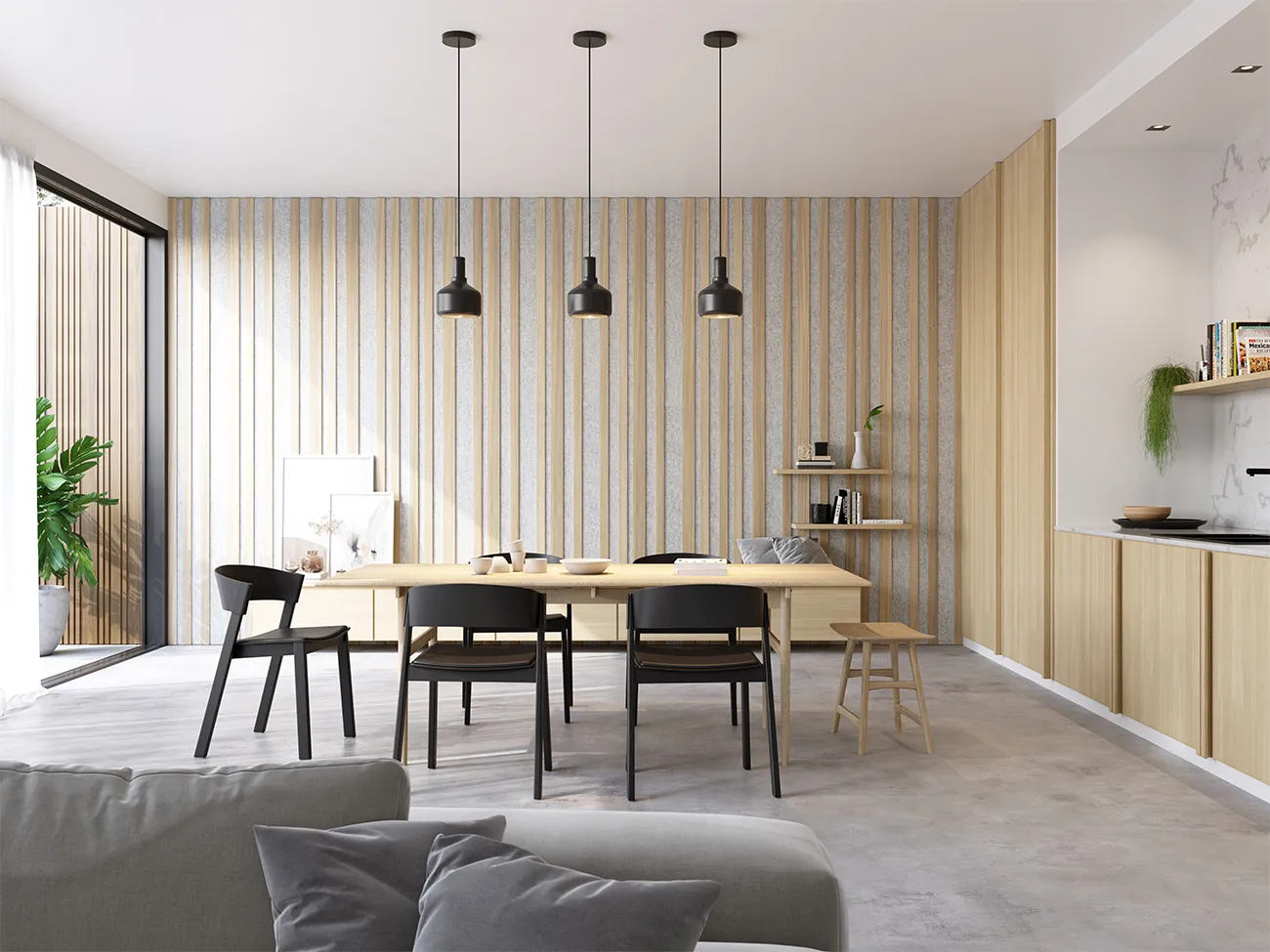
High design appeal
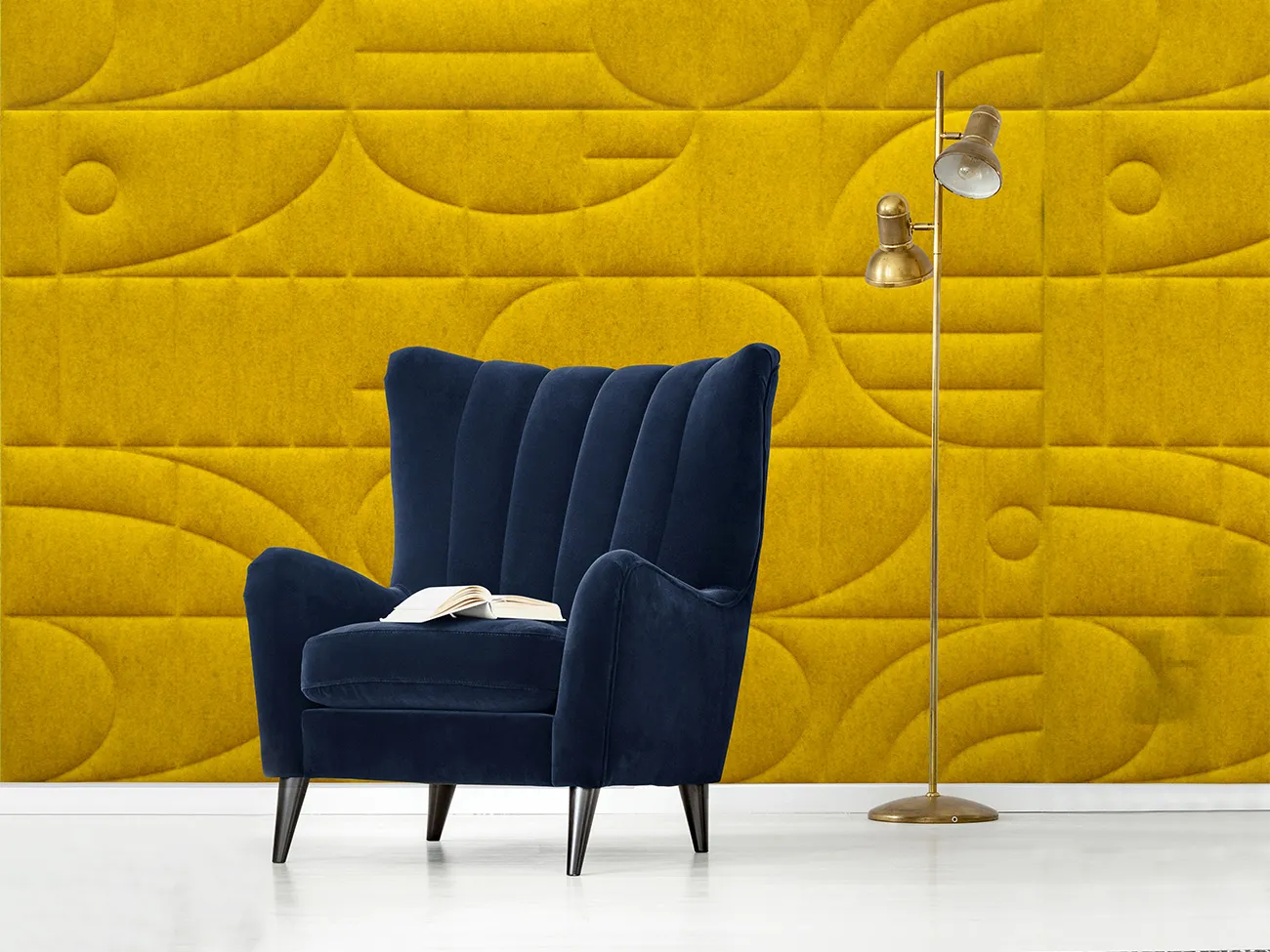
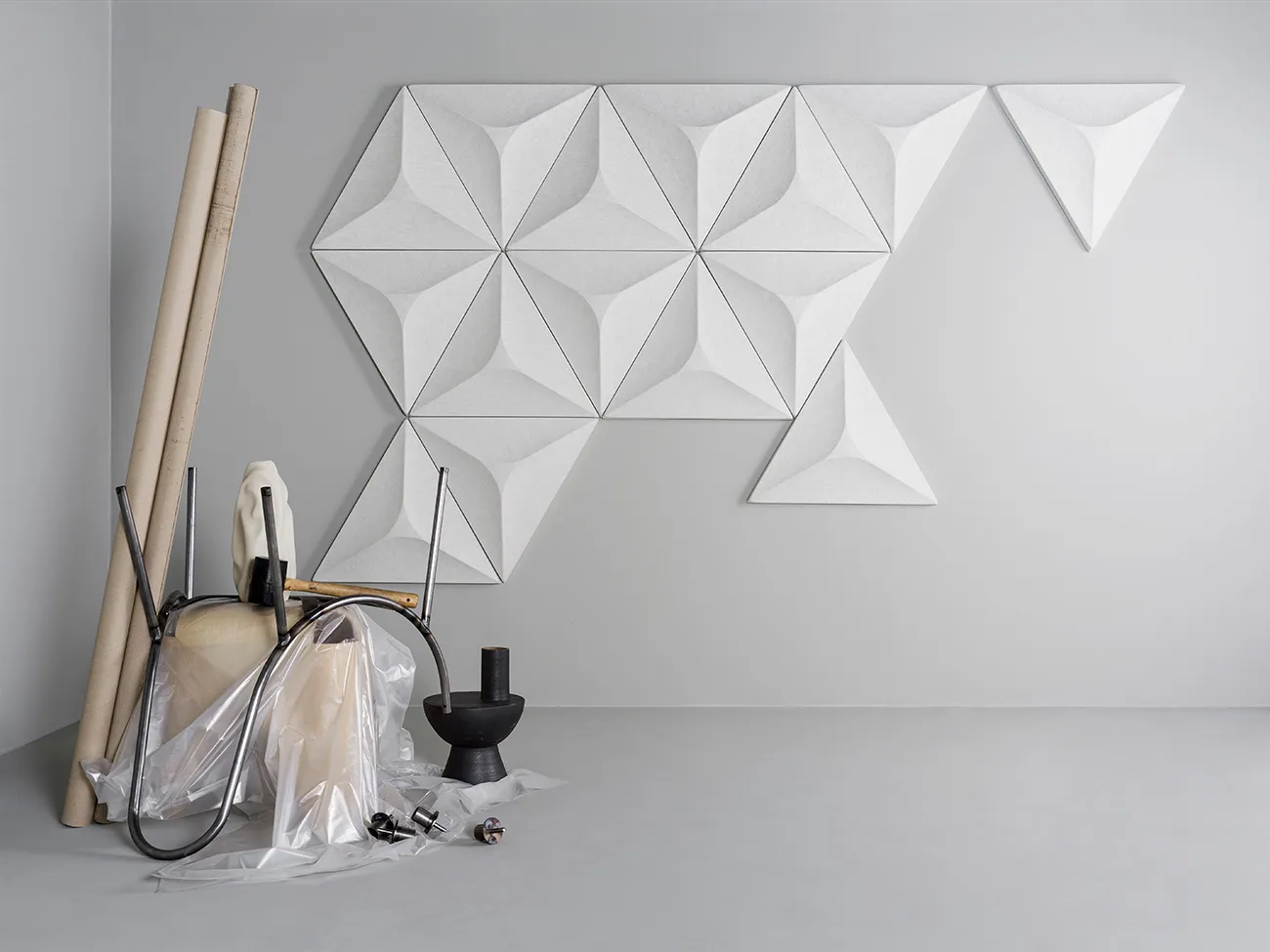
And then, of course, there are modular wall panels, which often combine acoustic comfort with an aesthetic 3D design. New from Italian company Slalom, represented in Belgium by Whoooz, is the thermoformed Jazz panel. Its grid of curved and straight-line patterns, together with the different colours, allows for countless combinations. Also noteworthy is Blå Station’s felt Arc Wall Panel, inspired by the Colosseum in Rome. Swedish company Offecct recently expanded its Soundwave collection with the triangular Jasmine Panel, which allows for playful configurations. There is also Swedish company Baux, with a wide range of wall solutions, including Baux Wood Wool Tiles, made from wood wool, cement and water. They come in eight different shapes that can be combined in endless ways.
Question about this story? Ask your question
Keep following this
Get an email when a new story is published. No account needed.
- ThemePeople-centred interiors
- SubjectInteriors