Trends in natural stone, ceramic and composite materials
Text Eva Goossens
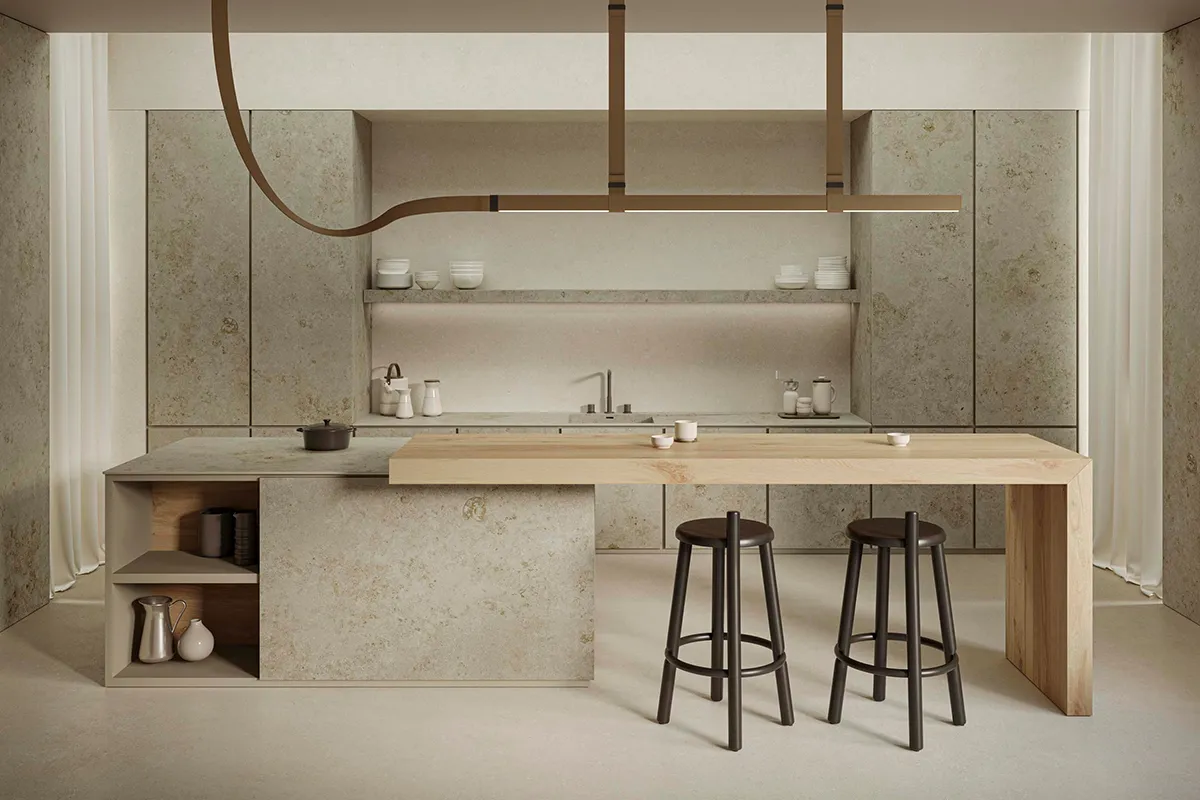
Want to bring the strength and beauty of nature into your home? There’s no better way than with natural stone. Alongside ‘the real stuff’, imitations in ceramic and quartz composite, with highly convincing natural stone designs, are also winning people over. Each material has its own specific properties, strengths and, of course, price tag, meaning they can sit perfectly alongside one another and continue to coexist.
Something for everyone. That seems to be the conclusion when we take a closer look at aesthetic trends in natural stone and alternative stone products. This was clear at both the last edition of Marmomac in Verona and Cersaie in Bologna. From subtle beige tones to a bold mix of textures, colours and striking veining for a rugged design statement that demands, and gets, attention.
Subdued, calming beige tones
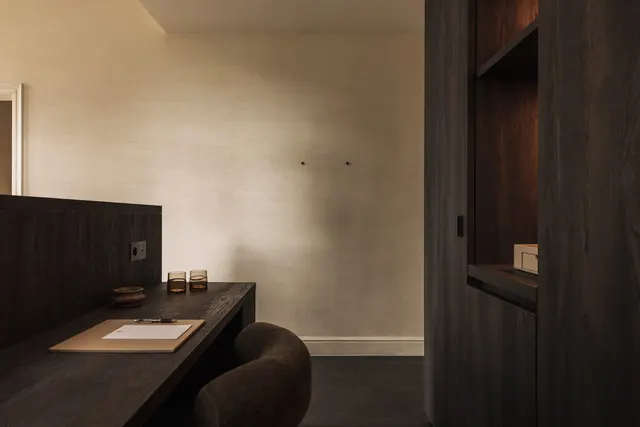
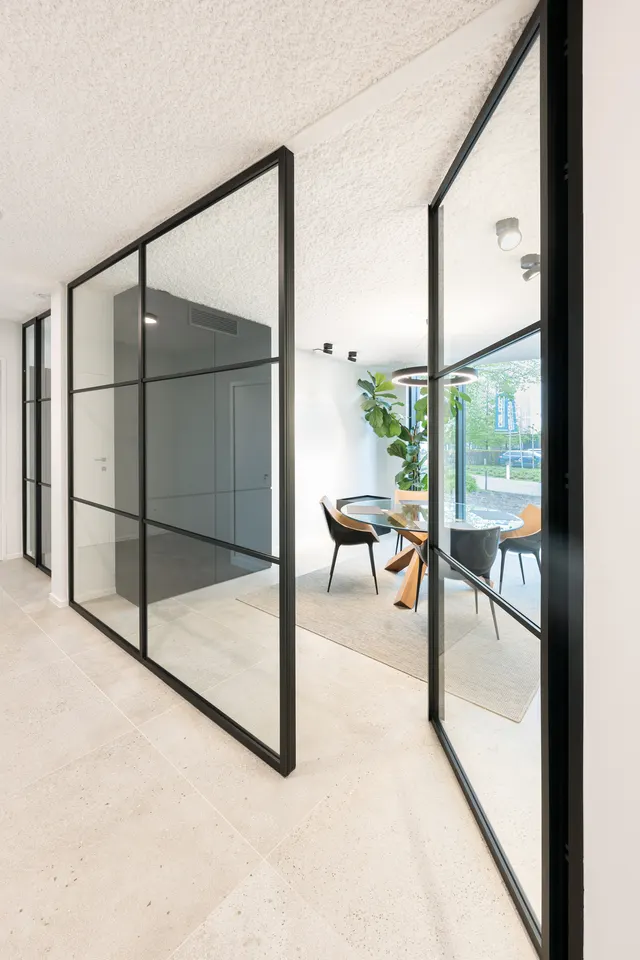
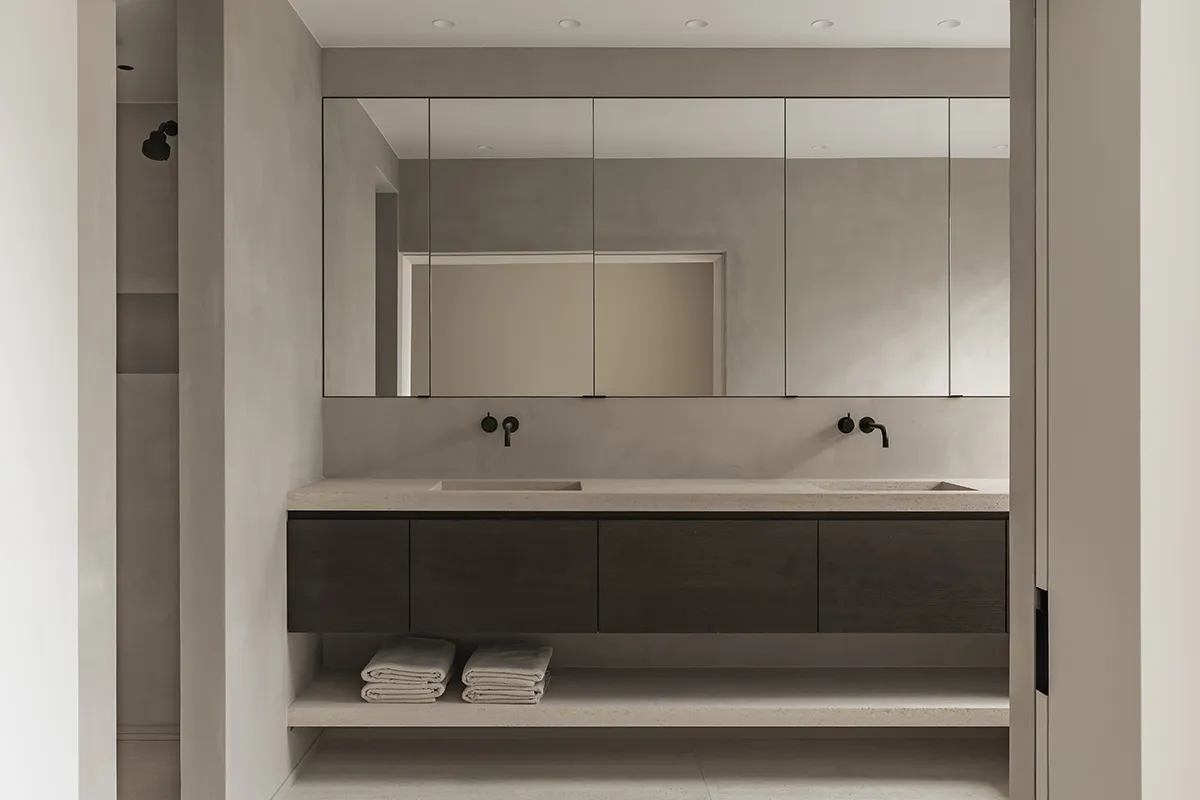
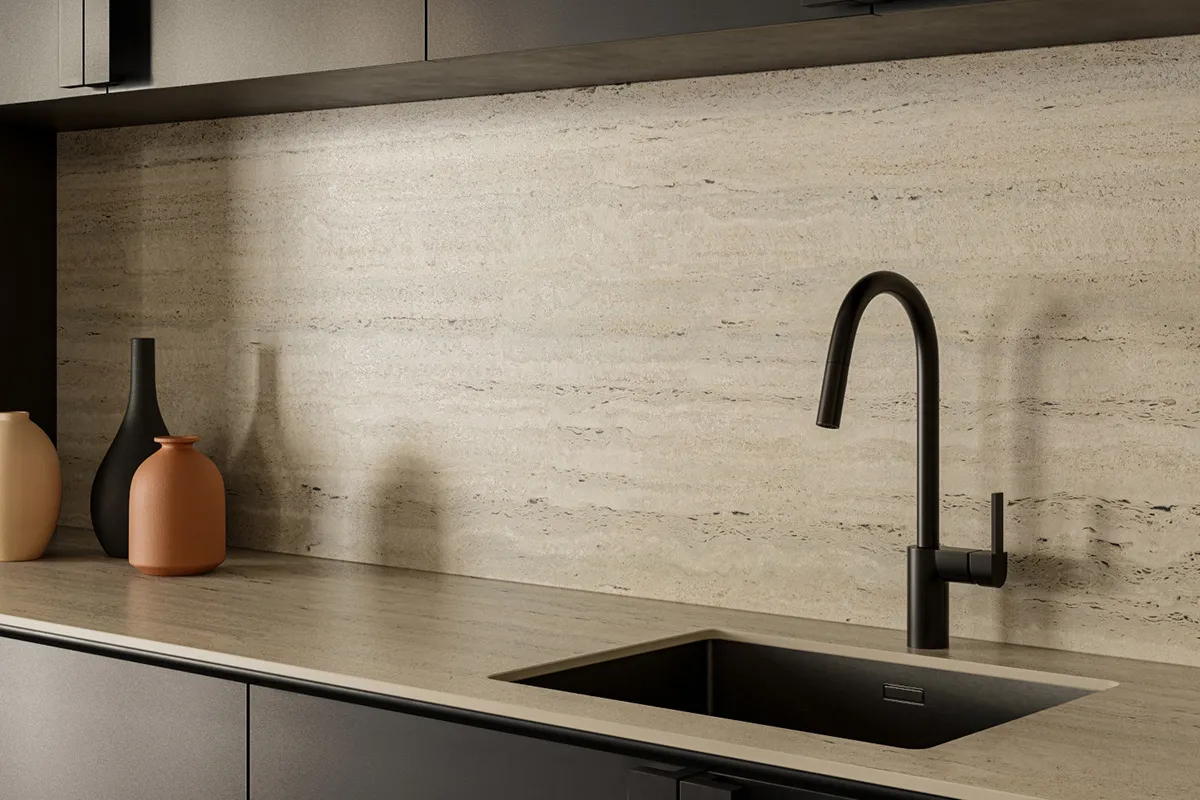
Natural stone is a choice for life. It stands to reason, then, that this natural product, like its lookalikes, is not subject to fleeting interior trends but simply remains beautiful. Nevertheless, we are seeing a number of varied trends, aimed primarily at inspiring. These natural stone options go well beyond the full-blown Carrara marble mania of just over a decade ago, which, incidentally, has still not entirely run its course. For those seeking minimalist aesthetics and a more subdued atmosphere, in keeping with Scandinavian-inspired interiors or Japandi style, there is natural stone in light, finely veined beige, cream and pale grey tones. Think Tesoro Veneziano, Muschelkalk and Steppa Romano. Travertine continues to do well, consistently delivering a warm, serene and timeless look. This mood also inspired Dekton® Pietra Edition by Cosentino, the ultra-compact porcelain surface with a proven track record, suitable for both indoor and outdoor use. The latest collection pays tribute to a range of iconic Mediterranean stones, including Travertine, Piasentina, Ceppo Di Gré and Campaspero. Traditional elegance that endures.
Tactile ceramic surfaces
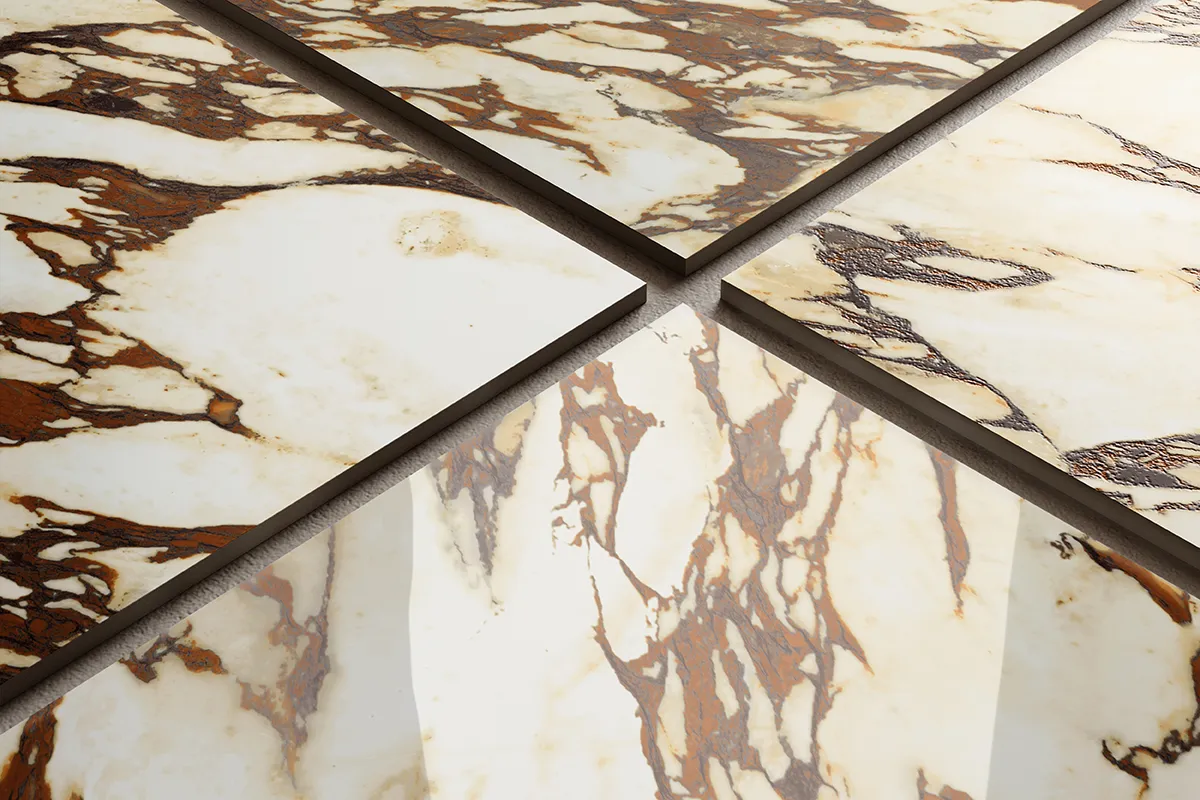
Looking for a little more character? One option is light Jura limestone, with its distinctive fossils. Italian company Marazzi presents Grande Stone Look Jura Beige and Grey, a ceramic alternative in its The Top Collection of XXL slabs. 3D Ink technology creates extra depth and a tactile surface pattern that convinces. It looks just like the real thing! The same is true of Coverlam Top, a technical stone by Spanish company Grespania, which uses ‘Carvedtechnology’ to add a visible and tangible grain texture to its natural stone design. Both brands offer large-format slabs measuring up to 162 by 324 centimetres, in a range of thicknesses, ideal for kitchen worktops, cabinetry and cladding large surfaces.
Casalgrande Padana’s Marmora tile collection offers even more tactile relief veining, with six natural stone designs in a range of colours: Grigio Antico, Lunese, Morato, Nero Antico, Palombino and Pavonazzetto. Finally, SapienStone, part of Iris Ceramica Group, is bringing 4D technology to ceramic surfaces: complete colour and pattern continuity throughout the thickness of the panels. Proof that ceramic materials, too, are constantly evolving.
Power and panache
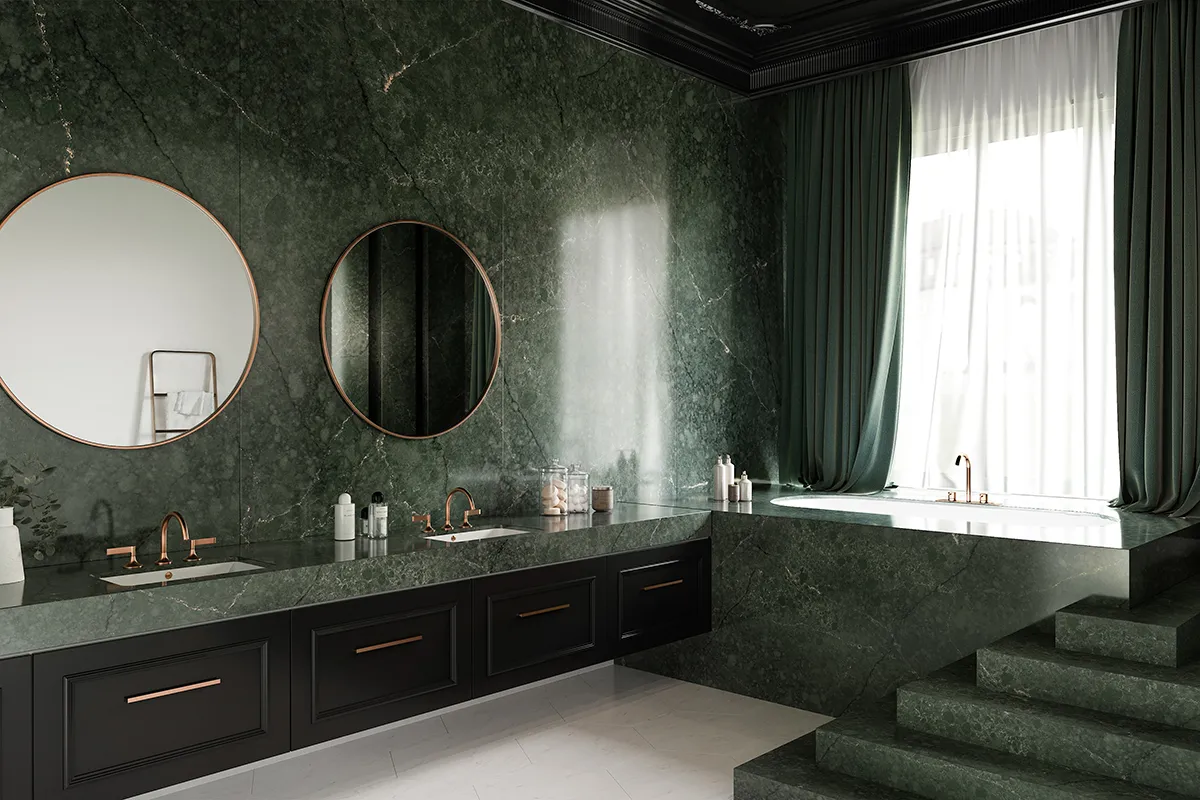
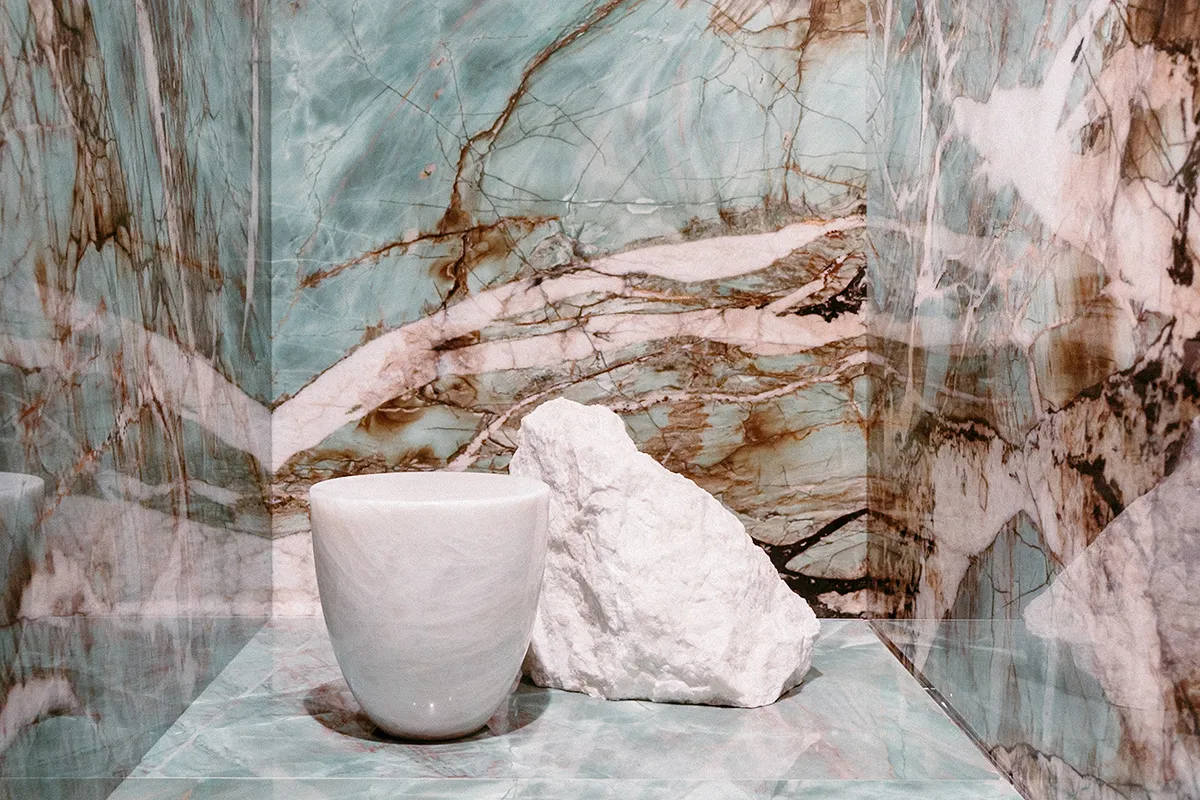
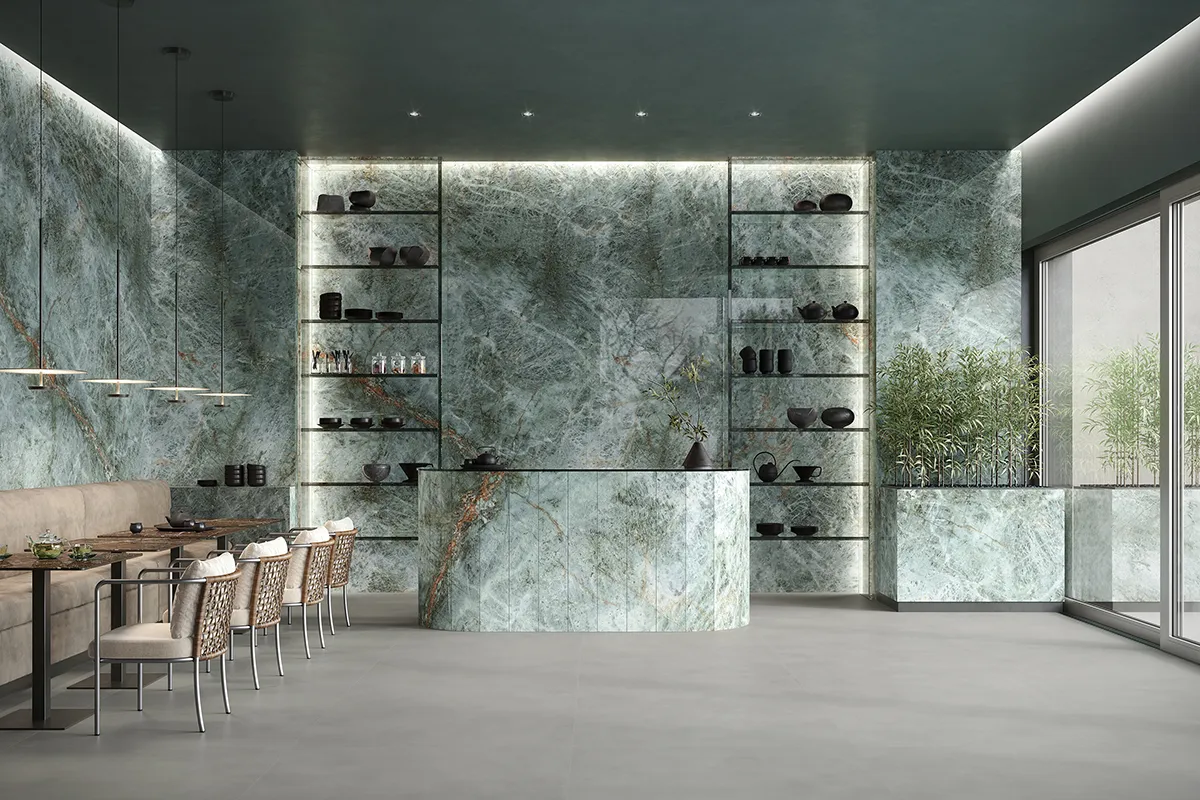
Looking for a little more power and panache in your interior? There are, of course, characterful natural stone varieties with pronounced, high-contrast veining and fossils, as well as rippling colour variations in which dark and light tones swirl together. After a distinctive wow effect? In that case, an extra dose of colour is called for. Green tones are especially striking, including in ceramic and quartz composite imitations of natural stone. Love it or hate it. Atlas Concorde’s Marvel Diva collection features ten new marble designs that look best on large slabs. There’s even more striking green in Le ChicBohème by Silestone®XM, a quartz composite by Cosentino that makes a bold statement, particularly in Jardin Emerald. Its intricate, interlocking veins are made possible by a new casting system, which creates an integrated veined design across the entire surface and through the full thickness. This allows edges and cut-outs to be finished with complete continuity, even on curved, stamped or milled cuts. Finally, there is the striking use of Onyx, a translucent natural stone that can be combined with backlighting for extra effect. But even without this lighting effect, Onyx captures the imagination. At Cersaie, Mirage Ceramiche presented its new Onyce range, a refined interpretation of Onyx in ceramic stoneware, in five colours: Coconut, Lead Grey, Champagne, Argan and, last but not least, Rose. For those who like to see life through rose-tinted, more extravagant glasses.
Question about this story? Ask your question
Keep following this
Get an email when a new story is published. No account needed.
- SubjectInteriors