Modular seating in Avonite solid surface
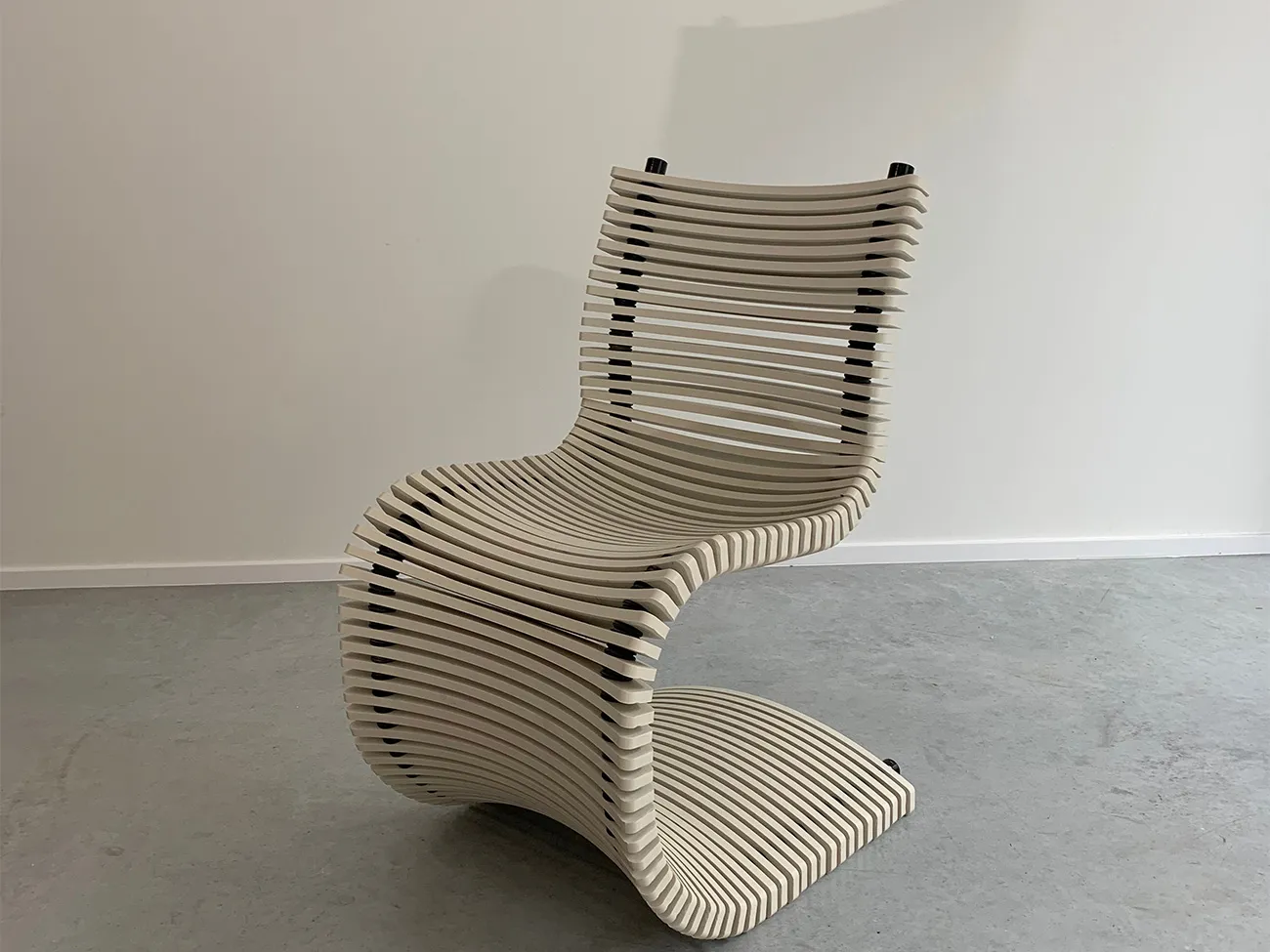
There is little more to tell you about the innovative nature of solid surface and its versatility. From kitchens and bathrooms to retail interiors, façades and medical applications, solid surface is finding its way into these settings. Now you can add the furniture sector to that list. Proof could be seen at the Please, Have a Seat exhibition in Kortrijk.
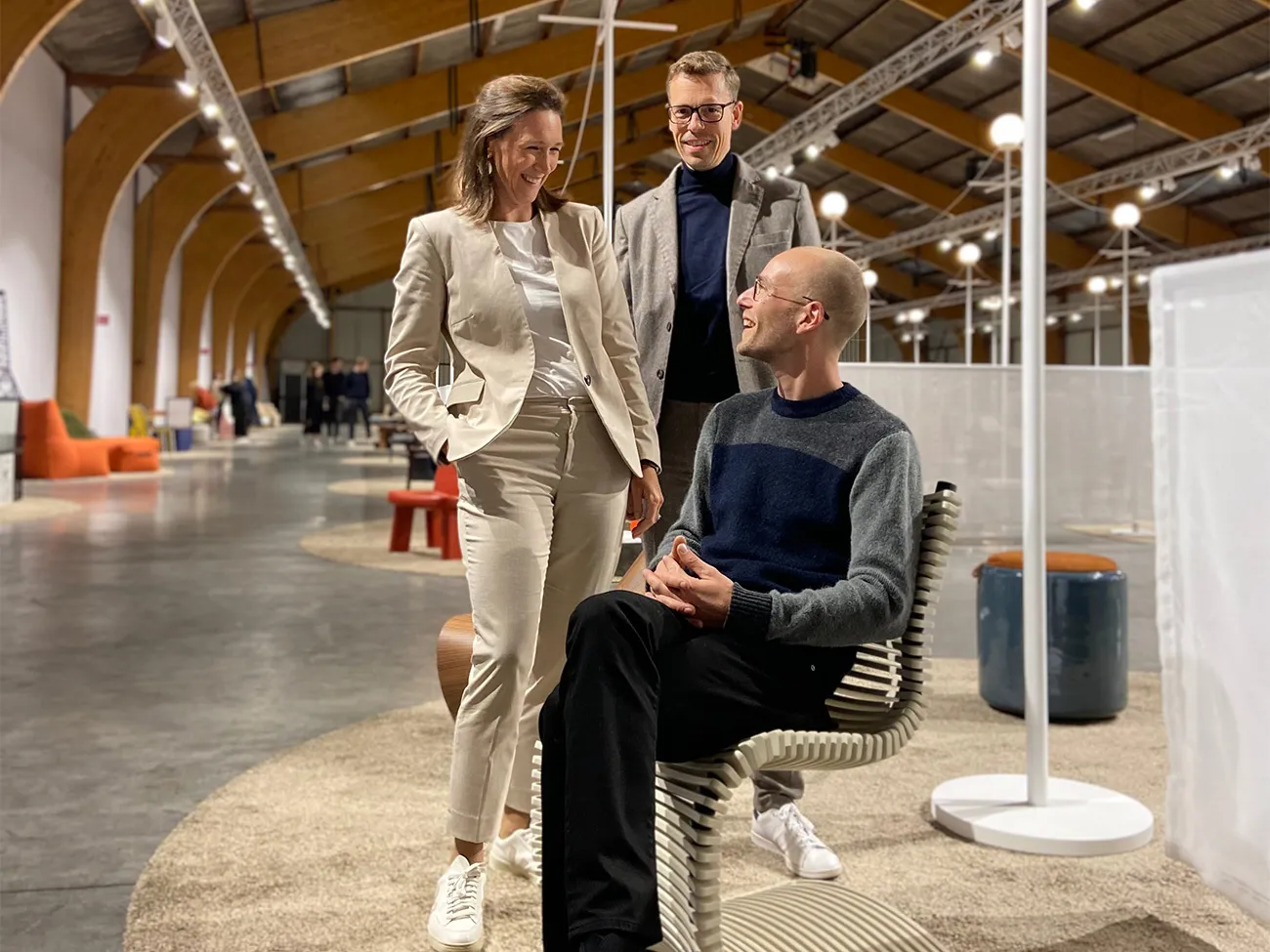
There was no Biennale Interieur this year because of the well-known virus, but an exhibition put chairs and seating by both historic and contemporary designers in the spotlight. Please, Have a Seat provided the setting for a remarkable collaboration between interior and furniture designer Benjamine Vleugels of Atelier Bens and solid surface specialist Engels Surfaces. The fruit of this collaboration is the BENDIT chair, made from Avonite Bone.
Solid surface instead of wood
BENDIT is not a new design. Vleugels developed the model several years ago, but in wood. Engels Surfaces was so taken with the design that it asked the designer to create a solid surface version as an experiment. “A great opportunity to use the growing range of solid surface materials in a unique yet functional way,” says Engels Surfaces. Vleugels adds: “The material is familiar to me, as I have regularly used it for furniture finishes and kitchen worktops. In the original design I use birch plywood. While this is not suitable for certain outdoor applications, solid surface is, thanks to its non-porous nature. It can therefore be left outdoors in all weather conditions, and is also easy to maintain. There is also a huge choice of colours in the Avonite range. We opted for a neutral cream shade, Bone, but BENDIT can be made in any colour to meet the customer’s requirements.”
Original design slightly adapted
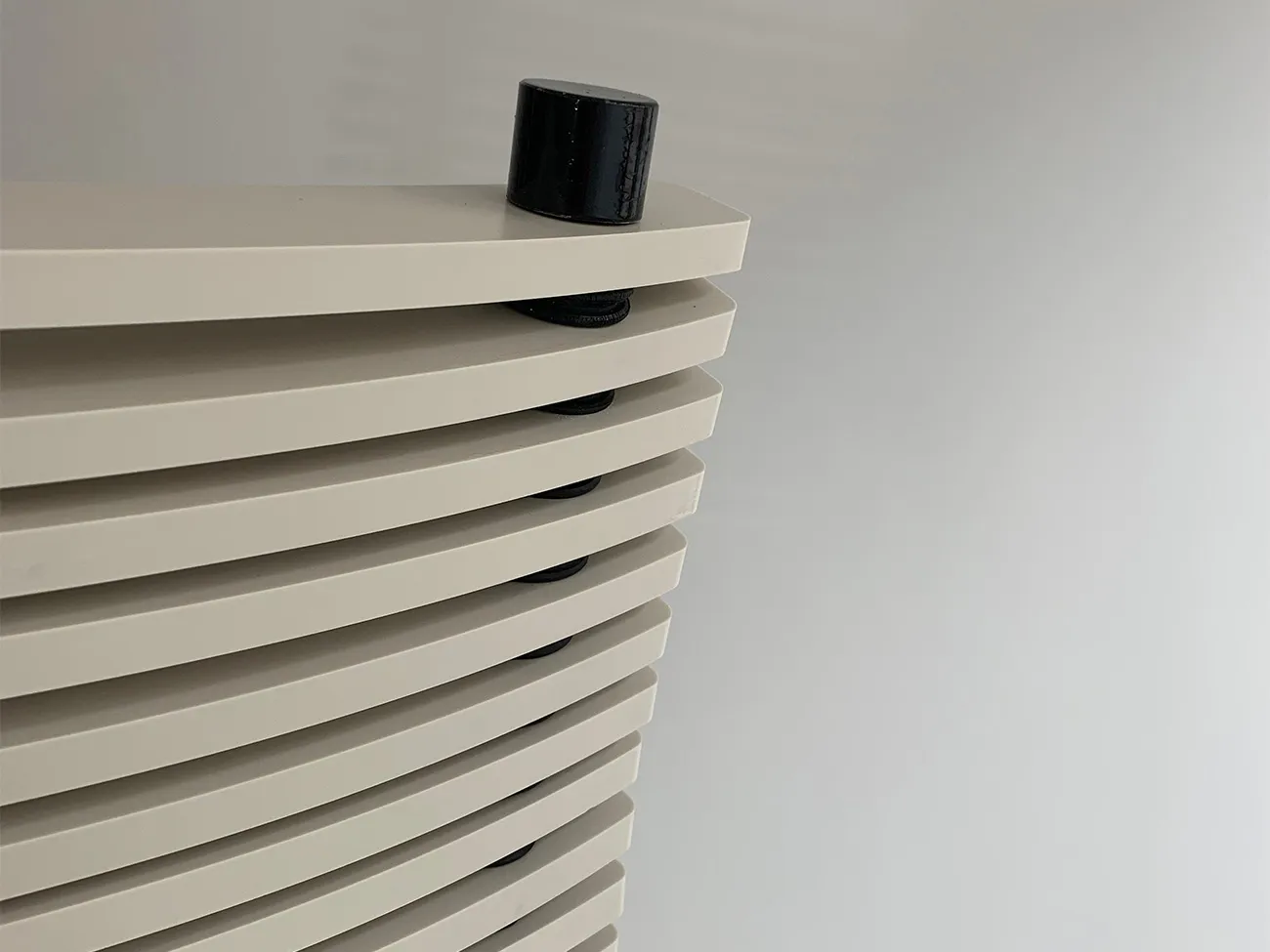
Both the Avonite solid surface version of BENDIT and the original wooden version involve a combination of handwork and machine preparation. The plywood slats, like the solid surface slats, are first milled to the same precise shape, then slid over the metal frame and tensioned by hand with the help of rubber strips. “A few minor design changes were nevertheless needed,” explains Vleugels. “Solid surface is more restricted to standard thicknesses than wood. I use 12-millimetre sheet material, which is slightly thinner than the plywood in the original design. This does not affect the chair’s strength, but it did mean I needed more slats, 75 instead of 68. The radius of the metal frame also had to be adjusted slightly.”
Outstanding properties
We have already mentioned solid surface’s non-porous nature and resistance to all kinds of weather conditions, as well as how easy it is to maintain. But Avonite’s strength and scratch resistance were also decisive factors in developing a solid surface version of BENDIT. “It makes for an extremely durable piece of seating,” says Vleugels. “Combined with the modular nature of the construction, I would say the chair has an unlimited lifespan. Should any damage occur, the damaged slat can easily be replaced with a new one or simply repaired.”
Question about this story? Ask your question
Keep following this
Get an email when a new story is published. No account needed.
- ThemeKitchens and bathrooms as architecture
- SubjectInteriors