Future-proof living with a home lift
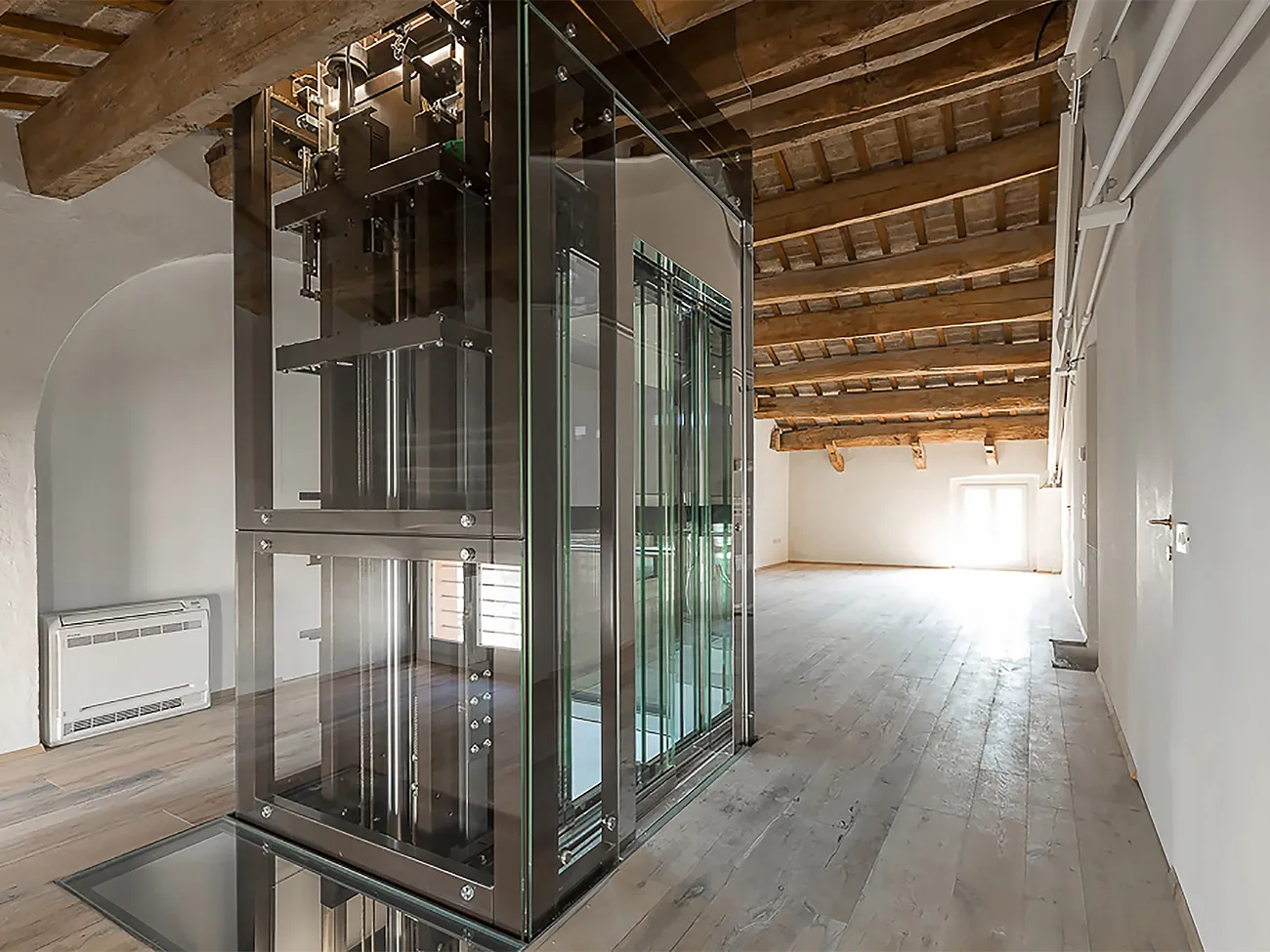
Homes with a lift are no longer the exception. In fact, interest in home lifts has risen significantly over the past year. And once again, the coronavirus pandemic has played a part.
The pandemic has made us all think about our homes, both now and later in life, when we would prefer to remain in our own home for as long as possible. What’s more, a home lift adds comfort and significantly increases a property’s value.
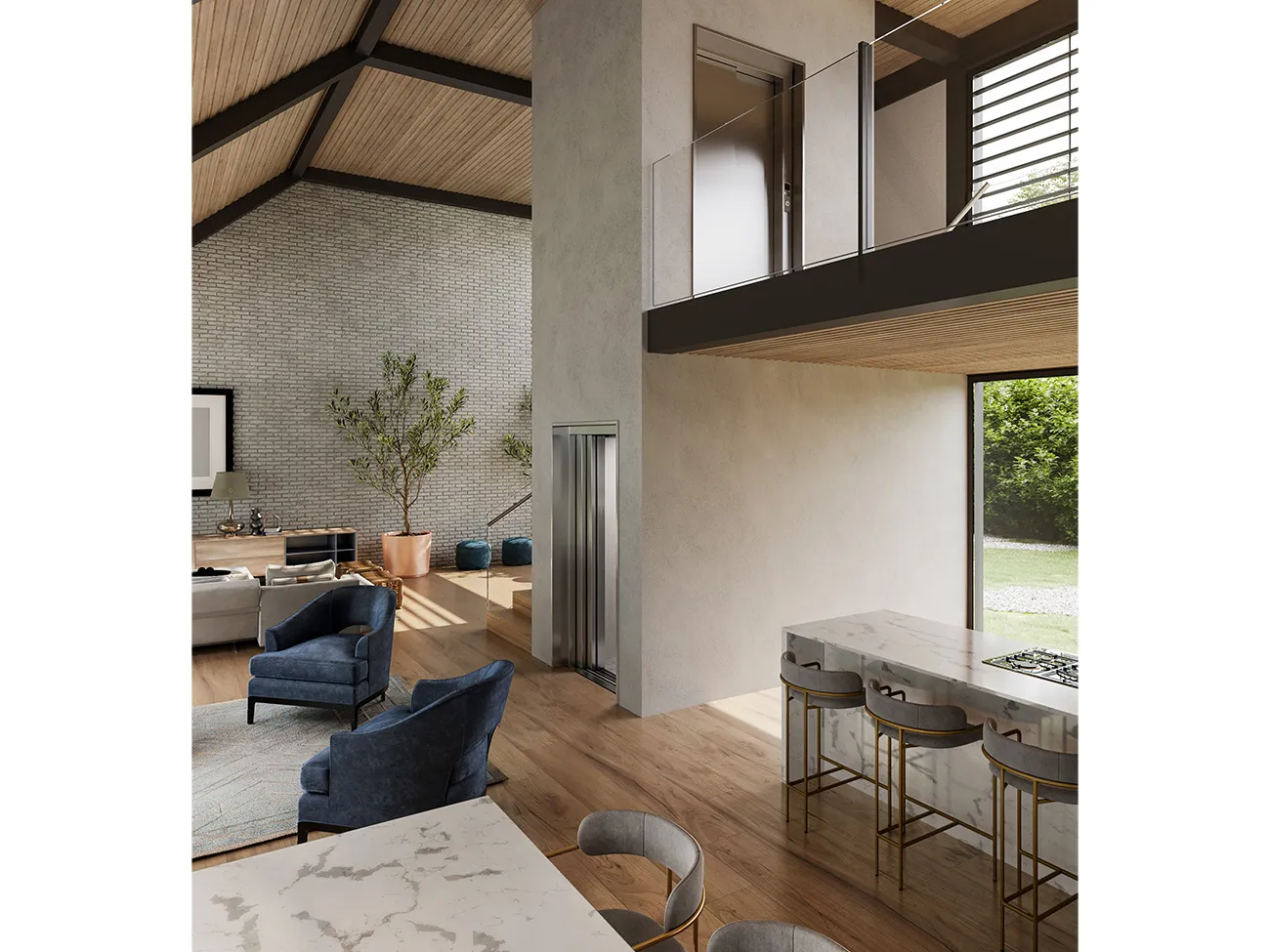
As an architect, you design a home to meet the needs of today’s clients, as well as their future needs. It is therefore worth considering the possibility of a home lift from the outset and discussing it with the client. If the lift is not to be installed straight away, space can be set aside for it if desired. The advice is to consult a home-lift specialist in good time. A brief discussion beforehand can help avoid construction problems.
Traditional passenger lift versus home lift
Although we call them ‘home lifts’, the term does not tell the whole story. Home lifts are installed not only in detached houses, exclusive villas and duplex apartments, but also in multi-occupancy homes, cohousing projects, hotels and restaurants, shops, offices, doctors’ surgeries and public buildings such as libraries and schools. A home lift can carry up to 5 people and serve up to 5 floors. So how does it differ from a traditional passenger lift of a similar size in a comparable building? The latter are subject to the statutory ‘Lifts’ directive, whereas home lifts must comply with the less stringent European Machinery Directive. As a result, home lifts have a limited speed of no more than 0.15/s. They are therefore slower than traditional lifts. Slower, but also more economical to run, which is a definite advantage.
Inspection and maintenance
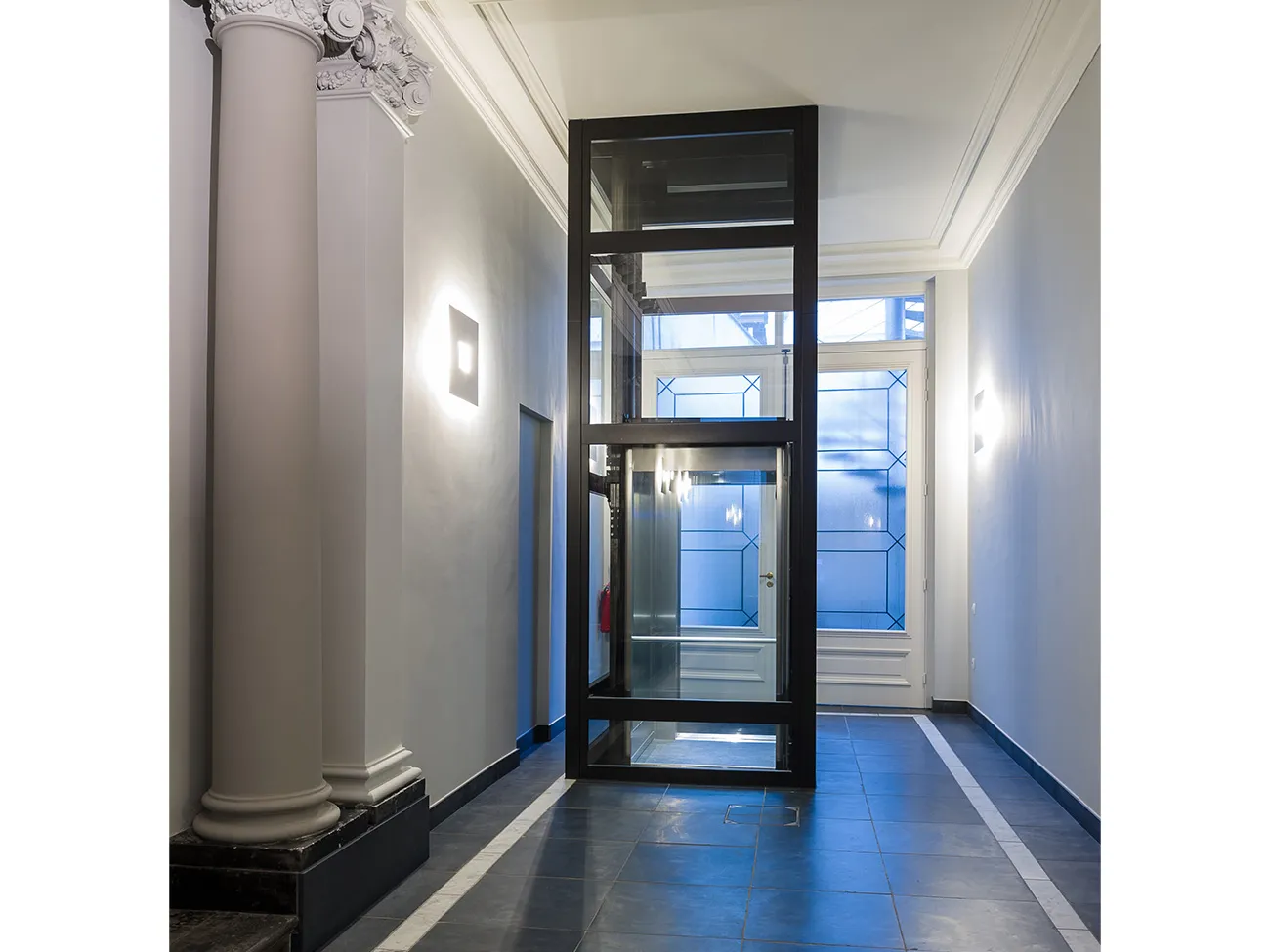
Periodic inspection is not compulsory either, unless the home lift is used by staff, including domestic staff. In this case, the General Regulations for Labour Protection apply and inspection is mandatory. Leaving this exception aside, home lifts are also not subject to compulsory periodic maintenance, although this is of course strongly recommended. Every home lift must, naturally, comply with a number of safety requirements set out in the Machinery Directive. These include an automatic emergency lowering system in the event of a power failure, two-way communication and the use of safety glass.
Installation
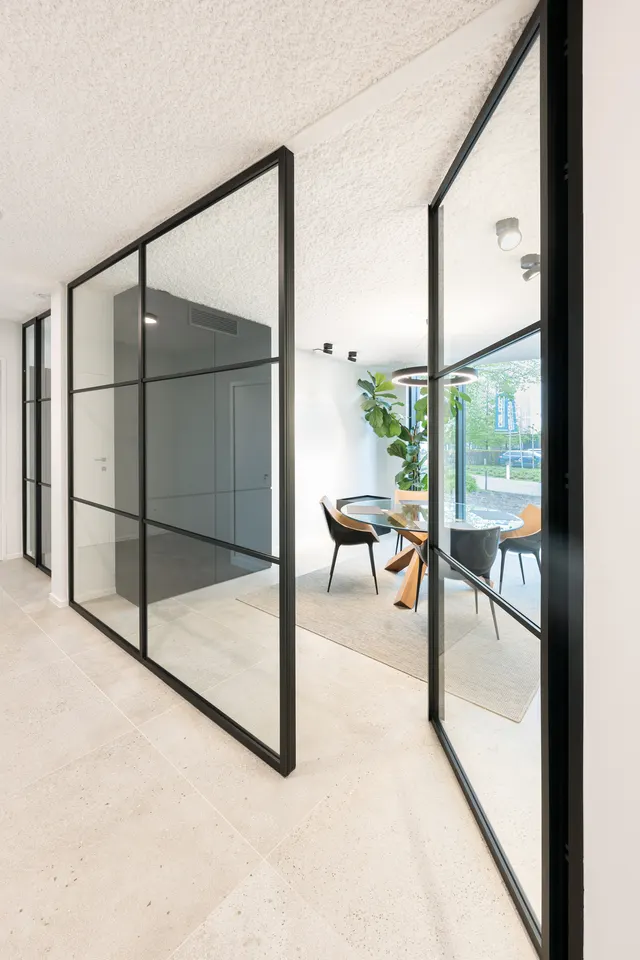
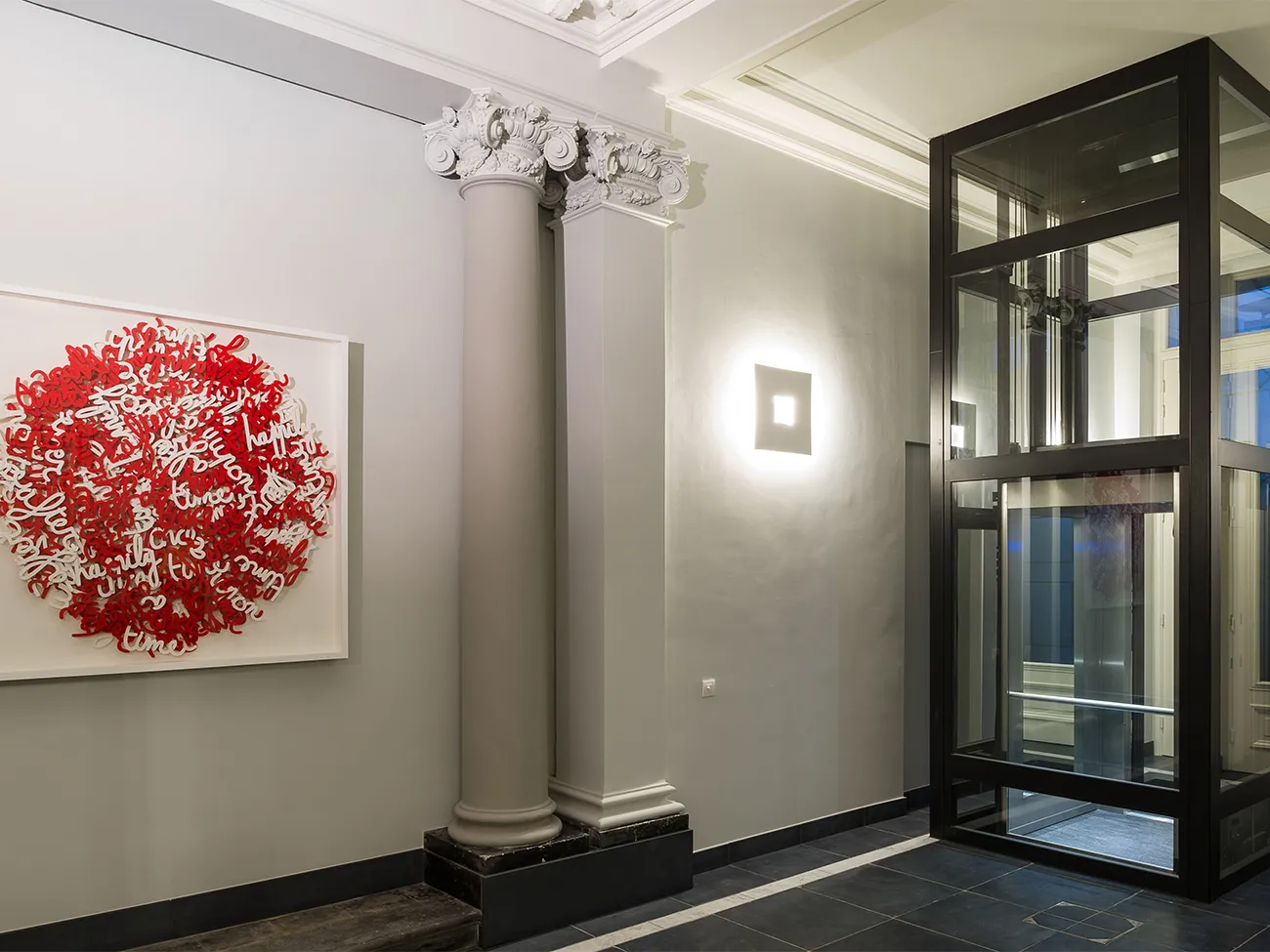
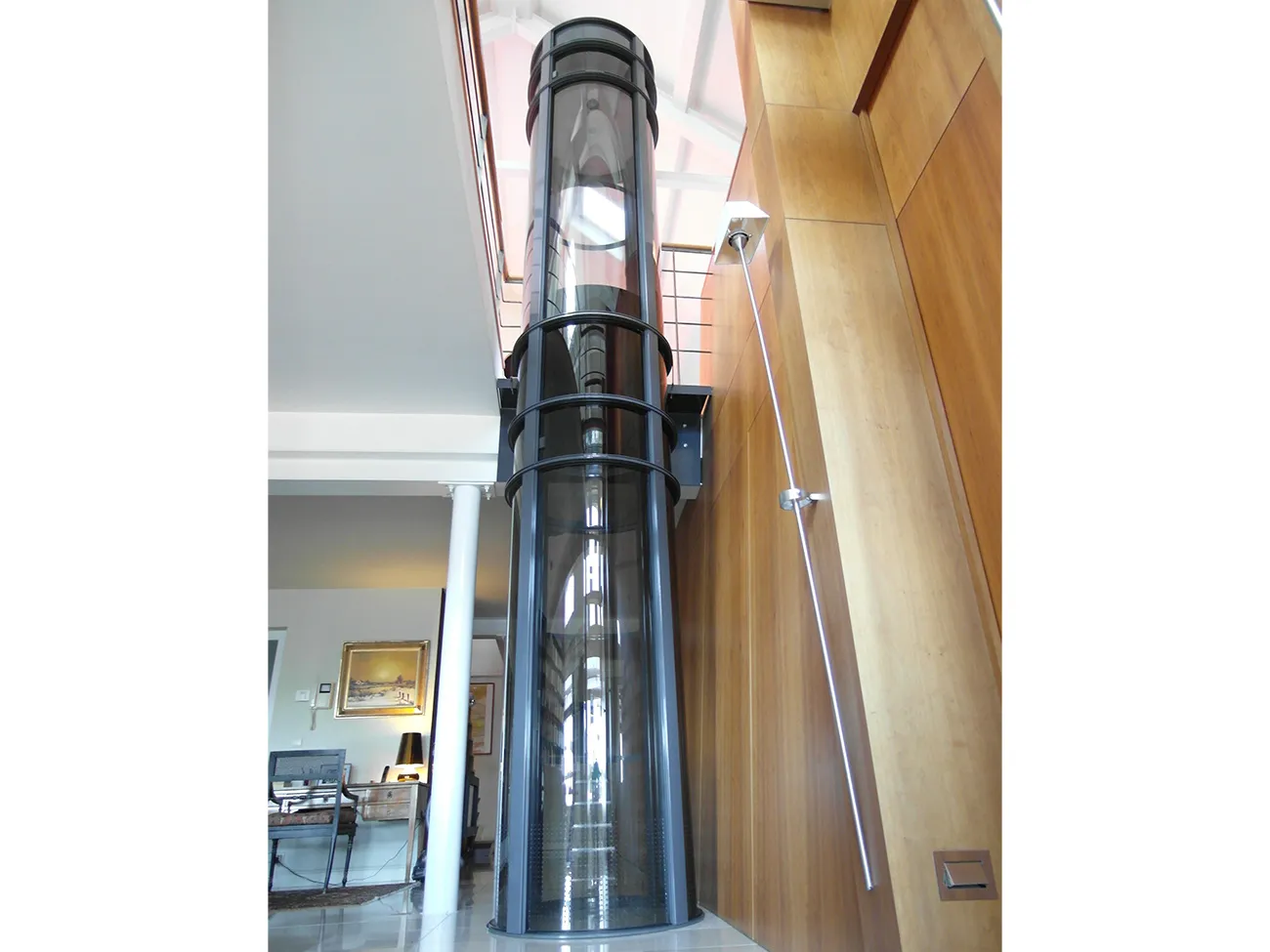
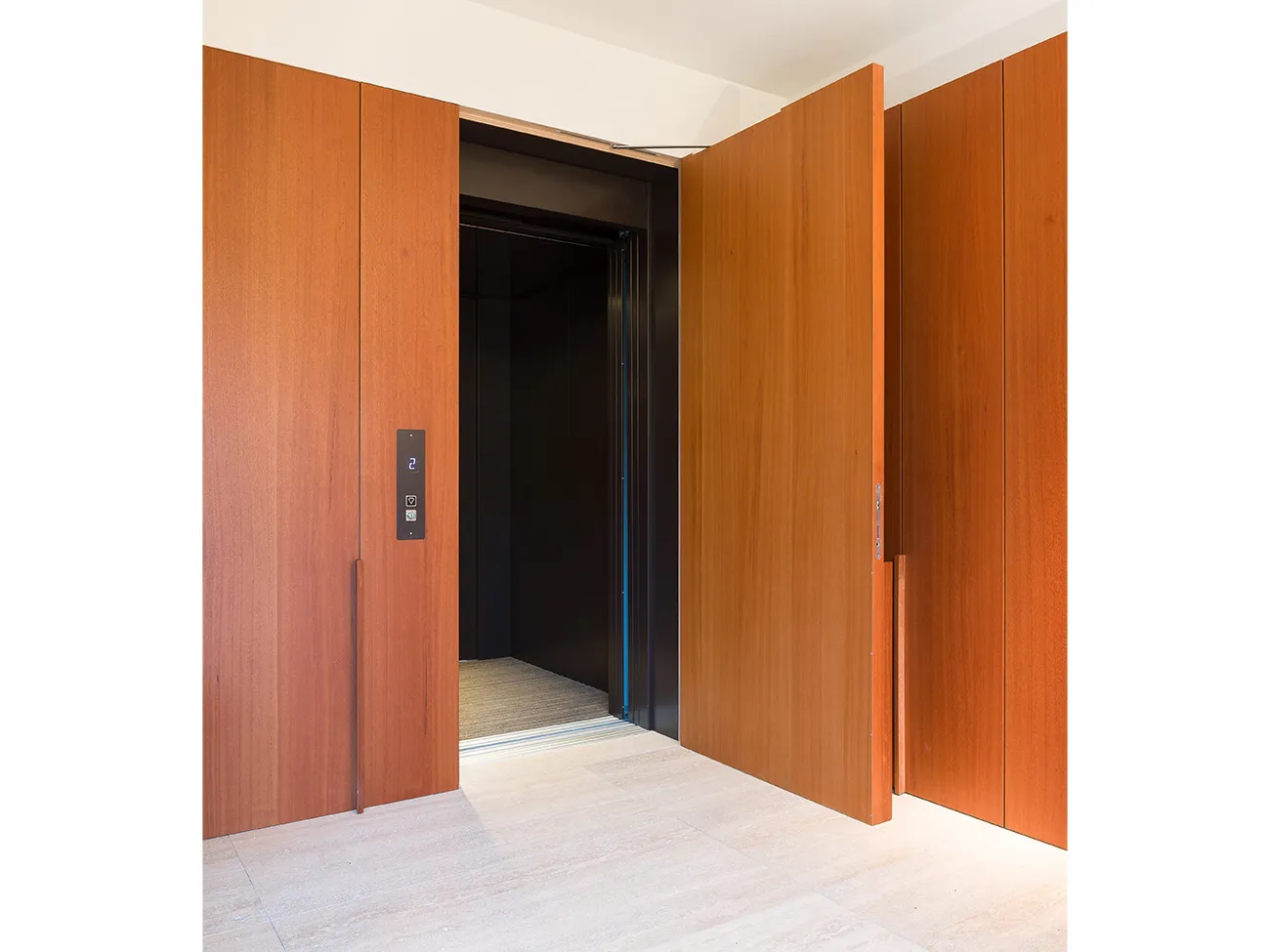
As standard, a home lift is installed in a lift shaft with one load-bearing side, preferably a sturdy, at least 14-centimetre-thick wall built from solid concrete blocks. A steel section or other sturdy load-bearing elements can be used as an alternative. In renovation projects, the lift shaft can sometimes be installed outside the house, if the property allows. As well as a masonry lift shaft, a freestanding structure is another option. Combined with safety-glass walls, this can create a panoramic finish. The lift is highly visible in the interior, becoming a focal point that adds a sense of exclusivity.
Drive systems
No two home lifts are the same, and the same applies to the budget required. The size and drive system are two key factors in determining the price. There are four types of drive system: screw drive, hydraulic, gearless (magnetic) and, finally, vacuum. In the more exclusive segment, home lifts with a gearless or magnetic drive are gaining ground rapidly. They use a magnetic motor, like the kind found in an electric car. This drive technology is exceptionally quiet and energy-efficient, with very smooth movement and extremely precise levelling. The drive is subject to little wear and does not heat up with frequent use, making it ideal for settings such as hotels, offices and multi-occupancy homes. Vacuum lifts are also exceptionally quiet, energy-efficient and low-maintenance. Widely used in America, they are now making their way here too. This cable-free lift, with no pulleys or weights, uses a vacuum pump: the lift car acts like a piston in a cylinder, with the vacuum drawing it upwards. It is, of course, completely safe and compliant with the European Machinery Directive that applies to all home lifts.
Options and customisation
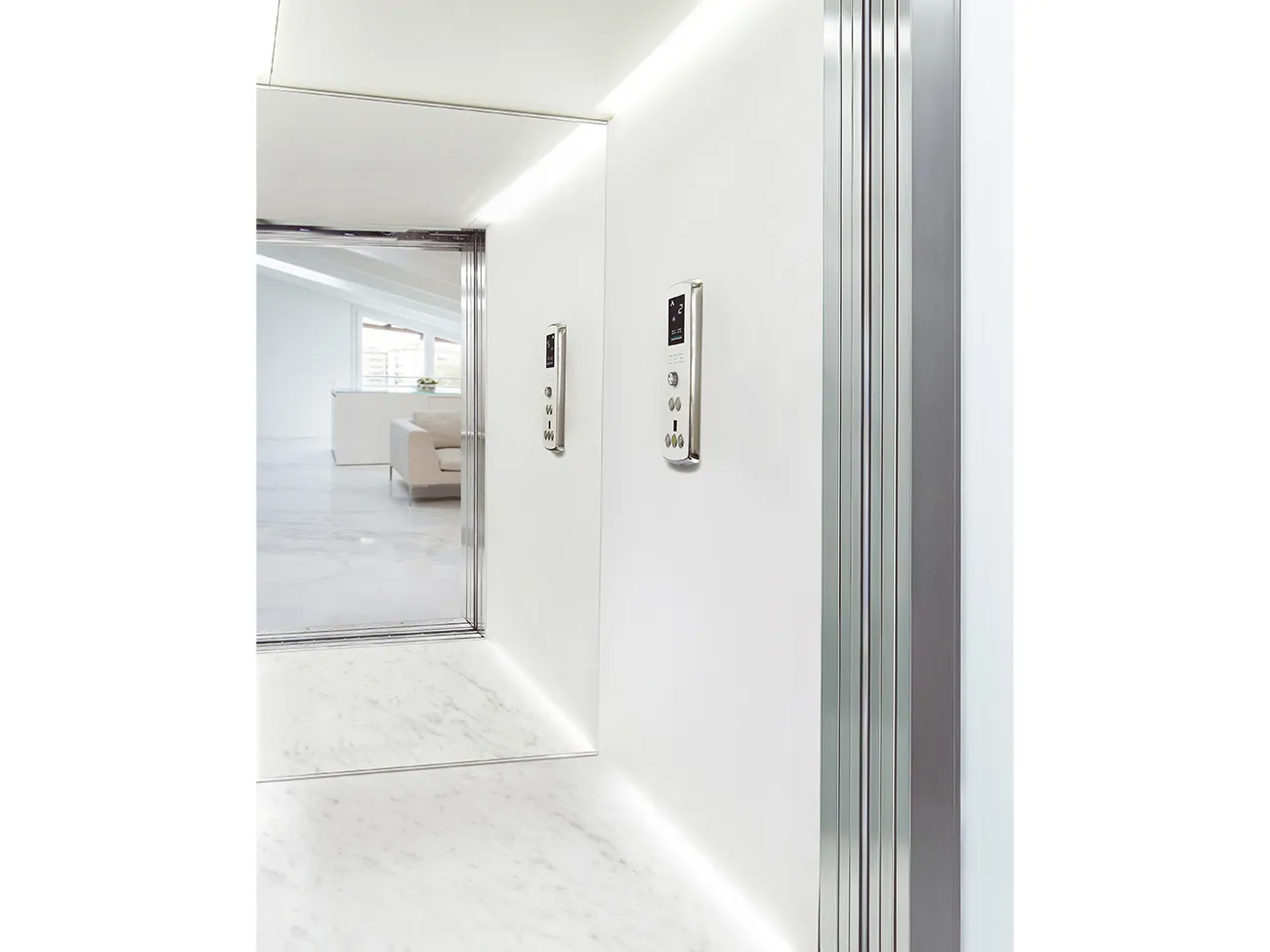
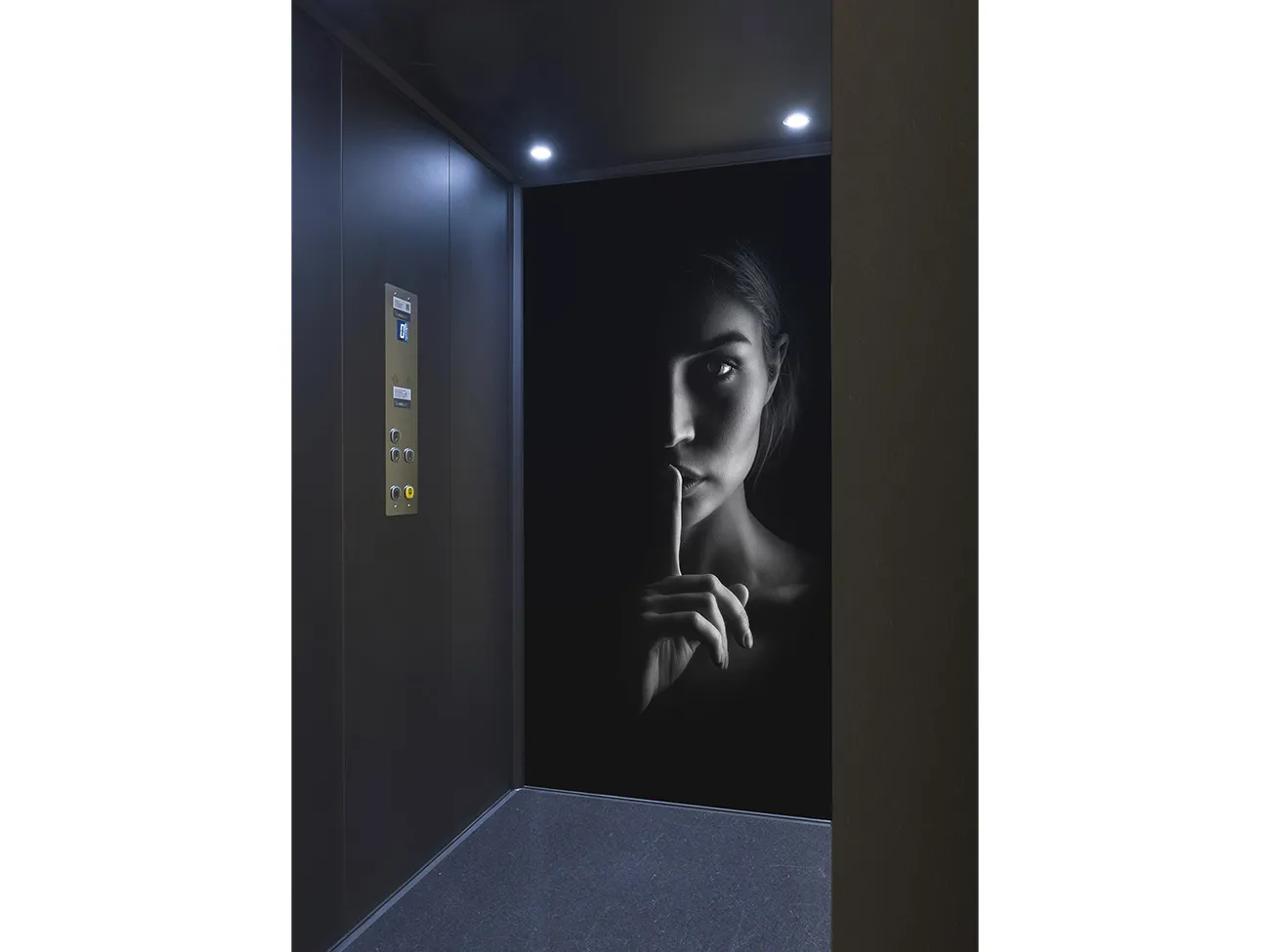
There is a wide range of choices and options, which also affect the price, from an XS standard lift with a hinged door and hold-to-run controls to a fully equipped five-person lift with one-touch automatic controls and a customised interior finish. Options include the walls, floor and LED lighting. Doors can be hinged or space-saving sliding doors, with up to four possible entrances on the same side, opposite sides or adjacent sides. There are also many access-control options, including private access to one or more floors using a key switch, access card, fingerprint scanner or keypad. The push buttons can also be integrated into the home automation system if desired. Want an audible announcement of each floor? That can be arranged. Finally, quality and service go hand in hand with home lifts, so always check that after-sales service is actually provided. One useful option is a Wi-Fi module that enables remote diagnostics. Smart technology for greater peace of mind and comfort.
Question about this story? Ask your question
Keep following this
Get an email when a new story is published. No account needed.
- SubjectInteriors