Achieving sustainability certification with smartly controlled taps
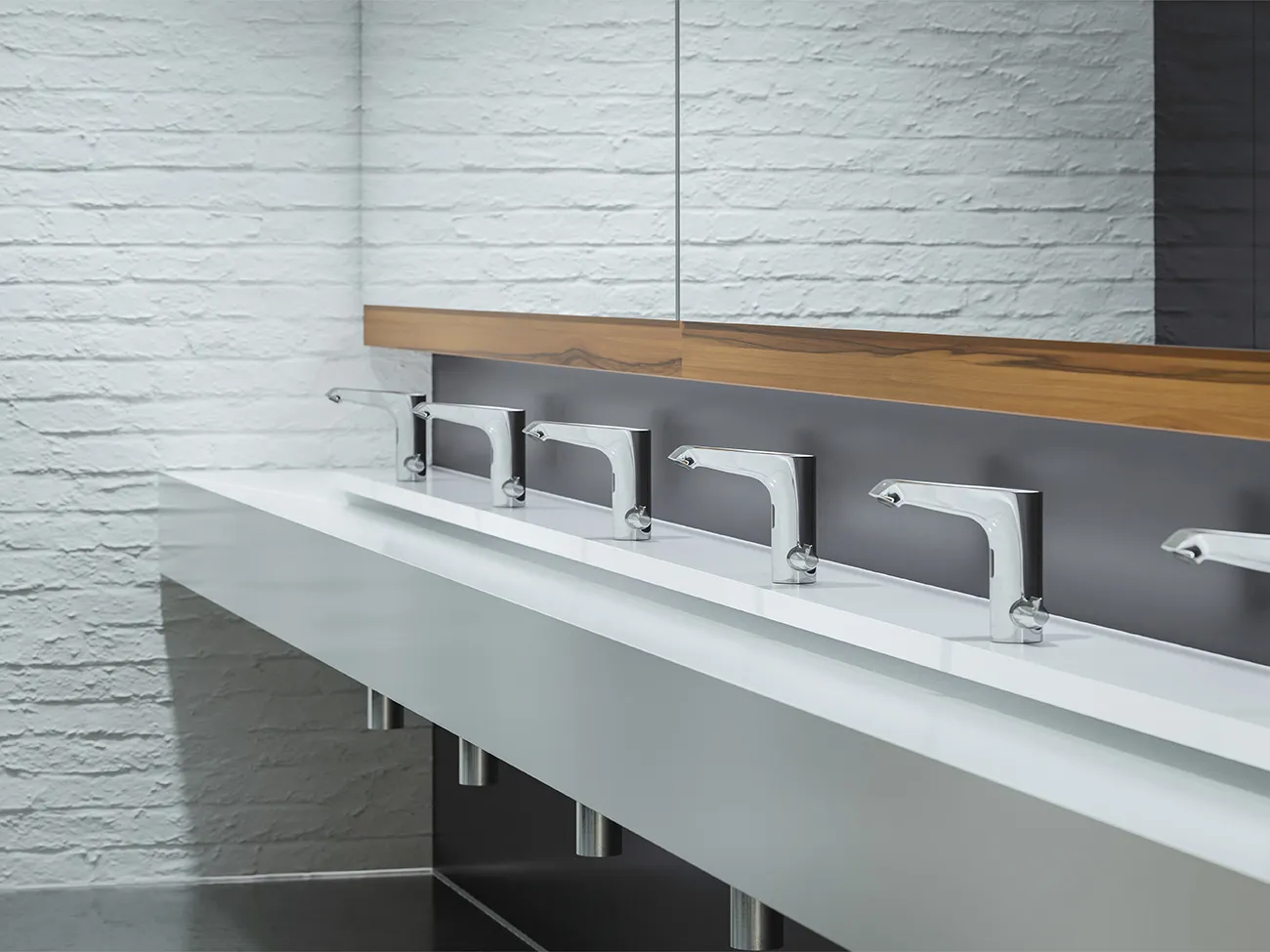
Innovative water management in buildings
All parties in the construction sector face the same pressing challenges. Manufacturers, clients, architects and engineering consultancies are all grappling with the question of sustainability. How can we use raw materials, water and energy more sparingly? Our high standards for comfort and hygiene make the answer far from straightforward, and innovative solutions are needed.
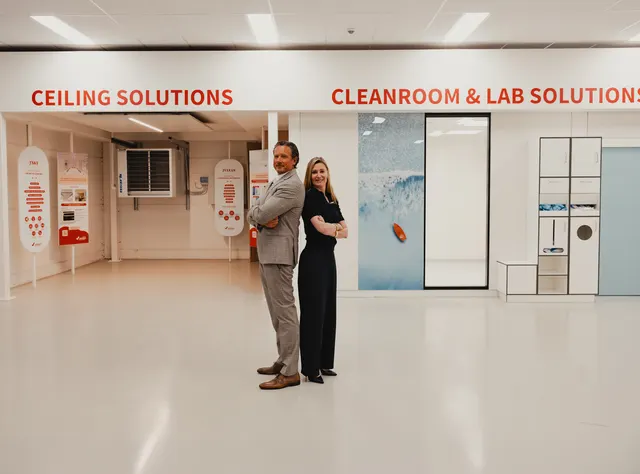
Dirk Vanden Breede, director of Schell Belgium, explains that the tap manufacturer is working towards greater sustainability in two ways. On the one hand, it is making major efforts to manufacture and transport taps in a circular and environmentally friendly way; on the other, it is developing systems that help users maximise savings on water and energy. This two-pronged approach has earned Schell taps and systems extra points towards BREEAM sustainability certification.
Respect for nature is in the company’s DNA
Around 90 years ago, Hubert Schell founded his company in Germany’s Sauerland, a region rich in forests, lakes and rivers. “Much of the drinking water for the region itself and nearby Cologne comes from the Sauerland’s lakes and rivers. It is therefore vital to keep them clean. Our chrome-plating department is close to a watercourse that feeds a reservoir for drinking water. So, from the very beginning, we have attached great importance to environmentally friendly production,” says Dirk Vanden Breede.
And Schell continues to make progress in this area. “We continuously monitor our production process to make it as energy-efficient as possible. All the electricity used in our factories and offices is 100 per cent green. We recently replaced around 70,000 fluorescent lamps with smart-controlled LED lighting, and are working hard to electrify our fleet. Schell taps also do not have to travel far to reach the Belgian market, which in itself limits transport emissions.”
Cradle to cradle and against planned obsolescence
The manufacturer has always followed the cradle-to-cradle principle and designs its products to last. Dirk Vanden Breede explains: “Our taps are made mainly of brass, which is an extremely circular material. During production, almost half of the brass used is lost through deburring and milling. We send all this brass waste back to the brass manufacturer to make new rods. We also take back old taps that no longer meet requirements so they can be recycled.”
Of course, sustainability is not just about using recyclable materials; it also means keeping material use to a minimum. This principle is built into Schell products too. “Because our taps are mainly used in public spaces such as stations, public buildings, offices, swimming pools and schools, we make them very robust so they last a long time. These are places where several taps are often installed side by side. That is why we give them a timeless design and keep them in our range for several years: if one tap in a row needs replacing, the same model is often still available, but with the latest technology.”
High hygiene standards with low consumption
“Did you know you can save 40 per cent of your water with the well-known ‘Schell tap’?” asks Dirk. “Unlike a simple stop tap, which can only be turned fully on or off, you can turn our tap off gradually. This means you can wash your hands for longer while using less water. In buildings with a high footfall, the extra cost compared with another angle valve is paid back within a year or two.” Handwashing has increased significantly since the coronavirus crisis, so water-saving systems at the washbasin are more than a drop in the ocean. And with drought becoming more common in our part of the world, saving water is more important than ever.
Dirk admits, however, that there is more scope to save energy than water in buildings. That is why the manufacturer also focuses on systems for energy-efficient thermal disinfection. “Regularly heating water to high temperatures to combat legionella in public buildings such as swimming pools and sports halls consumes a lot of energy, but it is of course essential. Making the disinfection process as efficient as possible can save a great deal of energy. For example, if you heat the water to 65 to 70 °C but are unsure whether the thermal disinfection process has worked properly, you have to start again. That wastes a great deal of energy and water. Our water management system monitors the entire disinfection process and controls it to ensure it runs efficiently, correctly and with the lowest possible energy use and minimal water consumption, while meeting the highest hygiene standards. In this way, we offer everything from a standard water-saving angle valve to highly sophisticated systems that ensure a hygienic yet sustainable installation.”
Schell’s SWS water management system ensures safe drinking water quality without wasting energy or water. It does so not only through efficient thermal disinfection, but also by automatically flushing outlets at the right time. The system also provides an overview of required maintenance, such as replacing batteries in contactless taps. It is easy to operate via PC, tablet or smartphone. This carefully designed system can be installed not only in new buildings. It is also easy to integrate into existing buildings using wireless components.

Scoring BREEAM points
Schell’s entire product range has been assessed for sustainability by an independent engineering consultancy. This assessment has resulted in documentation showing how many points each Schell product earns towards BREEAM certification. Schell taps and systems can therefore be found in major BREEAM Excellent projects such as the headquarters of BNP Paribas Fortis and the Multi tower in Brussels. A fitting reward for the manufacturer’s considerable efforts to improve sustainability.
Question about this story? Ask your question
Keep following this
Get an email when a new story is published. No account needed.
- ThemeKitchens and bathrooms as architecture
- SubjectInteriors