Office construction & interiors
Textile flooring for offices: greater circularity and bio-based materials
Text Eva Goossens
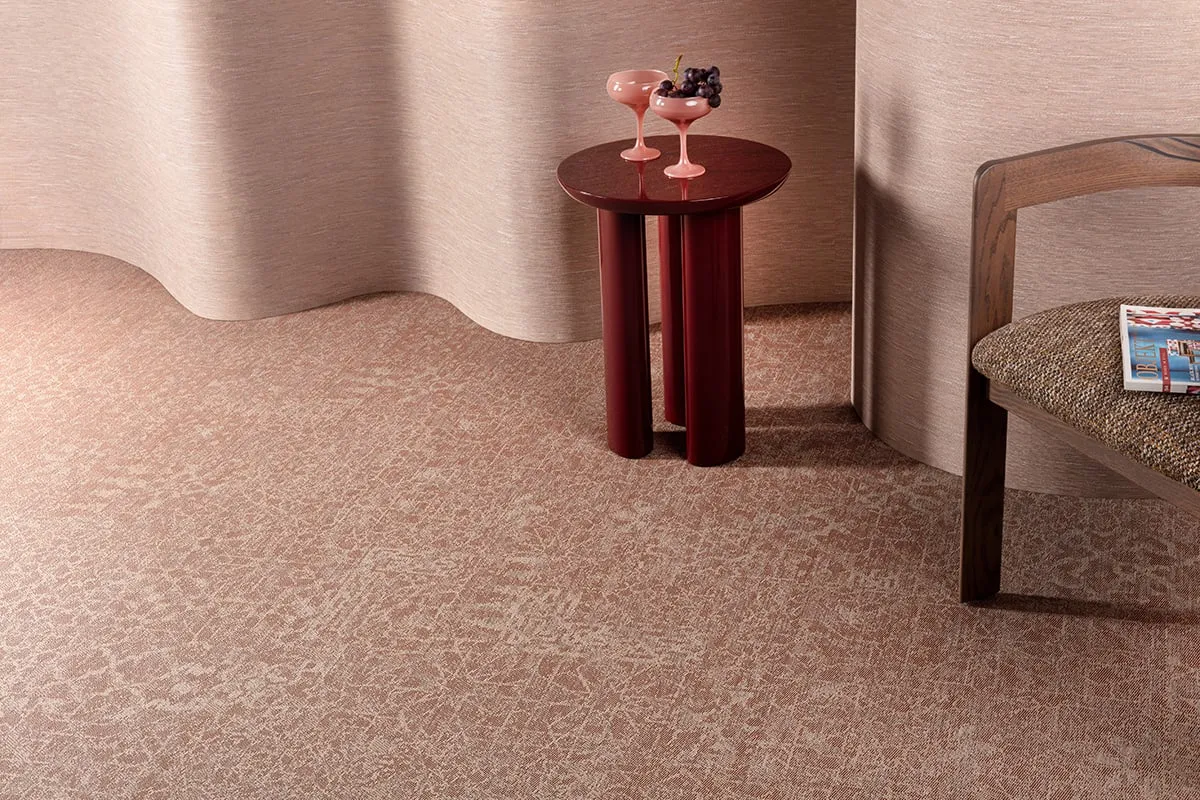
There are many reasons to choose textile flooring, such as woven vinyl and carpet tiles, for offices and hospitality spaces: it absorbs sound, is slip-resistant and offers extensive aesthetic possibilities. What is more, there is a strong focus on greater sustainability and circularity, which are now essential in a modern office environment.
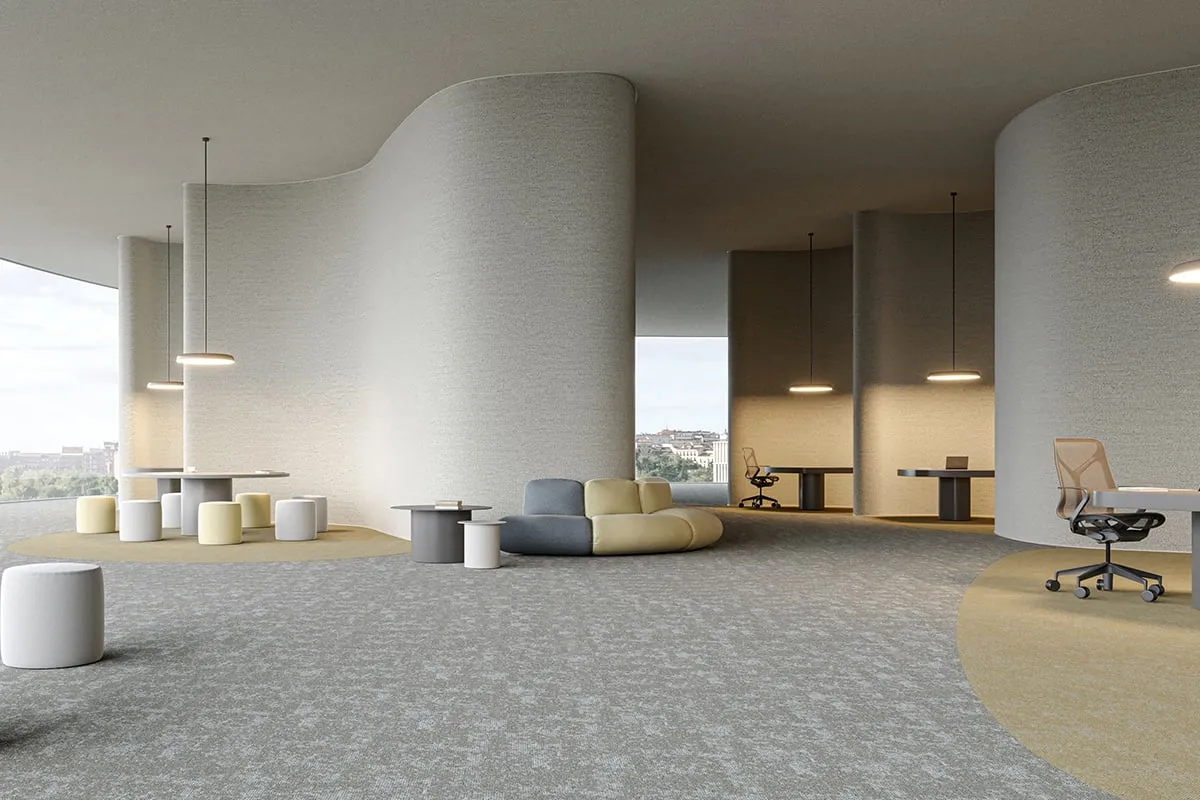
There is a growing need to make buildings, and offices in particular, more sustainable. Sustainability certifications such as LEED and BREEAM are gaining importance. Then there is WELL, a certification that focuses more on health and wellbeing. Various textile flooring manufacturers are rising to the challenge, aiming to contribute to both sustainability and wellbeing. Using as many recycled materials as possible has by now become the norm. There is also a focus on extensive circularity, while bio-based solutions are gaining ground. Aesthetics matter too, and manufacturers are investing in new design collections.
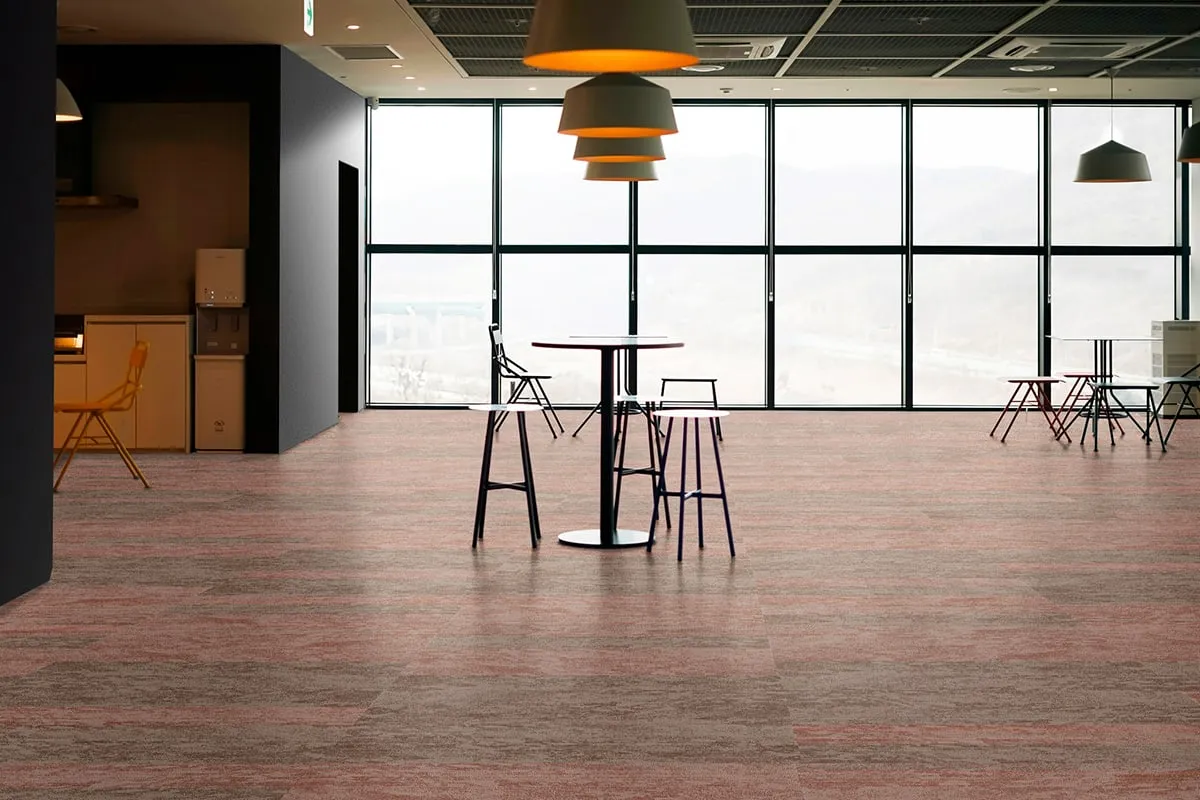
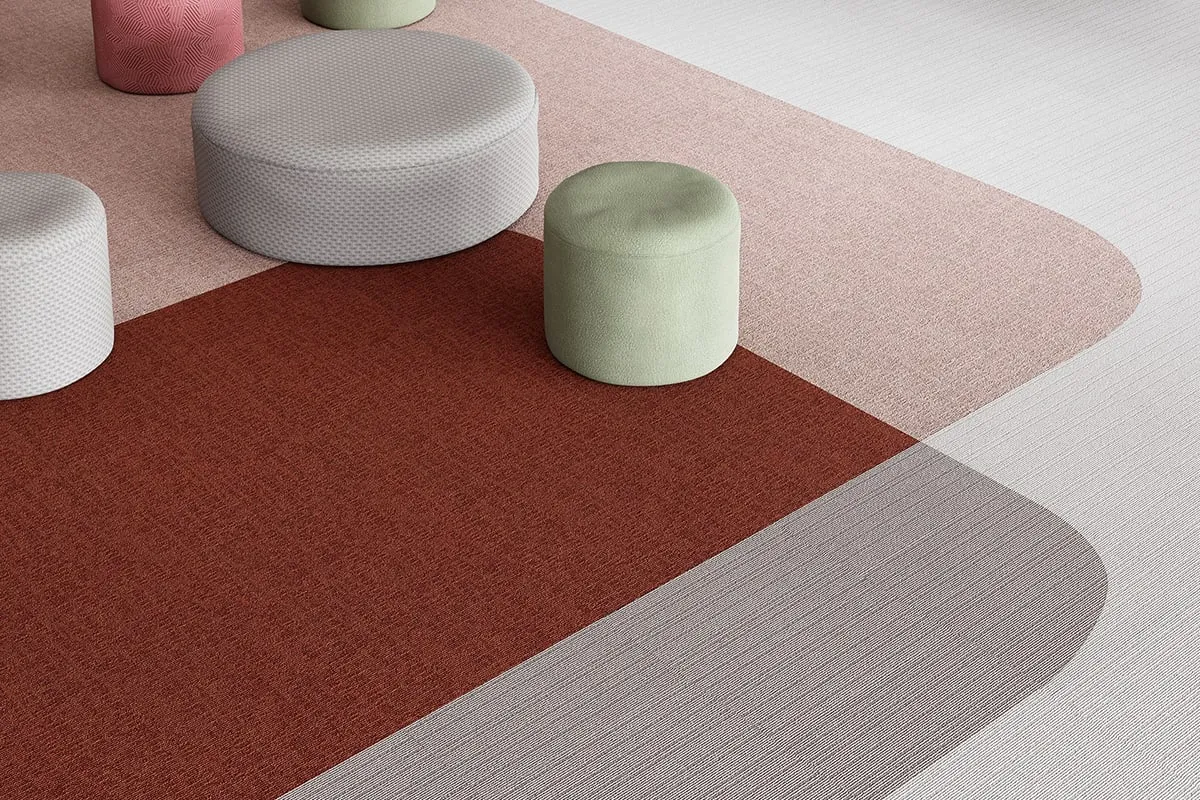
Bio-based
There is no shortage of sustainable and aesthetic innovations. Belgian company 2TEC2 is expanding its woven flooring range with new bio-based collections: Palma, featuring a palm-leaf pattern, and Alhambra, with more ornamental designs inspired by the Moorish palace in Granada. The formula used to make the PVC pellets for the woven yarns contains 45 per cent plant-based carbon, replacing virgin fossil carbon. Dickson Woven Flooring, meanwhile, is presenting Boréal, a new woven vinyl collection inspired by the beauty of marble. It is also the label’s first bio-based collection, introducing two new yarn colours made from natural and renewable materials. This marks the start of the label’s gradual transition to environmentally friendly alternatives. The ultimate goal is to use 100 per cent bio-based yarns by 2026. There is also bio-based news from Desso Tarkett, which recently announced an improved EcoBase® carpet backing for its revamped Airmaster carpet tiles. A new bio-based material replaces the main ingredient, which was previously petroleum-based.
Circular ambitions
In this sector, you are clearly no longer in the game without sustainability ambitions. The recently launched Modus collection of soft flooring by modulyss combines style and sustainability, and is Cradle to Cradle Certified throughout at Gold or Silver level. The Modus collections are made with 100 per cent Econyl yarn, recovered from nylon waste. Forbo also uses this Econyl yarn for products including its Tessara Create Space carpet tiles. Belgian company ntgrate, which offers woven vinyl tiles, takes a different approach with ‘REntgrate’. This involves installing the tiles without adhesive, making it easy to reuse the flooring at a new location without damaging the subfloor. Interface is also stepping up its circular ambitions, investing in a new recycling process at its factory in Scherpenzeel in the Netherlands.
A new machine now makes it possible to recycle used carpet tiles into raw materials for new ones. Since 2016, the company has also collected more than 31,750 tonnes of used carpet tiles through ReEntry. Depending on the condition and composition of the returned material, the most sustainable option is chosen: reusing the complete carpet tile at a new location, reusing the materials to make new carpet tiles, or generating energy. This means used carpet tiles are never simply thrown away.
Question about this story? Ask your question
Keep following this
Get an email when a new story is published. No account needed.
- ThemeCircular construction and material awareness
- SubjectOffice construction & interiors