Adding value with home and car lifts
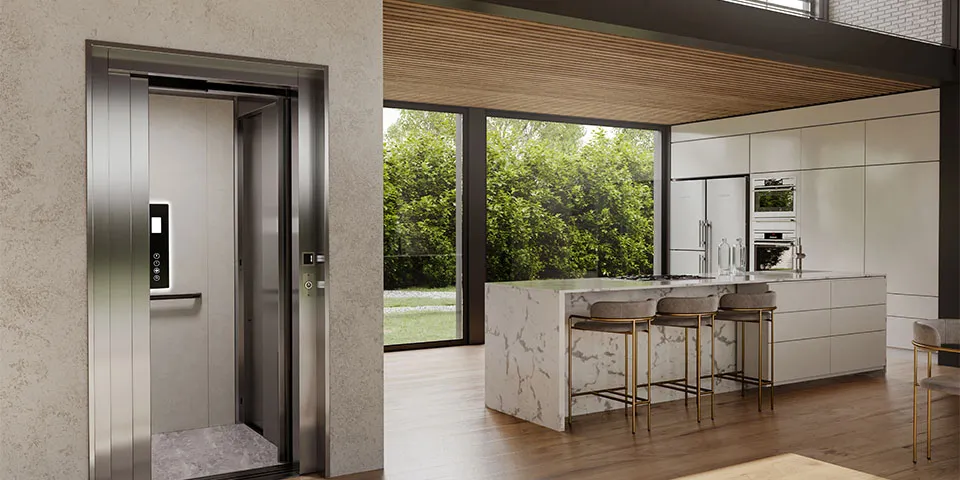
In 2020, residential homes are paying more attention to mobility, for both people and cars. The growing popularity of the home lift, which also adds a touch of luxury, is one reason for this. It is not only about comfort, but also about homes that can adapt to changing needs throughout life. Car lifts offer even greater comfort and are increasingly finding their way into detached houses and villas. They not only make parking easier, but are also safe and discreet, while making the best possible use of increasingly scarce space.
Text: Eva Goossens | Images: Thyssenkrupp, Verolift, Strobbe Mobility Solutions, RDL Autoliften, Cardok, Stove Benelux
It is a fact: home lifts are taking off. The drive for comfort and the desire to live at home for longer play a major role. What is more, home lifts have made considerable advances in both technological and aesthetic terms: quiet and stylish, they add a touch of luxury to the home. Car lifts add even more value, offering a solution to parking, privacy and security issues. Lifts are undoubtedly on the rise.

Compact solutions
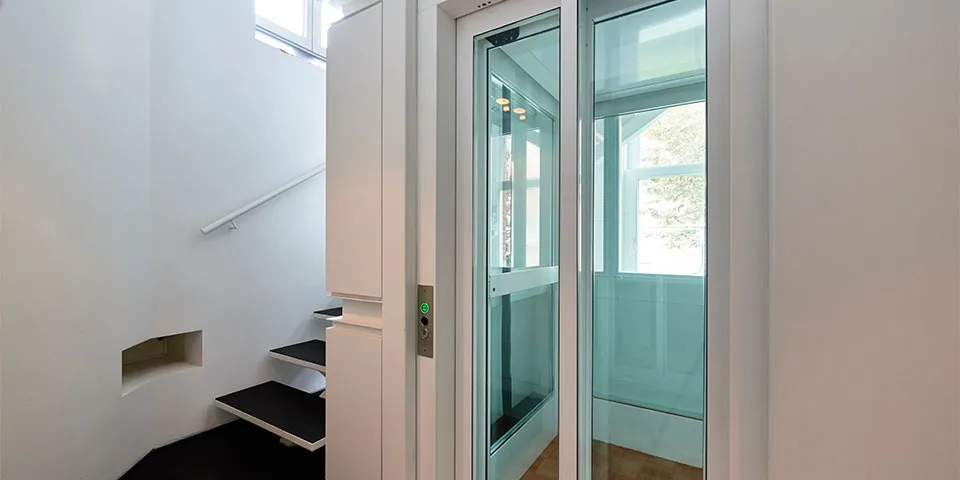
No room for a home lift? Too complex and expensive? In its most compact form, a home lift takes up just under one square metre and requires only a shallow lift pit, depending on the type and model. Home lifts are finding their way into ordinary homes as well as luxury villas, lofts and duplex apartments. New forms of housing, such as multi-generational homes and co-housing projects, can also benefit from a home lift. Larger models are sometimes installed in public buildings, offices, hotels and shops. A lift is easy to incorporate into a new-build home, but it is increasingly possible to install one in an existing home without major renovation work or structural alterations.

Factors affecting the price
The price of a home lift varies considerably and depends on many factors: the number of floors it needs to serve; the type of lift shaft (masonry, self-supporting, partially open shaft with platform lift, or no shaft); the number of people to be carried; the space required for a wheelchair and companion, if needed; the type of lift drive; the number, type and positioning of the lift doors; and whether the controls are hold-to-run or automatic. Finally, a wide range of options allows the lift to be customised to a considerable degree, which also affects the final price.
Adds value and a luxurious look
Installing a lift inevitably involves a certain level of investment. First and foremost, however, it significantly improves comfort, both for people with reduced mobility and for an ageing population who can then remain in their own homes for longer. Even heavy shopping bags can be brought upstairs with ease, for example from an underground garage. Finally, a home lift often adds considerably to the value of a property. With high-quality, bespoke interior finishes that complement the home, it also enhances the luxurious look of the overall scheme.
Extra-efficient home lifts with magnetic motors
Commercial and residential lifts can both be categorised according to their drive system. The main types are spindle technology with a screw-and-nut system, hydraulic home lifts and, last but not least, electric gearless drives. The latest technological innovations mean all these types can provide a high-quality, reliable and quiet lift. In terms of electricity consumption, however, home lifts with electric gearless drives stand out in particular. This top-of-the-range drive uses a magnetic motor similar to those found in electric cars. It ensures very low electricity consumption, even lower than that of its hydraulic counterpart. These home lifts also operate remarkably quietly, smoothly and comfortably, with highly accurate stopping regardless of the load.
Legislation and safety
Safety comes first. Home lifts must therefore comply with the European Machinery Directive (2006/42/EC) and European Standard EN81-41. The latter applies only to home lifts with a maximum speed of 0.15 metres per second. Home lifts are therefore slower than conventional lifts, but they are also considerably more energy-efficient. The requirements for home lifts are less stringent too, and periodic inspections are not required. Regular maintenance is, of course, recommended to ensure continued smooth operation. Various installers offer service contracts and are available 24/7 in the event of technical problems. In some cases, advanced lifts are even equipped with a Wi-Fi module that enables a full remote diagnosis.
Finishes and options
More than just a technical aid to mobility and comfort, the home lift has also evolved into a stylish, luxurious feature of the interior. When it comes to finishes, the sky is the limit. There is a wide choice of materials and colours for the walls, ceiling and floor, which can, if desired, be finished in the same material as the room opening onto the lift. Want a sleek lift interior without skirting boards? No problem. There is also a wide choice of LED lighting, from a floating ceiling with indirect LED lighting to an illuminated opal ceiling or even a full starry sky. A variety of control panels is also available. Options include Braille buttons, audible signals and floor announcements, key switches, code keypads and fingerprint recognition.

Stairlifts, platform lifts and bicycle lifts
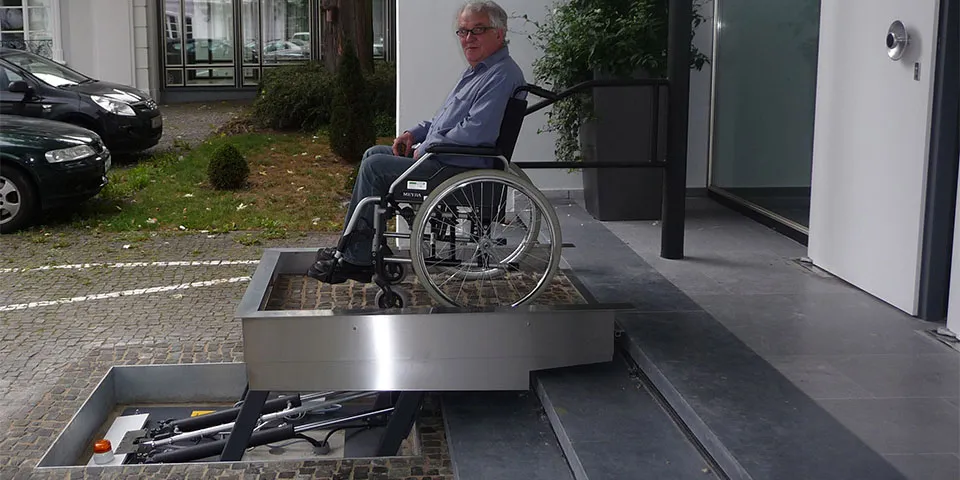
Alongside home lifts, other lift systems can also improve mobility in the home. Stairlifts are, of course, well known: they use a seat and a rail that follows the slope of the stairs. There are also various platform lifts, a budget-friendly alternative to a home lift for moving a wheelchair or goods to another level. These include hydraulic or mechanical lifting platforms, platform lifts for use on stairs, and hydraulic lifts for overcoming level differences of up to 1 metre, such as the step at the front door. These platform lifts require virtually no pit depth and can be incorporated into indoor or outdoor flooring both functionally and aesthetically. Finally, bicycle lifts offer an alternative to awkward stairs or steep cycle ramps. They are also suitable for other two-wheelers, such as scooters and motorbikes.
A wide range of car lift options
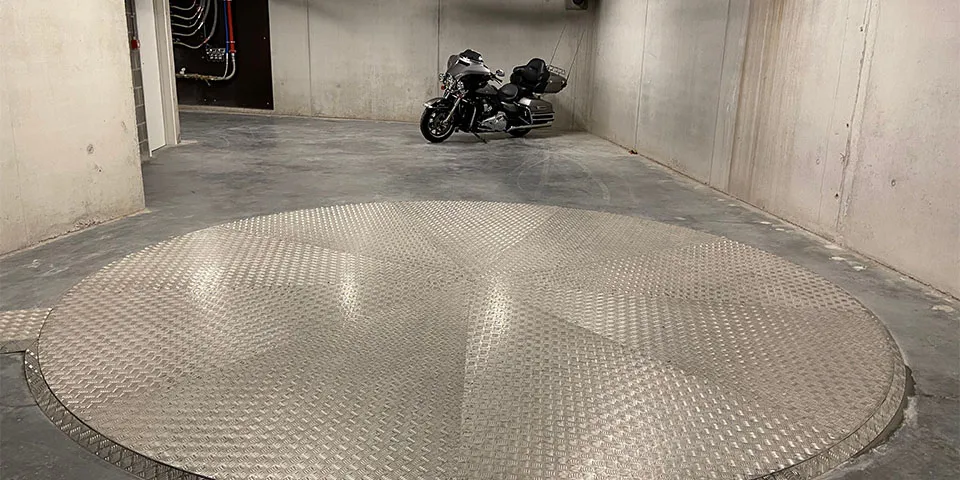
As well as home lifts, car lifts are also becoming increasingly important, not only in apartment and office buildings with limited access and parking space, but also more and more in combination with luxury villas. There are many reasons: people may prefer to avoid a space-consuming sloping garage entrance or, particularly with an external car lift, make maximum use of all available space for living areas. Safety and discretion are other considerations. As with home lifts, there is a wide range of car lifts, with various systems and applications: car lifts with or without an attendant; electric and hydraulic car lifts; scissor lifts; column lifts; car lifts that serve only a limited height; and car lifts that serve several floors. Where space to drive in and/or out is limited, the car lift can be combined with a turntable that positions the car correctly, sparing the driver from difficult manoeuvres.
External parking with a canopy car lift
If there is one notable trend, it is the rise of external car lifts. Sometimes they provide access to a larger underground garage, but this is not always the case. In some instances, only one car needs to be parked underground, in the car lift pit itself.
The roof of this ‘canopy’ car lift can be finished with grass or the same paving material as the driveway. When the lift is closed, its top then blends discreetly into its surroundings. This allows the car to be parked safely and discreetly underground, while keeping the driveway clear. If desired, a second car can be parked on top of the lift, immediately doubling the parking capacity. Note, however, that although some car lifts can raise the car parked on the roof so that the car parked underground can be driven out, this is not always possible. Sometimes the car on top has to be moved first. It is therefore important to establish the specific requirements first and then choose the right type of lift. This, of course, applies to all lifts in and around the home, from stairlifts and home lifts to car lifts. Every one of them improves mobility and, above all, the living comfort of homes today and tomorrow.
Question about this story? Ask your question
Companies in this story

Keep following this
Get an email when a new story is published. No account needed.
- SubjectGeneral
- CompanyVerolift