A holistic approach pays off
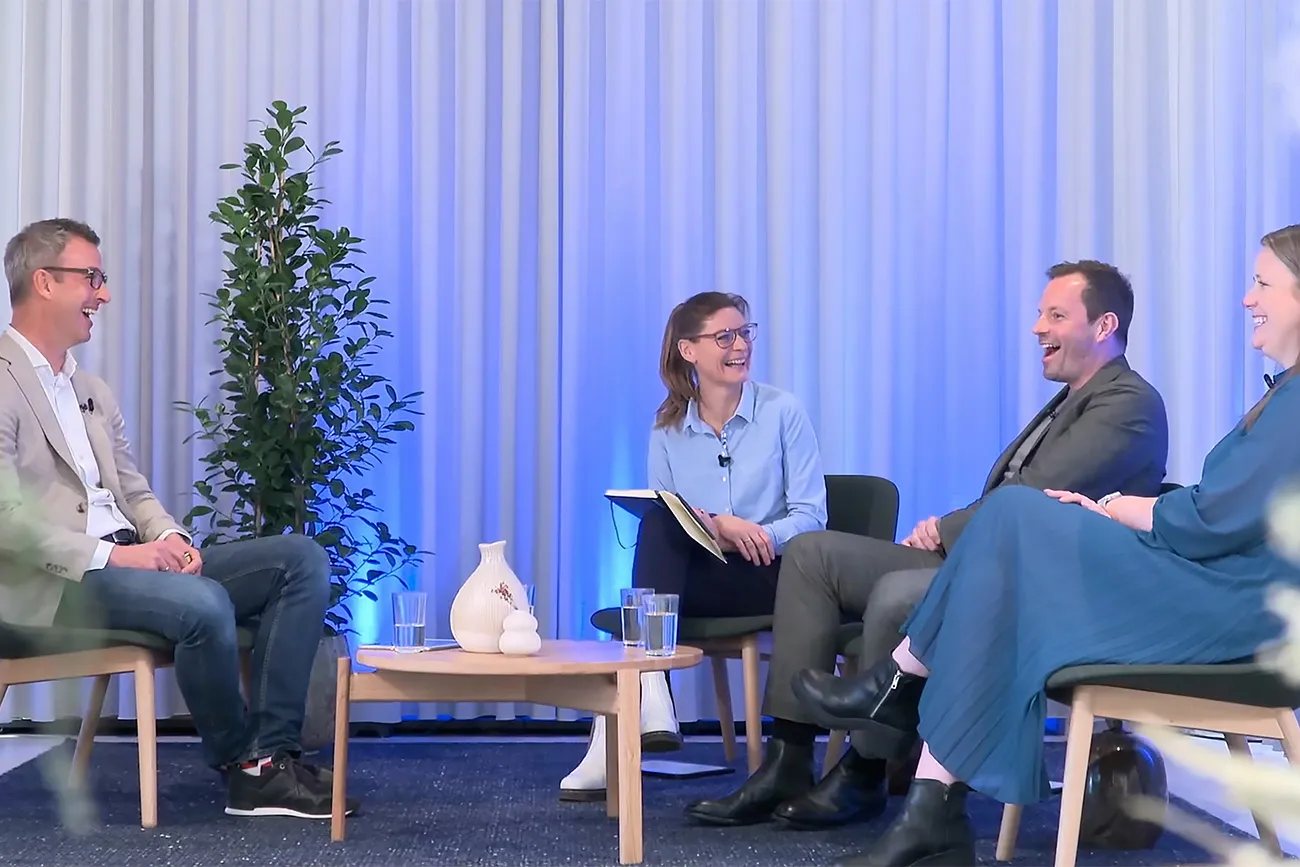
How do you combine acoustics and design in the design process, particularly when designing commercial and office spaces? That was the topic of a webinar featuring an international panel of experts. The conclusion? A holistic approach, involving all team members, including the acoustician, at an early stage, pays off.
“Did you know that 78 per cent of people who work in offices are negatively affected by noise in their workplace? And that 85 per cent of office workers say that the design of their office is important to them?” Speaking is Pascal van Dort, Global Acoustics Ambassador at Rockfon and moderator of the panel discussion, held in Rockfon’s new showroom in Denmark. He welcomes three experts: Anne Marie Tommerup (architect and CEO of Together Architecture, Denmark), Helen Sheldon (Director at RBA Acoustics Ltd, UK) and Stuart Finnie (architect and interior designer, Head of Design at Unispace, UK).
Balance, experience and collaboration
What is the first word that comes to mind when you hear ‘acoustics and design’? For the panellists, it is experience, collaboration and balance, the latter meaning a balance between comfort, aesthetics and functionality. So what comes first in the design process: aesthetics or acoustic comfort? Everyone agrees that, once again, it is a question of finding the right balance. Stuart adds: “It is often easier to start by talking about design with the client. People have a more intuitive feel for the look and feel of a space. But it is important to bring the technical aspects and acoustics into the conversation early on, so they do not have to be added at the end as quick fixes or extras. The design needs to be approached holistically.” Helen agrees: “If acoustic issues have to be addressed afterwards, the aesthetics that have already been invested in often lose out. People may even be inclined to make more compromises and sacrifice aesthetics in favour of better acoustics. If you take both design and acoustics into account from the outset, you can have both.”
An educational role
How can we encourage the involvement of an acoustic consultant in the design process, so that all objectives are met? Anne Marie: “Education is part of our role as architects. It is up to us, and the other experts too, to make less experienced clients aware of the importance of acoustics.” Stuart: “A large part of communication is also about managing expectations and finding intelligent ways to demonstrate acoustic performance.” At what stage of a project should acoustics be integrated? All the panellists agree that this depends on the project. There is no one-size-fits-all solution. Every project and every space is unique, and acoustic requirements vary according to the specific needs of the users. Those users and their wellbeing are at the heart of the process. Acoustician Helen adds: “We are not often brought into a project at a very early stage, but sometimes it does pay off. Acoustics obviously go beyond interior design. They can also relate to the spatial planning of buildings, for example in a noisy environment. Getting involved early means we can act quickly and sometimes avoid complex and expensive technical solutions.”
Too loud or too quiet
When we think of acoustic solutions, we think of reducing noise. But can a space be too quiet? Helen: “It is wrong to think that acousticians are crusaders for silence. Too quiet is probably worse than too loud, because then you really can hear everything. As the saying goes, you could ‘hear a pin drop’. Acoustics are not just about eliminating sound. They are about ensuring that the right sound is in the right place at the right time.” Finally, what is the main takeaway? Stuart: “We need to include acoustic performance in the conversation, just as we talk about materiality, lighting and other more tangible aspects. All these elements are part of a broader sensory experience.” A holistic approach, in which teamwork is essential.
Question about this story? Ask your question
Keep following this
Get an email when a new story is published. No account needed.
- ThemeLight and sound as design tools
- SubjectAcoustics