Innovations for greater sustainability
Text Eva Goossens
Making a contribution, one brick at a time!
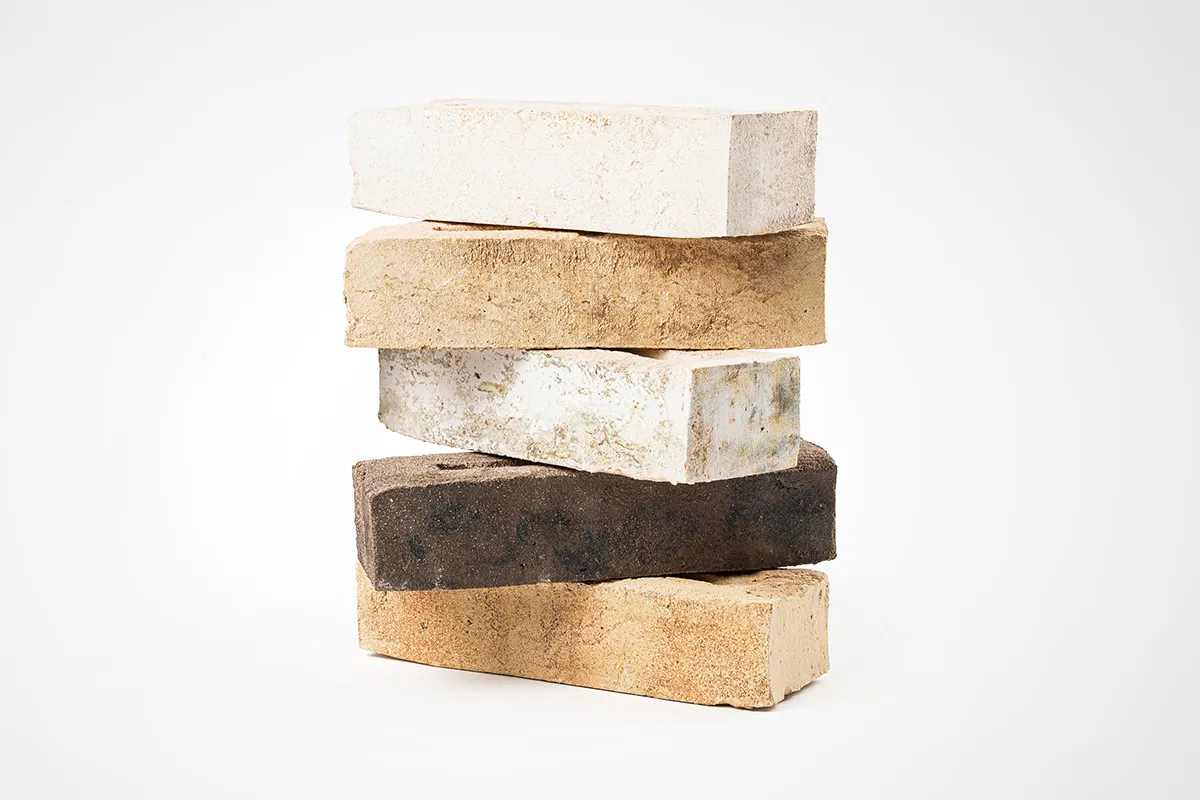
Brick is firmly embedded in Belgian building culture. Tradition is king, but that does not mean the sector is standing still. Quite the opposite. Brickmakers and producers of other facade materials are working hard to improve sustainability, embracing the shift towards more ecological products. A story of efficiency, dematerialisation and circularity.
Construction must and can become more sustainable. The brick sector also has an important contribution to make. Brick represents tradition, a cultural icon and a symbol of craftsmanship, but also innovation, often in the service of sustainability.
Eco-formats
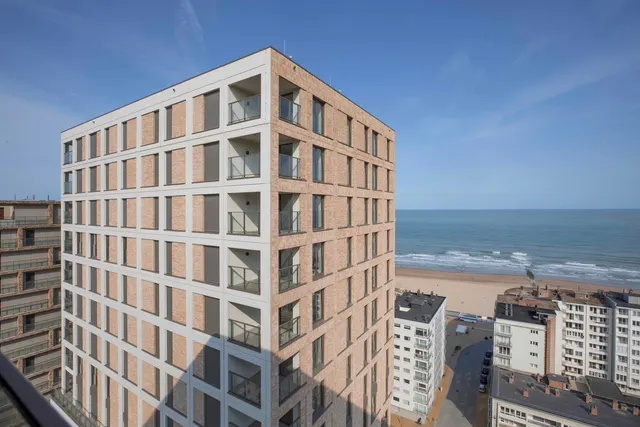
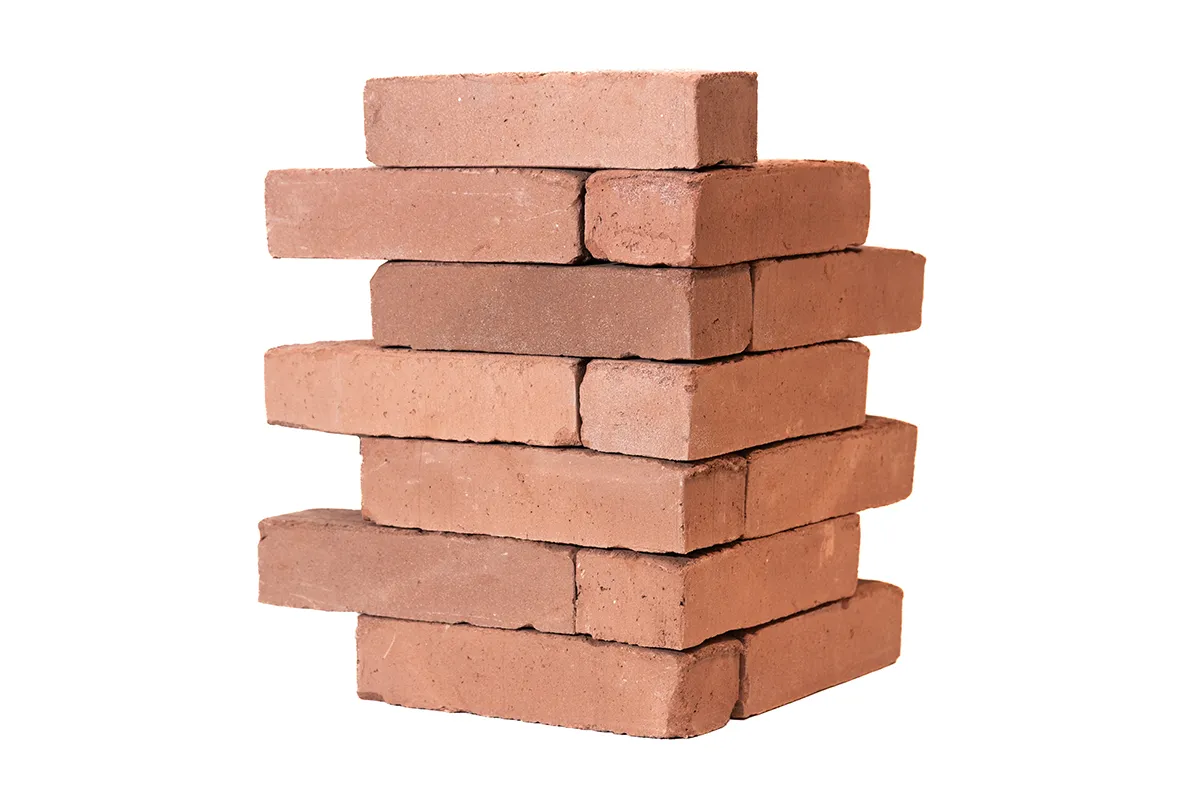
In 2023, the Belgian Brick Federation drew up a sectoral charter, signed by eleven companies, through which the sector aims to reaffirm its commitment to the transition to a low-carbon society by 2050. These companies have pledged to consider individually how they can reduce their energy and raw material use. The focus is on eco-formats, which are becoming increasingly widespread. The figures show that slimmer facing bricks already accounted for 1,293,183 square metres in 2023, an increase of more than 37 per cent compared with 2022. This share will only continue to grow. Both confidence and the range of products are steadily increasing, with eco-formats now a standard offering for several suppliers. This is also the case at wienerberger, which offers its new Fjord facing brick collection, with its natural, rough look, in the Eco-brick WF format. During production, natural pigments are applied digitally and then fired into the brick. Tradition and technology, brought together.
Greater circularity
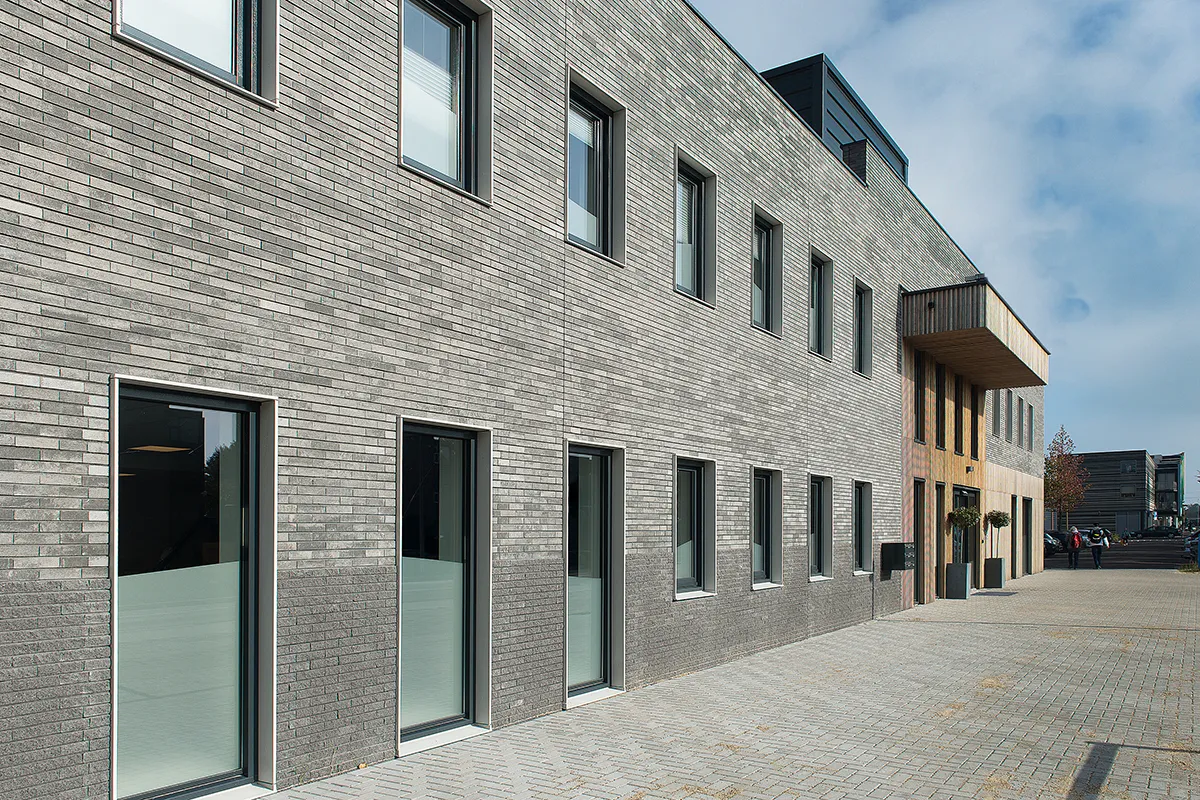
Steenbakkerij Vande Moortel is also continuing its commitment to the ECO-7 format, with a number of new facing bricks launched exclusively in a 7-centimetre thickness. One of these is Circular Brick, developed jointly by BrickZ and Vande Moortel. Each specific batch of this facing brick is made entirely from available secondary raw materials, which determine its colour, composition and quantity.
The extra-long, slender GeoStylistix concrete facing bricks from Dutch company MBI are a very different product. They are now also available in an eco-format and a new ReUsed variant. In this version, at least 65 per cent of the traditional raw materials in the core concrete is replaced with aggregate recovered from residual streams. The 10-millimetre-thick surface layer contains colourfast minerals and has the appearance of natural stone.
Reuse
Of course, circularity involves more than just secondary raw materials. What about reusing the entire brick? A 2023 thesis study by Anke Frulleux and Esther Vandenbulcke at UGent found that reusing ceramic facing bricks can deliver an average 85 per cent reduction in environmental impact. The use of lime mortar can make reuse easier. The ultimate in circularity is, of course, dry-stacking systems, which require no mortar or adhesive and allow facing bricks to be easily dismantled and reused.
Further CO2 reduction
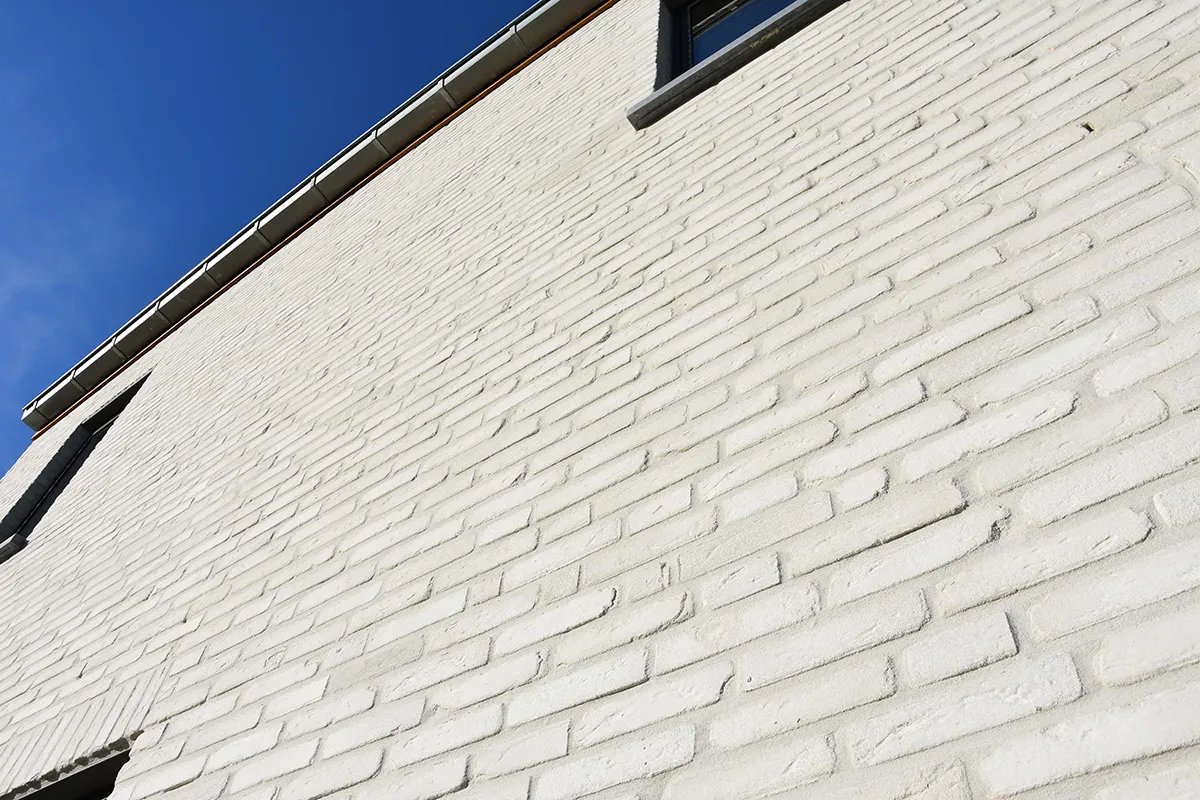
The focus is therefore firmly on dematerialisation, recovery and CO2 reduction. Vandersanden has now launched the first CO2-negative carbonated facing brick. Finally, there is Lowie Bricks, a sister company of Olivier Bricks, which produces a hybrid brick positioned between ceramics and concrete. Unlike ceramic facing bricks, these bricks are not fired. The specific production process reduces CO2 emissions by 80 per cent compared with ceramic facing bricks. And with the principle that ecological progress is only possible if it is affordable, the pricing remains attractive too. The transition is under way, and it is up to us to embrace it.
Question about this story? Ask your question
Keep following this
Get an email when a new story is published. No account needed.
- ThemeBuilding envelopes for a changing climate
- SubjectRoofing & facades