ZinCo retention roofs for efficient water storage, greenery and biodiversity
Text Geert Van CauwenbergeImage ZinCo Benelux
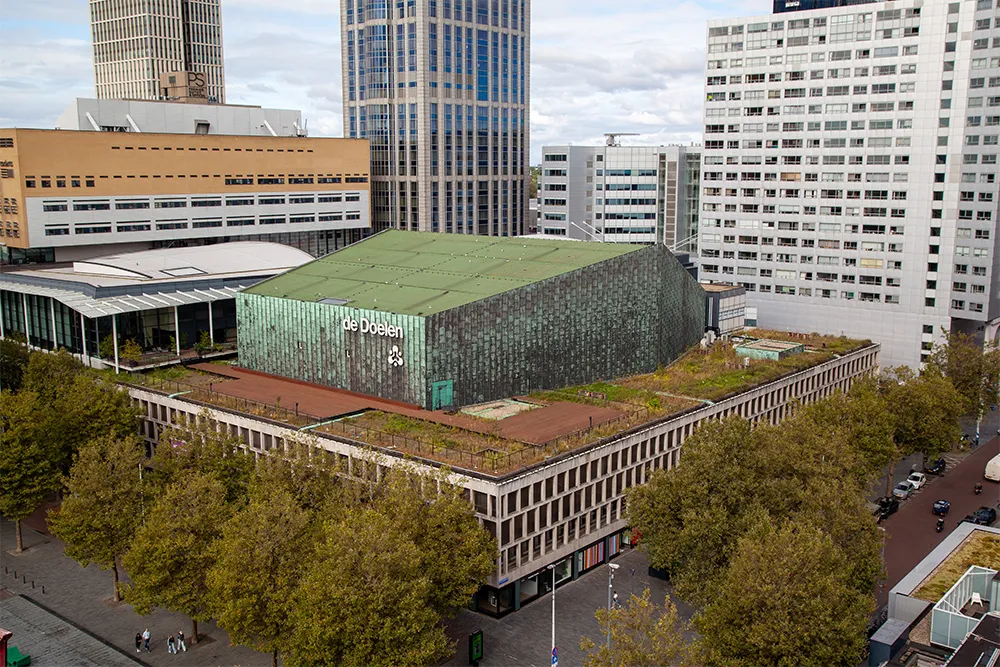
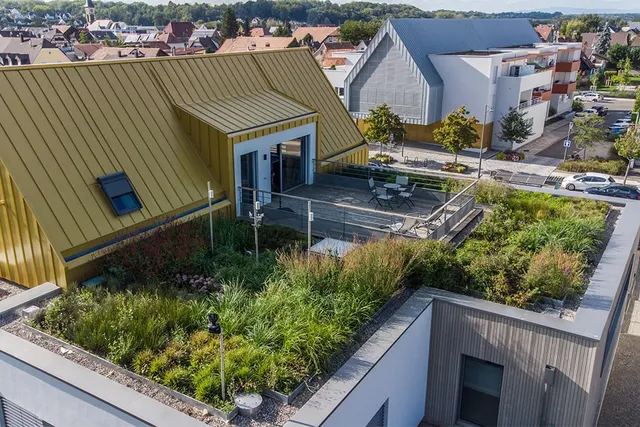
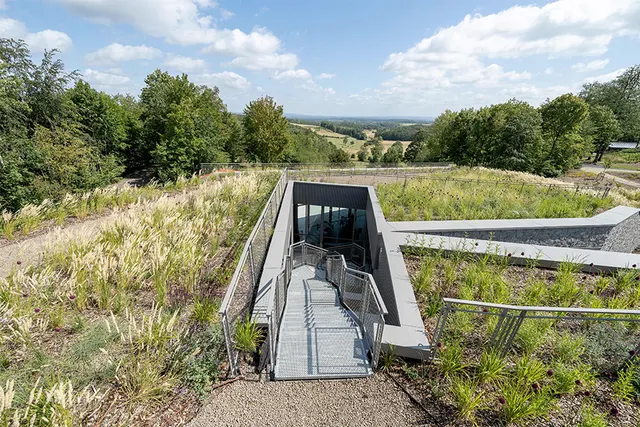
When it comes to retention roofs, the benefits include efficient water storage, greenery and biodiversity. More and more businesses and local authorities are opting for this sustainable, multifunctional roofing solution. An inspiring example can be found in Rotterdam, where a retention roof covering more than 2,500 square metres was installed on the de Doelen conference and concert venue, with a capacity equivalent to no fewer than 2,000 bathtubs. The innovative roofing solution was supplied by experts ZinCo.
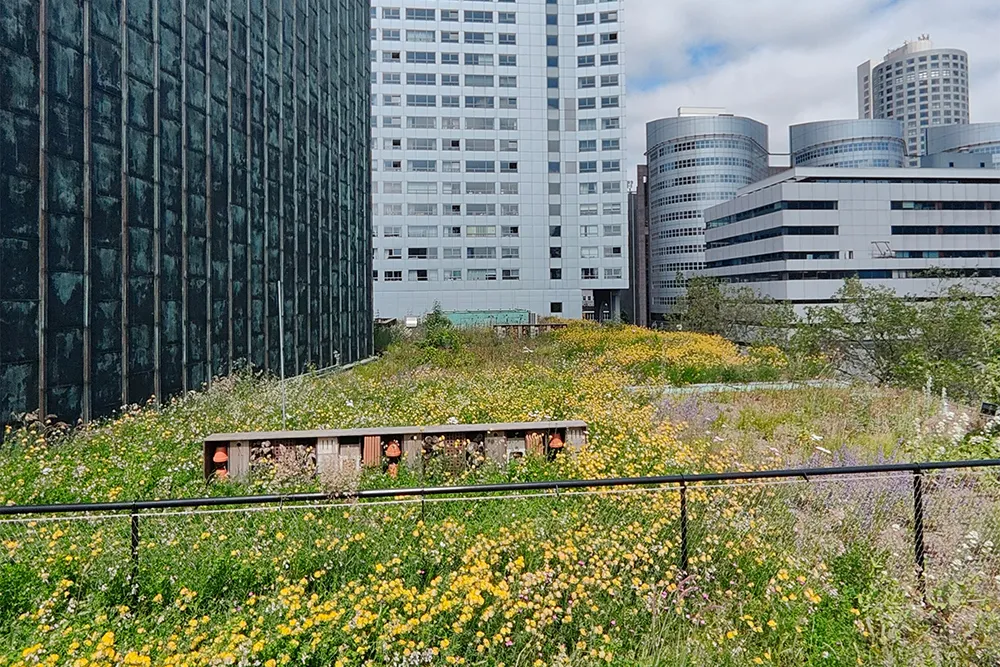
Intense downpours, impermeable surfaces and rising temperatures in urban areas are causing increasing problems with excess water. Green-blue roofs, also known as retention roofs, can capture much more rainwater. This water can then be discharged once certain threshold levels are exceeded, or intelligently reused.
An extensive green roof can retain around 30 litres of water per square metre, after which any excess runs off. Once it’s full, it’s full. By contrast, a green roof with retention elements can store twice as much water on top of those 30 litres, holding up to 90 litres of rainwater per square metre. You can compare this roof system to a bathtub that drains itself at a fixed rate, or at a variable rate depending on the roof’s intended purpose.
System build-up
How is a retention roof constructed? The basic build-up is always the same, from bottom to top: a roof structure (root-resistant and without a fall), a protection mat, a retention element, a system filter, extensive substrate and vegetation. During rainfall, water is first captured in the vegetation and substrate layers. The rainwater then percolates through to the retention layer, where it is stored temporarily. It is eventually discharged in a controlled manner into the sewer or a rainwater storage system, reducing peak flows.
Design considerations
There are several essential considerations when designing and installing a retention roof. First, you need to determine the roof’s purpose. Is the main aim to slow the discharge of water into the sewer, or should the roof also retain rainwater for irrigation, toilet flushing or heat recovery? You also need to consider the requirements of the city or municipality’s rainwater regulations: how much water must the roof be able to retain at a minimum? A third consideration is the load-bearing capacity of the roof structure, as a saturated retention roof can quickly weigh 150 kilograms per square metre. The roofing also requires careful attention: is it fully bonded and root-resistant, and what planting will create an attractive, contemporary appearance? Last but not least, choosing the drainage mechanism is an important issue. With a passive system, water is discharged at a fixed rate. An active control mechanism gives you greater control over the water flows being discharged.
Case study: de Doelen, Rotterdam
What does a retention roof look like in practice? For an example, we head to de Doelen concert and conference venue in Rotterdam. With more than 450,000 concertgoers attending 600 concerts a year, it is the second most visited concert venue in the Netherlands. In December 2015, the building, completed in 1966, was designated a national monument. Two years ago, its 2,581-square-metre flat roof was covered with a wide variety of greenery. A water storage system with a capacity of 300 cubic metres was also installed. ZinCo was one of the suppliers for this ambitious project, providing a range of native herbs, bulbs, ornamental grasses, plants and shrubs. The use of new technology is also impressive: weather forecasts are used to control the captured rainwater through ten Zinco Meteo Active’s. This active water management system responds to forecasts and the water level on the roof. A fine synthesis of greenery, biodiversity and modern technology.
Question about this story? Ask your question
In this story
- Project:Retentiedak de Doelen
- Location:Rotterdam (Nederland)
- Architect:Kraaijvanger Architects
Keep following this
Get an email when a new story is published. No account needed.
- SubjectGreen roofs