More bees and biodiversity on green roofs with the Zoemdak project
Text Eva GoossensImage IBIC
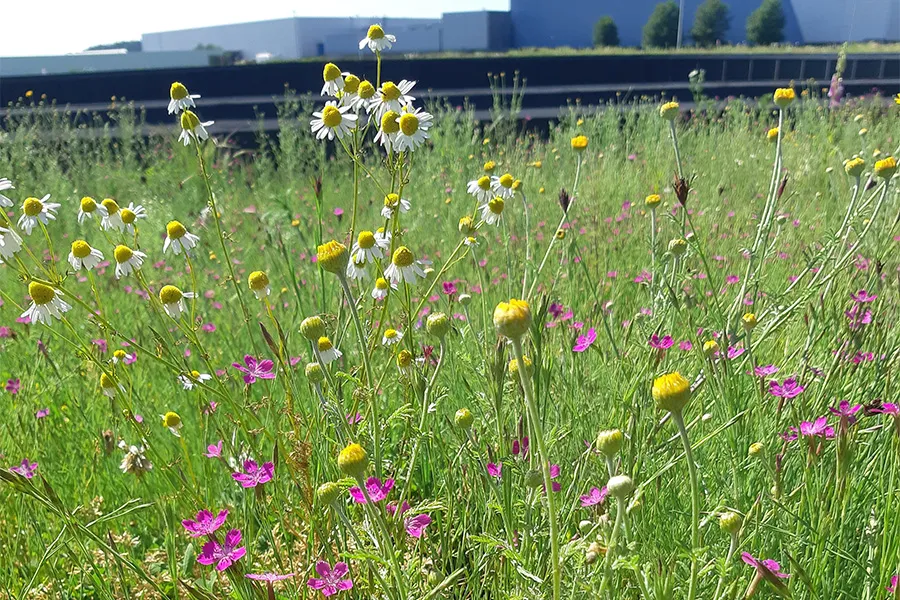
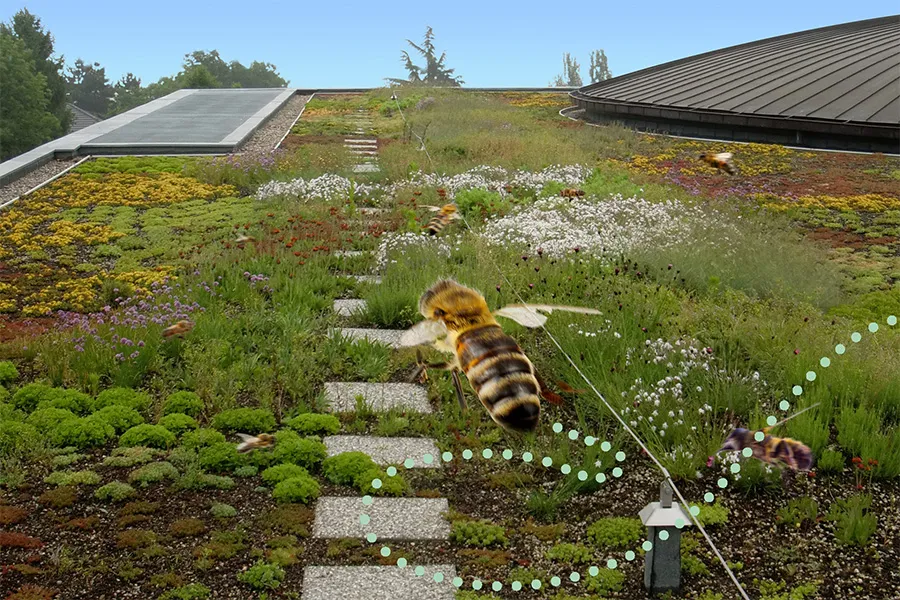
Bee populations in our country are struggling. With the motto ‘every little bit helps every little bee’, the Zoemdak project was launched around four years ago. Its aim: to make green roofs more attractive to bees and other flower-visiting insects. And although the project has officially ended, field research into more biodiverse green roofs is continuing unabated.
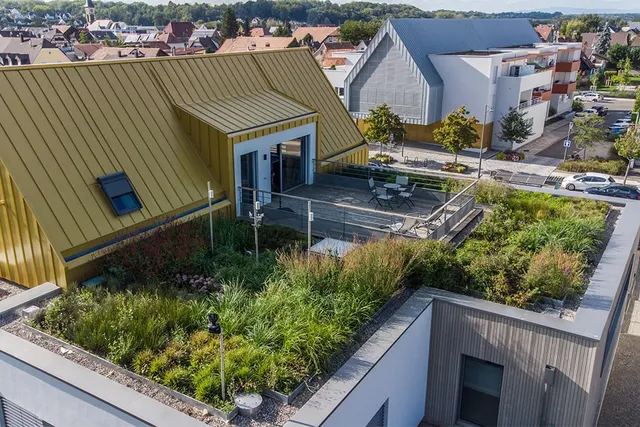
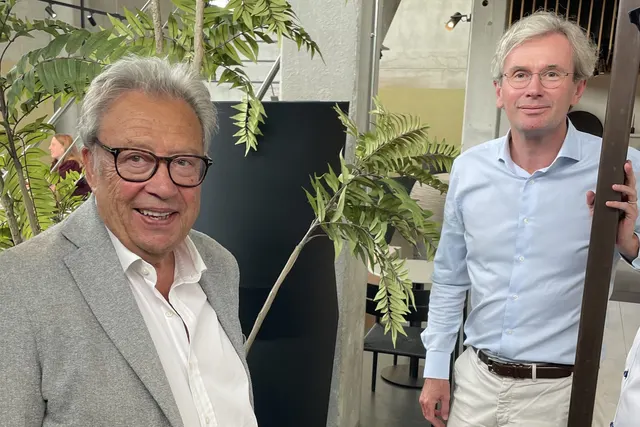
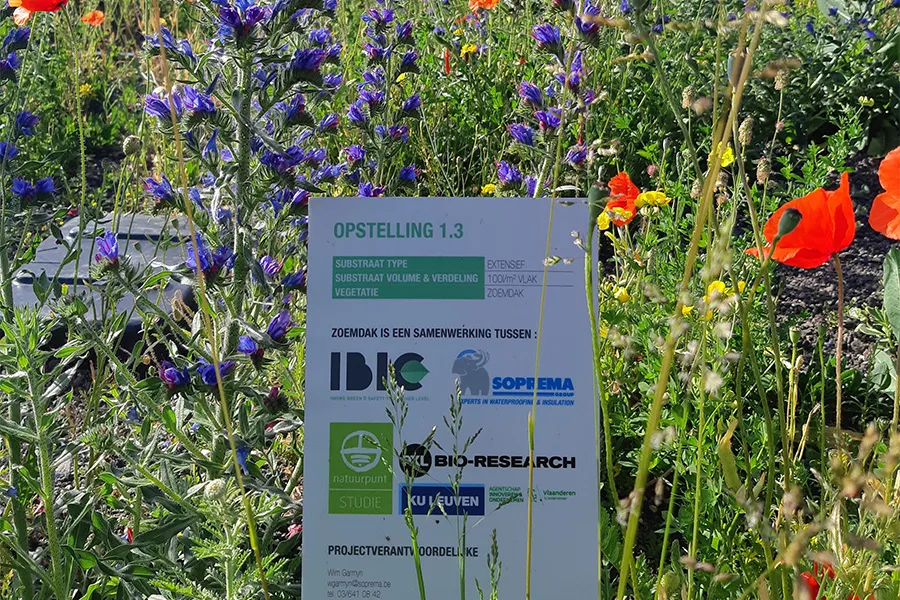
How has the Zoemdak project developed since then? We asked its initiator, green roof expert IBIC, which explored the subject in 2020 alongside Natuurpunt, Hogeschool PXL and KU Leuven. Fourteen test roofs with similar build-ups were installed and monitored. Bees and other insects were counted, with growing enthusiasm. The Zoemdak seed mix, containing around 30 native varieties, is now available and in use, and is also being offered for sale. Rob Christensen, Head of IBIC Realize: “The ideal mix can still evolve and vary depending on the specific situation. Every green roof is unique, if only because of its location and the possibility of creating contours with a thicker substrate layer.” Some variation in levels is certainly beneficial for biodiversity and the success of a Zoemdak, alongside the right seed mix. So too are water and adequate nesting sites, which help keep pollinators on the roof garden.
Resilient native and regionally appropriate plants
A bee-friendly garden at ground level is not comparable to a similar green roof. On a green roof, plants have to thrive in extreme conditions and withstand long periods of drought. Brecht Lammens, Commercial Project Manager at IBIC: “We set out to find what we call ‘host plants’, plants that certain insects need. Based on theoretical knowledge, we drew up an initial list. Species that did not germinate or failed to survive for long were removed from the selection. We are continuing with the other varieties. We keep monitoring these projects to fine-tune the Zoemdaken.” Rob adds: “In various roof gardens, plants not included in the original mix also appeared spontaneously. If these plants benefit biodiversity and have no undesirable tendency to spread aggressively, we leave them in place. What is more, we consider whether it would be useful to add them to the seed mix.” Nature is the best teacher.
Substrate and nesting sites
Research was also carried out into nesting sites and different types of substrate. Although the results on their impact are less striking, IBIC is convinced they are important. “We try to keep bees in the garden, including by providing dead wood as an ideal nesting site. We also work with different substrate particle sizes and depths,” explains Louis Fierens, also a Project Manager at IBIC. In this context, IBIC is looking forward to the further development of circular substrate made from construction rubble processed into granulate. Louis: “A Zoemdak is designed to grow on poor, dry ground. Substrate containing recycled rubble would therefore be highly suitable. It completes the sustainability picture.”
Easy maintenance
What about the experience and maintenance? A natural-looking Zoemdak blooms from spring to autumn. Louis: “By adding a selection of bulbs that flower in winter, we also provide some colour and variety during the winter months.” Initially, monitoring is required. “Once the Zoemdak is established, it requires minimal, though expert, maintenance. Invasive species are weeded out, and of course you need to be able to recognise them amid all the natural growth. Beyond that, an annual cut is enough, similar to a meadow in a nature reserve. The cuttings are then left to rest so the seeds can settle on the Zoemdak. The cuttings are removed afterwards to keep the substrate as nutrient-poor as possible. Unlike an intensive roof garden, a Zoemdak is not intended to be irrigated.” Intensive roof garden, extensive green roof or biodiverse Zoemdak? “The different types of roof garden need not be mutually exclusive and can be combined,” Brecht concludes. In any case, adding more biodiversity is always a good idea.
Question about this story? Ask your question
Keep following this
Get an email when a new story is published. No account needed.
- ThemeDesigning green and outdoor spaces
- SubjectGreen roofs