URSA glass wool offers architects a host of benefits
Text Laureline VansteenkisteImage URSA
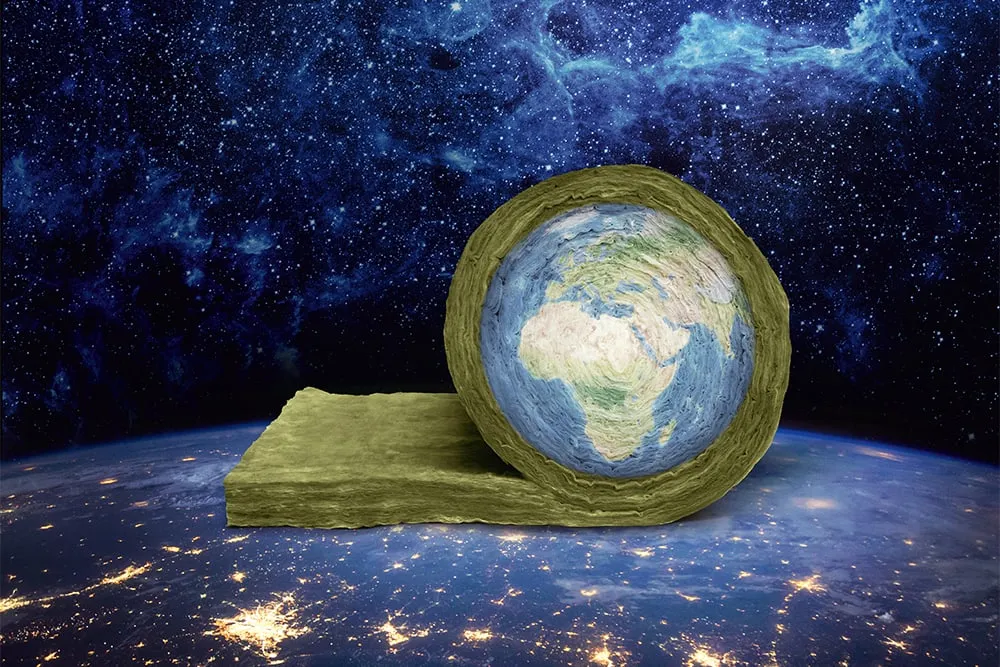
URSA stands out as a European insulation manufacturer thanks to its unique customer-focused approach. Long-term partnerships, founded on trust and reliability, are at the heart of every collaboration. Its flexible, proactive way of working is an asset not only to distributors and end customers, but also to architects. The company supports them with advice on their projects, with quality, sustainability and aesthetics in mind.
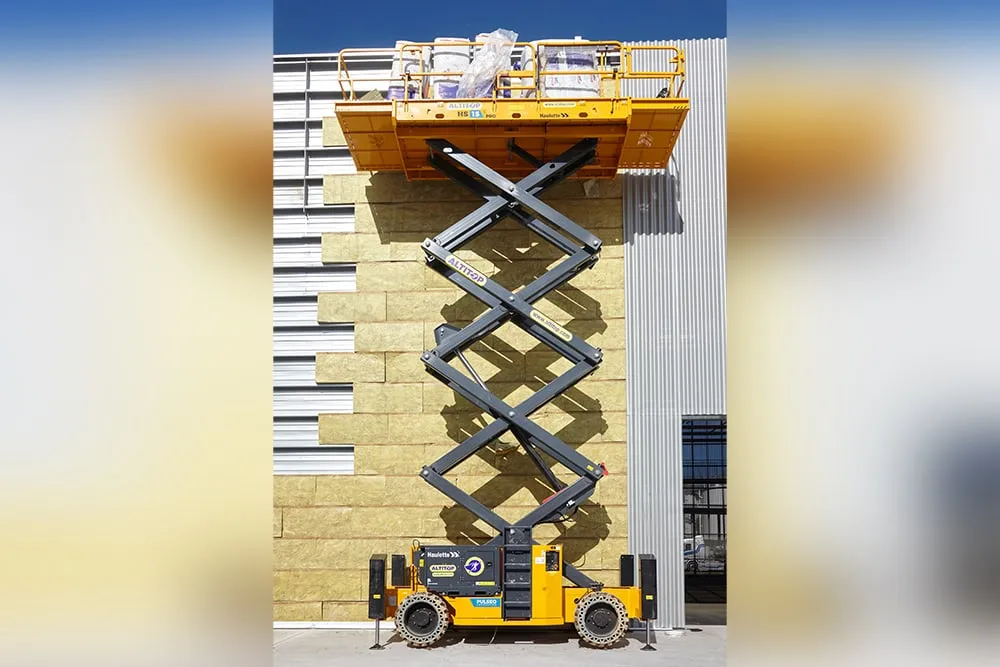
European insulation manufacturer URSA places great importance on sustainability and proximity to its customers. The producer of glass wool and XPS sees itself as a ‘glocal’ player. This means aligning global strategies and services with the needs and requirements of local markets. As a strategic partner, URSA works closely with its customers and architects, supporting them in achieving their business and environmental objectives.
Why choose glass wool?
Mineral wool, including glass wool, is the only product that combines thermal and acoustic properties while also being completely fire-safe. Glass wool also offers a host of benefits:
- The insulation is exceptionally durable and lasts for at least fifty years.
- Glass wool offers an attractive balance of price and performance.
- URSA glass wool is quick and easy to install, as the material is lightweight and highly workable.
- Thanks to its flexibility, URSA glass wool fits snugly into joints and gaps.
Did you know that …
… URSA glass wool saves more than 243 times the energy and 121 times the CO2 required to produce, transport and install it?
… URSA already uses 75 per cent recycled material in the production of its mineral wool, and aims to increase this to 80 per cent by 2030?
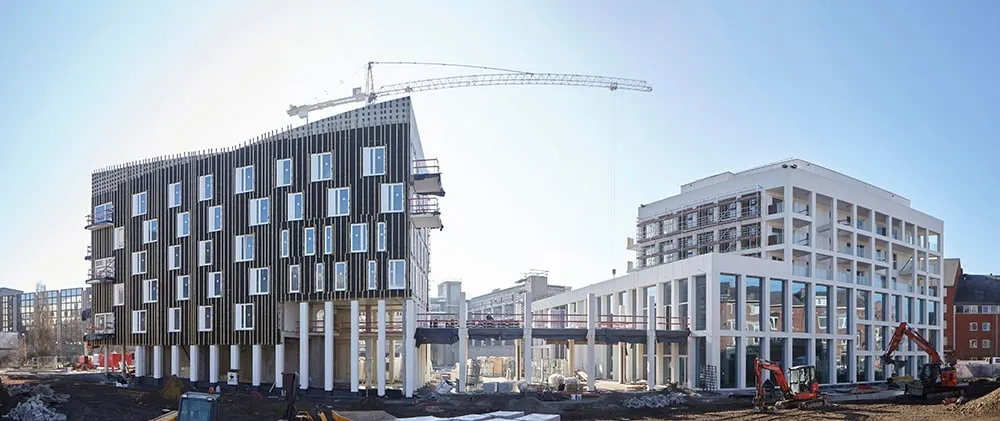
What about the fire safety of façades?
In 2022, legislation on the fire safety of façades was tightened. For
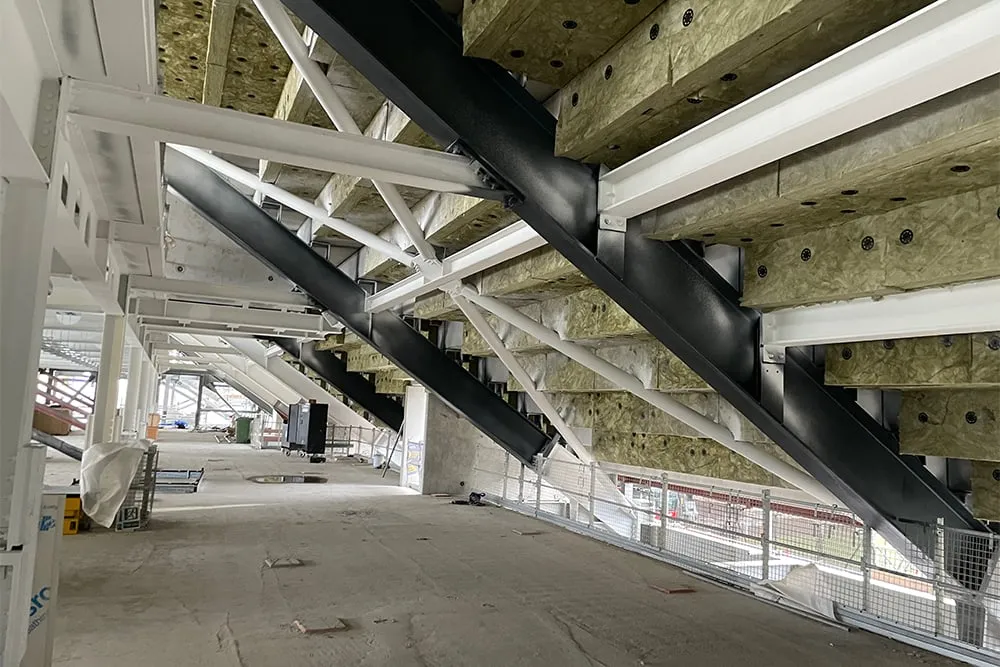
medium-rise and high-rise buildings, this means that the essential components of the façade must be non-combustible. The insulation chosen plays an important role here. URSA offers a suitable solution with WALLTEC BLACK, with a lambda value of 32, and URSPAN BLACK, with a lambda value of 35. Both have a reaction to fire classification of A1 and are therefore non-combustible. They also prevent flame spread and flaming droplets, and do not produce toxic gases or smoke. These dimensionally stable mineral wool boards are also ideally suited to ventilated façades.
Is rock wool more fire-resistant than glass wool?
No. Both glass wool and rock wool are non-combustible and meet the highest possible Euroclass, A1. There is therefore no difference in their reaction to fire classification, and neither material contributes to a fire.
What should I know about ventilated façades?
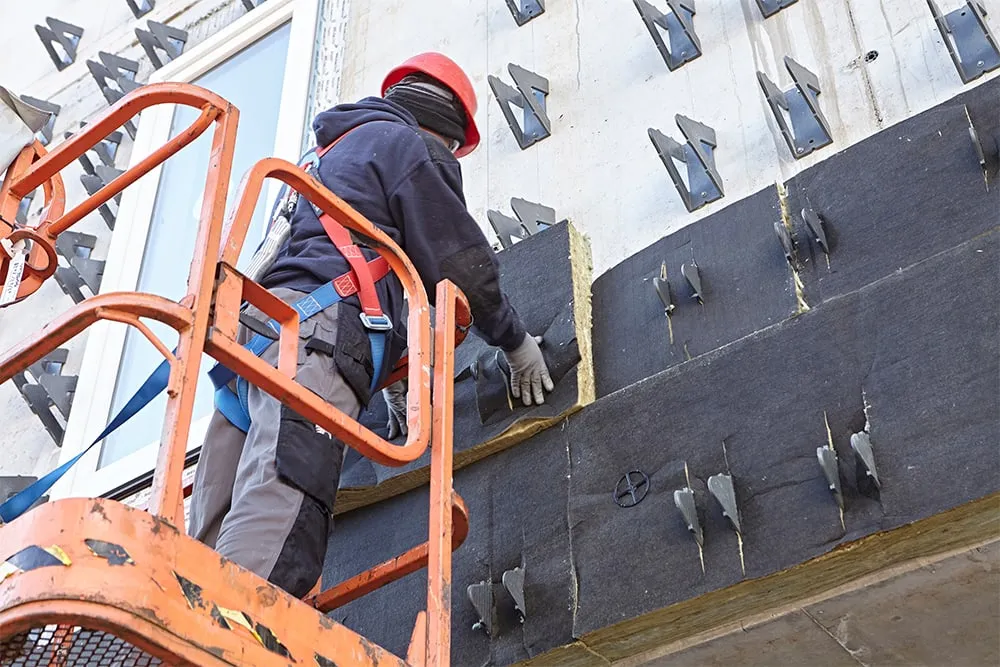
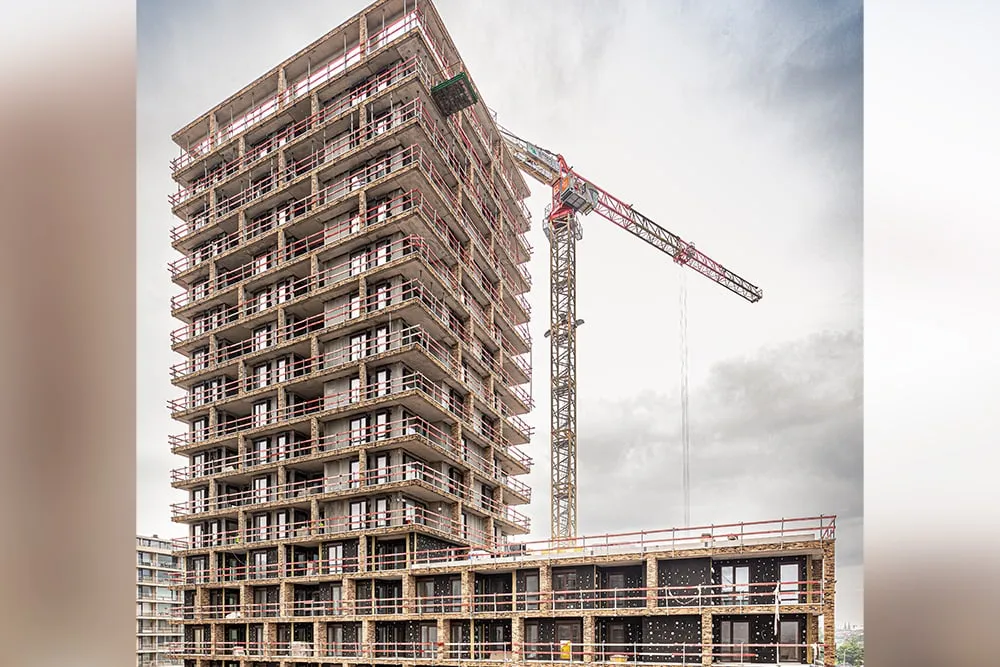
Ventilated façades are a particularly effective way to clad the building envelope. They protect against moisture and heat, and contribute to sustainable architecture.
1. Do you need to install a breather membrane behind a ventilated façade?
No, the insulation does not need to be protected with an additional waterproof façade membrane. Both the glass wool and the glass fleece are water-repellent. A breather membrane could even be counterproductive, as it can cause fire to spread vertically or block the air cavity if it tears.
A façade membrane may sometimes be needed to protect the timber battens. Find out more in TV 243, Timber and wood-based panel cladding.
2. What is the recommended exposure time for the insulation material?
The maximum exposure time for the insulation depends on the weather, wind, building height and façade orientation. Based on its experience, URSA knows that its façade boards can be exposed, or left uncovered, for a maximum of two to three months.
3. How many brackets are needed for fixing?
The number of brackets varies according to the cladding’s mass per unit area and the climatic conditions. For more details, it is best to check the technical requirements for the cladding.
The bracket length depends on the thickness and density of the insulation. Once the insulation has been pinned in place with the brackets, fit additional insulation fixings so that the insulation board is secured at a minimum of four points. URSA recommends using insulation fixings with a diameter of at least ninety millimetres.
How does time lag affect summer comfort?
Is a good time lag important for optimum comfort at home during the summer months? Time lag is the interval between a peak in outdoor and indoor temperatures. Independent studies show that the impact of a good time lag is minimal.
The main factors contributing to good summer comfort are:
- Solar shading: closing shutters or roller blinds. This has an impact of 6.83 °C.
- Night-time ventilation, with an impact of 4.70 °C.
- The density of the insulation used (-0.22 °C) has no more influence than thermal resistance (-0.24 °C).
For reference, glass wool has a heat storage capacity (R-value) of 1030 J/kg.K.
Does glass wool absorb moisture?
No, glass wool is water-repellent, vapour-permeable, non-capillary and non-hygroscopic. It therefore does not absorb moisture from the air or retain it. This is crucial when choosing the right insulation material. Once insulation absorbs moisture, its thermal properties are significantly reduced. This means that capillary-active insulation systems, which naturally absorb moisture, have a lower insulation value.
Please note: the best way to regulate indoor air quality is through a combination of airtightness and ventilation.
Does glass wool have good acoustic properties?
The best acoustic performance is achieved using the mass-spring-mass system, in which glass wool acts as the spring. URSA glass wool has an optimum airflow resistivity of more than 5 kPa.s/m², regardless of the product type.
Looking for more detailed information, such as specification clauses and EPDs? You can find a wealth of practical documentation at ursa.be/documentatie. Or contact technical and product manager Dirk Glorieux for tailored advice at [email protected].
Have a business enquiry for URSA Benelux? Get in touch
Companies in this story
Keep following this
Get an email when a new story is published. No account needed.
- ThemeBuilding envelopes for a changing climate
- SubjectSustainable construction
- CompanyURSA Benelux