Sustainable building with glass? Absolutely.
Text and images Aluprof
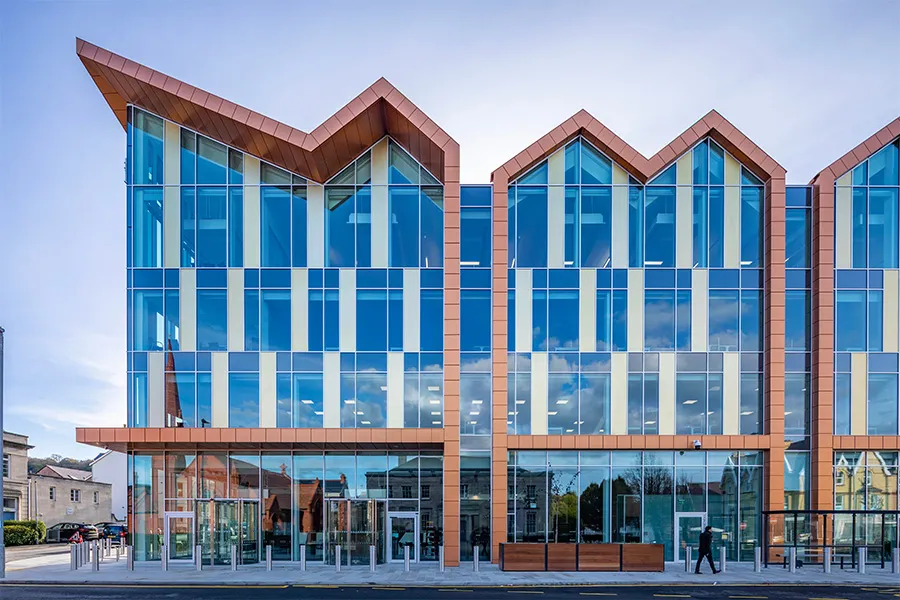
Today’s manufacturing technologies make sustainable glass applications possible. This means that both the production and use of glass systems in the construction sector have no negative impact on the environment. At the same time, glazed façades and internal fire-resistant systems offer benefits to investors and end users: improved thermal and acoustic insulation, and greater safety for occupants. What do you need to know about using glass in modern construction?
Glass is one of the most popular building materials. It is timelessly elegant, readily available and exceptionally environmentally friendly. Glass can be recycled repeatedly, is an excellent insulator and is also chemically inert. These qualities make glass a sustainable, safe and aesthetically pleasing choice with nothing but benefits.
Endless recycling possibilities
In an era of sustainable construction and the drive towards a circular economy, increasing attention is being paid to how materials are sourced and how they can be recycled when buildings are extended or renovated.
One of glass’s greatest advantages is that it can be recycled indefinitely. Although this does not deliver spectacular energy savings compared with aluminium, recycling glass does drastically reduce the amount of waste. This waste can be put to many uses, for example as aggregate in concrete or bituminous materials.
Excellent insulating properties
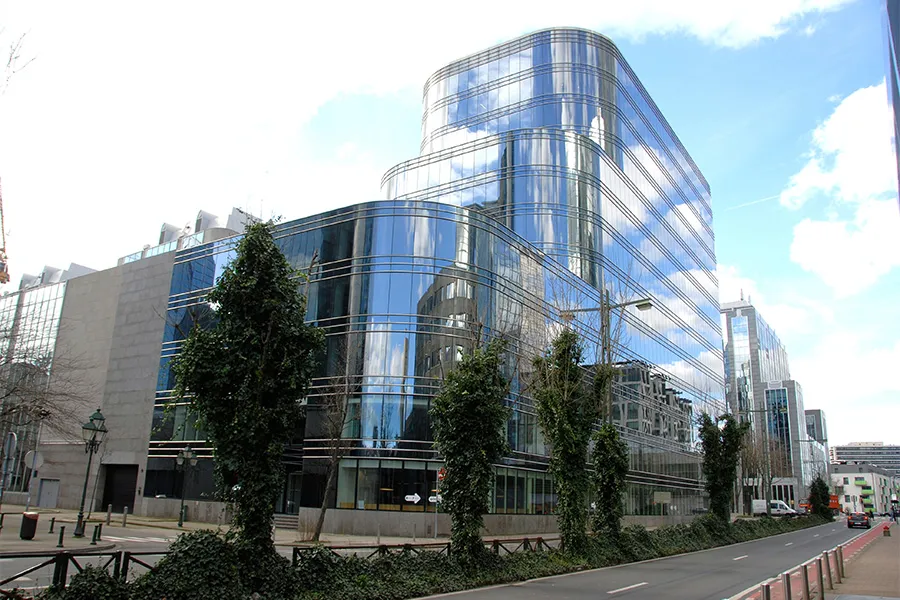
Traditionally, glass was not considered a good insulator, but that changed with the introduction of low-emissivity glass. Modern technologies make it possible to give windows, doors and façade systems excellent insulating properties. The insulation performance of building materials is an important consideration in the industry. Energy consumption in the Belgian construction sector is relatively high compared with buildings in other European countries with similar geographical and climatic conditions. This makes solutions that reduce energy use in new and existing buildings essential.
A good example is the MB-SR50N HI mullion-and-transom façade developed by Aluprof, featuring special two-component insulators. Additional flexible components bonded to the sides of the screws minimise air movement between the installed panes. This construction can also be used for large glazed areas.
Maximum benefits for the end user
Cities have been growing at an ever faster pace for decades. In the Brussels region alone, the population increases by around 0.5 to 0.7 per cent each year. This may not seem like much, but in practice it adds up to a substantial increase. In 1950, 1.4 million people lived in the Brussels region. 70 years later, the figure had reached 2.1 million, almost 25 per cent more.
People who live or work in a large city spend much of their time indoors. A lack of natural light and contact with nature, together with rising noise levels caused by increasing population density, has a negative impact on occupants. To maintain their wellbeing, buildings need to evolve and fulfil new functions. Glass has enormous potential in this respect.
Natural light
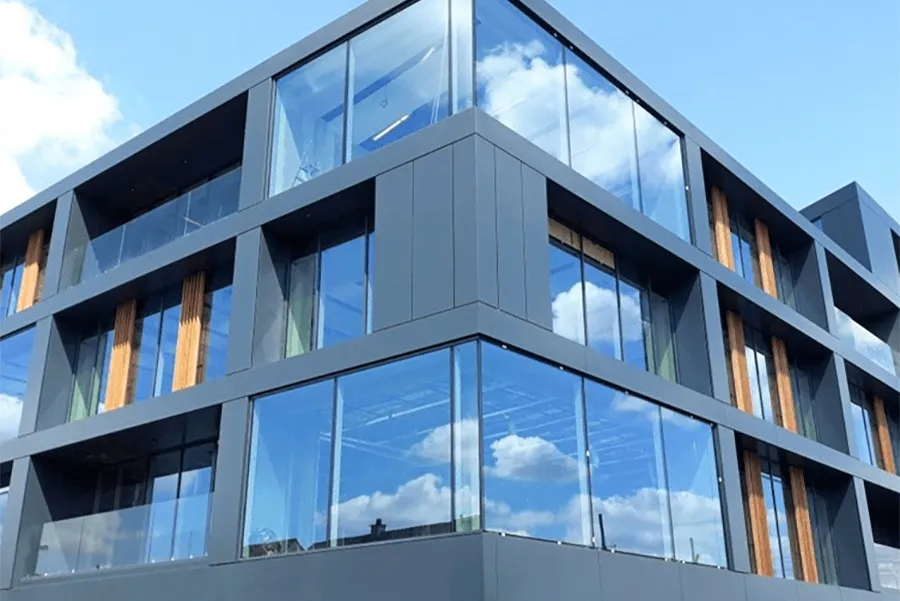
Most city dwellers spend too little time in natural light. Medical studies show that a lack of natural light lowers dopamine levels. This negatively affects our sense of wellbeing, eyesight and sleep patterns, and raises blood pressure. By contrast, studies in offices show that large glazed areas and more natural light significantly increase employee productivity. “Large glazed areas are not a passing architectural trend, but a requirement for a modern lifestyle. It is unthinkable that we will all suddenly return to living in nature. We will therefore need to adapt our surroundings as much as possible to our natural needs,” says Emmanuel Gregoire, Managing Director at Aluprof Belgium NV.
Sustainability and safety
Thirty per cent of Belgian homes are not equipped with smoke detectors. This type of protection is mandatory in commercial premises, but in the event of a fire, the building solutions used determine whether occupants can escape in time. Emmanuel says: “In products from our new Glassprof brand, we use a special radiation-resistant gel that crystallises in the event of a fire. Because the glass does not break or shatter under the heat, but forms a compact partition that limits the spread of smoke and heat, occupants have more time to leave the building safely.”
Reducing noise pollution
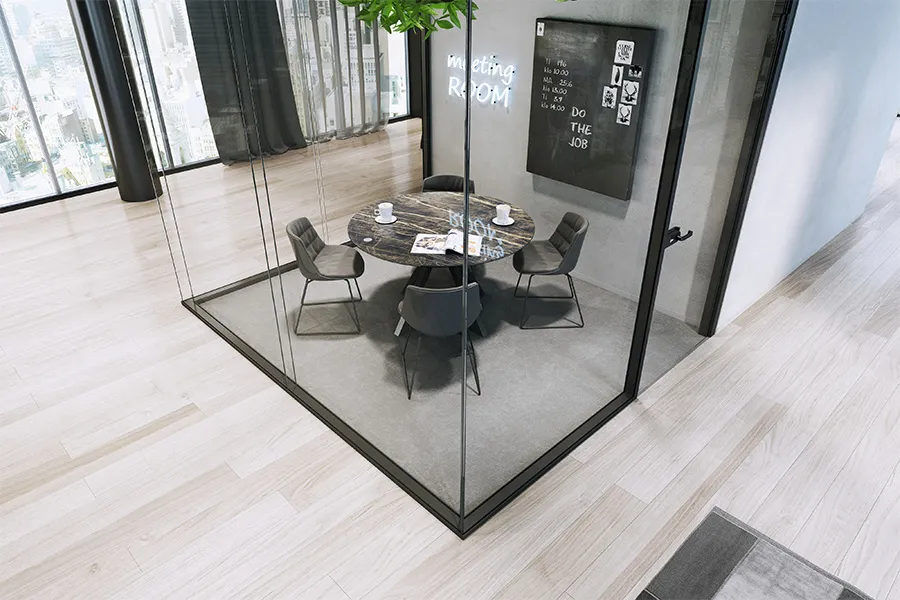
Seventy per cent of the Belgian population is exposed daily to noise levels exceeding the limits recommended by the WHO. This causes stress and affects cardiovascular health and metabolism, with a resulting reduction in life expectancy estimated at eight months. Glass is the perfect answer, as it can actively reduce noise both as façade material and in the form of internal partitions. Glass partitions such as Aluprof’s MB-Harmony Office system meet even more stringent acoustic requirements, achieving an insulation rating of RW 48 dB/ RA1 46 dB.
Let’s Build a Better Future
The outlook for glass in the construction market is bright, both for insulating glass and fire-resistant glass, with growth estimated at 3.5 per cent by 2025. This trend confirms that the industry is increasingly recognising the benefits of glass: its recyclability and insulating performance, its environmental credentials, and the positive impact of light, acoustics and a sense of space on occupants’ wellbeing. Choosing high-quality, aesthetically pleasing glass systems is therefore well worth considering, in both commercial and residential construction.
Question about this story? Ask your question
Keep following this
Get an email when a new story is published. No account needed.
- ThemeBuilding envelopes for a changing climate
- SubjectSustainable & circular