Smart irrigation brings nature back to the city
Text Chloé VanhaesebroeckImage ACO
Making efficient use of rainwater
Climate change is causing increasingly extreme weather conditions, so we need to manage rainwater more thoughtfully. ACO Group, an international player in water management, understands this too. That is why the company is launching a smart irrigation system that cities can use to store rainwater and reuse it only when it is really needed.
“Rainwater is a scarce resource,” says Axel Leybold, team leader of the Smart Solutions department at ACO Group. The company is the world market leader in drainage technology. “Rain showers are becoming shorter but more intense. This creates two extremes: periods of severe drought on the one hand, and major flooding on the other. What is more, trees often lack sufficient space for their roots to grow. Excessive soil compaction prevents oxygen from reaching the roots and impedes drainage. Our tree pit system addresses this: by storing rainwater and keeping it for the dry seasons, it helps prevent flooding in cities. The more of these systems we integrate, the greater their impact on improving the climate.”
The value of old trees
The smart irrigation system is primarily designed to help cities manage rainwater and increase greenery. “The aim is to let trees grow old in the city again,” says Axel. “Measurements show that they can lower a city's temperature by seven degrees, as their leaves provide shade and create cooling through evaporation. In European cities, trees usually live for just ten years, so they remain small and have no impact on the climate. What is more, it is expensive for cities to keep replacing and replanting trees. With the tree pit system, the effective leaf area increases by the third power, which is far more than a tree's height alone.”
Old trees therefore have an impact on the climate, but unfortunately an urban environment is the worst possible place for a tree to grow. The culprit? Soil compaction. “Take a tree near a car park, for example. When cars and lorries drive over its roots, they are deprived of oxygen and can no longer grow. As well as watering the tree, the tree pit system protects it from soil compaction with a strong, load-bearing structure.”
Digital technology for optimum performance
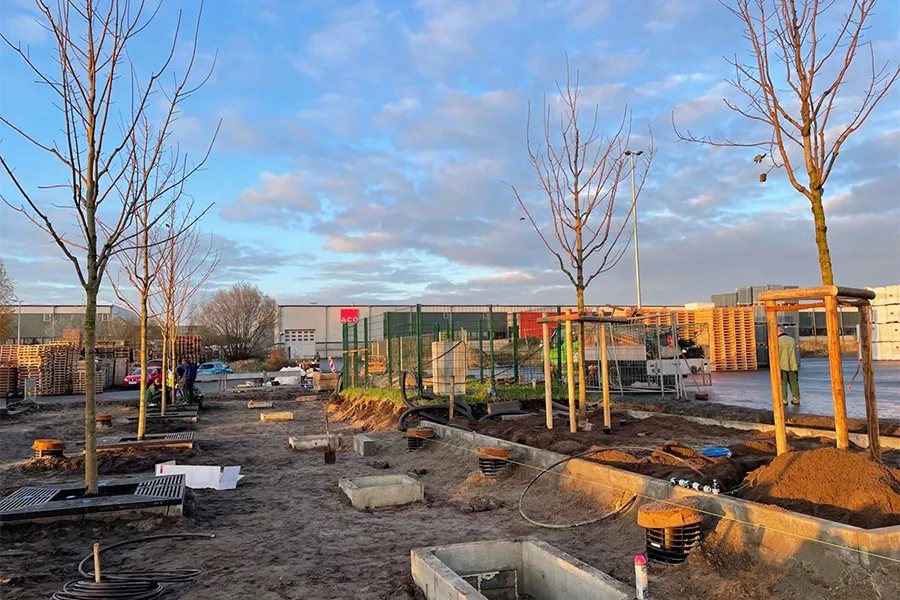
The underground system has four stages: collect, clean, hold and reuse. First, it collects rainwater through drainage into infiltration crates. Once the water has been purified, it is held in a large storage area. Finally, if soil moisture sensors indicate that there is too little moisture, the water is used to nourish the tree.
A digitally enabled intelligent dashboard monitors the entire process by mapping all the factors that influence it. The tree species and soil type, for example, need to be known in order to determine how much water the tree needs. “Sandy soils require more water because it drains through them faster than, for example, in clay soils,” Axel explains. By combining this information with online data such as weather forecasts and sensors that measure soil moisture, the dashboard knows when the system should store and use water. “With this information, you can guarantee the optimum growing conditions for a tree. Depending on all these factors, the system can save large quantities of water while also protecting against flooding, as natural floodplains used to do.”
A liveable city
No two tree pit systems are the same, as the options for water supply and storage vary. “At ACO Group, we look for the right tools and put together the complete system to meet the customer's needs. Combined with all the intelligence that controls the irrigation, this makes our system unique.”
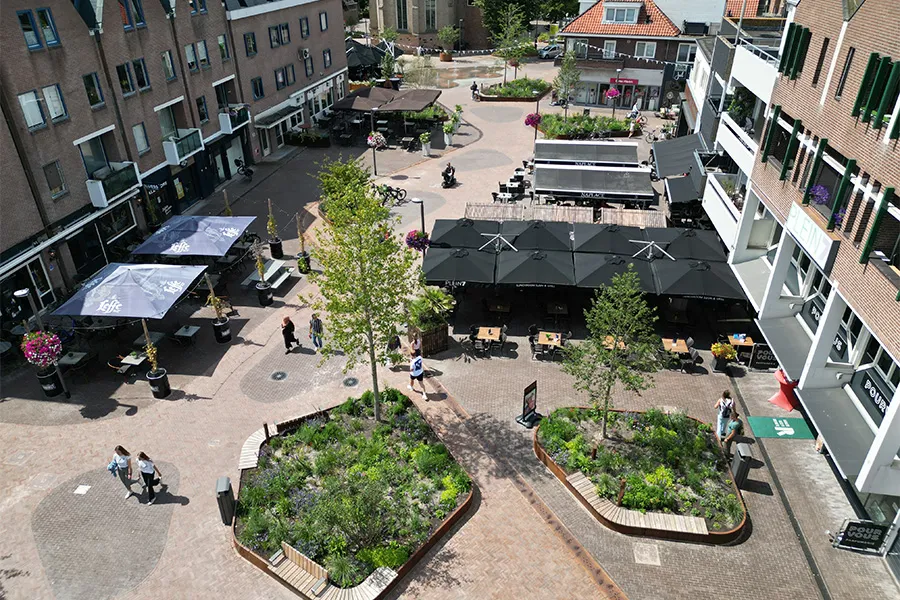
The tree pit system helps cities become greener. In the centre of the Dutch city of Raalte, ACO Nederland turned a car park into a natural environment. Axel says: “Old trees offer many benefits. They are not only good for the climate, they also boost our own wellbeing. People enjoy spending time in the city centre again. Because all the plants are natural and suited to the location, creatures such as birds and insects find their way back to the city. So the system is not just a technical solution. It brings nature into the city and makes it liveable again.”
Question about this story? Ask your question
Keep following this
Get an email when a new story is published. No account needed.
- ThemeDesigning green and outdoor spaces
- SubjectSustainable & circular