Public washrooms
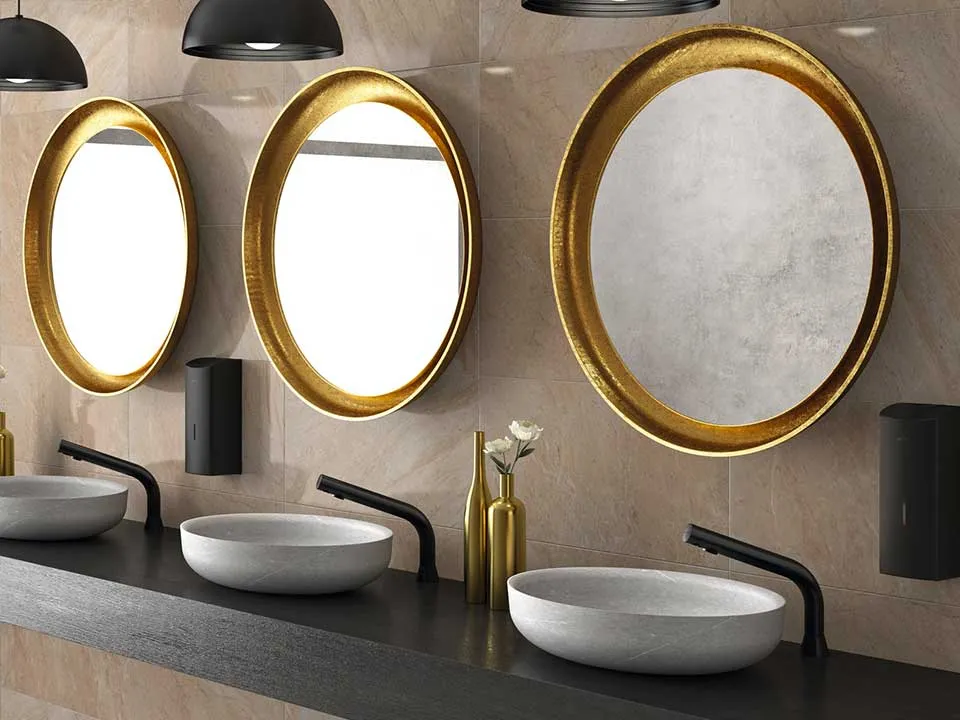
Smart product choices for hygiene and wellbeing.
The current global health crisis has forced us to live in a smaller world, where we work from home, can no longer enjoy cultural outings and have limited social contact, among other things. As this situation has now lasted for almost a year, there is much speculation and many predictions about its possible lasting impact on our lives. We can already see that new habits have emerged, mindsets have changed and new rules have been imposed.
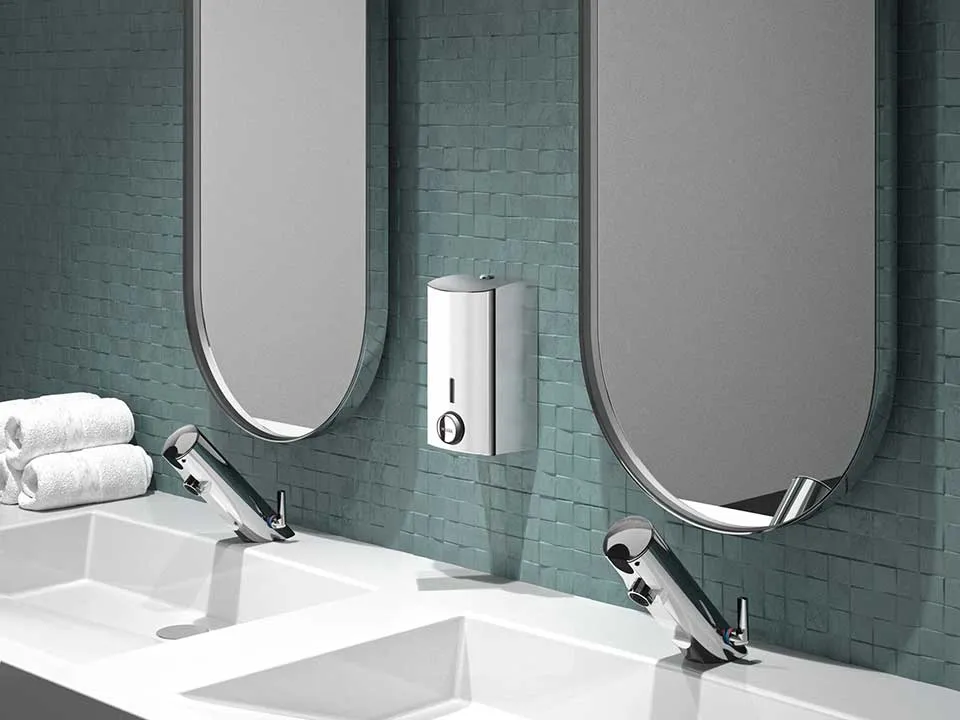
After months without a social life, some people find it daunting to venture out again. Naturally, they hope to catch up, hone their skills and unleash their creativity, but above all they want to feel comfortable and safe. It may sound strange, but the washrooms in public and commercial buildings also play an important role in this sense of comfort and safety. Users expect washrooms to be not only clean and accessible, but also places where they can relax and feel comfortable. The image of a public institution is therefore quickly reflected in its washrooms. People tend to associate the quality of an establishment with the quality of its toilets.
Choosing the right products can help: taps and accessories should have a clean-lined design with minimal joints, so dirt and bacteria cannot accumulate. Models with this type of design have a clear hygiene advantage over those with a more complex design. Public washrooms need taps and accessories that can withstand regular cleaning and are durable and reliable.
Saving water and energy
Self-closing electronic basin taps not only improve hygiene by eliminating the need to touch the tap after washing your hands. Choosing smart technology can also save water and energy. Flow regulators and self-closing taps are among the popular solutions for reducing water bills. Sensor taps that are activated only when a user is detected and switch off when no one is present can reduce consumption even further, saving up to 90 per cent compared with mechanical taps.
Did you know that the extra cost of buying a mechanical or electronic self-closing tap can be recouped in just a few months? A bar with 2 mechanically self-closing basin taps, each with a flow rate of 3 l/min and a 7-second shut-off delay, used an average of 50 times a day over 200 working days, saves 82 cubic metres of water a year, or €369 (at an average price of €4.5 per cubic metre).
Reduced water consumption also has a positive effect on energy use. Using less hot water means less energy is needed to heat it. This in turn affects the design of the washroom installation. The energy source can also be taken into account. Active infrared pulse technology, for example, is a low-power solution because the detection beam is emitted intermittently. All this also contributes to a positive rating under environmental certification schemes such as BREEAM.
Complete hygiene
Touch-free operation prevents germs from being transferred via the hands. When a tap is not used regularly, water stagnates in the pipes and bacteria can develop. To prevent this, Delabie electronic taps are equipped with an automatic flushing system that flushes the pipes every 24 hours after the last use.
The key to success is understanding the fundamental differences between a domestic bathroom and a public washroom, including how they are used and abused. This also makes it easier to choose the right products.
A business enquiry for Delabie? Get in touch
Companies in this story

Keep following this
Get an email when a new story is published. No account needed.
- ThemeKitchens and bathrooms as architecture
- SubjectSustainable & circular
- CompanyDelabie