Construction sector backs renewed climate plan
Text Eva GoossensImage Mungkhoodstudio’s Images en AndreyPopov van Getty Images by Canva

As part of our sustainability feature, we take another look at the renewed Flemish climate plan. It raises the bar for energy-efficient buildings in Flanders. “The construction sector is doing its part to support this renewed climate plan,” says Embuild Vlaanderen. “But we are calling for this ambitious long-term pathway to be safeguarded, with no changes to the rules halfway through. Both clients and construction companies need legal certainty.”
Embuild Vlaanderen is resolute: “The construction sector is doing everything it can to improve the energy efficiency of buildings. In both new-build construction and the renovation obligation for new owners, Flanders is consistently setting the bar higher than the EU requires. In line with the tightening pathway towards energy label A for all buildings, the sector is preparing to ensure the necessary capacity is in place in time.”
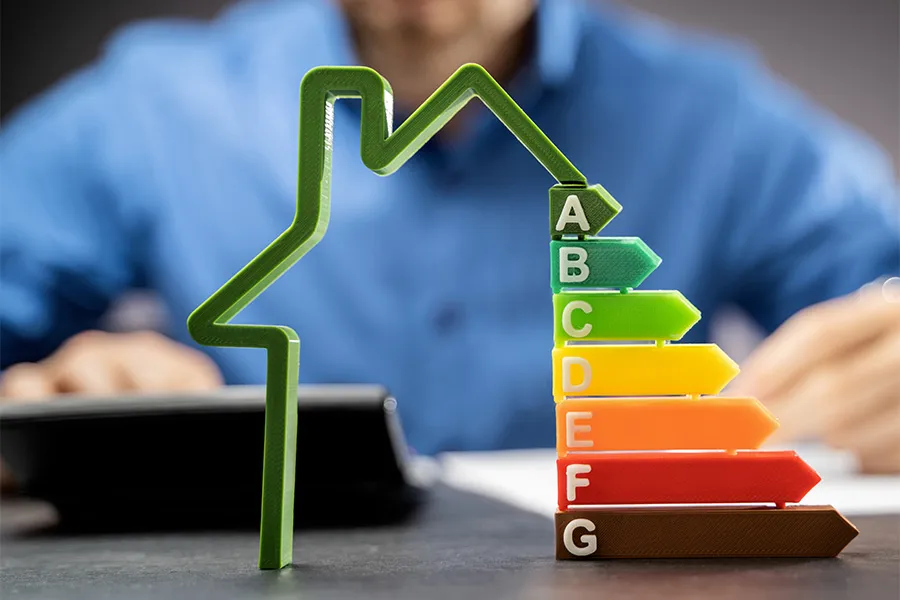
Flanders exceeds EU ambitions
According to Embuild Vlaanderen, the climate challenge can only be tackled effectively with concrete, effective and coherent measures that are consistently upheld. ‘Stick to the plan’, even when it is ambitious. That is precisely why Flanders aims to do more for energy-efficient buildings than the European directives require. While all new-build construction in Flanders must be fossil-free from 2025, the EU has set 2028 as its target, and 2026 for public buildings or public spaces. In addition, renewable energy generation is already mandatory in Flanders for new-build construction and major renovations, while the EU has set 2028 as the target for new-build construction and 2032 for renovations. Then there is the renovation obligation: new owners in Flanders must already renovate their building to at least energy label D within five years. The EU wants this requirement to apply to homes by 2033 and other buildings by 2030. The tightening pathway for energy renovations in Flanders is now largely known. The Flemish government will progressively raise the bar for energy renovations in 2028 and 2035, ultimately requiring homes to achieve label A by 2040 and apartments by 2045. These dates are ten and five years earlier, respectively, than the European requirement. •
Question about this story? Ask your question
Keep following this
Get an email when a new story is published. No account needed.
- SubjectSustainable & circular