Climate neutral by 2050? Febeliec chief: ‘The cost of the energy transition will be enormous’
Europe aims to be climate neutral by 2050. How is Belgian industry faring? How green and sustainable is it today?
Will we meet the target of cutting CO2 emissions by 55 per cent by 2030? And what about the ambition to become fully climate neutral by 2050? These questions were put to Peter Claes, head of Febeliec, for ‘Building a positive energy story’, the interview series by gas.be. “Above all, we must make sure we do not lose our economic activity and prosperity in this process. And we must look for viable solutions,” says Claes.
“Making our energy use more sustainable remains a huge challenge for every sector,” Claes begins. “We are lagging behind some other European countries in this respect. That is, of course, due to our spatial planning and the options available to us: we have few natural resources that are useful for generating electricity. And developing infrastructure for renewable energy is not easy. Just think of public opposition to large onshore wind farm projects or new high-voltage power lines.” That is why, Claes says, the first priority for delivering the energy transition is to convince the public. “Citizens have a strong voice when it comes to major infrastructure projects, which is a good thing, but at the same time it holds back progress. We need to bring the public on board if we want the energy transition to succeed.”
Is 2030 too soon?
There is clearly a lot to do, and the bar is set high. Too high? “Cutting CO2 emissions by 55 per cent by 2030 is a huge undertaking. Even 40 per cent would have been difficult,” Claes admits. We are in a better position to meet the ambition of being climate neutral by 2050: “By then, three major technologies will be available: renewable energy, coupled with storage and conversion into hydrogen or other molecules; fossil fuels, with the resulting CO2 put to beneficial use or stored; and new nuclear energy, reviled by many but free of CO2 emissions.”
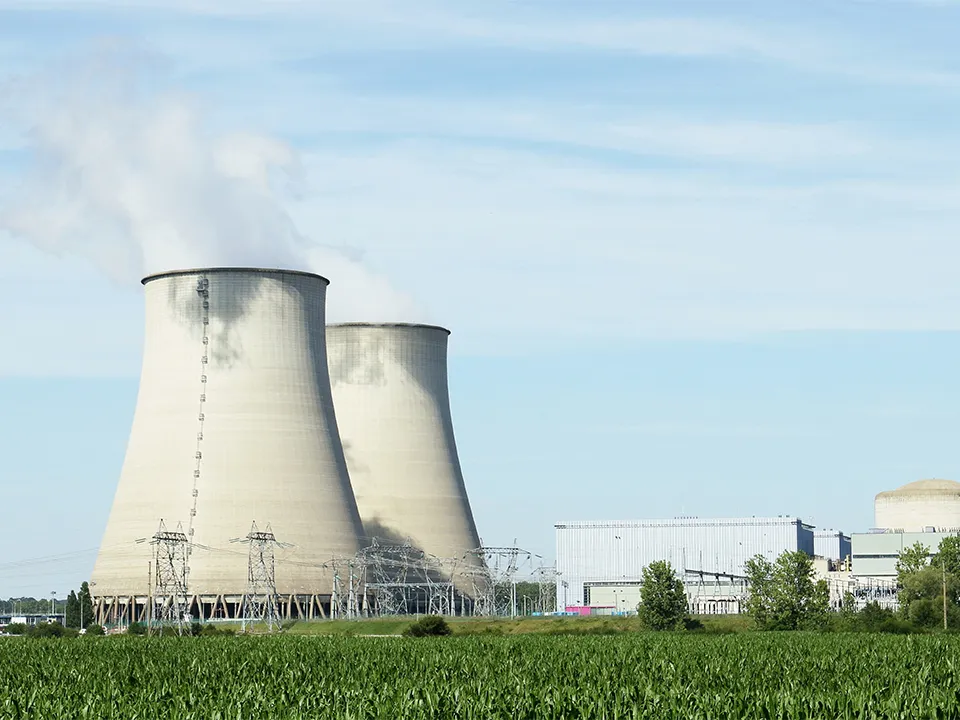
The planned nuclear phase-out in 2025, and the uncertainty surrounding it, make matters no easier, Claes says. “If we replace the Doel and Tihange plants with gas-fired power stations, both CO2 emissions and costs will rise again. Moreover, the debate over these two plants is separate from the discussion about the future role of nuclear energy. We can consider new, efficient and safe plants by 2050. That will, of course, require huge investment, but the same is true of other technologies.” Above all, Febeliec wants a long-term outlook. “It has still not been decided what will replace nuclear energy. Security of supply must not be put at risk under any circumstances,” says Claes.
Staying competitive
One thing is beyond doubt: the energy transition will be enormously costly. Who will pay for it? Industry cannot foot the entire bill, Claes believes. “Our businesses have to compete with companies from all over the world. If energy becomes unaffordable, they will move to other parts of the world, costing us prosperity, jobs and added value.” A carbon tax on imported products is one option, but Claes urges caution here too. “It is a double-edged sword. China, for instance, could decide to impose additional taxes on our products in turn. That could threaten global trade as a whole. It is a delicate balancing act that will take time.” Claes says governments can play a guiding role: “Public support can give new technologies and infrastructure an initial boost, and create new opportunities.”
Should energy become more expensive to make people and businesses more aware of its cost? Claes also calls for realism on this point: “Our electricity is already 10 to 40 per cent more expensive than in neighbouring countries. This puts our businesses at a disadvantage.”
New technologies
According to Claes, Belgian industry has already invested heavily in greening its processes. “Existing processes have already been significantly improved. But more is needed: we need to make technological progress and develop new technologies,” says Claes. “Further development of green hydrogen, for example, requires huge investment in research and development. This is certainly something we need to focus on in the coming decades. Every company wants this, just as everyone is now desperate for a coronavirus vaccine. Gas is already very important to industry, and if it can be produced in a climate-neutral way, that will of course be explored,” concludes the head of Febeliec.
Question about this story? Ask your question
Keep following this
Get an email when a new story is published. No account needed.
- SubjectSustainable & circular