Building circularity on trust
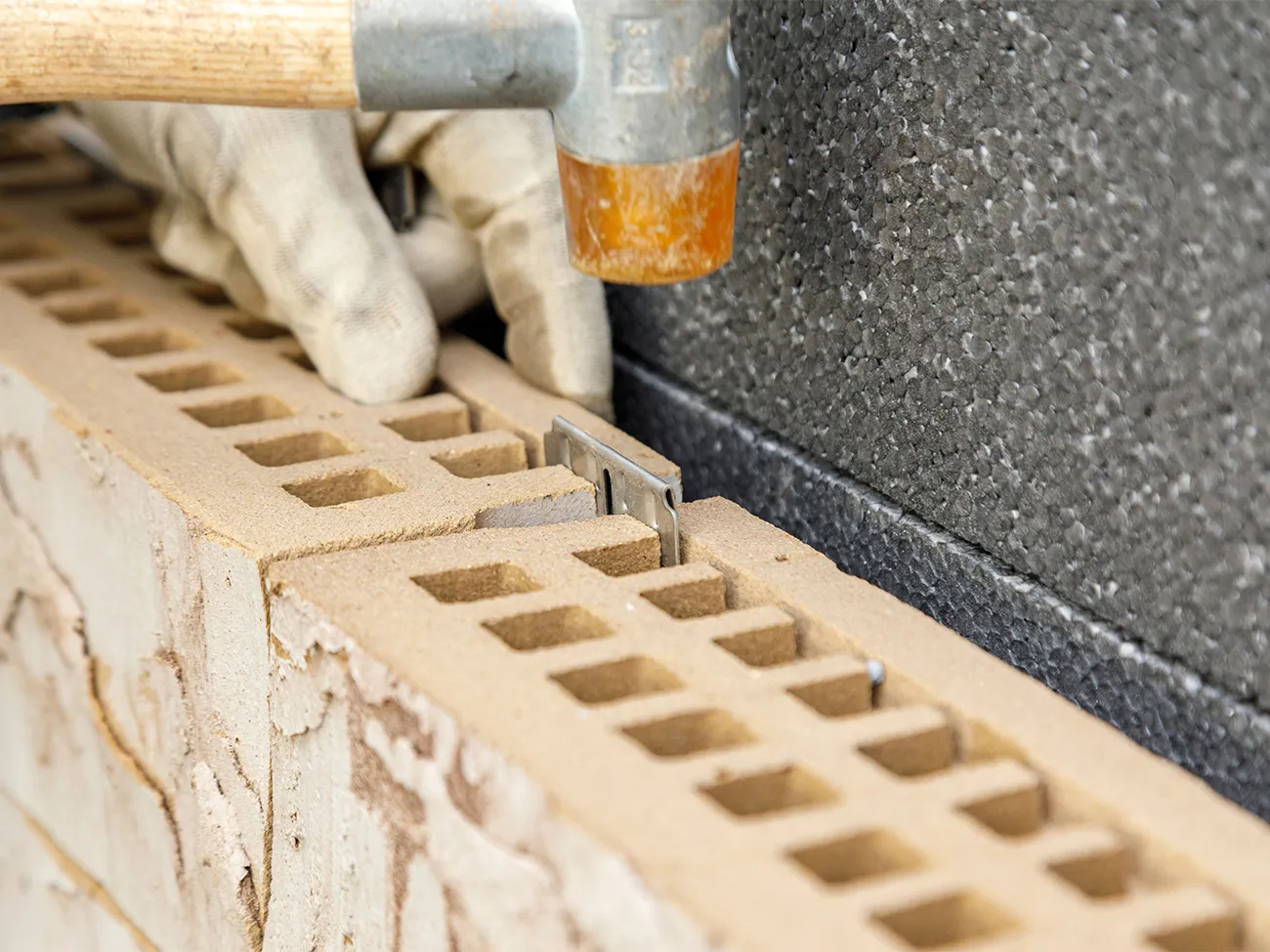
Circular construction is a must, and everyone agrees. Clay roof tiles, clay pavers and bricks are ideally suited to circular construction projects thanks to their long service life and potential for reuse and recycling. One example is ClickBrick, a system for installing facade bricks so they can be dismantled, without mortar or adhesive.
Circular by nature
Wienerberger’s familiar building products, namely clay roof tiles, clay pavers and bricks, are circular by nature. They have a long service life and are easy to dismantle and reuse.
Clay roof tiles are secured mechanically, so they can be put to good use again even after many decades, for example when adapting or extending your home. If any tiles are damaged in the process, or extra tiles are needed, they can usually be replaced or supplemented with a clay roof tile from the Koramic range.
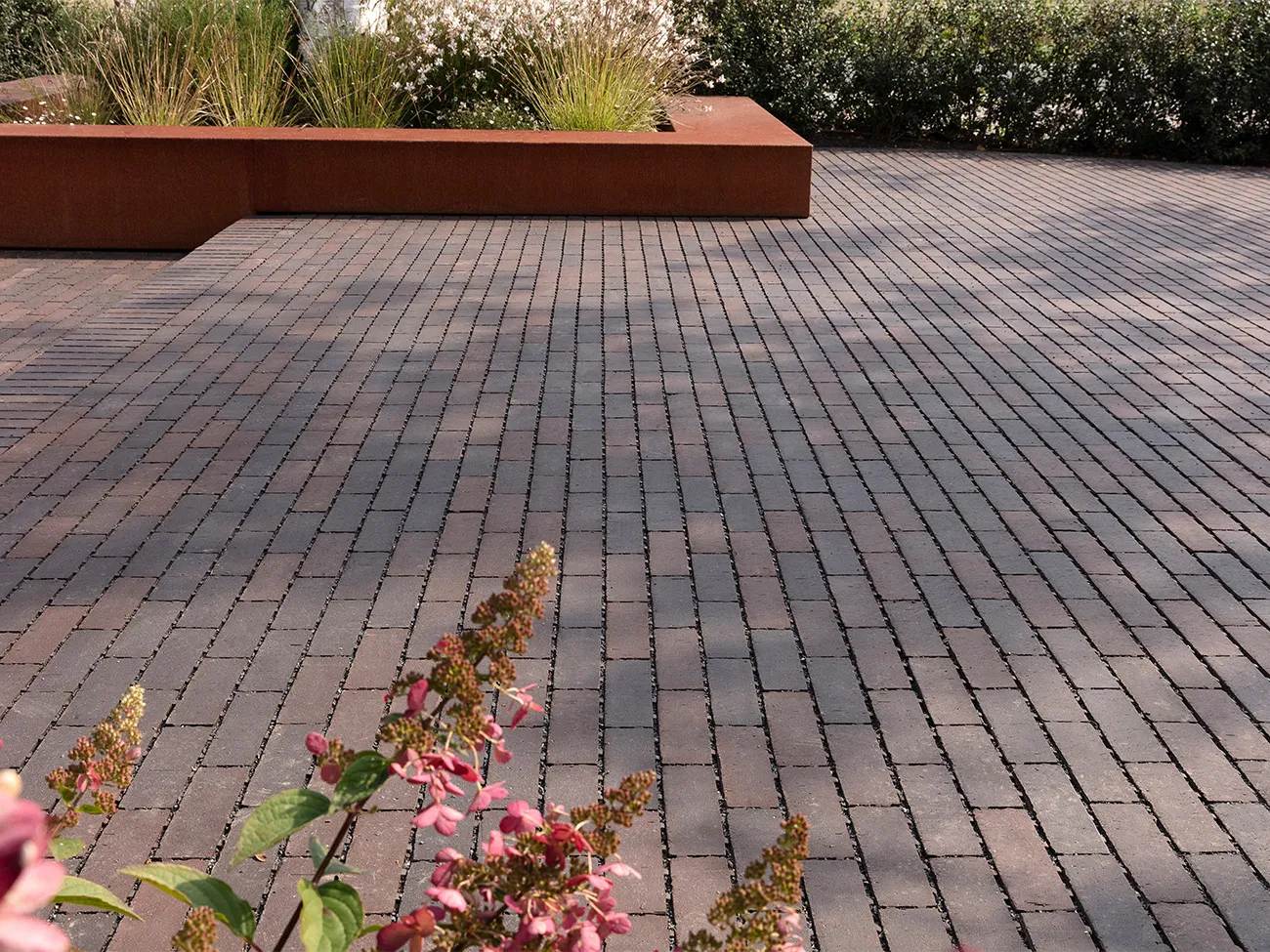
Clay pavers can also be easily lifted and reused as garden paving, surfacing around a swimming pool or a driveway. Their reusability also comes in handy when work is needed on a driveway or garden paving, for example to modify the sewerage system or extend the electricity supply. Wienerberger’s water-permeable Passaqua collection also allows water to seep through the joints into the ground, offering an additional sustainability benefit.
To make bricks reusable, lime mortar can be used as a masonry mortar, as it can easily be separated from the bricks afterwards. This means facade bricks can be salvaged for new masonry with minimal losses. One example can be found in Kortrijk, where social housing company Wonen Regio Kortrijk is replacing the dilapidated single-family homes at Tuighuisstraat 18 with 31 new residential units, salvaging the 100-year-old bricks and supplementing them with new bricks in lime-mortar facade masonry.
Demountable brick facades
With ClickBrick, Wienerberger offers an innovative circular construction system for dry-stacking facade bricks. This installation method makes the bricks easy to dismantle and reuse later. ClickBrick, which is Cradle to Cradle certified, therefore marks a major breakthrough in the sector’s use of circular materials.
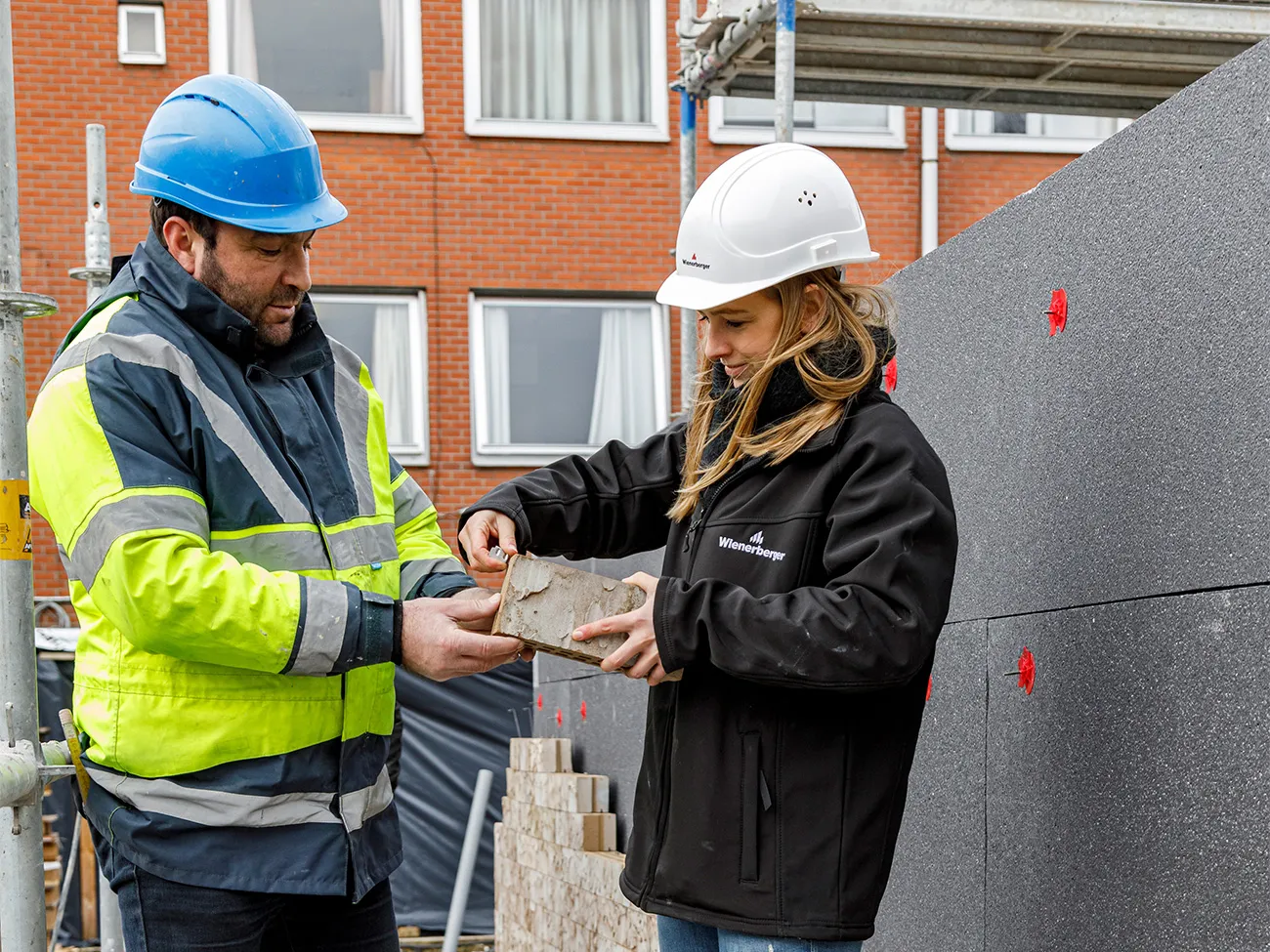
Smartly anchored. As the term suggests, the dry-stacking system uses no mortar or adhesive. Instead, it relies on an exceptionally robust mechanical fixing system with stainless steel clips and matching cavity wall ties. Installation is straightforward and fast, and unaffected by weather conditions, making it easier to schedule the construction phase. No specialist masonry skills are required, which helps address the shortage of skilled tradespeople on site. Project support and tailored advice on technical and aesthetic detailing, as well as accessories, ensure a high-quality finish.
Aesthetic freedom. The ClickBrick system uses precision-calibrated grooved bricks with extremely tight dimensional tolerances. This ensures there is no visible variation across the facades. The Wienerberger ClickBrick range is available in a variety of colours and textures. With no joints, a ClickBrick facade contains a higher proportion of facing brick than a traditional brick facade. This allows the colour, shape and texture of the bricks to stand out to best effect.
Tested and approved
A VUB study shows that after 30 years, a ClickBrick facade retains as much as 70% of its value when dismantled and can be put to excellent use in a subsequent construction project. Its financial value remains surprisingly high even after a longer service life. When dismantled after 50 years, it still has a residual value of 56%. A life cycle assessment (LCA) also shows that ClickBrick has a demonstrably low environmental impact. This is thanks to several qualities of the bricks. They have a long service life and do not need to be replaced. The system requires just two materials: brick and metal. Dismantling requires minimal labour and can be carried out without damaging the bricks, allowing them to be reused without loss.
The proof of the pudding: in practice
Made for ambitious projects. ClickBrick has more than proven its technical merits in numerous projects abroad. Several projects are also under way in Belgium. The system is being used to renovate and extend the Ten Dries youth residential centre in Sint-Denijs (Zwevegem), with a new-build extension designed by BAST architects & engineers. This project sets a high bar for social, environmental and economic sustainability.
The architects proposed to the client, the non-profit organisation Jongerenzorg Zuid-West-Vlaanderen, that the existing street-facing facade be opened up to create a central meeting place connected to its surroundings. This is flanked by a multifunctional building and a structural frame retained from the demolition, which serves as a covered outdoor space. The site will also gain two new residences for children or young people in special youth care and their carers. The facades of the two new residences and the multifunctional building will be built using ClickBrick.
Circularity also means reusing spaces
Intelligent structural shells. Buildings consist of different layers, such as the load-bearing structure (shell), insulation and finishes. Each layer has a different service life. To prevent work on one layer from affecting the service life of another, ideally they should be modifiable independently. PLS Newton, the Porotherm high-strength masonry block with extra-high compressive strength, makes this possible. Its load-bearing capacity allows large, open spaces to be created that can later be adapted and reconfigured with great flexibility. The result is an intelligent structural shell with a service life of 100 years or more that can be reused almost indefinitely, even if its use or purpose changes or the insulation and facade cladding need to be updated.
If it cannot be reused, recycle it
Reuse is not always possible, of course, but ceramic building products need not go to waste. Clay roof tiles and bricks that cannot be reused can be recovered, broken up, separated and ground down, then used again as raw materials.
At Wienerberger, production waste from firing is systematically reused as a raw material. It is no coincidence that all Porotherm internal wall bricks carry the Cradle to Cradle Silver label.
Question about this story? Ask your question
Keep following this
Get an email when a new story is published. No account needed.
- ThemeCircular construction and material awareness
- SubjectSustainable & circular