BREEAM makes sustainability tangible

Sustainability has unequivocally evolved from a ‘nice to have’ into a ‘must have’. What is more, in 2021, more and more businesses, including SMEs and even property developers with residential projects, see the value in going beyond what the law requires. BREEAM certification makes these extra efforts measurable, bringing benefits to different departments within a company and to its various stakeholders. Not to mention its positive impact on making our society more sustainable. Build or renovate for the future today, for your business and the world of tomorrow.
“We are convinced that businesses can have a positive impact on making our world more sustainable. That is why we want to support and guide them as they take a future-focused approach to business and achieve growth, helped by building a credible sustainable image. We are committed to helping businesses succeed with confidence over the long term.” So says Steve Van den Brandt, Business Unit Manager Green Building at Encon and BREEAM Expert & Assessor. We meet him for an interesting conversation about more than ten years of BREEAM.
BREEAM International
Demand for sustainability is greater than ever, accompanied by growing interest in certification. BREEAM stands for Building Research Establishment Environmental Assessment Method, a sustainable building standard developed in 1990 by the British building research centre BRE Group. With almost 600,000 certificates in 93 countries, it is the world’s leading sustainability standard. LEED, short for Leadership in Energy and Environmental Design, is also used in our country. It is a certification scheme that originated in the United States. Some European countries have their own variants, such as DGNB in Germany. In addition, five countries, the Netherlands, the United Kingdom, Spain, Norway and Sweden, have now developed their own BREEAM schemes, tailored to their national legislation. Belgium does not have one, and uses BREEAM International. “That is not necessarily a disadvantage,” says Steve Van den Brandt. “A local scheme may make things slightly easier in some respects, but the international scheme also offers a robust methodology. What is more, the international standard is more interesting for businesses operating across national borders. It makes it easier to compare buildings around the world.”
No ‘one size fits all’ solution
How does BREEAM work? The scheme covers ten categories: management, energy, water, ecology, health and wellbeing, transport, materials, waste, pollution and innovation. Together, these categories encompass around 100 sustainability criteria for which credits can be earned. For example, ‘visual comfort’ is worth two credits in the ‘health and wellbeing’ category. The points are then multiplied by a weighting factor, producing an overall score that determines the classification: BREEAM Pass, Good, Very Good, Excellent or Outstanding.
Throughout the process, the project team is supported by a BREEAM Expert, who works with the team to integrate sustainability into the building project and assists with the evidence requirements. The BREEAM Assessor, meanwhile, acts as an independent auditor and coordinates the assessment with BRE. Once approved, the certificate is awarded. Steve Van den Brandt: “BREEAM is a menu of options. You choose what to include and set your own level of ambition. That is BREEAM’s strength: sustainability across the board. There is no ‘one size fits all’ solution to sustainability. The key is to identify which criteria will add value to your business or project. What is the unique balance between economics, ecology and wellbeing? That, too, determines the final approach to sustainability.”
Who and what is it for?
Which businesses and buildings are pursuing BREEAM certification in 2021? Steve Van den Brandt: “Today, certification for, say, an office building in Brussels is no longer questioned. It is not unusual for a single building to have three certificates: BREEAM for sustainability across the board, WELL, which focuses on employee wellbeing and comfort, and, for example, German DGNB certification, which emphasises circularity. We are also seeing another trend. Whereas BREEAM used to be mainly for large businesses, with a focus on offices, industry and retail, we now also support SMEs and, over the past two years, residential projects with certification. These are not so much single-family homes yet, but apartment buildings and even residential neighbourhoods that are pursuing sustainability and creating added value.” This is a positive trend, because building for the future today avoids costs down the line and also maximises residents’ comfort.
Why BREEAM?
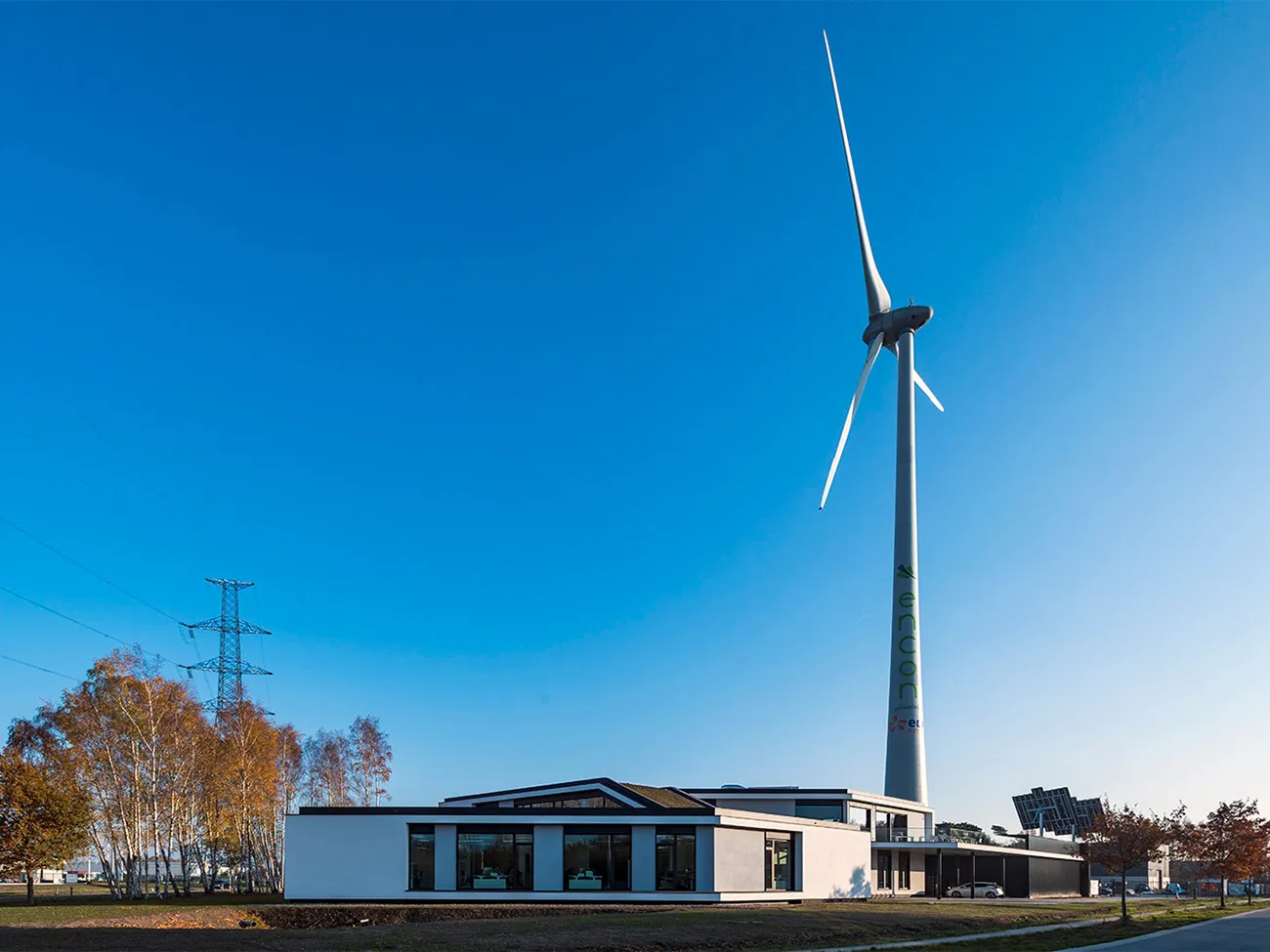
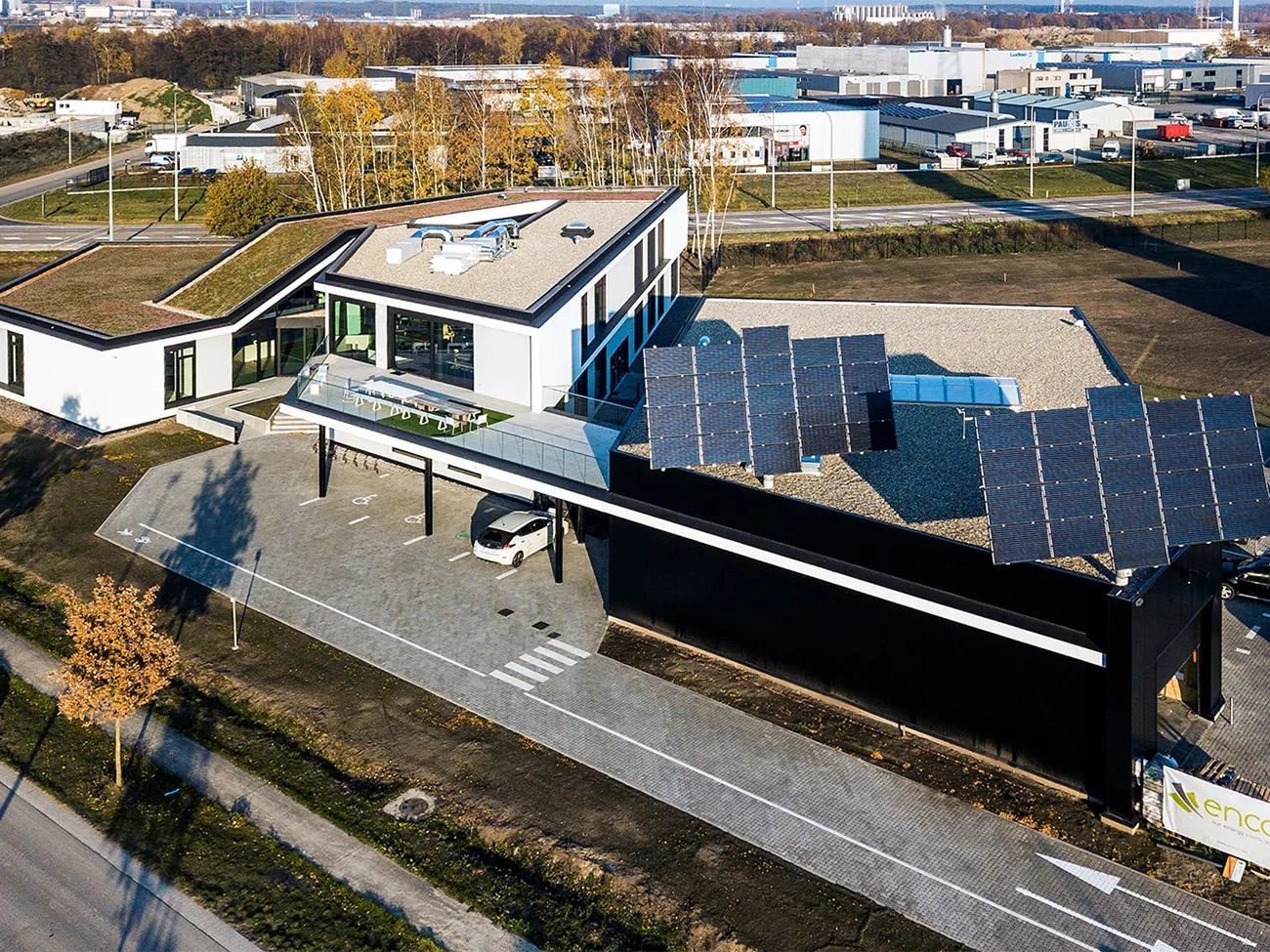
Is BREEAM too expensive and too demanding? Steve Van den Brandt: “I disagree. Either your level of ambition is too high, or you have not selected the right sustainability criteria, ones that will also pay for themselves. Sustainability is a form of systems thinking that affects various departments within an organisation: finance, sales and marketing, operations and, ultimately, even HR. First and foremost, BREEAM increases a property’s value. Our own Encon headquarters, which is BREEAM Outstanding and LEED Gold certified, is now worth 21 per cent more than its initial construction cost. Its value is also protected for longer. This is no small matter, given that buildings are often built today not for 20 years, but for 40 years or more. When applied in the right way, BREEAM can also have a positive impact on sales and marketing for some businesses, and serves as a powerful communications tool, like other certificates. It also stands to reason that a sustainable building reduces operating costs, such as energy and water. Finally, certain aspects of BREAAM can give employer branding a positive boost. Employees are looking for a pleasant and sustainable environment. Since Encon moved to its new Infinity office, the number of speculative job applications has almost tripled. That is a significant asset in the ‘war for talent’.” So yes, BREEAM comes at an additional cost, but you get much of it back through the return on investment. And sustainability will only become more important. So do not miss the express train. Sustainability is the way to go.
Question about this story? Ask your question
Keep following this
Get an email when a new story is published. No account needed.
- SubjectSustainable & circular