A case for embracing the circular transition
Text Eva GoossensImage René de Wit, The Book Photographer
“Architecture as a celebration of the existing”
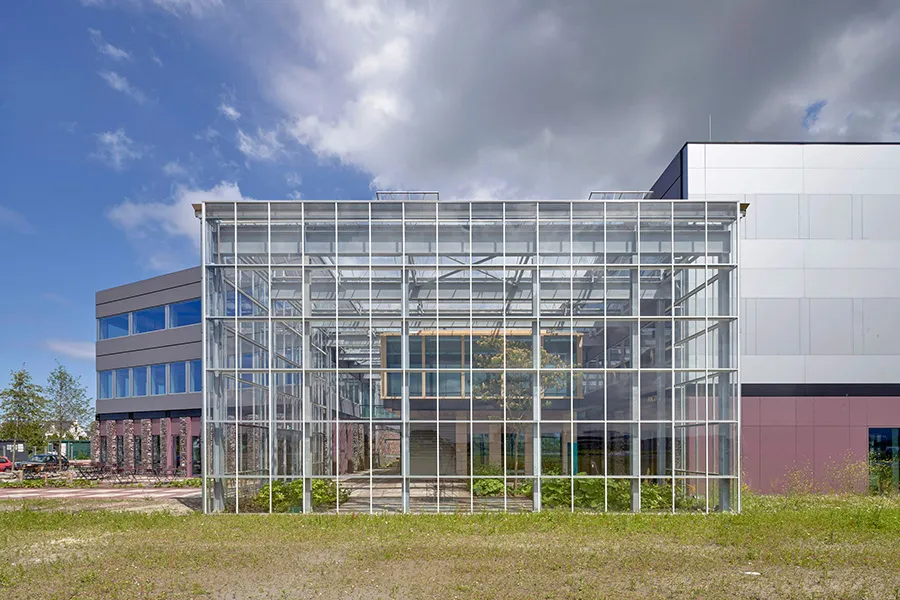
In our search for ways to make things more sustainable and, above all, more circular, we are also willing to look beyond our borders. Our northern neighbours are making good progress. The book Reuse to Reduce by Popma ter Steege Architecten (PTSA) was recently published. At the heart of this English-language work is the award-winning BioPartner 5 project, a new laboratory at Leiden Bio Science Park and the first ‘Paris-proof’ building in the Netherlands.
“After BioPartner 5 was completed, we gave a great many tours and presentations, and the question was always: but how? Many people are daunted by the idea of working with reused materials. That’s how the book came about,” says Josse Popma, architect and partner at PTSA. “We wanted to offer a more general answer about what circular design means for our profession.”
Finite materials as a starting point
How does architecture change when planetary boundaries become the starting point for our designs? Can the reuse of materials be harnessed to create a new aesthetic? These are some of the questions that led to the book Reuse to Reduce. Jan Willem ter Steege, architect and partner at PTSA, says: “In our book, we portray sustainability and the circular transition as a societal and cultural challenge. We advocate a way of working that combines design principles, such as designing to a CO2 budget, hybrid structures and collage aesthetics, with a strong focus on the value of the story of a place and the history of materials. As architects, we shape and tell these stories, giving our buildings meaning. Reusing materials offers an additional opportunity to tell stories that resonate with our times.”
The architect as collector
The subject PTSA is exploring is closely aligned with the work of architecture critic Aaron Betsky, who also contributed to the book. Betsky says: “I think it is important that we unlock the world inherited from our ancestors and use it in a new way. To do that, it is important to move away from the idea of the architect as hero, the genius who conjures something out of nothing. Instead, we should embrace the idea of the architect as collector, discoverer, composer or collagist. I would even add a kind of thief, someone who uses what already exists.”
Paris-proof
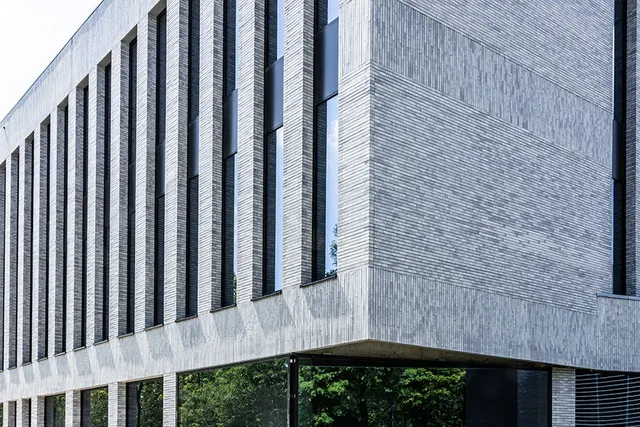
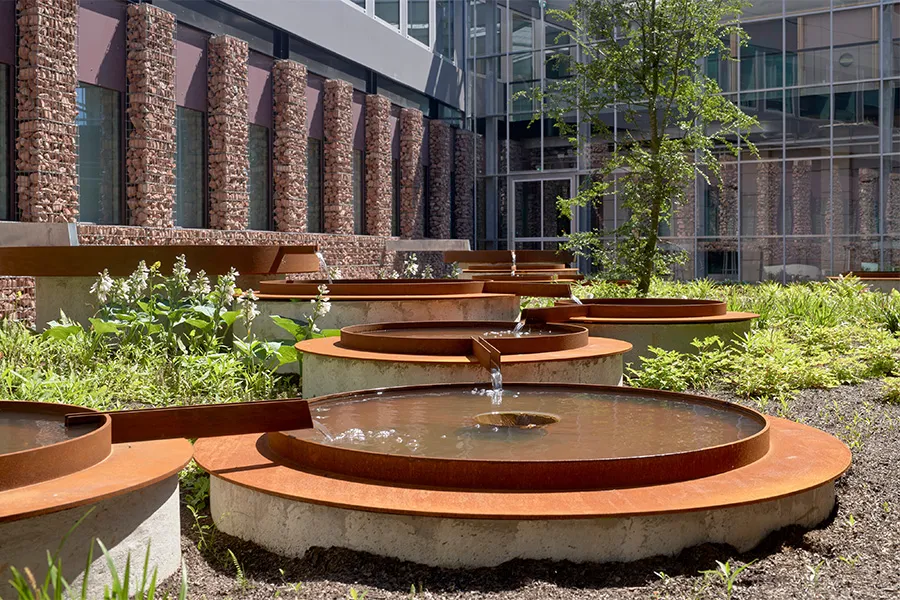
In the book, the architects give concrete examples of design measures to reduce the carbon footprint of buildings. They do so using BioPartner 5, a building they designed. With emissions of 212 kg CO2 eq./m2, BioPartner 5 is the first new non-residential building in the Netherlands to meet the Paris climate targets. Extensive reuse of building materials, including a 165,000-kilo reclaimed steel structure, is combined with a considered, aesthetic design language that expresses the transition to a world without waste. BioPartner 5’s structure has also been designed for easy disassembly at the end of its life cycle, so that it can be reused again, for a third time. A fine example of what can be done.
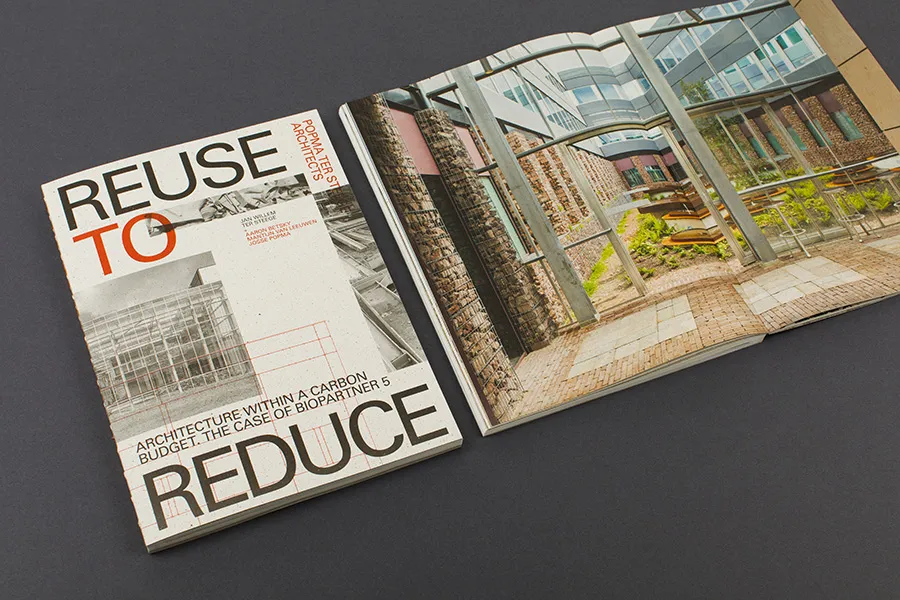
About the book Reuse to Reduce
Authors: Aaron Betsky, Mantijn van Leeuwen, Josse Popma, Jan Willem ter Steege
Design: Tariq Heijboer
Cover photo: The Book Photographer
Publisher: Jap Sam Books
Language: English
Price: € 29.90
Available from bookshops or to order directly: www.japsambooks.nl
WIN!
Enter for a chance to win one of two copies of the book ‘Reuse to Reduce’. How? Follow ArchiComm BE on LinkedIn and like the post. Entries close on 31 October 2023. The winners will be contacted personally and receive the book by post.
Question about this story? Ask your question
In this story
- Project:BioPartner 5
- Location:Leiden
- Architect:PTSA
Keep following this
Get an email when a new story is published. No account needed.
- ThemeCircular construction and material awareness
- SubjectSustainable & circular