THE SILO in Copenhagen
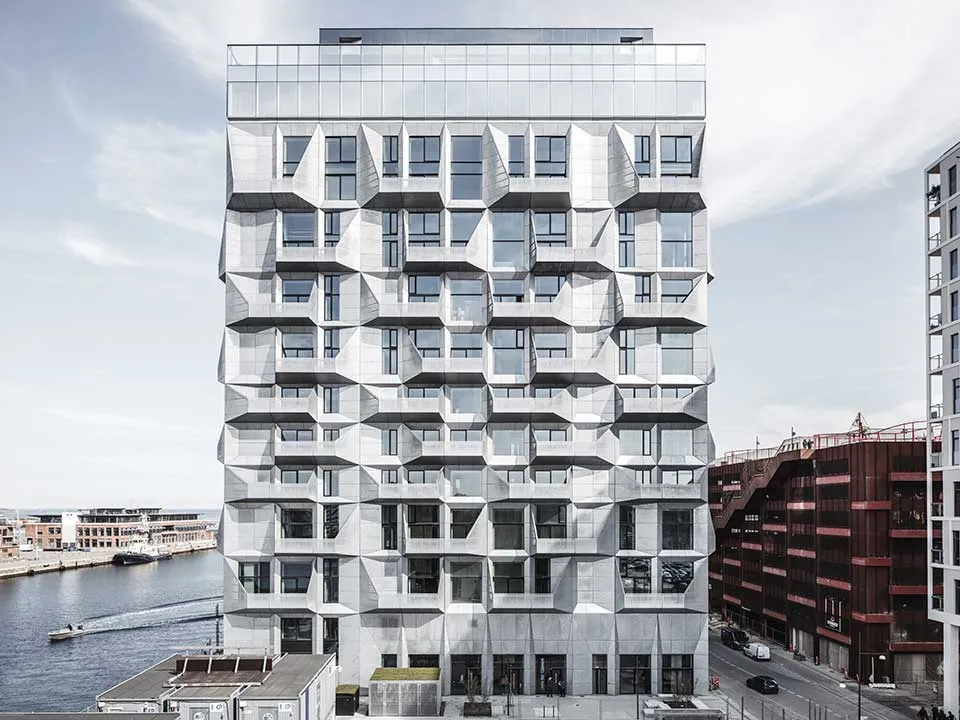
A new coat of galvanised steel for a concrete grain silo.
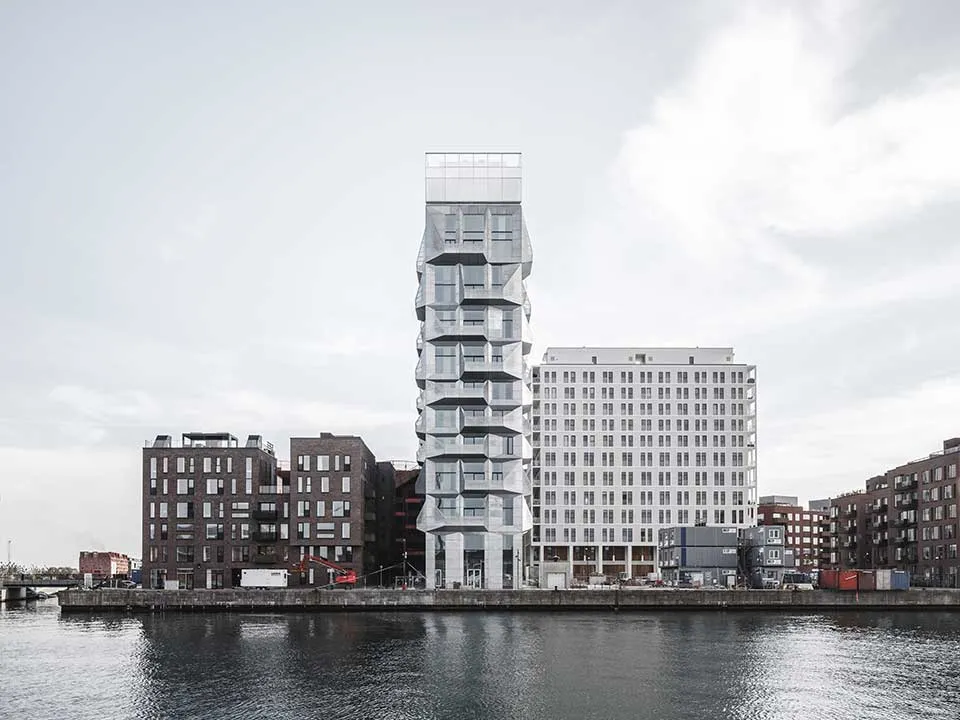
The Nordhavn harbour area in Copenhagen has been undergoing a transformation for several years. Alongside a new cruise terminal, the district will in future provide living and residential space for more than 40,000 people. A further 40,000 or so people will work in new offices and commercial buildings.
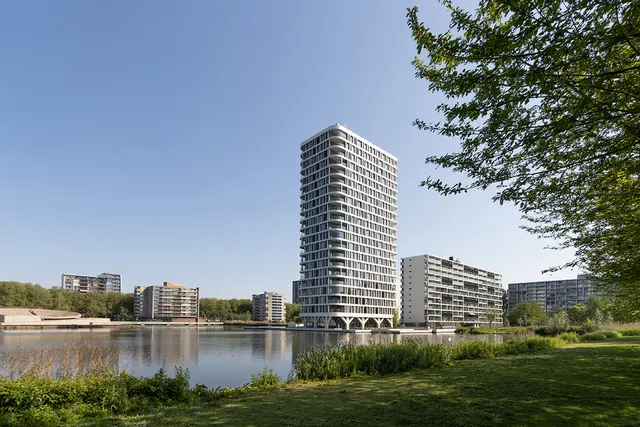
In 2018, a fifty-year-old grain silo was converted into an apartment building. The landmark, visible from afar, was transformed by Danish practice Cobe into a luxury residential high-rise: THE SILO. To achieve this, the concrete behemoth was wrapped in a new coat of galvanised steel. 40 apartments of various sizes were created and integrated into the existing 17-storey silo structure. The apartments range in size from 80 to 800 square metres. Each apartment has panoramic views of the Copenhagen skyline and the Öresund.
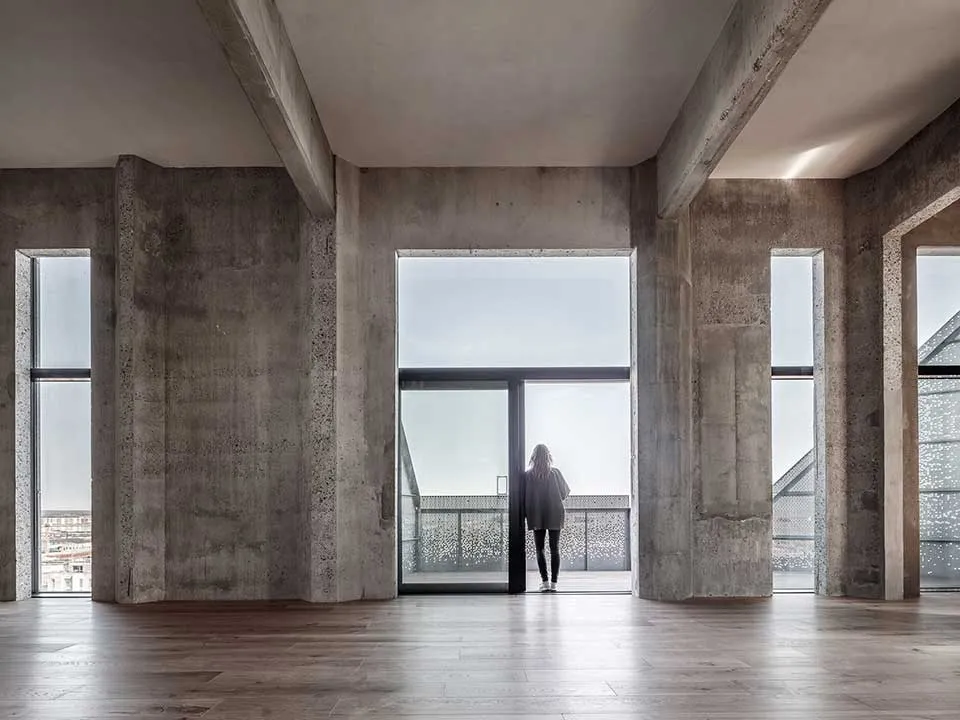
A sculptural, complex façade geometry makes cantilevered balconies possible. They cast ever-changing patterns on the rugged concrete throughout the day. The cladding and substructure of the complex façade and the balconies are made of hot-dip galvanised steel. The steel sheets in the balcony balustrades were perforated before being hot-dip galvanised, creating semi-transparent graphic effects.
Two publicly accessible facilities were added alongside the apartments: an event and exhibition space on the ground floor, and a glazed restaurant floor at the top.
Cladding and galvanising
For the façade cladding itself, Cobe sought an honest, lively material that would resonate with Nordhavn’s industrial heritage and complement THE SILO’s existing spatial qualities. Perforations in the steel façade cladding, designed in advance by the architect, offer expansive views from the apartments while also preserving residents’ privacy. They also add extra texture, as each perforated panel is slightly different from the next.
Choosing galvanised steel sheets (to EN ISO 1461) was not straightforward. Given the surrounding sea air, the exposed location and the risk of physical damage to the coating, corrosion was a challenge from the outset. The client and contractor, NRE Denemarken, wanted to use aluminium, which they considered cheaper and easier to install. The client commissioned the Force Institute, a private organisation in Denmark that conducts research into building materials, to study and assess the advantages and disadvantages of steel and aluminium in their various forms, including durability, required coatings, possible fixings and costs. It compared plain steel sheet with batch hot-dip galvanised steel, pre-galvanised sheets, aluminium sheets and aluminium treated with different types of zinc coatings.
A 1:1 prototype of the different cladding options was also made to support the decision-making process. This is also one of the requirements for obtaining a building permit for high-rise buildings in Copenhagen. The façade prototype, which also explored possible colours for the glazing frames and possible sizes for the rain-screen panels, tested the different material options over a period of six months, comparing them in terms of aesthetics and durability.
A sustainable choice
The decision to use batch hot-dip galvanised steel façade cladding was based on the material’s more interesting, playful and lively character, a comparative cost calculation and the Force Institute’s advice on life expectancy.
The research concluded that the intended service life of batch-galvanised steel could be achieved by carefully selecting the base steel to ensure a slightly thicker coating. For the 3-millimetre-thick façade sheets, steel with a specified minimum silicon content was used to achieve a zinc coating thickness of at least 100 microns. If an even longer service life were required, the galvanised façade sheets could be removed and galvanised again at a later date. Batch-galvanised steel was chosen over pre-galvanised sheets to prevent exposed steel edges from rusting.
For more information, visit zinkinfobenelux.com
Question about this story? Ask your question
Keep following this
Get an email when a new story is published. No account needed.
- SubjectProjects