“Housing quality should be for everyone”
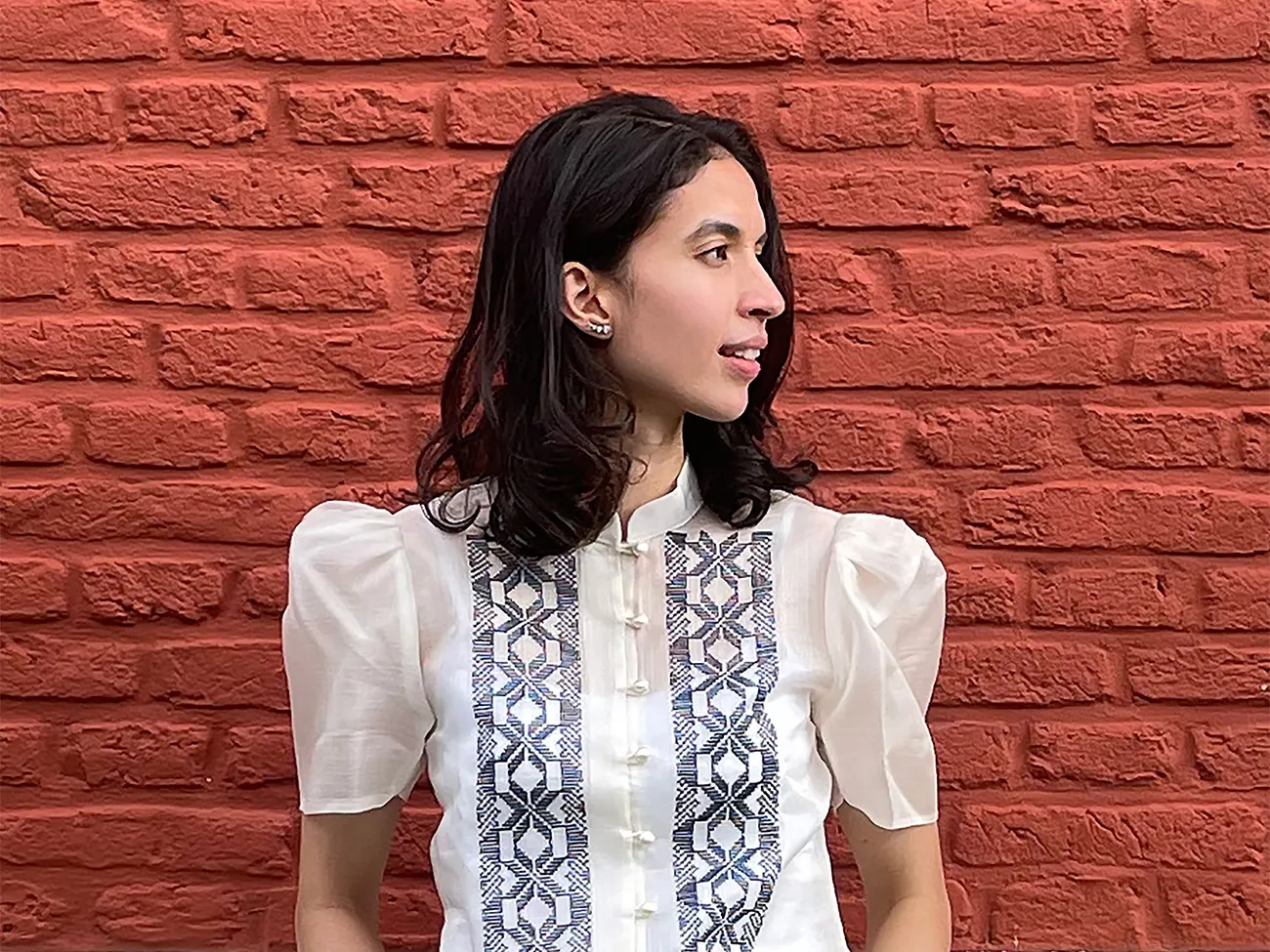
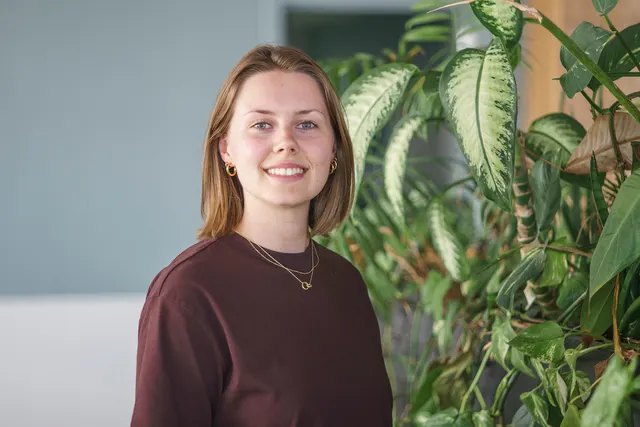
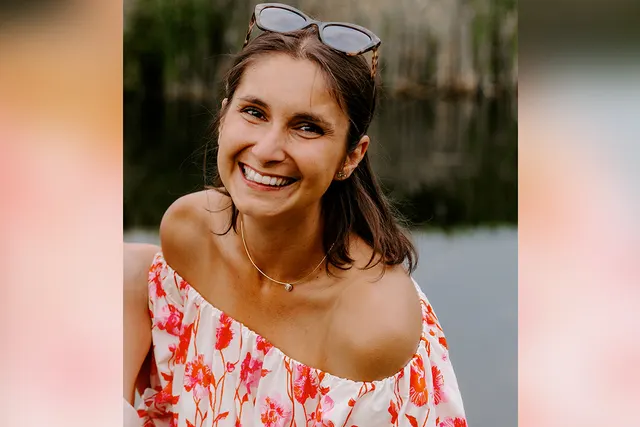
Despite her rather reserved nature, young architect Maureen Piers has proved to be driven and highly daring. She came from the Philippines to Ghent to study architecture, graduating successfully. She now finds great fulfilment in her job as an intern at B2Ai. Daring to question things is her guiding principle, as is inclusive architecture that benefits everyone.
Maureen Piers spent her childhood in the Philippines. Her desire to study architecture brought her to Belgium, her father’s home country, and specifically to the welcoming centre of Ghent, which she now considers her second home. As she did not speak the language, she first spent two years at the Sint-Lucas art secondary school in Ghent before embarking on her master’s in architecture with enthusiasm and conviction. Although it proved demanding, her love of architecture only grew. Today, a bright future lies ahead of her.
Leave No One Behind
“I had to learn a new language, live independently and grapple with the familiar challenges of the course, but I also experienced many positive moments. And now my adventure in the world of architecture continues.” With this introduction, Maureen Piers immediately impressed us with her drive. After completing her bachelor’s degree at KU Leuven campus Sint-Lucas Gent, she chose an international master’s programme focused on ‘Sustainable & Resilient Architecture’. Maureen says: “During this master’s, I met students from a wide range of countries, which made it all the more interesting. Learning about the perspectives on architecture and urban planning of people from very different backgrounds is refreshing.” Her research-based master’s thesis focused on sustainability in slums. “Sustainability is obviously a topical issue. But my frustration is that the discussion is currently too one-sided and relevant only to a specific audience. Through my research, I wanted to show that people in poor neighbourhoods also have sustainable attitudes. ‘Leave No One Behind’ is the goal of the United Nation Sustainable Development Group, but that is still not happening.”
Architecture ‘in the real world’
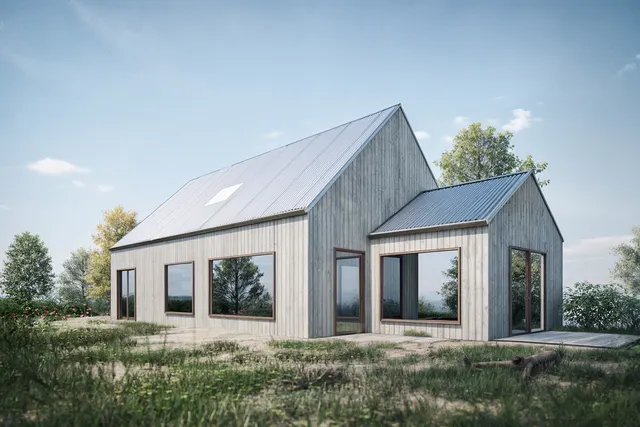
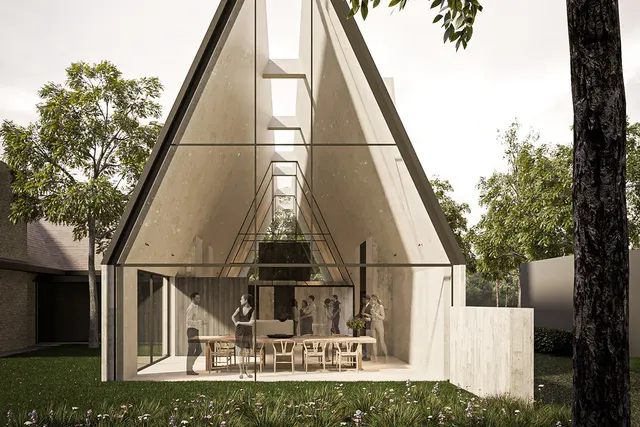
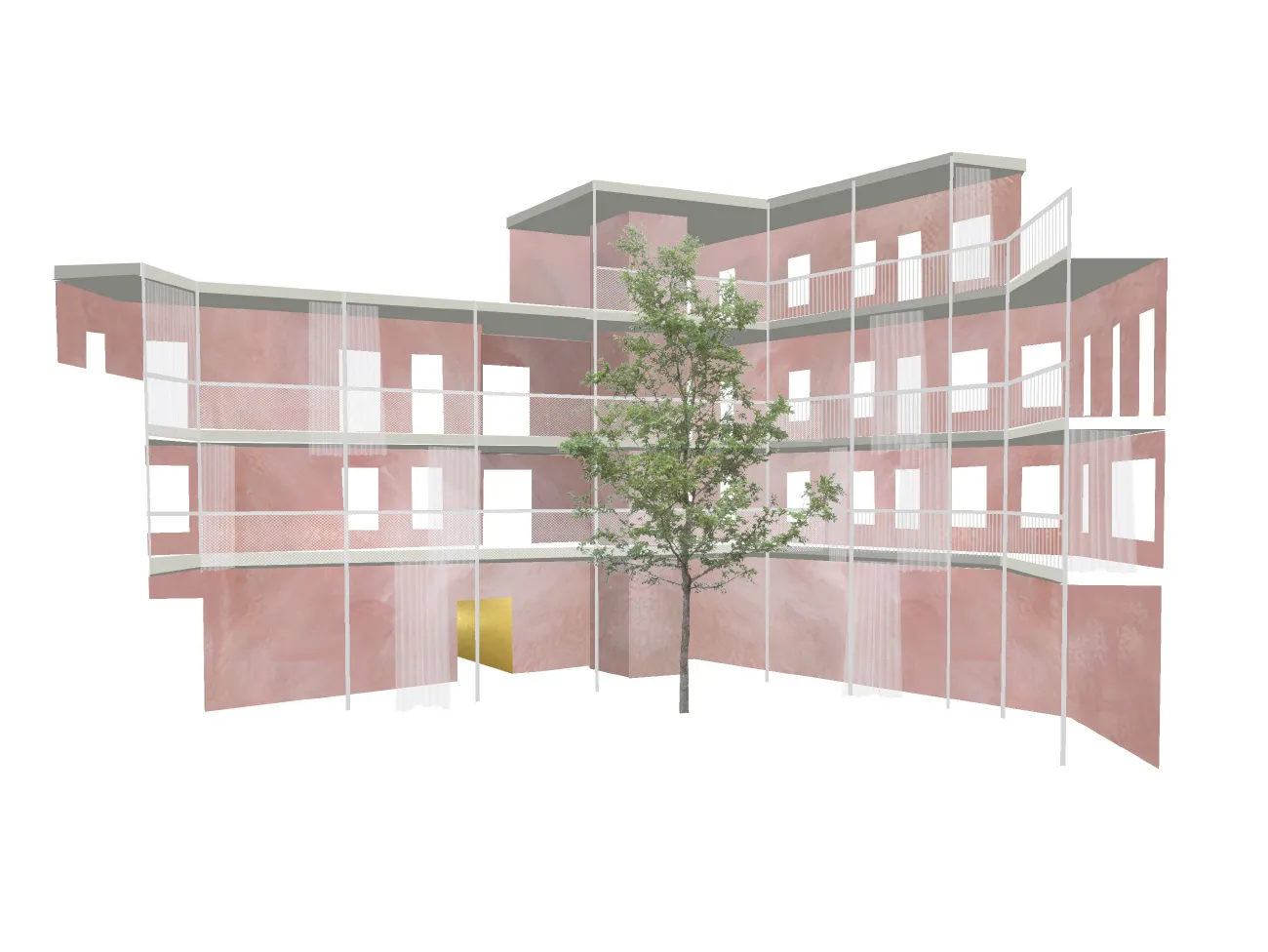
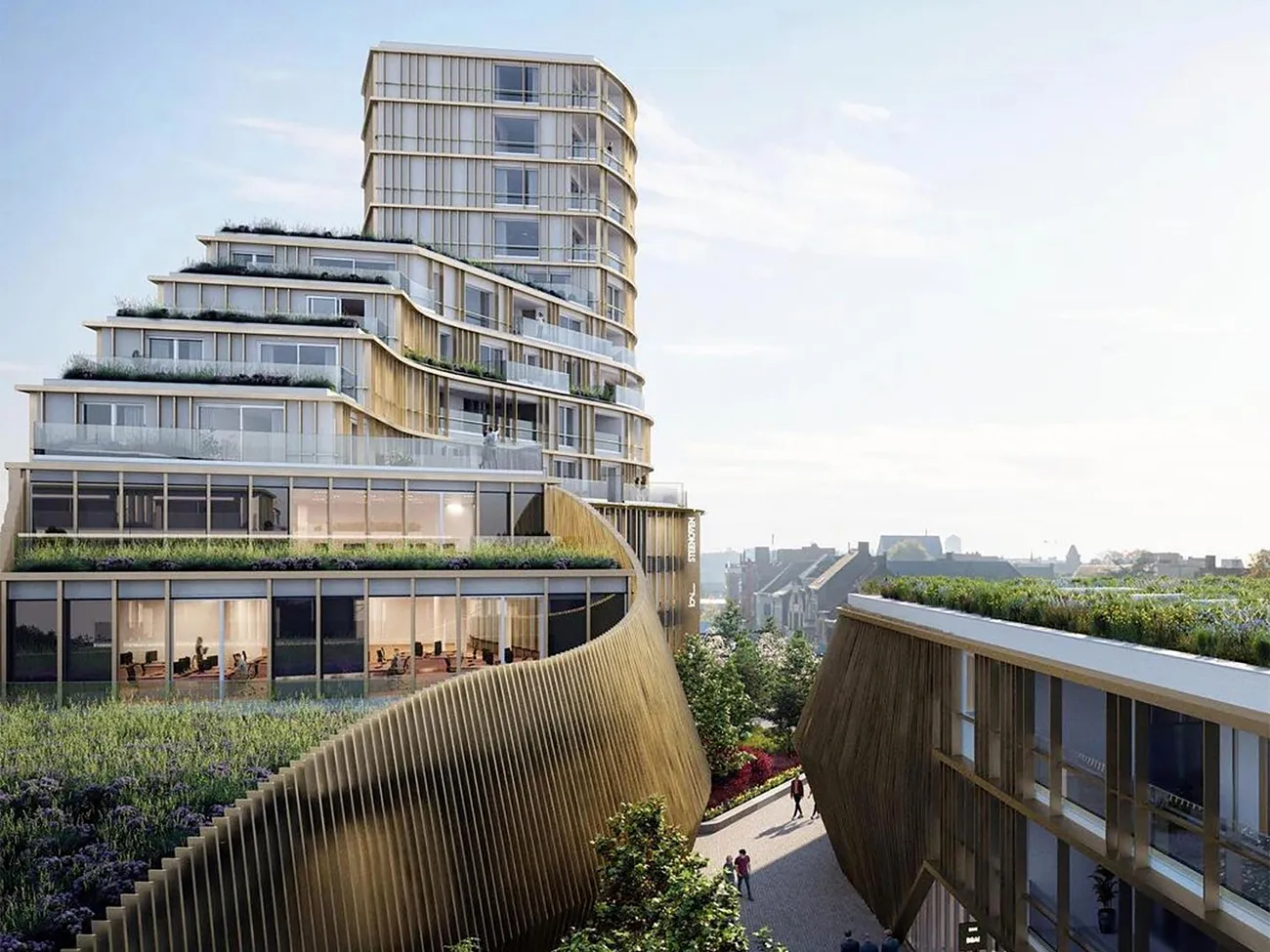
How did Maureen choose her internship? “My cousin is an architect. She showed me Venning, a sustainable social housing neighbourhood in Kortrijk, a project by B2Ai. Even as a teenager, I was impressed by how good the quality of social housing could be. That led me to approach B2Ai as my first practice after my studies. We clicked straight away, and I was able to start work at the Roeselare office. Admittedly, it was quite daunting to join a large practice straight away. But I have always been interested in urban planning and a mix of projects, so it really appealed to me. It is a challenge, not only for me but for all architects. Many new questions are arising, in terms of sustainability but also economics. How do you create high-quality architecture and outdoor spaces while taking the challenges of our time into account? That is something I think about too.” In terms of her role, Maureen was involved in design research, preliminary design and design during her first internship period. She is learning a lot, taking on responsibility and feels supported not only by her internship supervisor, Ing. arch. Frederik Popelier, but also by the many experts at the practice. “The first project I got to work on, under the guidance of Chief Design Architect Dieter Haemers, is the Sociale Huisvestingsmaatschappij project in Kortrijk. It was a project close to my heart from the outset. I see architecture as a very social profession: housing quality should be for everyone. Although the project is on a busy road, the courtyard, around which the galleries are arranged, brings greenery to the residents. It is not just a circulation space, but also a place to meet. Social cohesion matters too.”
Where does Maureen see herself in 10 years? “Still part of a team. But alongside design, I would also like to focus on research. Finding solutions to today’s and tomorrow’s challenges, and daring to step off the beaten track. Just because we have done things one way for a long time does not mean we should not explore alternatives. And yes, sometimes I come up with ‘crazy ideas’ that turn out not to be feasible. Still, I think it is important to question things. And I will keep doing that.”
Question about this story? Ask your question
Keep following this
Get an email when a new story is published. No account needed.
- SubjectYoung Guard