Think globally, build locally
‘Think globally, build locally.’ This principle seems to sum up perfectly how we can translate the energy transition into a building transition. The construction sector is responsible for around 40 per cent of global greenhouse gas emissions. Reusing and recycling building materials are obvious strategies for reducing these emissions. Belgium
is playing a pioneering role in this respect, with innovators exploring new
ways to give architecture a central role in the debate on energy, from materials policy to urban policy. The ‘As Found’ exhibition and the book of the same name, both curated by VAi, bear witness to this new building culture. Yet the question remains whether a materials-focused approach is enough to meet today’s energy challenges.
Economists point out that the reuse of buildings is often not included in CO₂ balances, because emissions from materials such as concrete are already attributed to industry. Legal and economic initiatives to preserve buildings rather than demolish them are complex, owing to the lack of a legal framework or a basis for assessment. The European Citizens’ Initiative ‘HouseEurope!’ is both promising and necessary. It aims to make demolition more difficult and promote renovation at European level.
At the same time, the energy crisis highlights our geopolitical dependence on fossil fuels. The Brussels Institute for Geopolitics is calling for a new energy diplomacy at European level. In 2022, the European Union imported 62.5 per cent of its energy, mainly fossil fuels, the highest level of dependence since 1990. This underlines the need to approach energy issues across borders.
But what does this mean locally? And how does it relate to the reuse of materials? More than half of the energy consumed goes towards cooling and heating buildings. Materials are media: they store and transfer energy through convection, conduction and radiation. These ‘invisible’ properties can be measured and simulated, and should be considered in architecture just as much as the CO₂ emissions of concrete.
The aim of a building transition cannot be to continue designing large loft apartments with local, sustainable materials, then cool or heat them all year round to achieve an average climate of a comfortable 22 degrees Celsius. We must dare to question our current standards of comfort. Architectural historian Daniel Barber speaks of ‘Design after Comfort’, which means changing our habits and seeing ourselves as thermally adaptable beings. In other words, we must rethink our modern housing culture in the face of periods of energy scarcity. Ultimately, nothing less is at stake than the right of future generations to a healthy environment, recognised by the UN Human Rights Council in October 2021. How we live today will determine whether everyone can continue to enjoy a good quality of life on this planet in the future.
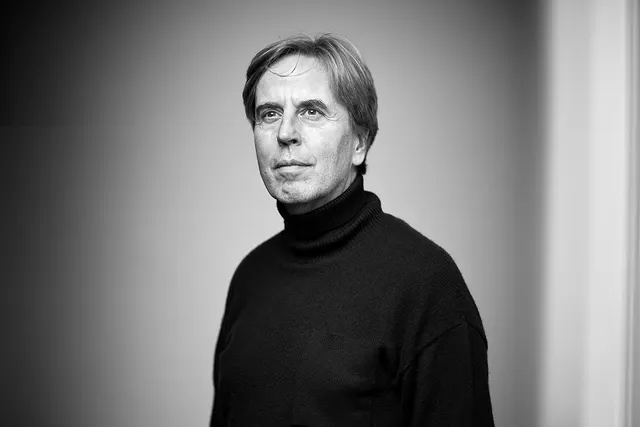
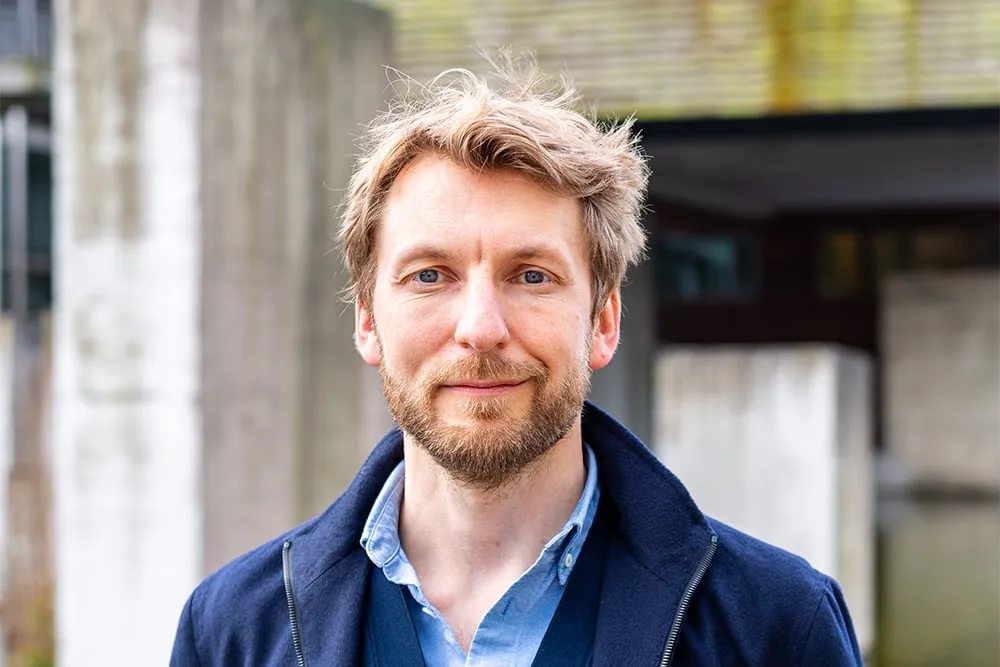
Since 1 April 2024, Dr Dennis Pohl has been director of the Vlaams Architectuurinstituut. Until 1 July 2024, he will share the role with current director Dr Sofie De Caigny, before taking over from her. Pohl will work full-time at VAi and will leave his post as a postdoctoral researcher in the Design, Data and Society (DDS) group at TU Delft. In his vision as the institute’s new director, he is focusing on three areas: activating the collection, promoting cross-disciplinary artistic collaboration and strengthening VAi’s place in an international network.
Dr Dennis Pohl,
Director of the Vlaams Architectuurinstituut (VAi)
Question about this story? Ask your question
Keep following this
Get an email when a new story is published. No account needed.
- ThemeCircular construction and material awareness
- SubjectThe pen