Sound-absorbing ceilings: prevention is better than cure

Buildings and wellbeing are a subject of growing interest. Attention is also turning to acoustics, and sound absorption in particular, which has sometimes languished at the bottom of the priority list, behind insulation levels, energy performance, fire safety and, of course, aesthetics. Here too, prevention is better than cure. Don’t wait for a problem to arise: take a proactive approach.
Acoustics is a broad term. Sound-insulating products and systems designed to limit sound transmission, for example between different rooms, are beyond the scope of this article. There are also products and solutions designed to reduce reverberation and echo, known as noise absorbers or sound-absorbing materials. Here, the guiding principle is that prevention is better than cure. In other words, consider the acoustics at the design stage and bring in a specialist if necessary. Adding acoustic materials after the event does not always produce the desired result, aesthetically as well as acoustically.
Acoustics in contemporary homes
Sound-absorbing ceilings play an important role in acoustic comfort. We tend to think first of offices, but they are just as relevant in care facilities, hospitality venues, educational settings, the music industry and elsewhere. Contemporary homes, too, are increasingly prone to acoustic problems. This is the natural consequence of large open spaces with double-height areas, combined with hard materials such as expansive glazing, concrete, ceramic and steel. Especially when interiors are kept sleek and minimally furnished, unpleasant reverberation soon becomes an issue. The result is a restless environment and poor speech intelligibility. Acoustic spray or plaster finishes can help, as can a full acoustic ceiling system, finished seamlessly and with great attention to detail.
Wellbeing comes first
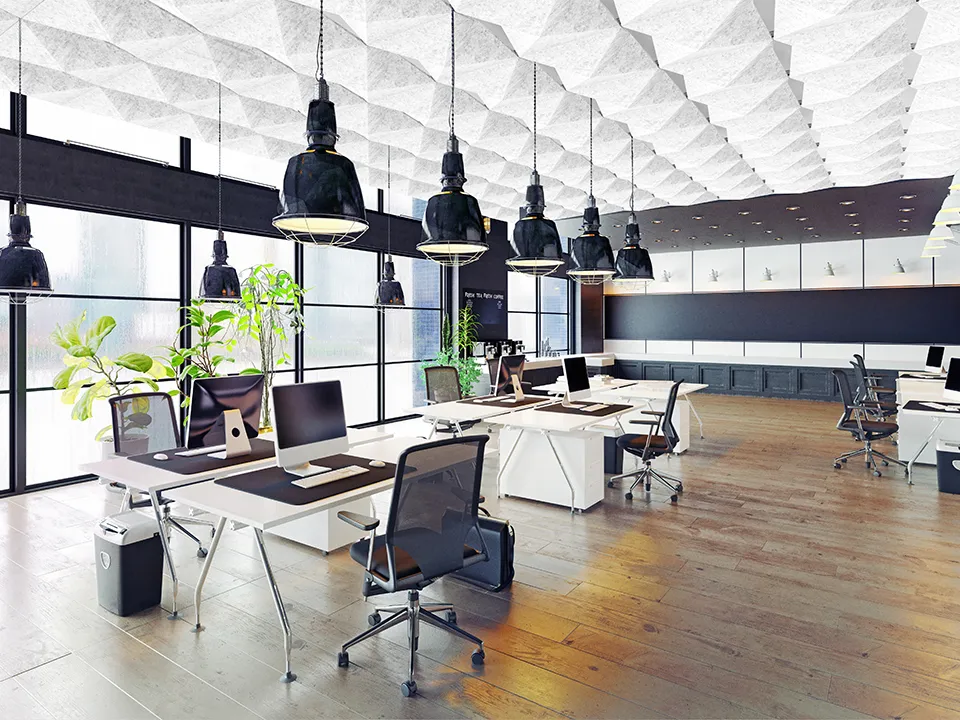
Some people have now got used to working from home, while others are keen to return to social interaction in the office. But that interaction also generates noise that can be disruptive, especially in open-plan offices. This is detrimental to wellbeing and, consequently, productivity. Acoustic ceilings can help. The options are many, from modular felt systems and acoustic panels, which can sometimes both absorb and insulate, to intelligent climate ceilings that combine cooling, heating, lighting and ventilation with acoustic performance. One notable trend is the growing number of ‘quiet spaces’ in open-plan offices, where employees can withdraw when they need to.
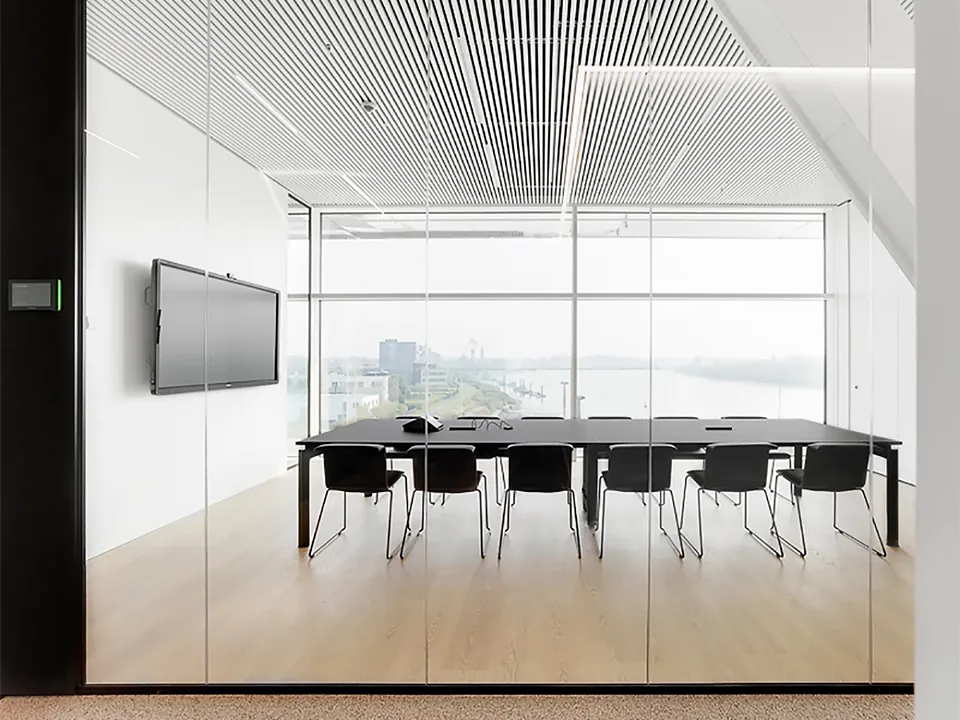
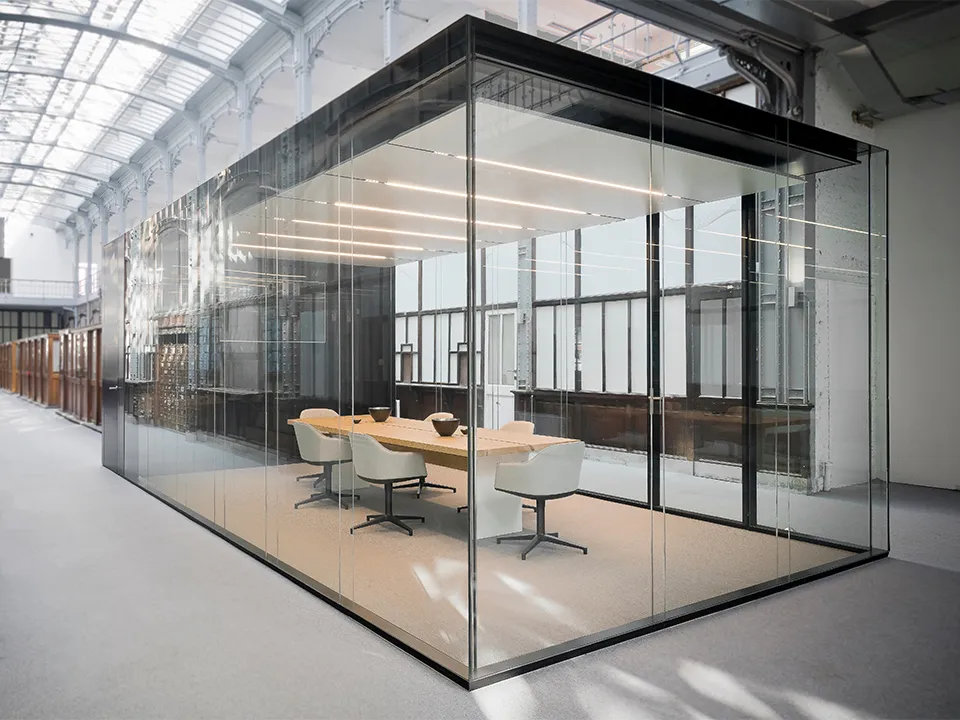
Meeting rooms can also combine sound insulation with sound absorption, benefiting efficiency and wellbeing both inside and around the space.
The benefits of certification
Why choose acoustic ceiling solutions? They can also contribute to a building’s WELL certification. “This is an international, objective label that indicates how a building contributes to people’s health and wellbeing. Its aim is to make buildings as healthy as possible for body and mind, by putting the wellbeing of people, both employees and residents, at the heart of construction and interior design,” explains Jansen The Building Company. Why pursue WELL certification? A certified building can reduce staff absenteeism and, in turn, the associated costs. Certification also enhances property value and the company’s image. There are more than enough reasons for architects to make ‘WELL-being’ a priority too, and convince clients of its added value.
Een zakelijke vraag aan Group Jansen? Get in touch
Companies in this story

Keep following this
Get an email when a new story is published. No account needed.
- ThemeLight and sound as design tools
- SubjectGeneral
- CompanyGroup Jansen