








Solar shading and climate-adaptive design: how architects prevent overheating in Belgian homes
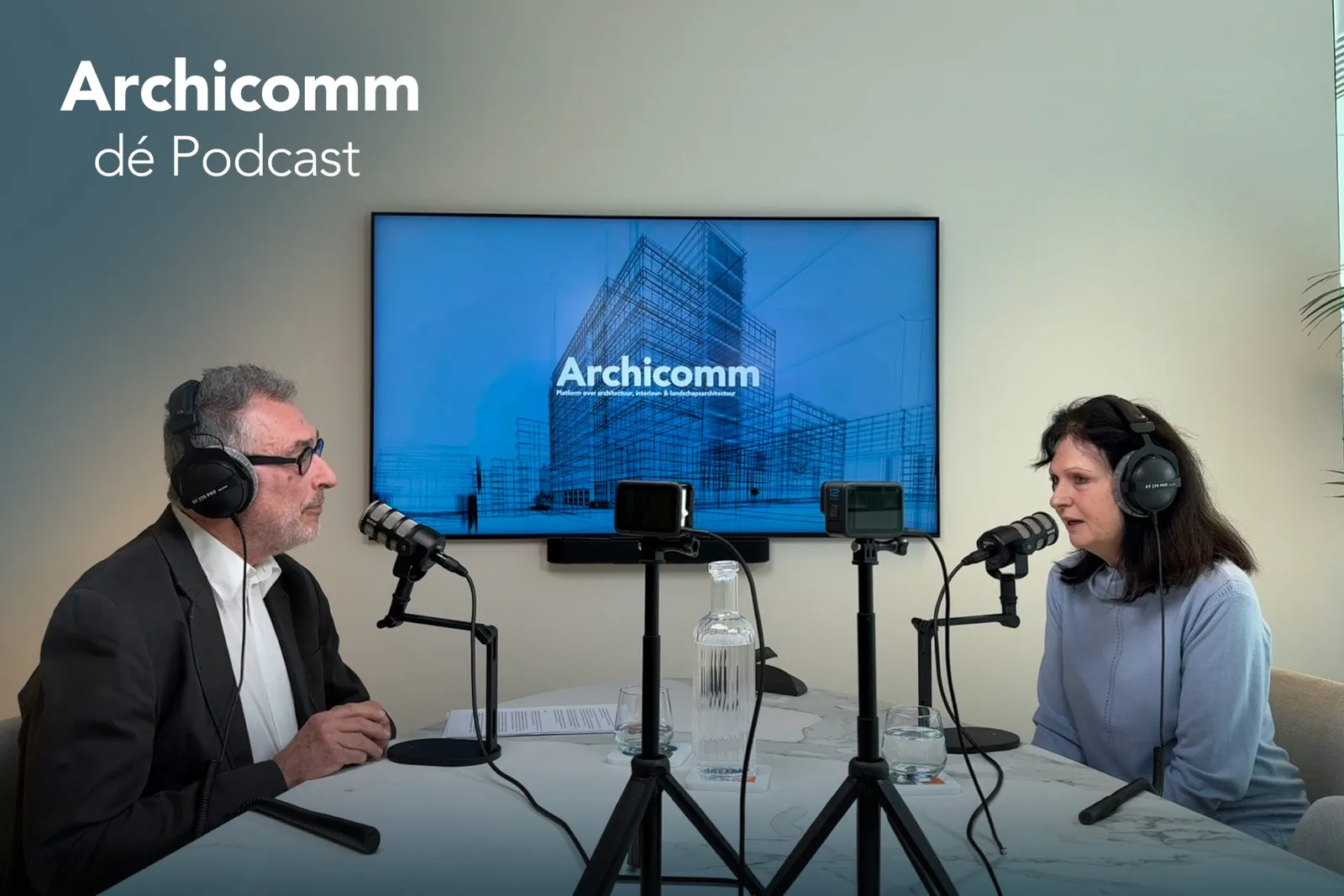
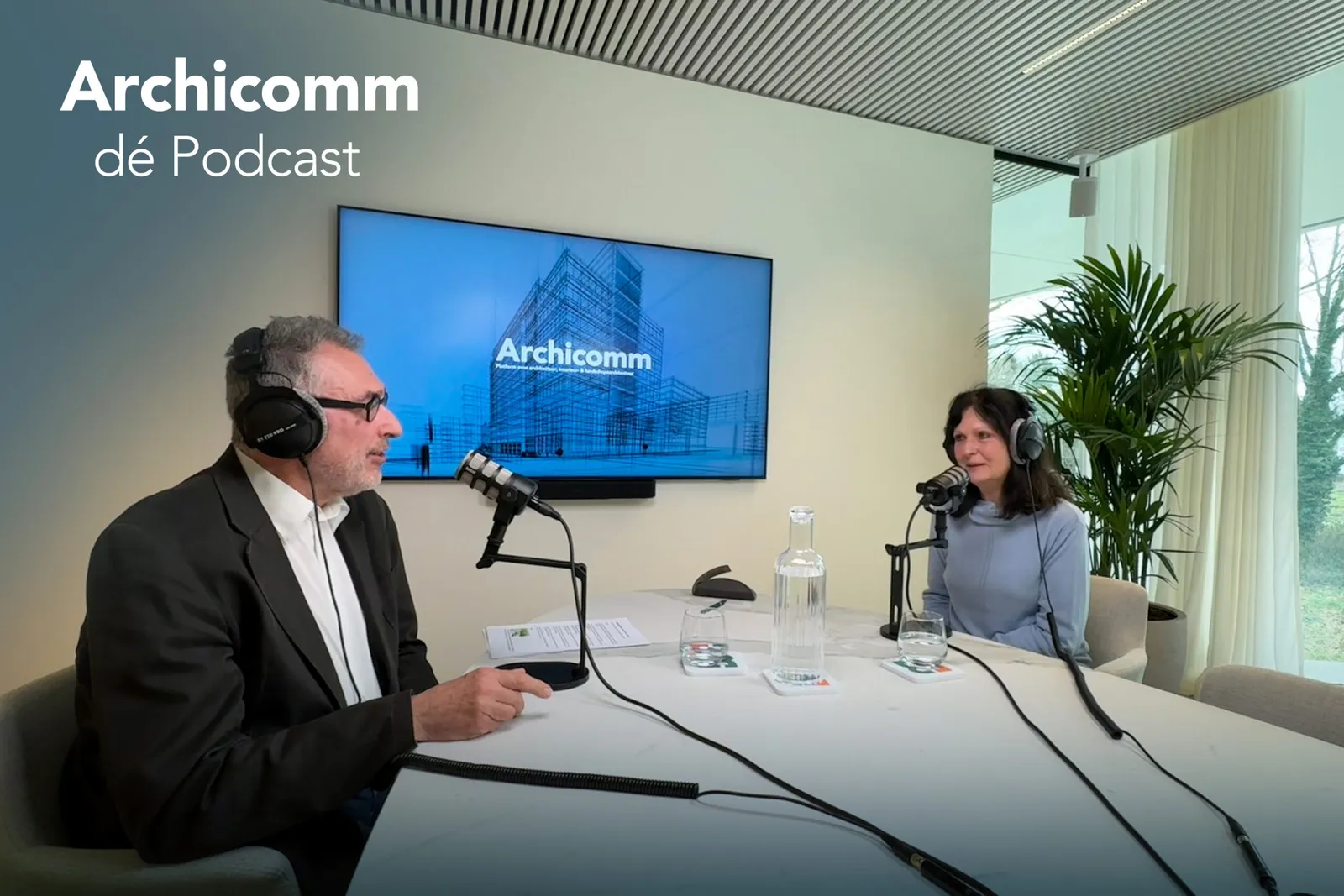
In this episode of Archicomm, Patrick Retour talks to Ann Van Eycken (Secretary-General of VEROZO) about the growing importance of solar shading in a warming climate. As temperatures rise and homes face increasing heat stress, the focus is shifting from heating to cooling. Solar shading plays a crucial role in creating a comfortable, energy-efficient indoor climate.
The podcast explores how architects need to take building orientation, glazing and dynamic solar shading into account to limit overheating. It also discusses the ‘cooling hierarchy’, which prioritises passive measures such as external solar shading, thermal mass and night ventilation over active cooling systems.
The discussion also covers regulations (EPBD), the limitations of current EPB methods and the importance of solar shading as a fully fledged component alongside insulation and ventilation. Renovation solutions and innovations such as plug-and-play systems and solar-powered applications are also discussed.
Finally, VEROZO emphasises its ambition to establish solar shading as a standard feature in building regulations, so that it evolves from a ‘nice to have’ into an essential building component.
Full transcript
All chapters (28)
- Introduction and presentation of Verozo
- Members and how the sector works
- Information for architects
- The Secretary-General’s responsibilities
- Board and studies
- Climate study and heat stress
- Architects and cooling needs
- Cooling hierarchy and passive cooling
- Combining external and internal solar shading
- Comfort, privacy and atmosphere
- Internal solar shading and visual comfort
- Indoor climate and energy efficiency
- Cooperation with industry organisations
- Advice on climate and dynamic solar shading
- The orientation of the home
- Regulations and EPBD
- Overheating indicator and outdated data
- Grants and renovation loans
- Making choices
- New builds and renovations
- Retrofitting
- Large glazed areas
- Sliding doors and the feeling of being outdoors
- Solar-control glass versus solar shading
- Innovation and sustainability
- Role and term
- Ambitions for Verozo
- Closing
Introduction and presentation of Verozo
Patrick Retour A very warm welcome to the seventh episode of Archicomm, the podcast. You can listen to all the episodes on Spotify. Do give it a go. Today we’re looking at a hot topic, quite literally. Temperatures are soaring, the indoor climate is under pressure, summers are getting hotter and there are no more freezing-cold winters like the ones we used to have. They are gone for good. Architects are very aware of this and are taking action. They are responding to the challenge, and time is running out. But today, here in the studio at Louwers Mediagroep in Oostkamp, we want to take a closer look at this hot topic. We’ve invited a specialist, the Secretary-General of Verozo. Verozo is the Belgian professional association for roller shutters and solar shading. A very warm welcome to our studio, Ann Van Eycken. Thank you. Verozo, what is it and what does it do?
Ann Van Eycken: Well, what is Verozo’s purpose? It is an association of manufacturers that represents and promotes the professional interests of the solar shading sector in Belgium. Solar shading has obviously become a hot topic because of climate change. It is set to become more important in the future too.
Members and how the sector works
Patrick Retour They say that summers are getting longer. They used to last two months, but now spring is joining in, as is late summer, and it’s getting warmer all the time. Solar shading really is the challenge of the future, and even of today. Who are your members, and what do they do?
Ann Van Eycken: You can find our members on the website, of course. They are primarily manufacturers of solar shading systems, but suppliers are members too. These include companies that provide fabric shading and louvred shading. The controls are part of the system too. A solar shading system is a complete system. It is built into the façade, but it also needs to be activated. That can be done manually, by motor or automatically. The controls are certainly important.
Read the full transcriptCollapse transcript26 more chapters
Information for architects
Patrick Retour You’re also an information platform for private individuals and construction professionals. What can you offer our audience, the architects?
Ann Van Eycken: From time to time, I attend information sessions organised by NAV, for example, where I explain the importance of solar shading. It helps ensure thermal and visual comfort in a building, and, in a way, supports the health and wellbeing of its occupants. Keeping them comfortable has become important. We also explain the different solar shading solutions to architects, including their advantages and other factors to consider. The solutions can also vary depending on the orientation of the building.
The Secretary-General’s responsibilities
Patrick Retour You’re the Secretary-General, which is quite a weighty title and comes with high expectations. What else do you do? What does your role involve?
Ann Van Eycken: I am indeed the association’s point of contact with the outside world, including the government. We are a recognised stakeholder, which means I am involved in those discussions. We are also involved in organisations such as Buildwise, the scientific institute for contractors, where we have more contacts. We are in touch with BouwUnie, Agoria, FintiBel, for example, and all the key construction stakeholders with whom we know we have complementary roles.
Board and studies
Patrick Retour You also make a great team with the chair, Mark Haneveer. He brings a wealth of experience and know-how. He is also the managing director of Verano. I assume the board includes a lot of people with hands-on experience. That can only strengthen Verozo, I’d say.
Ann Van Eycken: That’s right. The members’ meeting is made up of business owners, so they can speak with authority. We also look at regulations, including EPB regulations, and how solar shading is positioned within them. We commission studies too, because when you look at the interface of the EPB software tool, it is not clear why solar shading is treated the way it is. So we commission studies on that as well, and they show, for example, that there are still a number of shortcomings.
Climate study and heat stress
Patrick Retour From what I hear, you’re the right person for the job. Indeed. Ann, could you run through the areas Verozo covers?
Ann Van Eycken: We mainly focus on studies. For example, our latest study looks at the climate, specifically the warming climate in Belgium. It is a recent study, which we also presented at Batibouw, and it examines the impact on Belgium’s housing stock. The study was carried out by KU Leuven in collaboration with the research group at Archipelago Architects. We found that global warming will continue steadily. That means we are currently about 1.2 degrees above the norm.
Patrick Retour So we’re heading towards a rise of 2 degrees. We need to start worrying.
Ann Van Eycken: We do need to start worrying. The researchers have found that we could reach a 2-degree rise as early as 2039. But that would mean 1 in 5 homes would be subject to heat stress. If we were to reach a 3-degree rise, 9 in 10 homes would be affected by heat stress. That could happen as early as 2063. So it’s not that far off, because, as you know, a home built or renovated today is expected to last a long time. Those homes will still be standing then. We need to make sure we build in a climate-adaptive way.
Architects and cooling needs
Patrick Retour Knowing all this makes us stronger, because then we can respond to it. Our architects are aware of the issue and will increasingly turn to the latest innovative techniques to tackle it, I’m convinced. I think we need to keep moving forward in a positive frame of mind.
Ann Van Eycken: Yes, indeed. Architects are key partners in this. It’s important to remember that solar shading is a made-to-measure solution. We also know that we build with a lot of large glazed areas, which architects like, but that also increases the risk of overheating. So architects need to make sure the building’s design takes account of its orientation and glazing percentage, and that external solar shading is provided too. We are seeing a shift from heating needs towards greater cooling needs.
Cooling hierarchy and passive cooling
Patrick Retour Yes, that’s right. So alongside solar shading, we also need to focus on ventilation.
Ann Van Eycken: That also means making sure cooling can be provided in the home or building. But you need a cooling hierarchy for that. The cooling hierarchy originated in the Netherlands and is now widely applied there. It would be good to see it used in Belgium too. Solar shading is important, as is thermal mass, and these come into play at the stage of keeping heat out. The first step is to block heat from outside.
Patrick Retour Yes, that’s right.
Ann Van Eycken: Then we look at passive cooling, which involves night ventilation. The house or building should also be designed to allow cross-ventilation, so that airflow can circulate more freely.
Combining external and internal solar shading
Patrick Retour I’ve been told that external and internal solar shading make the ideal combination. Is that true?
Ann Van Eycken: Yes, that’s right. It’s about managing sunlight and daylight. Sunlight means the incoming solar radiation, which is very important. If it creates a lot of heat gain, you need to keep it out from the outside. External solar shading is the best way to do that. Internal solar shading is more about daylight management, visual comfort and preventing glare, as well as comfort indoors. And, of course, internal solar shading can also provide an extra layer of insulation.
Comfort, privacy and atmosphere
Patrick Retour In any case, investing in internal and/or external solar shading is always worthwhile, because it brings benefits not only in winter but also in summer, in every season, in fact. It doesn’t just keep out heat and sunlight, it also preserves a cosy atmosphere indoors and keeps the cold out.
Ann Van Eycken: Belgians also value their privacy. They want large windows, but at the same time they need to feel protected. That’s another function of external and internal solar shading.
Internal solar shading and visual comfort
Patrick Retour Let me take that a step further. As a housing journalist, I’m interested in home decoration and interiors. People will combine solar shading with blinds and attractive curtains. Is that your area too, or is it related?
Ann Van Eycken Yes, that follows on from that. Our companies are mainly focused on external solar shading, because summer comfort is a hot topic. Visual comfort, of course, is always important too, so we are working on that as well. In projects, for example, we see that visual comfort is very important in office spaces, where glare needs to be controlled.
Indoor climate and energy efficiency
Patrick Retour It is not just about keeping the sun out, but also about preserving a sense of cosiness in the home.
Ann Van Eycken Yes, you could say it is about managing things a little.
Patrick Retour Yes, of course. It is about maintaining the indoor climate, day and night, winter and summer, and ensuring that our quality of life and comfort remain at a good level.
Ann Van Eycken And let’s not forget that we do this in an energy-efficient way.
Part 2
Cooperation with industry organisations
Patrick Retour Yes, of course. I also see links on your website to all kinds of organisations and associations: BouwUnie, as already mentioned, NAV, Netwerk Architecten Vlaanderen, Agoria, WTCB, Vlaams Energieagentschap and so on. You work with all kinds of players. How should I understand this collaboration?
Ann Van Eycken Well, we obviously meet at conferences organised, for example, by Agoria or Inbeeld. We often discuss various topics there, and sometimes we speak or take part in a debate. On the other hand, VK is very important when it comes to regulations. A consultation round was held recently, for example, as there are plans to move towards a single instrument for policy. At present, there are EPB and EPC. EPB is mainly for new builds, EPC for renovation. The aim is to combine them into a single instrument. We are asked all kinds of questions, which we then discuss.
Advice on climate and dynamic solar shading
Patrick Retour There is a lot happening, and Verozo is gaining momentum, which we can only applaud. Very good. The aim of roller shutters and solar shading is to create a healthy, pleasant indoor climate, while also helping to keep energy costs down. That much is clear. We feel it in our wallets, so keeping a close eye on spending is very important. It is all linked to quality of life and living, exactly. And Verozo wants to do its bit. I’d like to return briefly to climate change and global warming. These are pressing issues. What advice do you have in store, and what guidance can people find on your website?
Ann Van Eycken First of all, I mentioned the cooling hierarchy. We should first try to keep the sun out using passive measures, doing as much as possible to prevent it from entering the building. In other words, when we do not need the sun. That is an important measure, or tip, that we give architects, but also residents. They need to use solar shading when necessary. Because solar radiation is dynamic, moving from east to south to west throughout the day and changing with the seasons, we also need to use dynamic solutions. These are especially important on the east and west elevations. And let’s not forget that in summer, for example, the sun rises as early as 4.30 am. It is still low in the sky, but its rays come in through the glazing.
The orientation of the home
Patrick Retour You always thought the south side was the one that heated up the most. That is where we like to have our terrace, our kitchen-diner and our living room. But at our house, for example, the bedrooms and bathrooms are on the east side. When the sun wakes up and stretches out its arms, it starts shining straight away, heating everything up. It is lovely to wake up with the sun on your face. But what do we do after that? We close everything up properly, so it is cool when we go to bed. So the east side is something architects need to keep an eye on.
Ann Van Eycken Absolutely, and I would say you have already understood that very well. The south-west side is also very important, because the heat lingers there for a long time. The same principle applies: you need to use solar shading when necessary. That means residents need to develop habits that take this more into account.
Regulations and EPBD
Patrick Retour You need to adjust your attitude a little. Again, this is in light of climate change and the planet warming up. We will have to make some changes to our way of life and respond to the new situation.
Ann Van Eycken Yes, indeed.
Patrick Retour I also see two icons on your website that catch my eye: regulations and grants. How does that work? Regulations in Flanders and Belgium can be rather complicated, and legislation can be difficult too. What role do you play in this? What can you do as Verozo for architects and private individuals?
Ann Van Eycken We are very active in this area, of course. The EPB regulations are the ones that matter, but they originate in Europe and are determined at European level. They are the Energy Performance of Buildings Directive, or EPBD. This European directive has been in force since 2002 and is updated every five years. Initially, it was introduced primarily to improve energy efficiency, following the principle of using as little energy as possible in buildings, and to reduce CO2 emissions, which were very high in buildings. The aim was to bring them down. The initial focus was on heating, which is why there was a push for more insulation and airtight buildings. Many new buildings are now very well insulated and airtight. But that can also lead to overheating. Why? The opaque elements, as we call them, such as walls and roofs, are very well insulated. But solar radiation enters through the windows, which remain the weak link. That is why solar shading should be incorporated into the regulations as an essential measure. Over time, the EPBD has also taken health into account, alongside energy efficiency, which brought ventilation into the picture. Ventilation was important too. But we are now entering a new phase, and the latest revision was in 2024. It has to be implemented by the member states this year. The European Commission has also issued guidance to help them. It explicitly states that passive measures should be used first, before turning to active measures.
Overheating indicator and outdated data
Patrick Retour So there is work to be done. Is there any progress?
Ann Van Eycken Well, the member states now have to do their work. The European legislation has been delivered, but in our country energy is a regional matter, so each region has to implement it. VK in Flanders is aware that something needs to be done about overheating. Our EPB regulations in all three regions do include an overheating indicator, but it is very rudimentary. It works with monthly figures or monthly averages, whereas, given that solar radiation changes over time, it should really be assessed hour by hour. Overheating is also very localised, occurring in indoor spaces. There are living areas and bedrooms, so each room needs to be assessed more closely. The climate data used, or the data on which the software tool is based, also dates from 1961 to 1990. This means that cooling needs are greatly underestimated. So the system is not working properly.
Grants and renovation loans
Patrick Retour We are eagerly awaiting that change.
Ann Van Eycken I hope they do what is needed. I also hope they take into account the climate study I mentioned earlier, which looked at the impact of the climate on buildings. VK has already welcomed it as a basis for action, so they know they need to do something about it.
Patrick Retour I’m sure Verozo will help keep an eye on that. That brings me to the other icon, grants. We are all being told by the government to save money, and the government needs to save money too. What grants, subsidies or other support are still available to customers who decide to have roller shutters and solar shading installed as part of a renovation, or choose to include them in a new build?
Ann Van Eycken Yes, I think you may have looked at the grants page on the website, and there is not much left. By the end of 2026, which is now approaching, that will be over. There will be nothing left for insulation. Support is increasingly focused on heat pumps and heat pump water heaters. Support is still available for the lowest income groups, of course. But I have to say that more and more is being shifted towards renovation loans. Until now, we were also covered by the EPC label grant. If you buy a home with a poor E or F label, you are required to upgrade it to a D label within six years. There was also an EPC label grant for that. That too will be abolished. There is not much left.
Making choices
Patrick Retour Architects will have to be creative with their cost estimates, I would say. I wish them the very best of luck.
Ann Van Eycken It is a matter of making choices.
Part 3
New builds and renovations
Patrick Retour Yes, but our architects know all about that. And I know they are willing to embrace this approach, because we have to move towards sustainable construction, and our living conditions also need to remain optimal. That is why we need to focus on ventilation, solar shading and roller shutters. So it is right that you are our guest today. Thank you, Ann Van Eycken from Verozo, the Belgian professional association for roller shutters and solar shading. When you build new, it is an obvious choice, I would say, to include all of these features. If you want to alter or renovate, it may be much harder to incorporate them, though, isn’t it?
Ann Van Eycken Well, if you look at housing and the renovation of an older home, the home itself is actually not so badly built. And you do see roller shutters there. Buildwise, formerly WTCB, has also worked on projects such as the Renovatiegids, which provides contractors with guidelines or advice on how to carry out renovations. For example, how to remove an old roller shutter and install a new roller shutter, a new screen or another form of solar shading. So all of that is certainly possible. And what you see in renovation, for example, is that we in the solar shading sector have solutions for every situation. We can build them into the façade, fit them onto the window, which is known as face-fixing, or install them in front of the façade itself.
Retrofitting
Patrick Retour Okay, so there are plenty of options, really. With renovation, for example, the architect often isn’t involved at that stage any more.
Other speaker: And that’s because the architect might not have chosen to include solar shading, but the resident later says, ‘Actually, I really do need it.’ And then it can certainly be incorporated.
Patrick Retour Yes, okay, ça va.
Ann Van Eycken And perhaps…
Patrick Retour All sorts of solutions, then, yes.
Ann Van Eycken Yes, and to add to that, when it comes to improvements or innovation, the controls for these renovation solutions, for example, can now be installed without any more building work.
Patrick Retour Okay, that’s good.
Ann Van Eycken That’s because green technology or a solar panel is used to power the controls.
Patrick Retour Oh right, excellent.
Ann Van Eycken And it’s then housed in the casing, or built into the casing above the solar shading.
Large glazed areas
Patrick Retour I remember reading somewhere that researchers and specialists had advised using fewer large glazed areas, but for me that’s a no-go, as you know. The trend in housing, when people build a new home or add an extension, is to have a glass structure. People want to bring nature indoors, enjoy the greenery and the changing seasons, and experience outdoor living inside. So I think we need to look for the solution elsewhere, namely in solar shading and solar…
Ann Van Eycken Solar shading can do a lot. Belgium is certainly a bit of a pioneer in this respect. Compare us with Germany, for example, where windows are often rather small. They’re also more focused on heating requirements. We Belgians, as Bourgondiërs, really enjoy natural daylight. So architects here do indeed design large glazed areas, and we cater for that. We can cover glazed areas of 20 square metres. That’s no problem for us. You also get very wide folding-arm awnings. So we can handle all of that. For example, there are modern homes on corner plots with two glazed areas meeting at the corner, where you can use a zip screen. The zip then runs at the junction between the two panes of glass. So all of that is possible.
Sliding doors and the feeling of being outdoors
Patrick Retour Yes, because the idea is to create as little separation as possible between indoors and outdoors. You can slide everything open, or, when the glass is closed, still feel as though the garden has been brought into the home.
Ann Van Eycken We also have sliding doors. Solar shading can be fitted to sliding doors too, so that’s an option.
Solar-control glass versus solar shading
Patrick Retour Sliding glass doors are very popular. Do you also have specialists in glass? Because glass itself can, of course, help control solar gain, keeping the heat in and the sun’s heat out.
Ann Van Eycken Yes, but that’s the big problem. You also need to design intelligently. You have to manage the sun in a smart way. That means keeping it out in summer, but letting it in during winter.
Patrick Retour Yes, that’s right.
Ann Van Eycken Because the sun is also much lower then.
Patrick Retour It almost needs to be able to breathe.
Ann Van Eycken Yes, it sits much lower and can therefore shine inside.
Patrick Retour Yes, that’s right.
Ann Van Eycken That’s why internal solar shading helps a little with glare. But you really do need to let the sun in. Solar-control glass can provide a partial solution in summer, but it can never be as effective as external solar shading. Its g-value can only go down to 0.25. But you also lose daylight. The glass becomes darker, which means that the colour spectrum no longer looks entirely natural.
Patrick Retour So it works like my glasses, then?
Ann Van Eycken Yes, that’s not ideal. With solar shading, such as external fabric blinds, people outside can’t see in because the fabric provides privacy, rather like a grey screen. But from inside, you can still see through it. So that’s not a problem.
Patrick Retour Magico!
Ann Van Eycken Yes, exactly.
Innovation and sustainability
Patrick Retour Are there any other innovations you’d like to share with us, Ann? Any other developments you’d like to mention?
Ann Van Eycken Yes, another thing we’re seeing is that solar shading systems can now be integrated into façades much more easily. People sometimes call it plug-and-play, meaning they’re no longer so difficult to fit. Manufacturers have already done a lot of work on that. We’re also seeing systems that are very robust, so they can last a long time. And you can also replace the fabric on your screen or folding-arm awning over time, while keeping the system itself. So we’re already looking ahead to the future, including recycling and so on. We’re conscious of the environment too.
Role and term
Patrick Retour You’re secretary-general, Ann Van Eycken. How much longer will you be doing that? Can you be re-elected? Or how exactly do the terms work? How long is the term, is it for life?
Ann Van Eycken I don’t know how much longer.
Patrick Retour How long have you been doing it?
Ann Van Eycken Since 2008.
Patrick Retour And they’re very pleased with you, clearly.
Ann Van Eycken I hope so, yes. I think they are. We have a board of directors that is renewed every four years. I’m not on the board, but I am the managing director. That means I handle matters on behalf of the board relating to the association, such as the board, the members’ meeting and so on. So I take care of all those things, and I’ve been doing it for quite some time.
Ambitions for Verozo
Patrick Retour Thank you for coming all this way, Ann Van Eycken. But I’m not letting you go without asking one last question. What are Verozo’s ambitions? What can we expect from Verozo? And what are your own ambitions? What would you like to achieve in the near future?
Ann Van Eycken What I’d like to achieve is for solar shading to be given the essential place it deserves, including in regulations. Solar shading should be mandatory, alongside ventilation and insulation. It should be given its rightful place. It shouldn’t be a nice-to-have any more, but a must. That’s my biggest dream.
Closing
Patrick Retour You’ve certainly been able to make your point on our podcast. Thank you for coming all this way. Have a safe journey home. That was great, we can wrap up here. And thanks to everyone for listening. This has been Archicomm, the podcast. My name is Patrick Retour. I write books about homes and gardens, 42 so far. I’m a home blogger on social media. I’m also an editor for Archicomm magazine, of course. And above all, I’m your podcast host.
Other speaker: I look forward to seeing you back soon for the next episode.
Patrick Retour Until next time.
Other speaker: See you next episode. Until next time.
Keep following this
Get an email when a new story is published. No account needed.
- ThemeBuilding envelopes for a changing climate
- SubjectGeneral







