Solar shading to prevent overheating
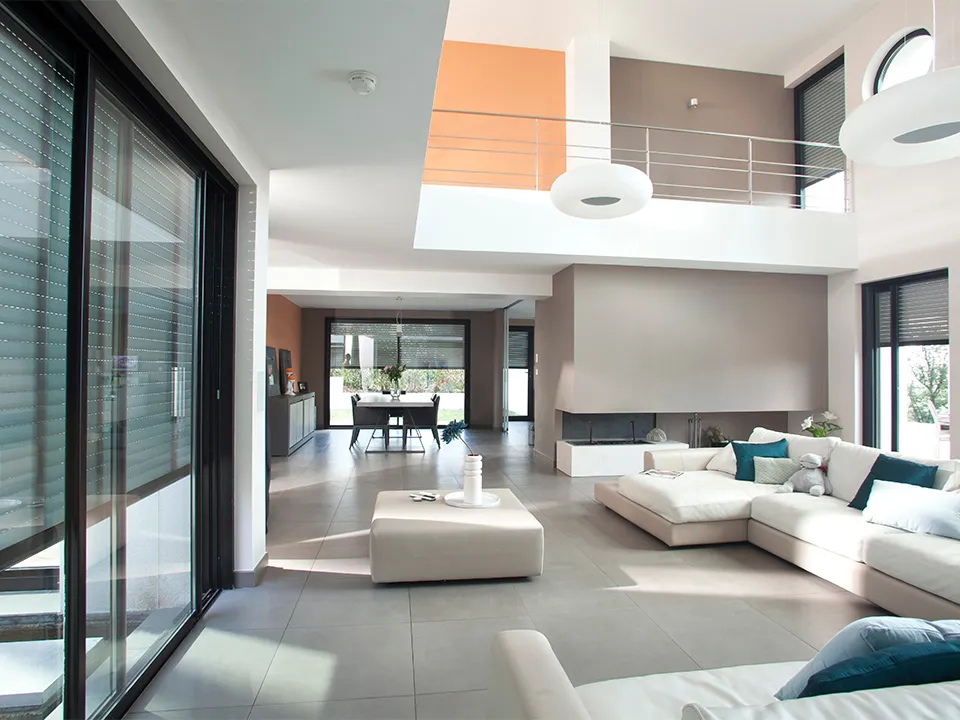
Preventing overheating has gained considerably in importance in recent years. Structural measures aimed at energy-efficient solutions are now essential.
In 2021, creating a comfortable indoor climate must therefore also mean limiting overheating, preferably in an energy-efficient way. Solar shading plays an important role in this.
It is a fact: summers are lasting longer and getting hotter. The near future offers little prospect of improvement, quite the opposite. Architects, engineers and construction companies are pursuing energy-efficient solutions to control the indoor climate. Governments, too, are beginning to recognise the negative impact of overheating in buildings. Since the introduction of the EPB regulations, the overheating indicator has also had to be taken into account. Above 6,500 Kh, a fine is calculated in the EPB declaration. But even below this threshold, the risk of overheating is not entirely ruled out. That is reason enough to consider solutions, including solar shading.
Limiting solar gains in summer
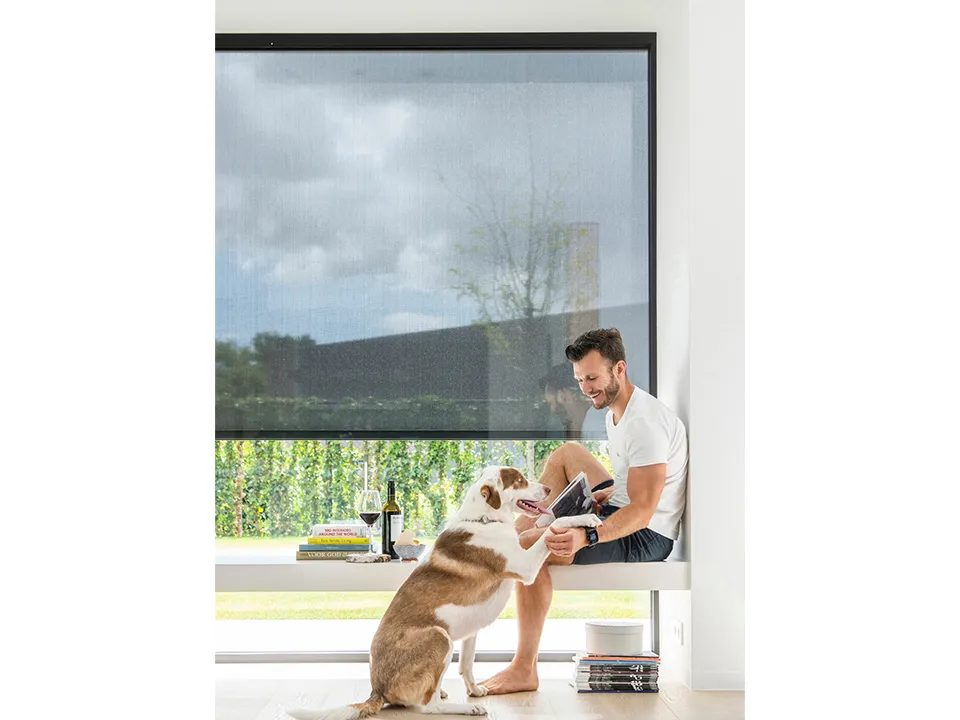
Many factors affect the risk of overheating. Homes with a high ‘thermal mass’, and therefore made of heavy materials, are better able to store heat. Steel and timber frame construction are at a slight disadvantage in this respect compared with ‘massive’ homes built of masonry or concrete. Thermal mass may have an influence, but that certainly does not mean overheating is ruled out. Other factors also play a part, such as insulation, airtightness, the building envelope’s finish and the choice of ventilation system. And, of course, there are the size and orientation of the windows and the type of glazing. Their impact should not be underestimated. After all, the aim is to let in plenty of daylight and, if possible, offer panoramic views of the garden. Solar-control glazing is one option, but its drawback is that it also limits solar gains in the cold season. The challenge, then, is to protect windows from the high summer sun and limit cooling loads without compromising solar gains in winter. This is where fixed or dynamic solar shading comes in.
Types of solar shading
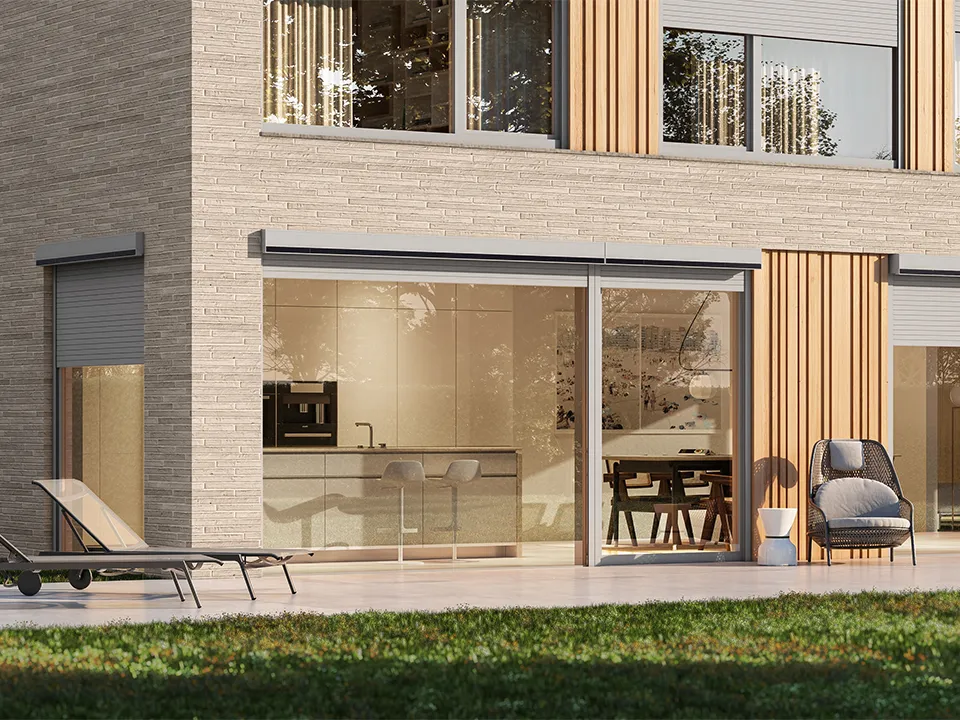
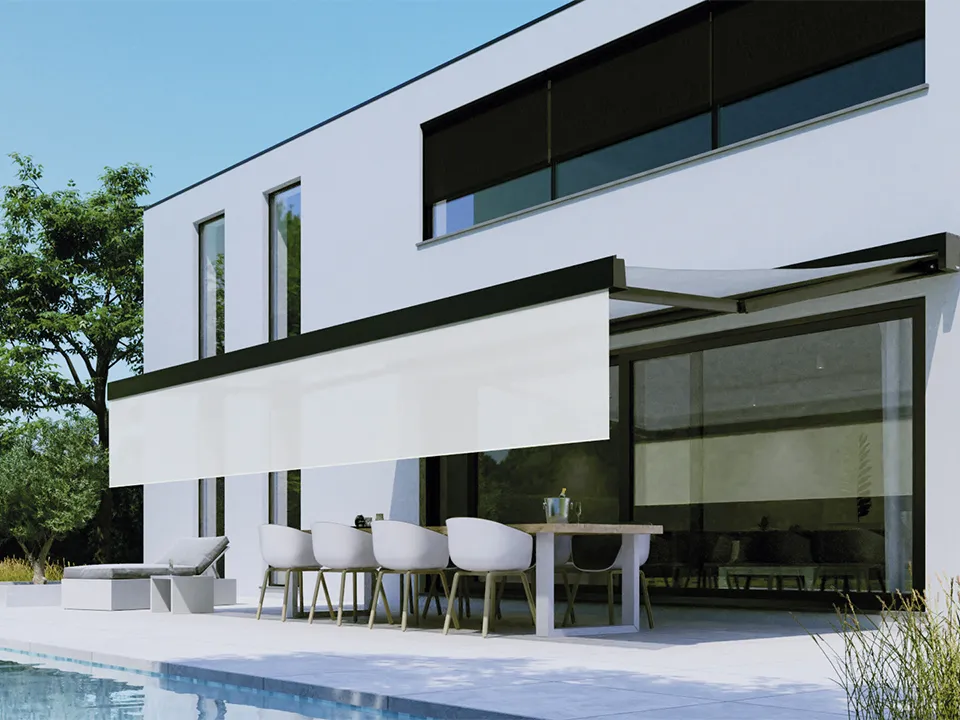
Solar gains can be limited in various ways. A deciduous tree, whose dense foliage filters sunlight in summer without blocking the low sun in winter, is one option. Attractive, but not always possible. Architectural overhangs are also a good option, provided the projection is correctly proportioned to the window height. Note, however, that like all fixed horizontal shading, they are effective against direct sunlight but do not filter reflected sunlight. In addition to structural architectural shading, used mainly on larger projects, there is a wide range of dynamic shading options: external screens, with or without integrated ventilation, roller shutters, external venetian blinds, sliding and folding screens, retractable awnings, and awnings with adjustable louvres or fabric. Like fixed horizontal shading, the last two categories only block direct sunlight, but they do guarantee optimal visual contact with the outdoors. For fabric shading, the key is to choose the fabric carefully, taking both thermal and visual comfort into account.
Solar shading and renovation targets
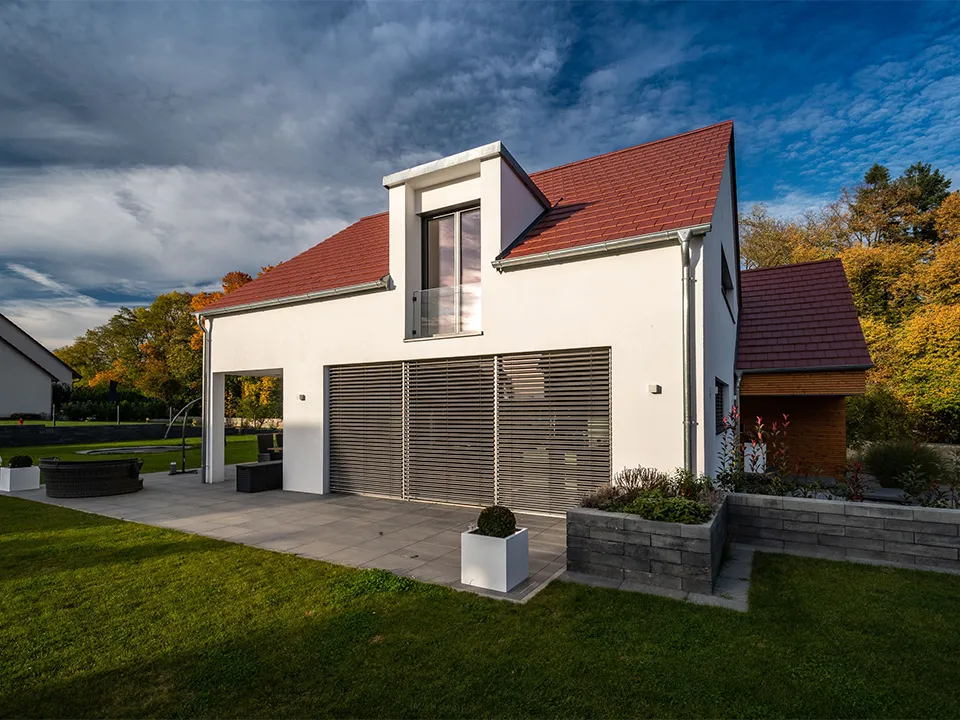
“If the European Commission wants to achieve its ambition of drastically reducing energy consumption for heating and cooling in buildings over the next ten years, dynamic solar shading must become an integral part of the European Renovation Wave strategy.” This is the position of ES-SO, the European Solar Shading Organization, which explains why in a new position paper and makes four recommendations. The challenge is immense: 75 per cent of buildings in the EU are not energy-efficient. Launched in October 2020, the European Renovation Wave strategy aims to renovate 35 million buildings by 2030 so that they consume less energy. Since heating and cooling account for 80 per cent of energy consumption in residential buildings in Europe, the European renovation strategy focuses on reducing energy consumption for heating and cooling by 18 per cent over the next ten years.
Sustainable technology
ES-SO also believes it would be a huge missed opportunity to press ahead with renovation plans and strategies without integrating modern, dynamic solar shading. If solar shading is installed on 75 per cent of the windows in renovated buildings, energy consumption and CO2 emissions in buildings can be reduced by 19 per cent per year. If cooling becomes as important as heating, that figure could even reach 22 per cent. “Dynamic solar shading is an exceptionally cost-effective and sustainable technology. The production process for these solutions generates far fewer CO2 emissions, while the energy saved is around 60 times greater than the carbon footprint associated with a service life of twenty years. In summer, solar shading limits energy consumption for cooling. In winter, natural solar gains reduce the need for heating.”
Four recommendations
ES-SO has therefore drawn up four key recommendations for EU and national policymakers on continuing the Renovation Wave strategy. The four recommendations are set out in the new position paper, ‘ES-SO statement on the European Renovation Wave strategy’:
• Overheating prevention should be included in European requirements for building renovation.
• Minimum energy performance standards for existing buildings, based on the ‘energy efficiency first’ principle, should include solar shading.
• Investment and targeted funding for renovations should include solar shading.
• Solar gains through windows should be recognised as a natural energy source.
ES-SO concludes: “Solar shading must become an important feature of every building in Europe to prevent it from overheating in the future. It is the most cost-effective solution on the market and has a direct impact on health, comfort and energy savings.”
Question about this story? Ask your question
Keep following this
Get an email when a new story is published. No account needed.
- ThemeBuilding envelopes for a changing climate
- SubjectProducts