Old PVC windows and doors provide raw material for new profiles
Text Johan DebaereImage Deceuninck
Using recycled PVC for new window and door profiles.
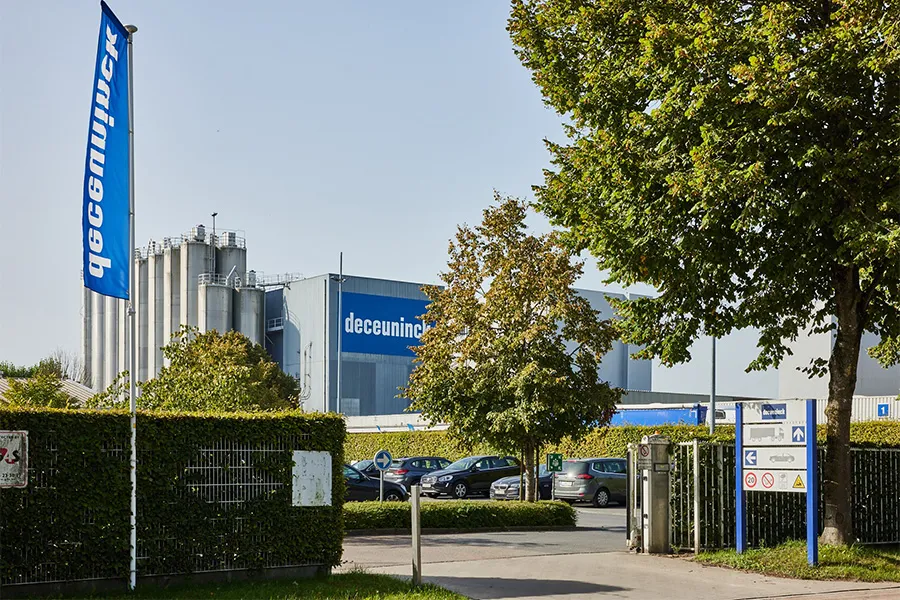
Sustainability, recycling and circularity are now an integral part of our society. For years, Deceuninck has invested in recycling PVC from old windows, doors, façade cladding and shutters as a raw material for manufacturing new window and door profiles. To do so, the company built a high-tech recycling plant in Diksmuide. In 2017, it processed 8,000 tonnes of recycled material, but by the end of 2023 its capacity will have quadrupled to 40,000 tonnes a year.
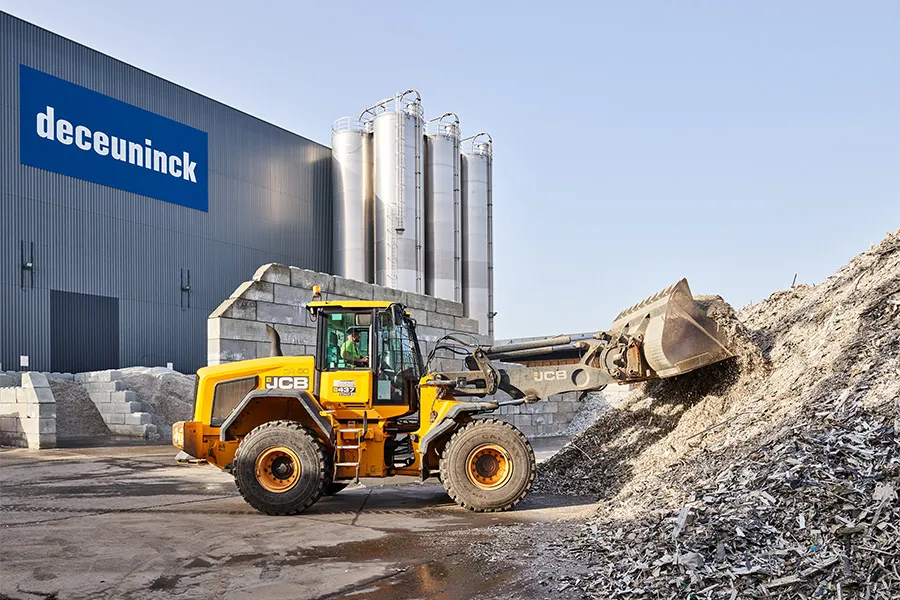
A plastic window can easily last 35 years without showing significant signs of ageing and with minimal maintenance. It can also be recycled 8 times without any loss of quality, and at least 10 times without losing its mechanical properties. That is why Deceuninck continues to invest heavily in expanding its recycling plant in Diksmuide. “Using recycled material in new window and door profiles is an important requirement for our R&D department. A standard profile from the Elegant range now contains 15 to 30 % recycled plastic, while the Phoenix version is made from 100 % recycled material. There are also several environmental reasons to invest in recycling. Firstly, this keeps 2.3 million windows a year out of landfill and incinerators. In addition, the recycling process uses 90 % less energy than producing new material, so CO2 emissions are also significantly lower,” says CEO Bruno Humblet. “For years, Deceuninck has focused on recycling old PVC windows, doors, façade cladding and shutters. Last year, we came close to processing 20,000 tonnes of recycled material. By the end of 2023, we aim to increase our recycling capacity to 40,000 tonnes. This will involve investing in optimising production processes. Over the past 5 years, we have added a warehouse and doubled the number of granulation lines from 3 to 6. From the end of 2023, all the granulation lines will also be brought together in a new building.”
A closed loop
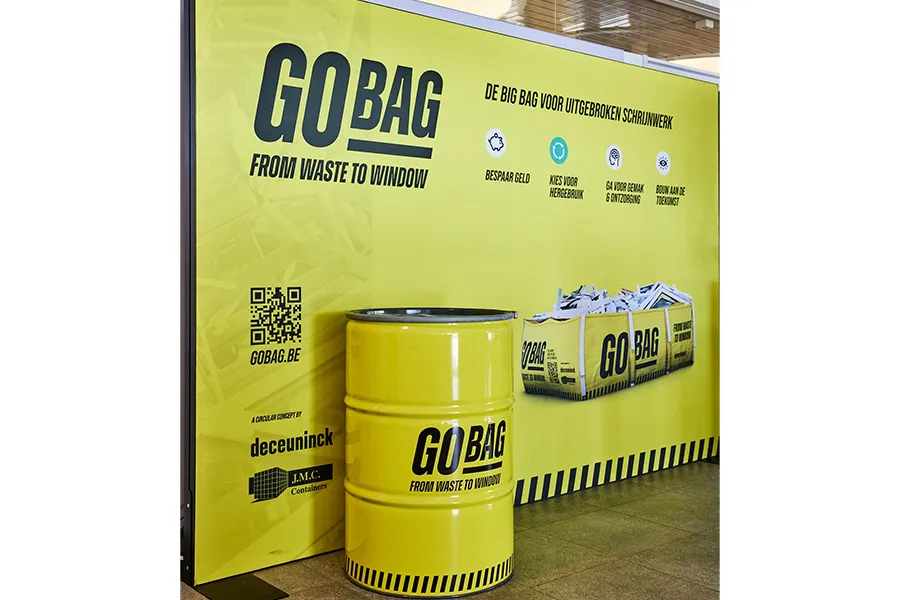
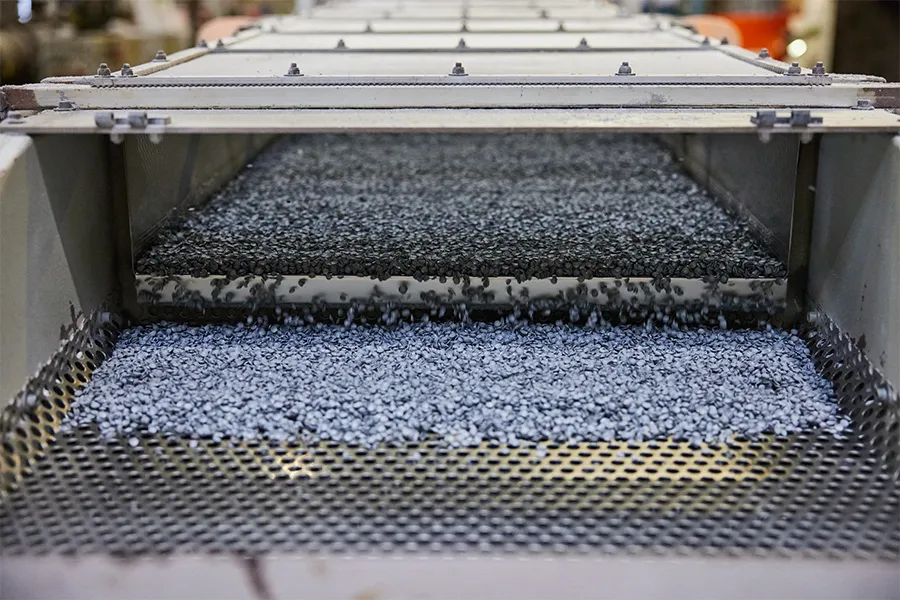
The recycling process starts with collecting old PVC windows, doors, façade cladding and shutters in Belgium and abroad. Deceuninck currently has 9 collection points in Belgium, for example, and plans to expand their number. PVC offcuts from construction sites are also recovered. The new GoBag is a yellow bag for discarded PVC, timber or aluminium joinery, with or without glass. Deceuninck collects it once it is full. “A great deal of the material we receive has already been sorted. This is obviously not the case with the contents of the GoBags, which we have to sort ourselves. The rest of the recycling process is largely automated. In the first stage, the profiles are fed through a shredder and broken up. The PVC and iron are separated here. The pieces are then broken down further, washed and dried. This removes metal, glass and sand. After this stage, the remaining substance consists of 95 % PVC and 5 % dirt,” the CEO explains. “Finally, white and coloured PVC pieces are separated, and the smallest dirt particles are removed. After granulation, we are left with pure PVC granules, which are stored in large silos and supplied to our production facilities as required.”
Focus on sustainability and climate
Every day, 10 lorries arrive in Diksmuide carrying scrap, and the team processes around 35 tonnes of material per shift. Quality control is, of course, given close attention throughout the process. Deceuninck is committed to supplying its partners with high-quality profiles at all times, including those made partly or entirely from recycled material.
“The motto at this recycling plant is ‘recycling for a sustainable world’. Sustainability and climate are very important to us. As a recycling company, we have received EuCertPlast certification and the VinylPlus product label for our sustainable overall policy, processes and products,” Bruno Humblet concludes. “The Science Based Targets initiative (SBTi) recently approved our ambitious climate plan. This confirms that we are continuing to take the right steps to minimise our environmental impact. We are making a far-reaching commitment. By 2030, we want to reduce absolute greenhouse gas emissions from scope 1 (direct emissions) and scope 2 (purchased energy) by 60 % compared with the 2021 baseline year. By then, we also aim to reduce emissions throughout the value chain (scope 3) by 51.6 % per tonne of production.”
Question about this story? Ask your question
Companies in this story
Keep following this
Get an email when a new story is published. No account needed.
- ThemeBuilding envelopes for a changing climate
- SubjectGeneral
- CompanyDeceuninck