FVWW Architecten: “Zilverkwartier with district heating stands out for its sustainability”
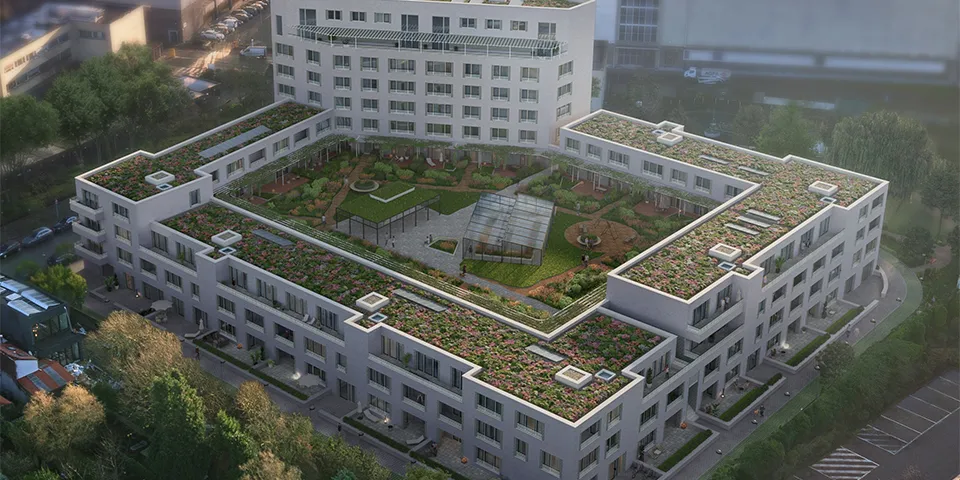
Frederic Vandoninck of FVWW Architecten speaks passionately about Zilverkwartier, a project currently taking shape in Berchem.
It will be a ring of homes, an ‘all-sided’ building rooted in its surroundings, with a focus on the individual as well as the collective. There will be plenty of shared space in the form of a generous rooftop garden designed to bring people together. Sustainability is also a priority, with green roofs, PV panels, ample bicycle parking, new green spaces with greenhouse construction nearby and a connection to a new district heating network. Innovative on several fronts.
Words: Eva Goossens | Images: FVWW Architecten / Fides Invest
In this column, we introduce an architect and a new project. Frederic Vandoninck of FVWW Architecten is first up, although he prefers to speak on behalf of the whole team contributing to the end result. Zilverkwartier, a project by Fides Invest, is not due to be completed until mid-2022, but the plans have already piqued our curiosity. The building comprises 82 apartments of various types and forms part of a wider masterplan that will transform the area around the Agfa-Gevaert company in the near future. The site is becoming a pleasant new residential neighbourhood, with a focus on green space and sustainable living.
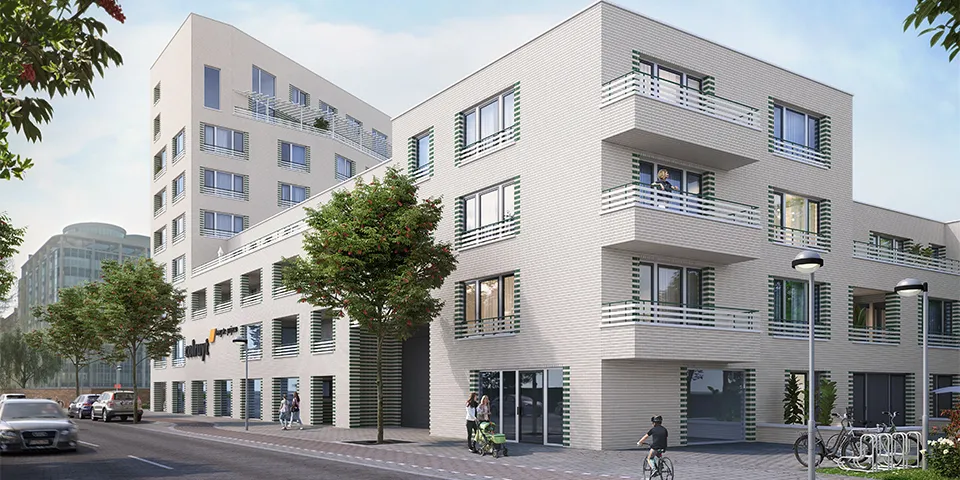
The building includes an indoor supermarket, with a loading and unloading area in the underground car park to prevent noise nuisance.
A focus on the collective…
“We make a positive and specific contribution to society and culture. We always aim to deliver social added value and bring human activities such as living, working, exercising, resting and relaxing together.” This is by far the first point in FVWW’s mission, and we see it translated into very concrete terms in the Zilverkwartier project. Frederic Vandoninck: “We do this above all by providing more space for communal areas than is standard and than a conventional return calculation would allow. Here, that mainly takes the form of a 1,840-square-metre rooftop garden above the roof of the indoor supermarket. The garden will feature footpaths, seating, spaces for relaxation, a pergola structure and two greenhouses. It will be a place for interaction where residents can meet.”
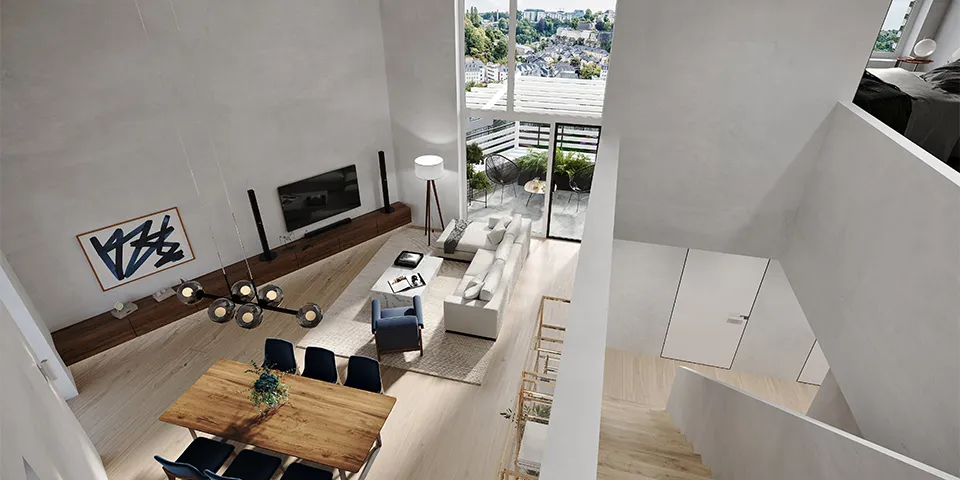
Living on a human scale
There is a focus on the collective, but also on the feeling of coming home to a peaceful place. “Although the development comprises 82 apartments and a supermarket, the new-build project feels very spacious and the building is on a human scale,” says the architect. “The different entrance halls around the cores create a more intimate atmosphere and closer contact with immediate neighbours. And importantly, all the circulation cores open onto the rooftop garden.” The apartments are conceived as a ring of homes around the supermarket and rooftop garden. This ring also makes Zilverkwartier an ‘all-sided building’, with no back. The surrounding area is designed to be largely traffic-free, with the exception of one side that borders Ooststraat. In addition to a recessed terrace, the ground-floor apartments will have a front garden, as a nod to the houses in the neighbourhood.
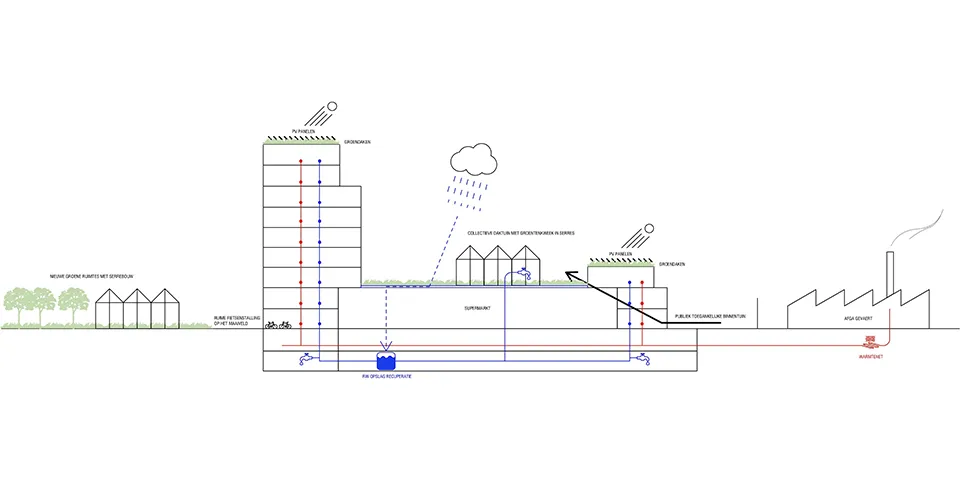
Sustainability is a major asset, with a connection to the district heating network, green roofs and, of course, PV panels.
CO2-neutral heating with district heating
The innovation in this project goes beyond its considered architecture. Sustainability is a key theme. Zilverkwartier is one of the first projects in Flanders to use a district heating network that harnesses industrial residual heat to provide heating and hot water for the homes.
Specifically, the new district heating network will make use of residual heat from nearby Agfa-Gevaert. Willem Warmenbol of project developer Fides explains: “Agfa-Gevaert, which is making every effort to improve its energy efficiency, already has its own district heating network, which provides heating for its company buildings, among other things. However, it only uses a small proportion of the capacity, meaning that a great deal of residual heat is still wasted. The plan is now to provide Zilverkwartier with a district heating network whose source is located at Agfa-Gevaert.” The network is being built by Warmte Verzilverd, set up by the citizen cooperatives Ecopower and ZuidtrAnt-W together with the experts at Kelvin Solutions, and is also being delivered with financial support from the Flemish Government.
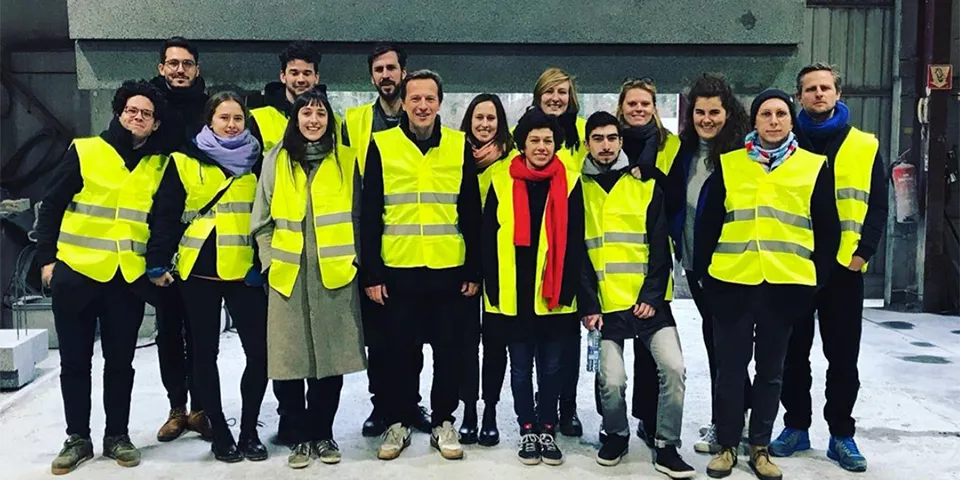
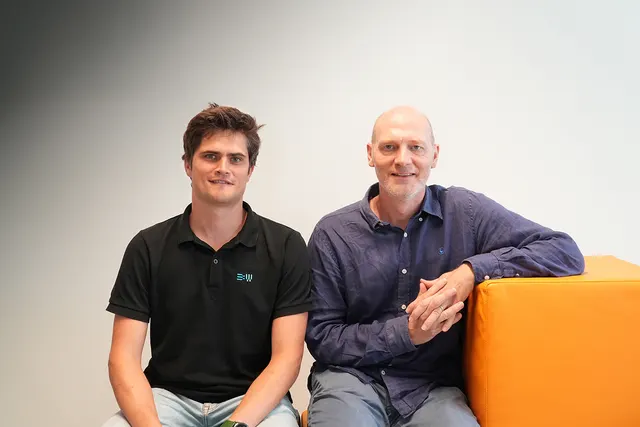
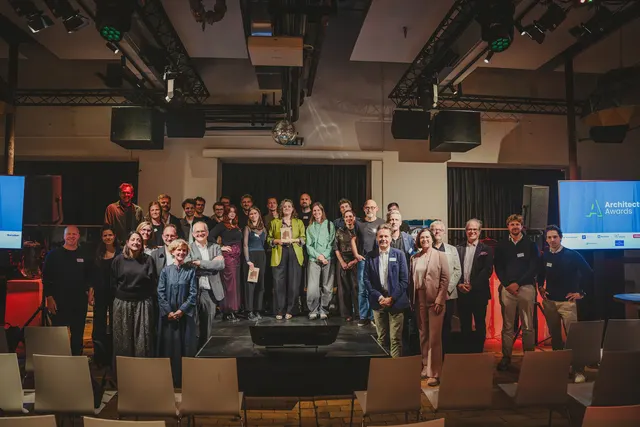
The FVWW Architecten team.
District heating: how does it work?
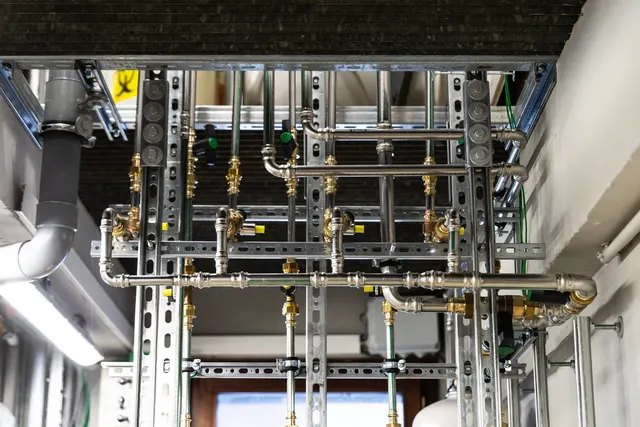
Will the residual heat be sufficient to provide heating and hot water for all the residential units? “With the Zilverkwartier project, we are using only a fraction of the residual heat,” says Willem Warmenbol. The district heating network consists of a pipe network that carries hot water in and cooled water out. It reaches the basement of Zilverkwartier via a substation, from where it is distributed throughout the building via a combined heating and hot water circuit. Each apartment then has its own heat interface unit. Consumption is, of course, measured using individual meters. And the energy price? “It is in line with market rates and based on market prices for natural gas. The arrangements are sound.”
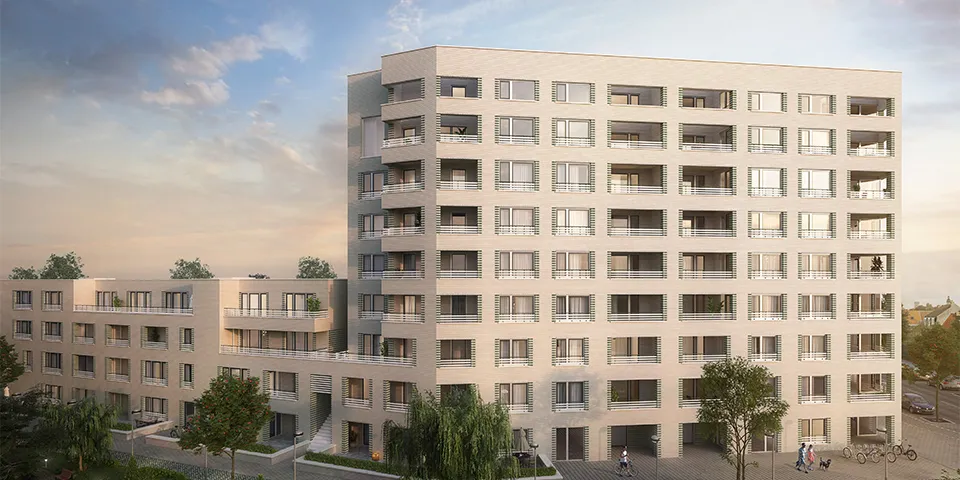
The architecture has a dynamic quality, with a tower alongside lower building volumes that also ensure maximum daylight reaches the rooftop garden.
Back-up guaranteed
In this case, the residual heat generated by Agfa-Gevaert’s industrial production serves as the heat source for the district heating network, but a heat plant using renewable sources such as biomass and heat pumps could also be used. “There is also a back-up plan in case residual heat from Afga-Gevaert were to become unavailable at some point, although there is no indication that this will happen. Other heat sources can be connected to the existing district heating network relatively easily.” The distributor, Warmte Verzilverd, is in any case required to keep sufficient back-up capacity on standby at all times. Heat will therefore always be available through the network. Is it innovative? In Belgium, yes, but there are already more than 500,000 kilometres of district heating networks worldwide. Belgium, too, had to act in order to meet its climate targets. With Zilverkwartier, FVWW Architecten and Fides Invest have already taken responsibility.
Question about this story? Ask your question
Keep following this
Get an email when a new story is published. No account needed.
- ThemeFrom vision to built project
- SubjectGeneral