National Heating Survey explained
Text Eva GoossensImage Daikin

‘Half of Belgian homes are heat-pump-ready’
One in two Belgian homes are already ready for a heat pump, but their owners do not seem to know it. This is one striking finding from the National Heating Survey. The survey shows that people need guidance and more information. This is a role for the industry, the media and the government, including energy advice centres and energy coaches. The advisory role of the installer is also essential, as is that of the architect guiding the client, both for new-build projects and major energy renovations of existing buildings.
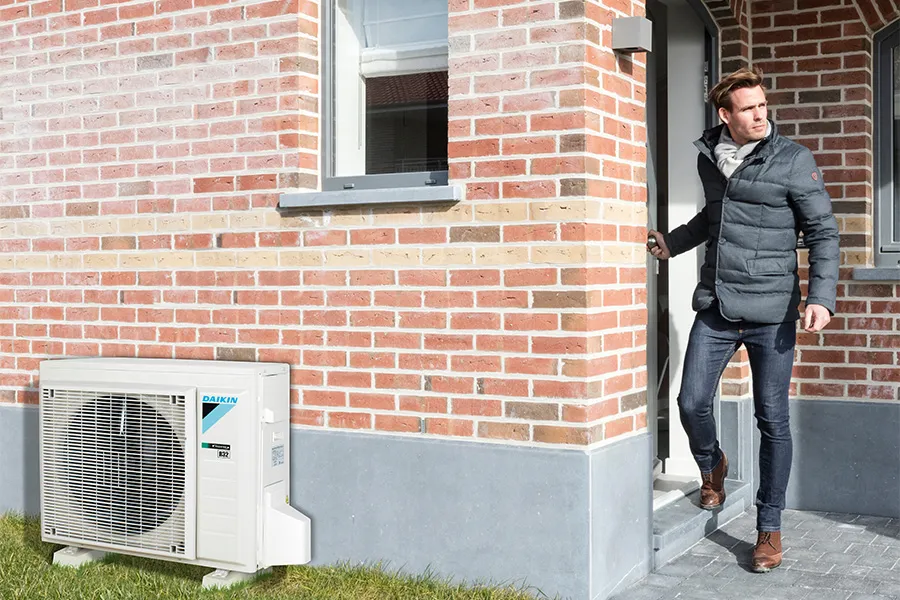
ArchiComm attended a panel discussion where the findings of the National Heating Survey, conducted by iVox on behalf of Daikin, were presented. Tom Defruyt of Eneco, Vincent Vancaeyzeele of Techlink, Sam Hamels of UGent and Luc De Smet of Daikin discussed the findings in greater depth. Although we are moving in the right direction, the transition to more sustainable heating needs to accelerate. Traditional heating systems must make way for heat pumps. Are homes and consumers ready? What are the challenges? Here is an overview.
Debunking myths
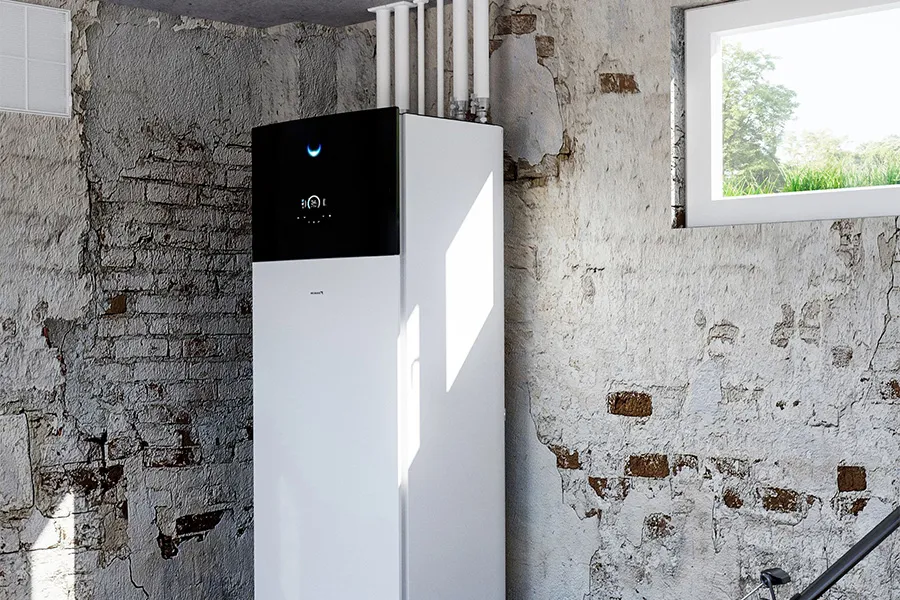
The new survey findings show that Belgians still mainly use traditional heating. For example, 59 per cent still have a gas boiler. Yet many Belgians recognise the importance of switching to renewable energy and smart technologies. A quarter say their home needs an energy renovation, including additional insulation and a new heating system. However, there is still some uncertainty about which system to choose. Luc De Smet, Director Strategy & Innovation at Daikin: “Although one in four heating appliances installed for central heating is already a heat pump, the average Belgian is still unsure whether their own home is suitable for one. However, when we look at the floor area, estimated energy consumption and stated level of insulation, we find that around one in two homes is ready for a heat pump.” Sam Hamels, Energy Economics Researcher at UGent, adds: “Several myths also need to be debunked. For example, one in two Belgians still think heat pumps are only suitable for new-build homes.” Another common myth is that underfloor heating is an absolute must with a heat pump. It is true that underfloor heating ensures the highest efficiency. But if it is not possible, radiators, often the existing ones, are also an option. The conclusion: it is essential to correct these misconceptions and raise awareness of the potential of heat pumps in existing homes.

A tax shift is needed
To make investing in a heat pump economically viable, account must be taken of the stated energy consumption, the floor area of the home and the quality of its insulation. A VITO study shows that, at current energy prices, a heat pump is cost-effective in homes with a heat demand of up to 70 W/m², and up to 100 W/m² in smaller homes. Tom Defruyt of Eneco: “The 50-degree test can establish whether a home is technically ready for a heat pump. During a cold spell in winter, set the heating boiler to 50 degrees Celsius instead of 70 or 80 degrees.
If the home can be heated adequately, it can take a heat pump.
This proved to be the case for one in two customers in a test conducted last year.” So why are we still hesitating? Providing information is important, but what will really convince Belgians is the clear impact on their wallets. The main reason respondents gave for installing a heat pump is still to save money. “Those high levies on electricity are where the problem lies in Belgium,” says Tom Defruyt. “For heat pumps to pay for themselves within a reasonable period, the price of electricity relative to gas needs to come down.” Specifically, reducing levies on electricity or shifting them to gas could further accelerate the energy transition, as is also happening in the Netherlands. According to the panellists, this tax shift is bound to happen. It is important to make clients aware of this when they are investing in a new heating system that will serve them for decades to come.
Electricity demand and dynamic tariffs
Can the grid cope with this growing demand for electricity? Tom Defruyt: “On the one hand, there is major investment in more Belgian solar and wind power; on the other, we are focusing on flexible control using dynamic tariffs to smooth out peaks.” Combining a heat pump with a dynamic electricity tariff and smart controls, which is already possible, seems a sensible option. This helps keep the grid balanced while giving customers extra savings. In short, the heating and energy sectors are fully committed to the energy transition and a greener future. It all comes down to informing, guiding and working together so that end customers can join the journey without doubts or uncertainty.
Question about this story? Ask your question
Keep following this
Get an email when a new story is published. No account needed.
- ThemeTechnologies for safe, smart buildings
- SubjectEvents