From storytelling to storydoing
Text Kris VandekerckhoveImage NOA outdoor living
Broeklin from the inside: a project marked by scars and courage
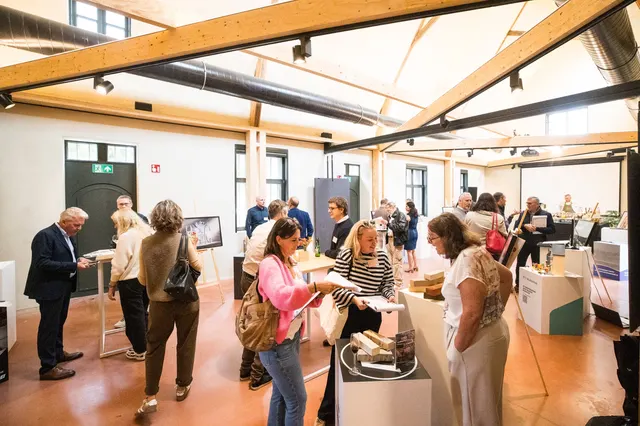
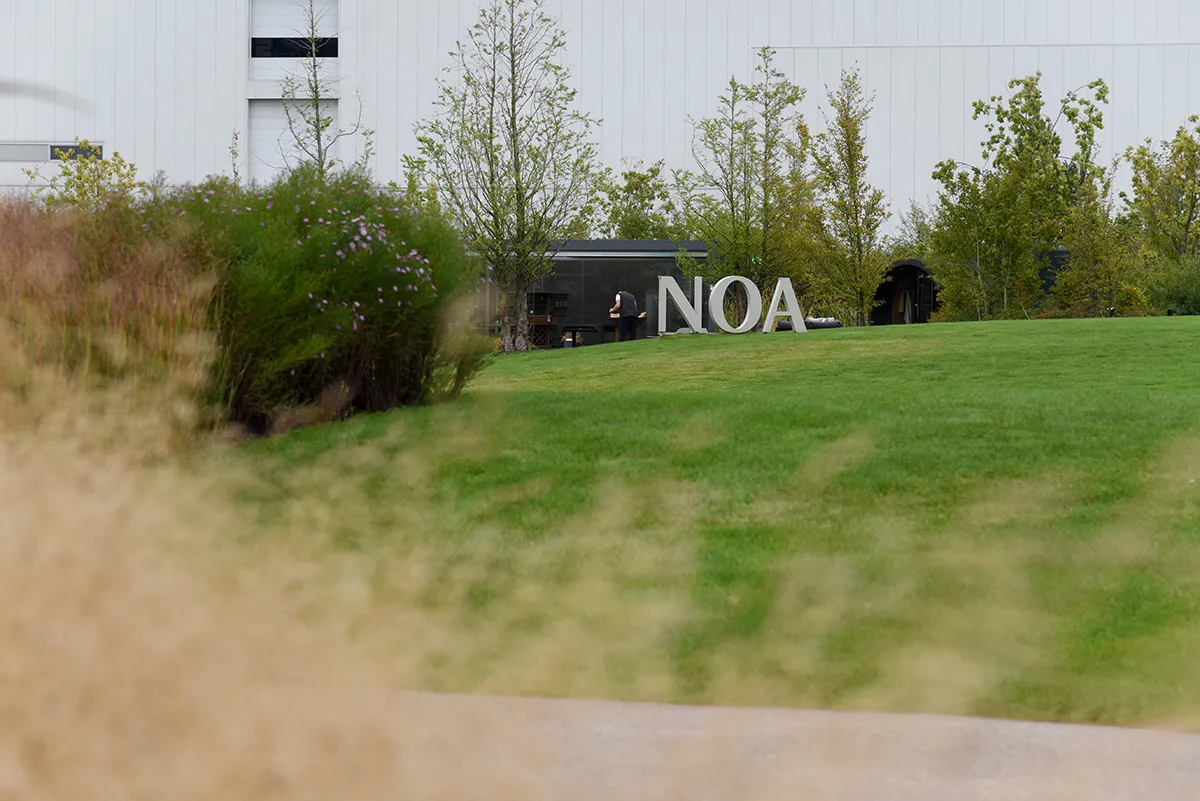
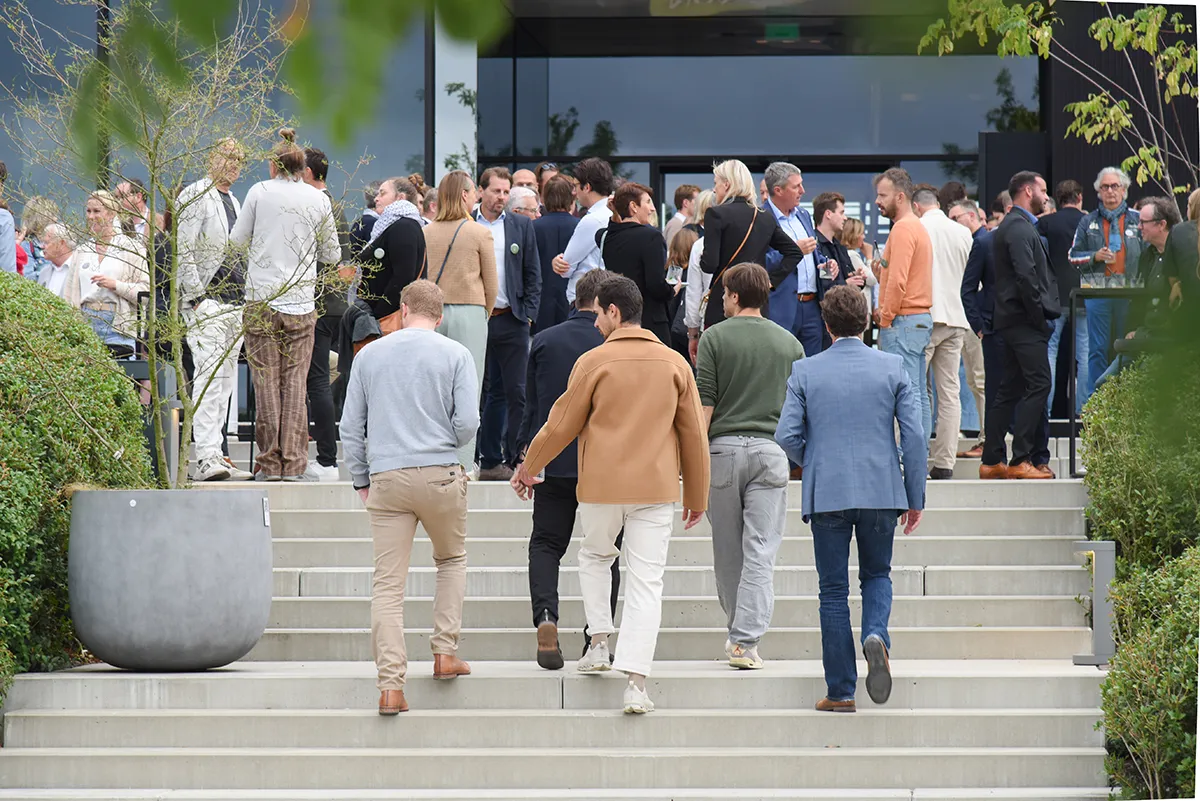
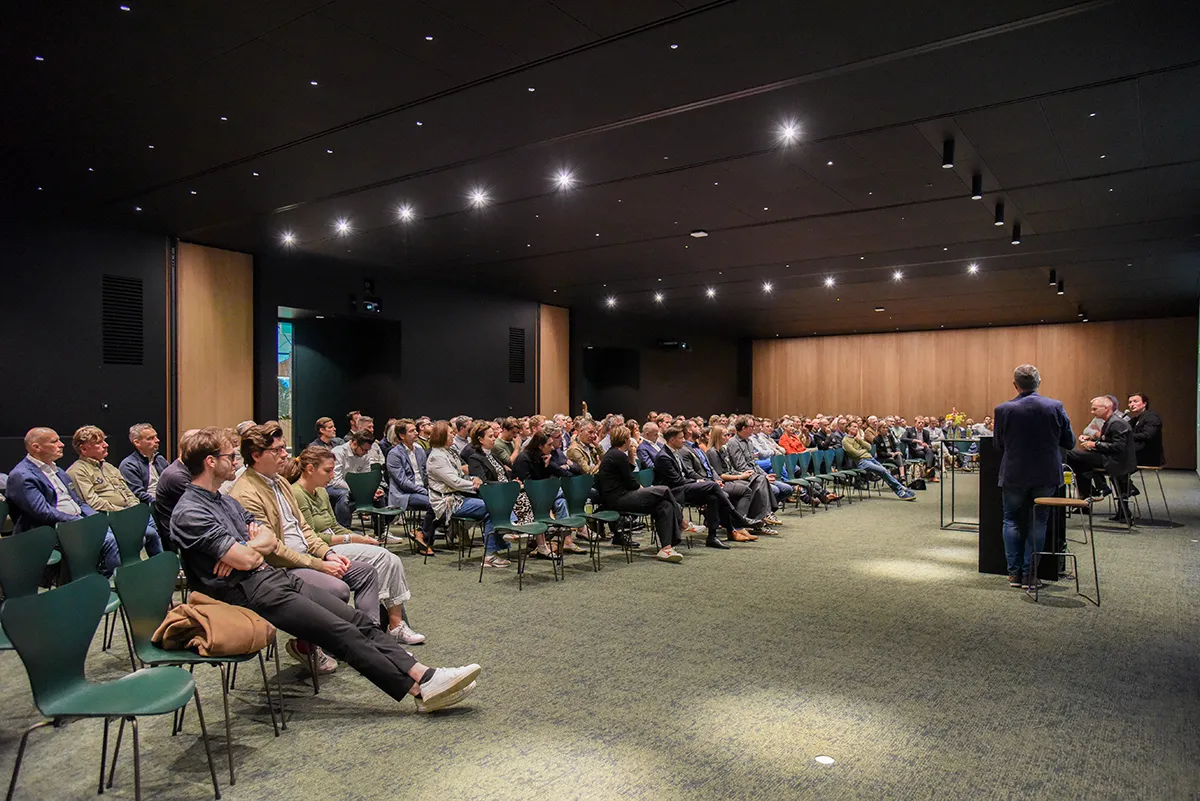
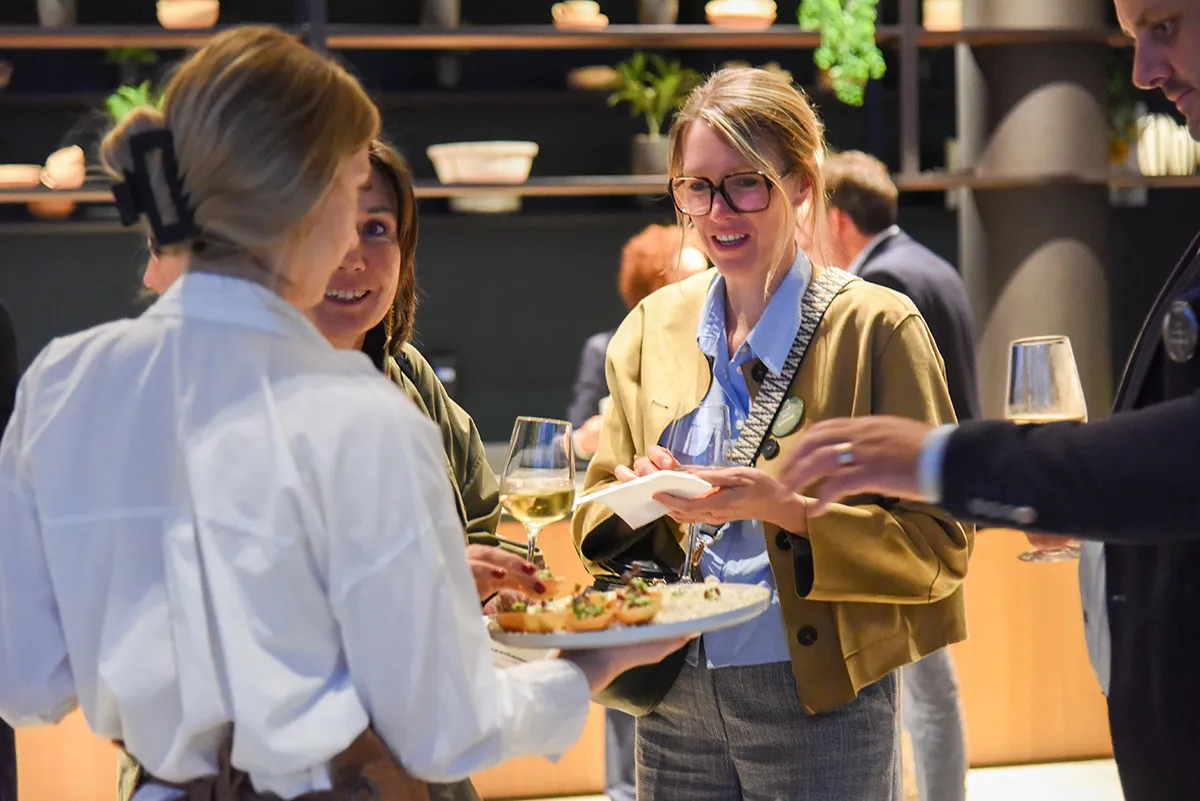
On 18 September, NOA Outdoor Living and ArchiComm welcomed a select audience of architects and construction partners for an inspiring evening of vision and dialogue. The centrepiece was the unveiling of Broeklin Brussels, an ambitious regeneration project bringing together sustainability, circularity and urban renewal beneath the Vilvoorde viaduct. What was once Uplace is becoming a model for the city of tomorrow, a place where making, experiencing and repairing go hand in hand.
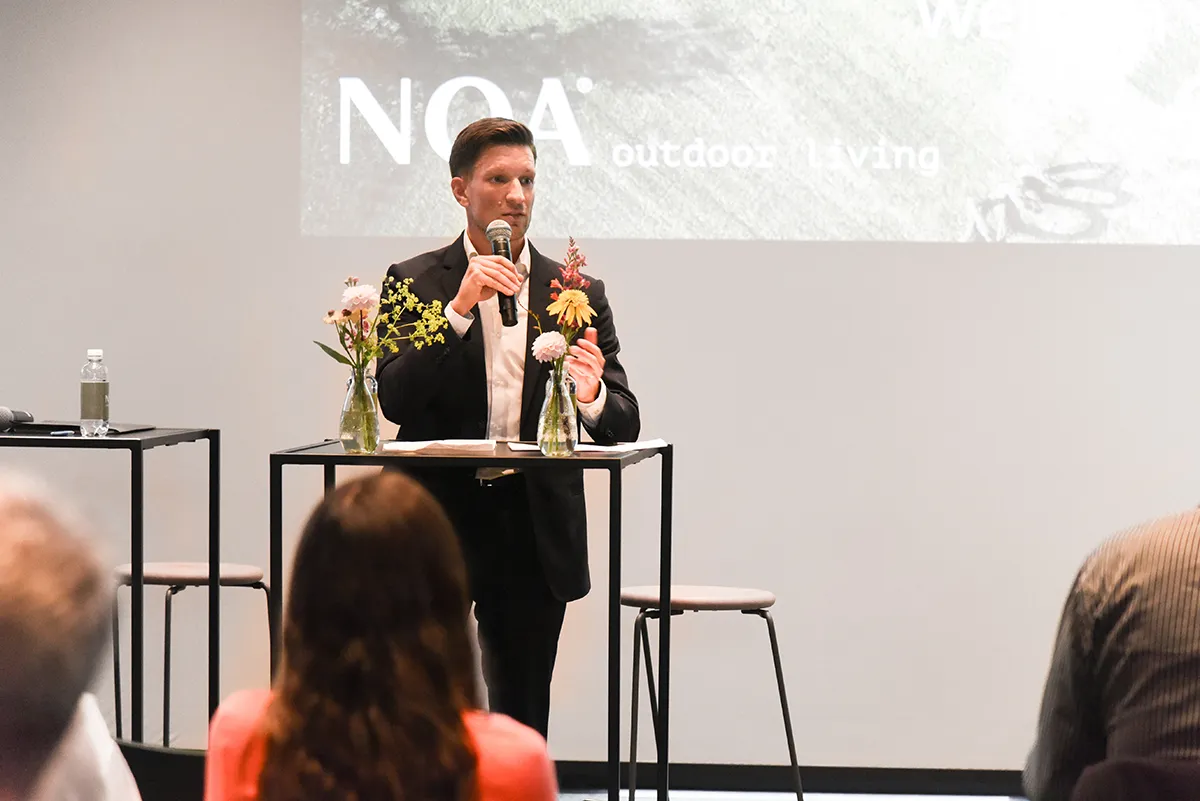
“If you had asked me this last year,” began Jan Van Lancker, CEO of Uplace, “I would have told you a story about eighteen years of struggle.” Today, however, he tells a different story: one of entrepreneurship, positivity and flexibility.
Broeklin Brussels is taking shape on a 12.5-hectare site, with more than 150,000 square metres of mixed-use space: retail, leisure, offices, SMEs and even a 3,000-square-metre urban farm.
A new story for an old site
The site will not include housing. The focus is on working, experiencing and producing. “We don’t want to hide sustainability and circularity in a paragraph on a website,” says Van Lancker, “but make them visible at the heart of the shopping experience.” That is why Broeklin will feature so-called maker shops: places where consumers can see, feel and understand how products are made, and where repairing, reusing and recycling become tangible experiences.
From Uplace to Broeklin: co-creation with society
The transformation from Uplace to Broeklin is not a cosmetic rebrand, but a fundamental change of direction. After years of legal proceedings and public opposition, Van Lancker opted for a radically different approach: working with former opponents.
“Former opponents are now ambassadors for the project,” he says proudly. Organisations such as Bond Beter Leefmilieu and Unizo, as well as representatives from the cultural and academic worlds, helped shape the new vision.
The result is a project that does more than build: it reconnects. It is a circular ecosystem where the economy, ecology and community come together. Or, as Van Lancker puts it: “We’re moving from storytelling to storydoing.”
Circularity as an experience
Broeklin’s circular approach is practical, not theoretical. Alongside around five hectares of solar panels and approximately 2,500 new trees, the project also aims to rethink consumption.
Van Lancker explains: “We want to be the first major retail project to bring circularity to the forefront of the shopping experience. No hidden sustainability report, but transparency on the shop floor.”
A central repair hub will collect, sort and repair clothing, ahead of European regulations that will introduce a textile guarantee requirement in 2028. Broeklin will turn old jeans into new jumpers and even provide space for education and craftsmanship. The partnership with social economy organisations such as Groep Intro is also part of this approach: people who face barriers to entering the labour market will, among other things, repair bicycles in the largest social economy bike shop in Flanders.
Even the hospitality offer will have a circular dimension, with a farm-to-table concept that brings vegetables straight from the urban farm to the plate.
An ecosystem for the city of tomorrow
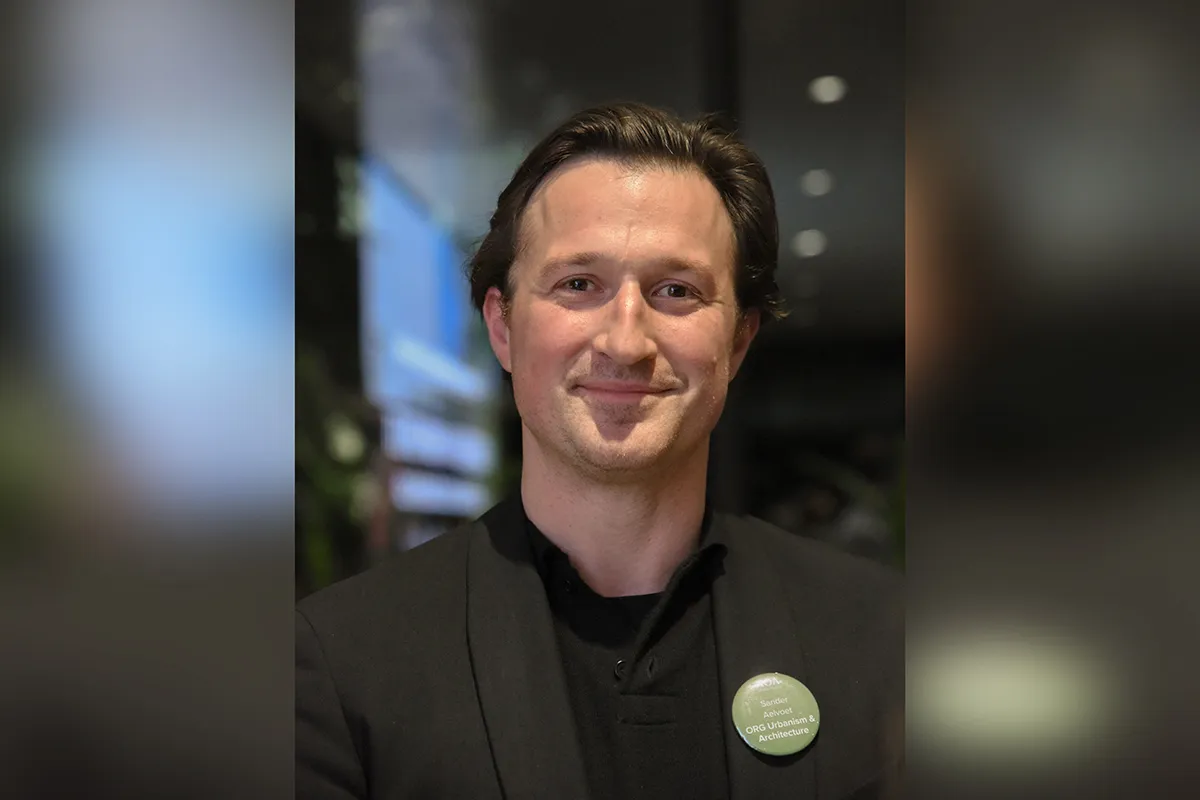
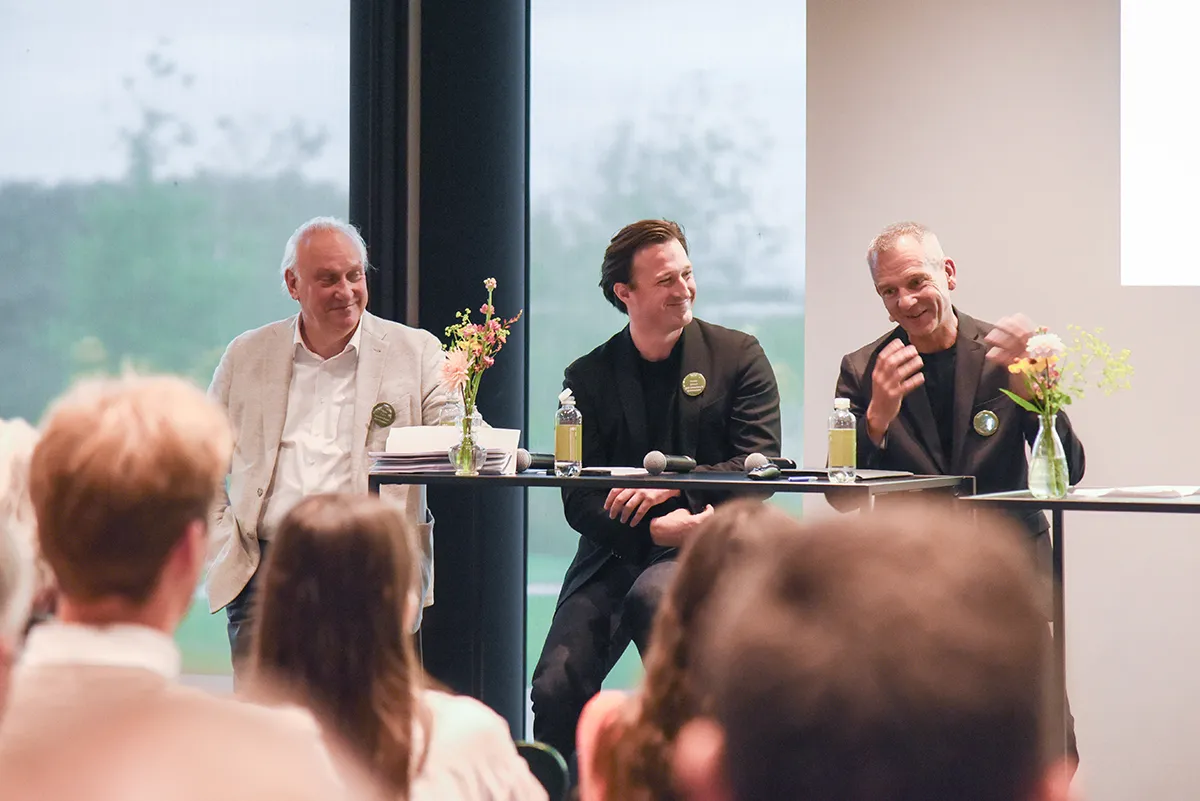
“We build large projects to last a hundred years,” says Sander Aelvoet, partner at ORG. His talk took a step back to consider the wider urban context. The canal zone around Brussels, once a string of brownfield sites, is evolving into a network of innovative urban districts where living, working and producing are once again intertwined.
Aelvoet identifies four keys to sustainable urban transformation: density, accessibility, green networks and sustainable mobility. Broeklin’s masterplan translates these principles into six large halls set in a parkland designed by renowned landscape architect Bas Smets. Public spaces, walking routes and bioswales will be created between the buildings, and around 25 per cent of the site will be restored to wild nature.
The architect sees Broeklin as an ‘ecosystem of places to make things’, where industry, culture, education and retail reinforce one another. “We no longer build single-use zones,” he says. “The future is interconnected: economically, socially and ecologically.”
The architect as director
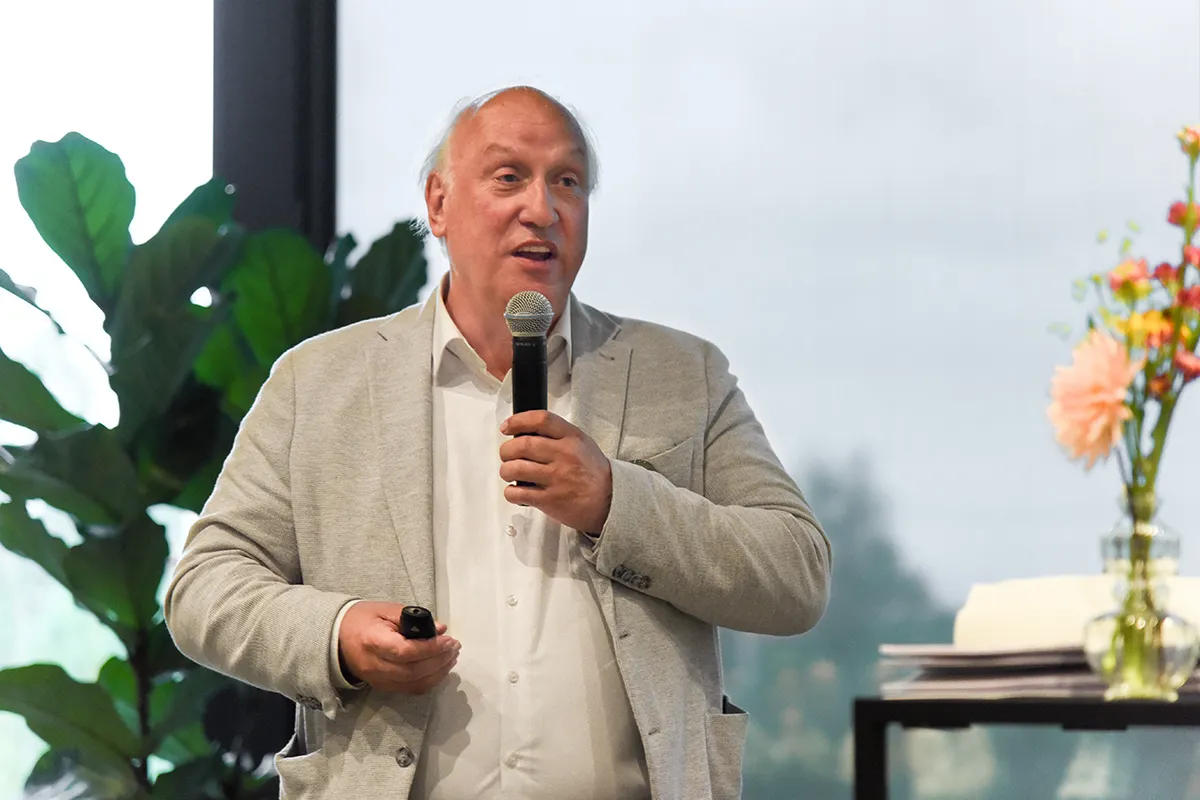
“Our profession has changed completely,” says John Eyers, CEO of Jaspers-Eyers Architects. “The architect is no longer just a designer, but the director of a multidisciplinary process.” In his view, circularity starts with preparation and collaboration.
Everything is modelled in 3D in advance, with contractors and manufacturers involved before the first stone is laid. “Anything not resolved during the design phase will come back as a problem on site,” says Eyers.
Eyers illustrates this principle with specific examples of materials. At Broeklin Brussels, the team is looking for concrete with recycled aggregates, aluminium from renewable sources, and glass with minimal profiles and maximum reusability. He also points to a remarkable example of glass innovation: the glass façades of Apple’s flagship stores, developed by the German company Sedak. “Everyone knows Apple stores with their fully transparent façades,” Eyers explains. “There you see glass panels eight metres high with no profiles at all. Sedak helped develop the technology, using furnaces supplied by Apple itself. Today, it can make glass twenty metres long and 3.55 metres wide, just eight millimetres thick and weighing one and a half tonnes.”
For Eyers, this is not an isolated technological feat, but an example of how architects and manufacturers can work together to develop new materials with a lower environmental footprint and greater reusability. “Circularity is easy to talk about,” he concludes, “but you make it happen by working closely with the people who really understand materials. That is the future of architecture.”
More than construction: a societal shift
Broeklin Brussels is more than an architectural project. It is a societal movement that challenges conventional thinking about real estate. With an investment value of €600 million and construction scheduled to start in 2026, the project’s initiators are aiming for an opening around 2028. Yet its real ambition lies not in the building itself, but in the mindset it represents.
As moderator Patrick Retour put it: “It’s not just about buildings, but about the experience. Broeklin will be a new place to be: for people, society and the environment.”
Broeklin aims to prove that circularity is not the end of consumption, but the start of a new way of living together: fair, transparent and future-focused. Or, in Van Lancker’s words: “We’re bringing sustainability to the forefront. Not as marketing, but as reality.”
Question about this story? Ask your question
Keep following this
Get an email when a new story is published. No account needed.
- SubjectEvents