Climate-resilient construction: an insurance policy for a comfortable living environment
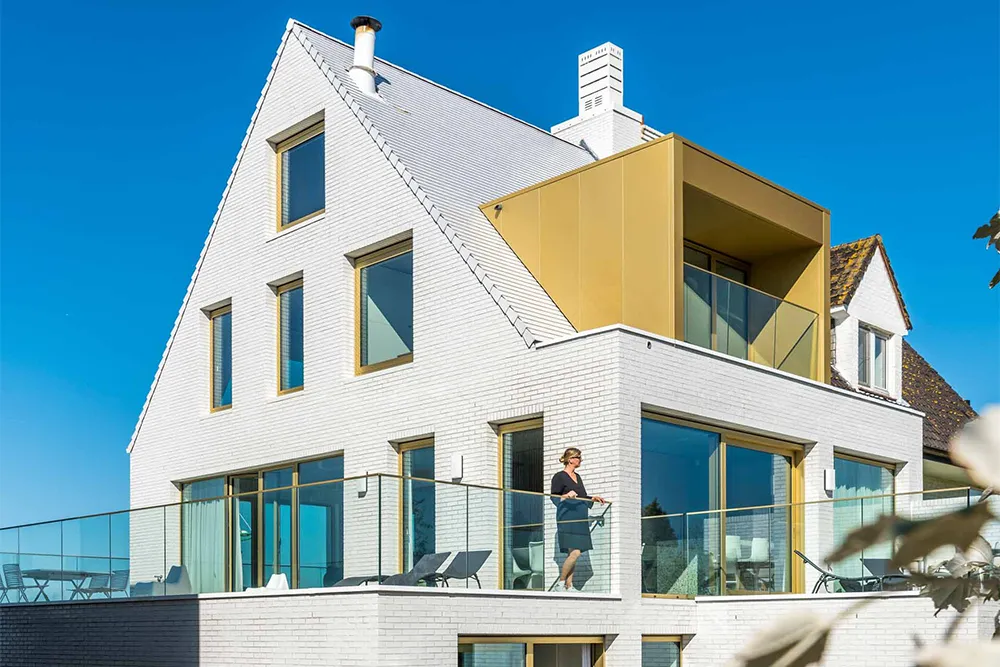
Heatwaves, flooding, the extinction of plant and animal species … every month, the media report another alarming consequence of global warming. Climate-resilient construction prepares our buildings and their surroundings for the effects of climate change. Wienerberger is leading the way. The building materials manufacturer not only offers a comprehensive range for climate-resilient and nature-inclusive construction, but is also taking mitigation measures in its production processes.
Our society faces major challenges. The projected growth in the number of households is putting increasing pressure on available space and infrastructure. The government’s spatial planning policy focuses on greater urban densification in city centres and village cores. “This densification, combined with global warming, entails risks such as a more pronounced urban heat island effect, flooding and falling groundwater levels … To avoid these dangers, it is important to design and construct our buildings and their surroundings in a way that mitigates climate change and adapts to its effects.” So says Wim Garmyn, Climate-Resilient Construction Project Coordinator at Embuild Vlaanderen. The construction sector is already familiar with effective solutions for climate-resilient construction, including materials that do not absorb heat and the incorporation of green-blue solutions around our buildings.
Mitigation: preventing climate damage
“But there is still a great deal to do,” says Wim Garmyn. Embuild Vlaanderen’s vision for tackling climate challenges rests on two pillars: mitigation and adaptation. “The first step, mitigation, addresses the causes of the problem. Examples include the Flemish renovation obligation, in force since 2023, limiting the ecological footprint of new building materials and reducing emissions during construction and infrastructure projects.”
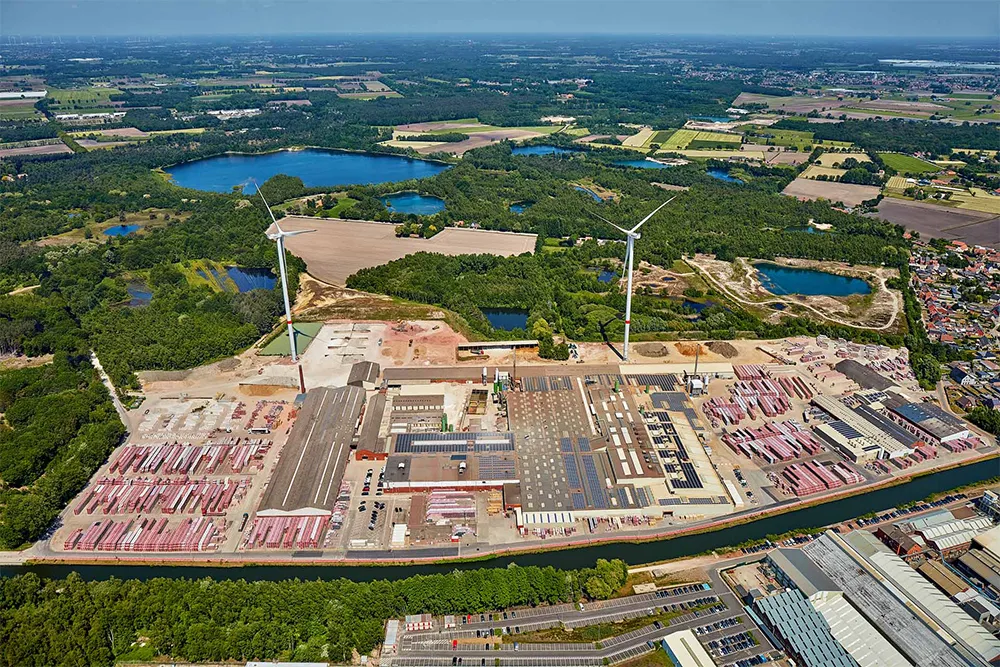
For several years, Wienerberger has been working to reduce emissions, not only in the production process but throughout the entire chain, from extraction through to product packaging. Commercial Director Katrien Nottebaert explains: “Wienerberger’s policy focuses on circular construction and achieving CO2 neutrality. We aim to close loops as far as possible, for both raw materials and water used in the production process. We also have a number of urban mining pilot projects under way, recovering ceramic building materials from demolished buildings for use as secondary raw materials in production. In addition, we support our building partners in applying circular construction principles. This ranges from advising designers to developing circular systems such as ClickBrick.”
Other environmental priorities for Wienerberger include decarbonisation, reducing CO2 emissions, and dematerialisation, reducing the consumption of raw materials and other materials.
Adaptation: adjusting to the new reality
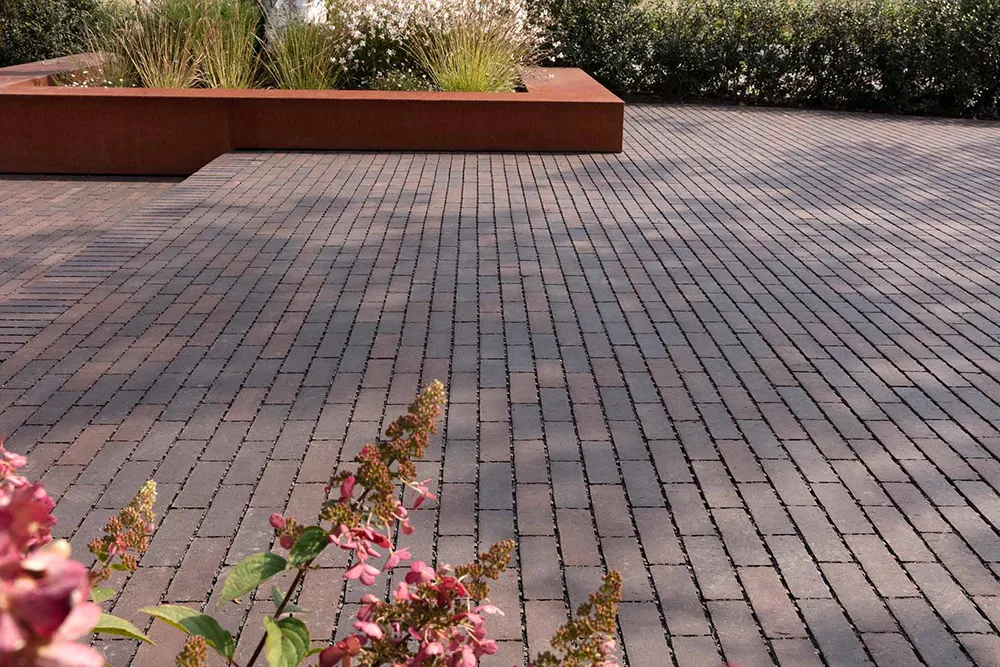
In the second step, Wim Garmyn identifies three ways to adapt to what lies ahead: implementing technical solutions, creating green-blue infrastructure and launching targeted climate projects. “Technical solutions in the building envelope can help to reduce the urban heat island effect in particular. One example is using white building materials. Expanding our green-blue infrastructure not only serves recreational and aesthetic purposes, but also helps improve water management, purifies the air, enhances physical and mental wellbeing and helps counter the urban heat island effect. Embuild Vlaanderen is also supporting a range of initiatives at project level.”
With Wevolt solar panels, Wienerberger has launched a technical and aesthetic solution for creating a roof that generates all the electricity it needs, or for integrating PV panels neatly and unobtrusively into the roof covering.
A bright partner
Clients and designers looking to tackle the urban heat island effect will find a reliable partner in Wienerberger. Katrien Nottebaert explains: “Choosing white or light-coloured building materials helps keep temperatures lower in and around buildings on hot days. On the roof in particular, a white roof covering helps reflect solar radiation and reduce heat absorption through the roof. This can help prevent buildings from overheating and thus reduce the need for cooling. Wienerberger’s range includes several white or light grey tiles for pitched roofs. For flat roofs, we offer Leadax Roov, a demonstrably circular solution thanks to the use of recycled PVB films from the glass industry in its production process. Another advantage is that a white roof covering not only helps reduce the urban heat island effect, but also ensures a higher yield from solar panels installed on the roof.”
When it comes to façade finishes, light-coloured façades reflect sunlight and therefore absorb less heat, helping to keep indoor temperatures lower. Almost every collection of handmade or wire-cut bricks includes a light or even white option in its colour range. Those looking to complete the white look can also choose light-coloured clay pavers from our range.
Approved infiltration solution
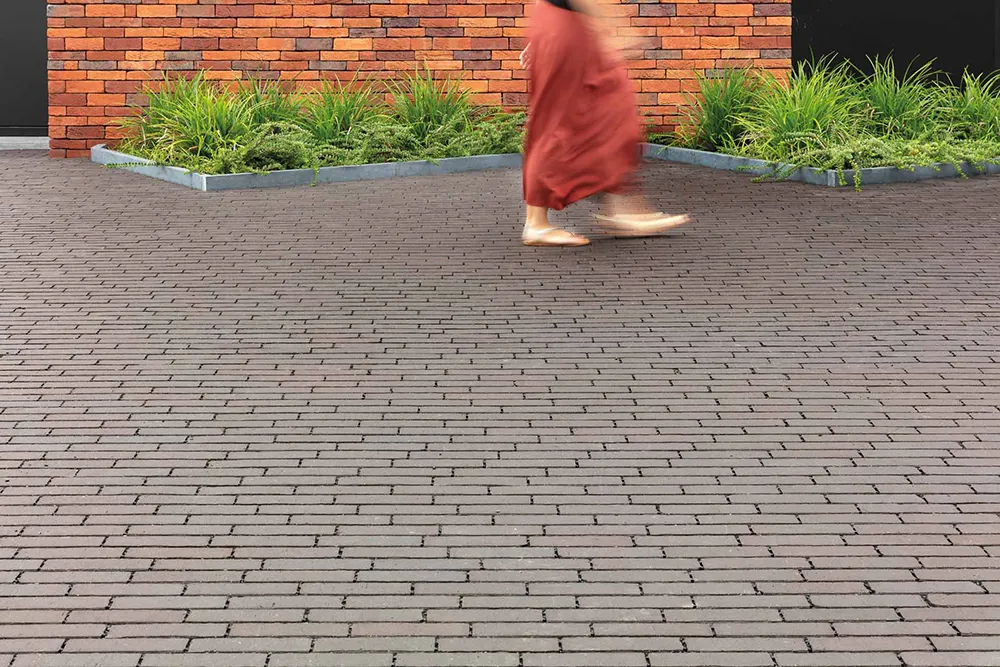
Those looking to contribute to green-blue networks and good water management can choose permeable paving, alongside measures such as installing a wadi. Since October 2023, the Regional Urban Planning Regulation on Rainwater has required an infiltration facility on residential plots larger than 80m². Above-ground solutions, such as permeable paving, are preferred. Passaqua from Wienerberger is a proven, sustainable solution. This wire-cut clay paver has spacers approximately 6mm wide. On a 59mm-wide clay paver, this gives a joint area of over 10%, meeting the minimum requirement for permeable paving. The wide joints allow rainwater to drain quickly and easily, prevent water from remaining in the joints and reduce the risk of weeds and moss.
Wienerberger has been testing the effectiveness of Passaqua in the Duurzame Wijk in Waregem since 2015. Permeability measurements taken every three years show that, 8 years after installation, the permeability coefficient is still above the minimum requirement.
Stronger biodiversity
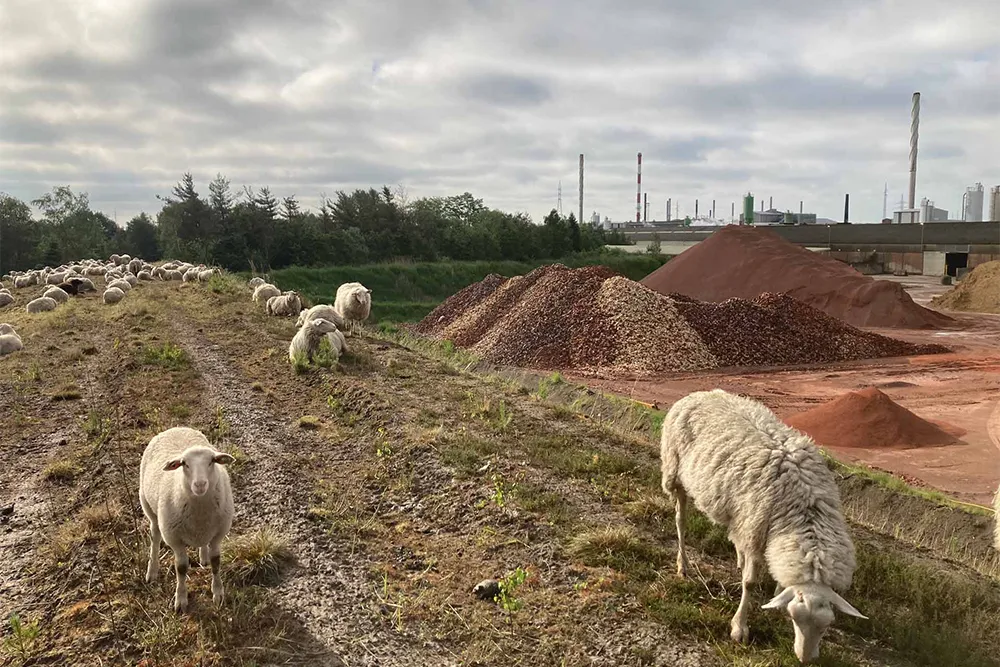
Wienerberger is also taking steps to adapt its own sites to the new reality. Last year, it completed a biodiversity plan for each of its approximately 200 production sites worldwide. The plan sets out specific measures to strengthen local biodiversity at every site. The first measures have already been implemented: Wienerberger previously created ecocorridors and specific habitats at its sites in Rumst, Beerse and Lanaken, including temporary pools at the Rumst site to support the natterjack toad.
Nature-inclusive products
Clients can also make a straightforward contribution to biodiversity in new-build projects by designing and building in a nature-inclusive way. Nature-inclusive construction makes nature an integral part of a building. This goes beyond incorporating green features into buildings: it also means creating suitable habitats for a range of plants and animals, including birds, bats and bees. This can be achieved with building elements such as bat boxes and tiles, hedgehog boxes, nesting bricks and tiles for birds, and insect and bee bricks. These elements give nature a permanent place in making a building and its surroundings climate-resilient. Designed with the help of ecological consultants, they can be seamlessly integrated into a building’s façade or roof.
Wienerberger is currently running an architecture competition to encourage architects to design in a nature-inclusive way. Our neighbours to the north have already moved beyond the incentive stage. Their Besluit Bouwwerken Leefomgeving provides a basis for setting specific requirements for nesting facilities for house sparrows, swifts and bats.
In short, the move towards climate-resilient construction is inevitable. Wienerberger’s products already offer solutions that put you ahead of the curve and help ensure highly comfortable living environments.
Question about this story? Ask your question
Keep following this
Get an email when a new story is published. No account needed.
- SubjectGeneral