








Carbon neutrality in buildings: Is aluminium the future of architecture?
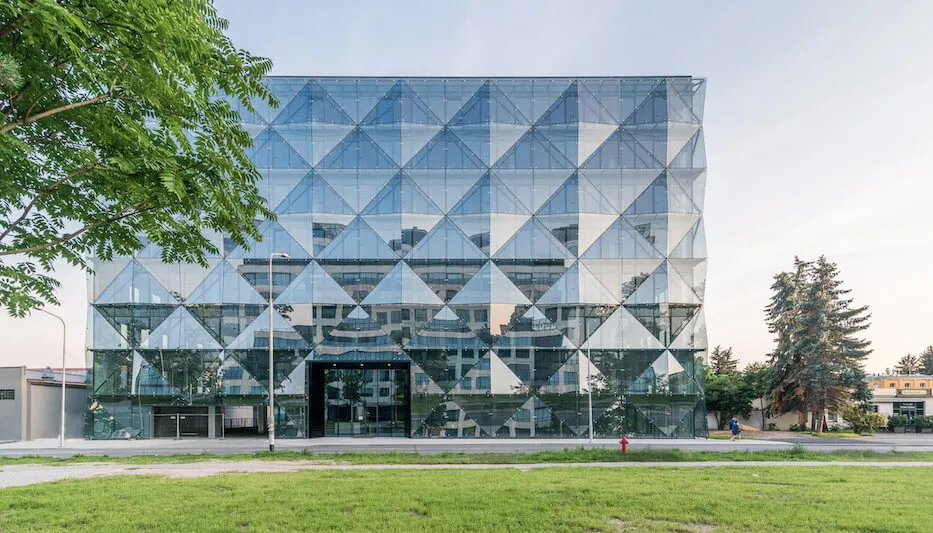
Net Zero Carbon is a global project by the World Green Building Council aiming to decarbonise the construction sector by 2050.
Members of this partnership are working to standardise market conditions and develop technologies, such as aluminium fenestration systems used in passive buildings.
Advancing Net Zero programme
The project was launched by the WGBC in 2016, and since then 29 Green Building Councils from around the world have joined, from Asia and the Middle East to the US and, of course, the PLGBC, the Polish Green Building Council. The industry worldwide is focusing on self-sufficient energy systems that enable buildings to generate the energy they need, with energy storage systems increasingly being used in combination with renewable energy sources.
One of the project’s pillars is “The Net Zero Carbon Buildings Commitment”, under which companies, cities, countries and regions commit to achieving zero operational CO2 emissions across their building stock by 2030 at the latest, and to aiming for a zero carbon footprint (the sum of greenhouse gas emissions caused by a building) for all buildings by 2050.
Poland’s contribution to the initiative
The PLGBC was established in 2008. The organisation influences the domestic construction sector by promoting and implementing the principle of triple responsibility: towards the environment, society and the economy. The association is modernising the design, construction and operation of buildings across the country for the benefit of occupants, the environment and everyone involved in the construction process. It also aims to be a pioneer and leader in this development, working with all stakeholders, including the government, to decarbonise Polish buildings and the entire sector. Participation in the WorldGBC’s global “Advancing Net Zero” project is one of its key activities in this area.
ALUPROF, a Polish manufacturer of aluminium fenestration and a market leader in this type of solution, is joining forces with PLGBC on a range of green building initiatives.
, Ecology, environmental impact and the sustainable development of our company and the entire construction sector are extremely important to us. We have been working with the Polish Green Building Council (PLGBC) for years on projects that promote “green building”. As a market trendsetter, we feel responsible for the future of international architecture. This is reflected not only in our sponsorship of the PLGBC Green Building Symposium and other environmentally focused initiatives, but above all in the way we design our systems to make it easier to achieve the goals of passive or net-zero-energy construction. , says Bożena Ryszka, Marketing and PR Director at ALUPROF.
Aluminium is a modern material that fits perfectly with current trends in global architecture. ALUPROF’s range includes many energy-efficient fenestration solutions that meet the requirements for passive construction, for both commercial and residential projects. Notable examples include the MB-104 PASSIVE window and door system, designed for energy-efficient and passive construction, and the MB-SR50N HI+ and MB-TT50 façade systems, which hold the highest A+ efficiency class for products designed for passive houses.
ALUPROF recently presented a new edition of its AluBOOK trendbook: Green Zone. In this edition, experts, architects and scientists explore the concept of green building and introduce readers to some of Poland’s most prestigious and pioneering green building projects.
Net-zero-energy, passive and energy-efficient buildings
WGBC experts acknowledge that, in many cases, it is not feasible to construct a building with zero net energy demand (that is, a building that generates 100% of its own energy needs). It is therefore more appropriate to aim for passive or energy-efficient projects that use renewable energy sources, either on site or off site. Carrying out these kinds of activities on a large scale will have a real impact on the state of the construction sector worldwide, and above all on the natural environment. You can read more about this initiative on the PLGBC website: https://plgbc.org.pl/projekty/… and, in English, on the WGBC website: https://www.worldgbc.org/advan….
Question about this story? Ask your question
Keep following this
Get an email when a new story is published. No account needed.
- SubjectGeneral







