insulco enhances indoor acoustics
Text Ingrid AllaertsImage insulco
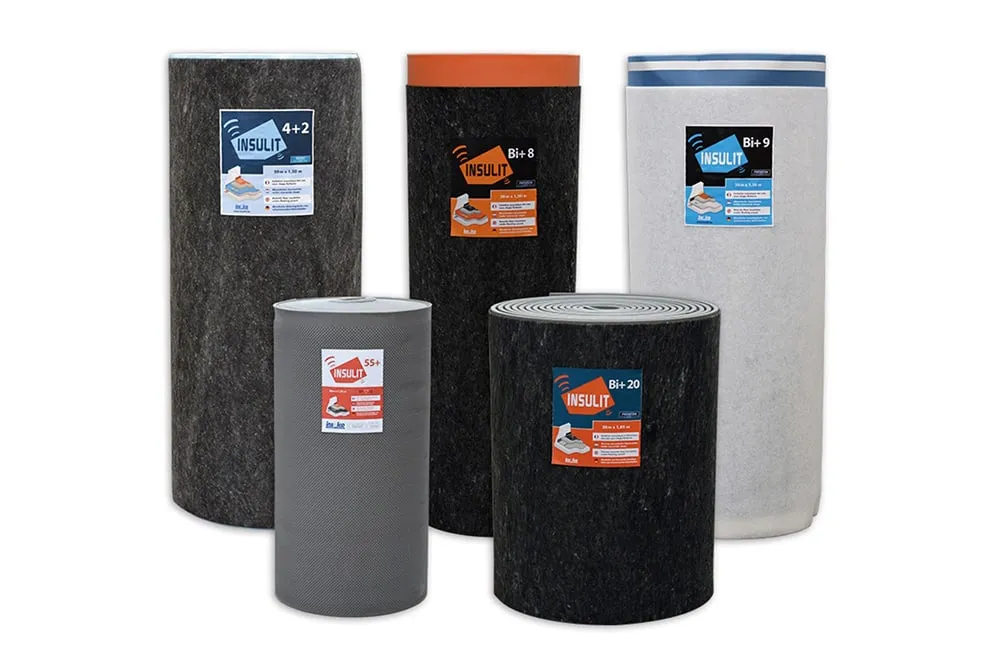
For more than 35 years, Belgian company insulco has specialised in acoustic underlays. These underlays are used beneath parquet and timber floors, and especially beneath screeds. Alongside its main product range, the insulit range, insulco offers acoustic solutions for walls, partitions and ceilings. “Architects regularly ask us about the acoustic performance of our products. Underlay performance must be compared objectively, under perfectly identical test conditions,” says François-Xavier Debaillie, technical manager at insulco.
Specialists in their field
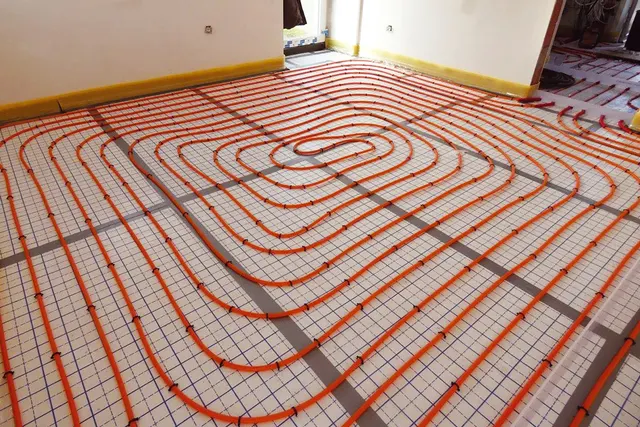
For every specific project, insulco has a suitable type of underlay to provide acoustic and, where required, thermal insulation beneath a screed. To achieve this, insulco combines different components, with the composition depending on the level of performance required. The company has its own in-house laboratory for research, development and quality control.
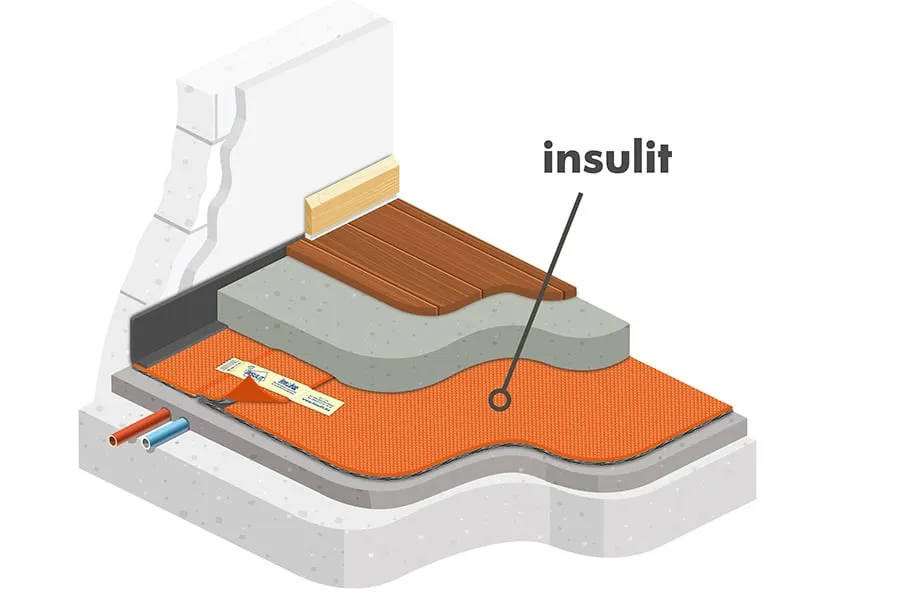
“New-build apartment blocks always have floating screeds. These are not in direct contact with the building structure. We offer acoustic underlays that are installed between the screed and the concrete floor slab. That is our main speciality,” explains François-Xavier.
Impact sound and airborne noise
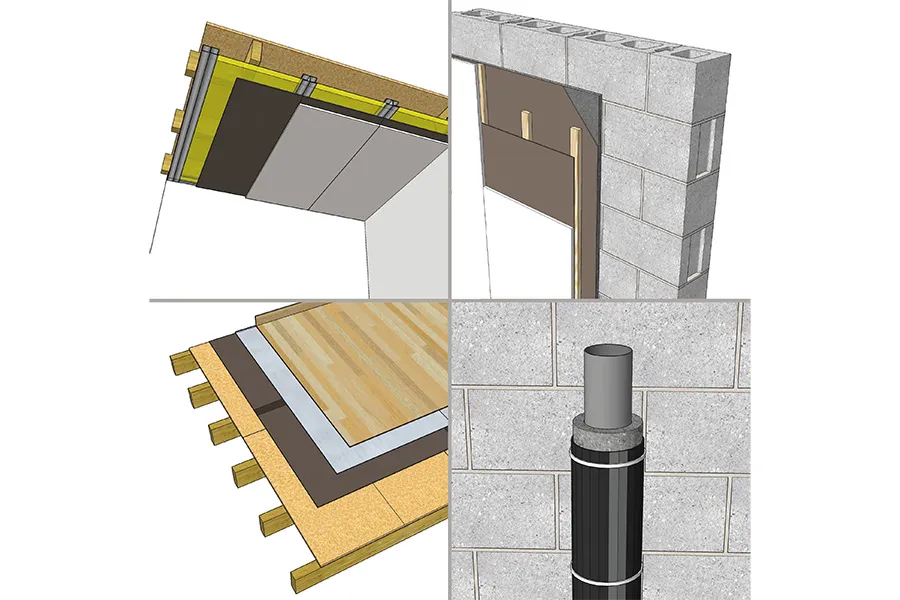
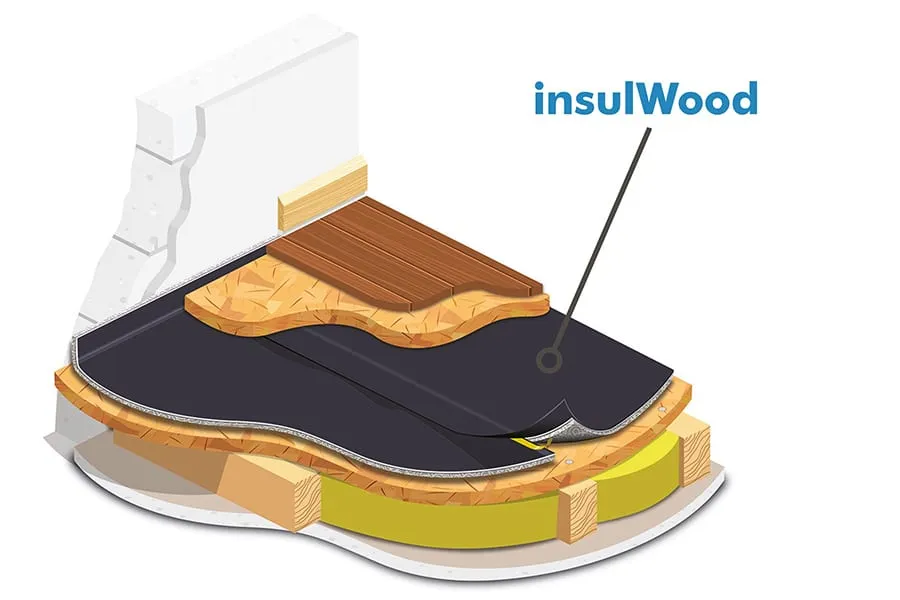
“There is a difference between reducing impact sound, such as the sound of chairs being moved or women’s heels, and reducing airborne noise, such as barking dogs, noisy children or an overly loud television. Acoustic underlays are designed to reduce the transmission of impact sound between floors. Alongside this main product range, we also develop and manufacture underlays for parquet and timber floors. The principle, reducing impact sound between floors, remains the same. These solutions are used in both renovation and new-build projects. To reduce airborne noise, we add mass to partition walls, lining walls and suspended ceilings to improve their performance. These two types of unwanted noise need to be reduced in different ways. Our solutions are invisible and suitable for a range of applications,” says François-Xavier.
A valid comparison
“Why do some inexpensive, lower-performing membranes sometimes achieve a higher dB (Delta Lw) rating than other, more technical and innovative products?” asks François-Xavier.
Acoustic membranes are tested in the laboratory at the WTCB. Testing is not always carried out in the same configuration. On the Belgian market, underlays are often tested in combination with thermal levelling layers, which improve the results.
“The improvement can be as much as around 10 dB for a membrane tested with a levelling layer, compared with the same membrane tested on a bare concrete floor slab. For the results to be comparable, testing must be carried out objectively under perfectly identical conditions,” explains François-Xavier.
Comparing apples and pears
So what exactly are the ideal test conditions? “To obtain comparable results, tests at the WTCB must be carried out on a bare concrete floor slab, without the influence of a levelling layer and beneath a screed of the same thickness. At insulco, all underlays are tested at the WTCB in the same configuration: on a 14-centimetre concrete floor slab, with an underlay and a 6-centimetre screed,” says François-Xavier.
François-Xavier therefore advises architects to pay close attention to choosing products with good performance ratings. As the saying ‘comparing apples and pears’ makes clear, it is best to make a like-for-like comparison.
Een zakelijke vraag aan Insulco? Get in touch
Companies in this story

Keep following this
Get an email when a new story is published. No account needed.
- ThemeLight and sound as design tools
- SubjectAcoustics
- CompanyInsulco