A preview of the construction sector: the path to carbon neutrality, the value of subsidies and skills shortages

A discussion about targets, challenges and solutions.
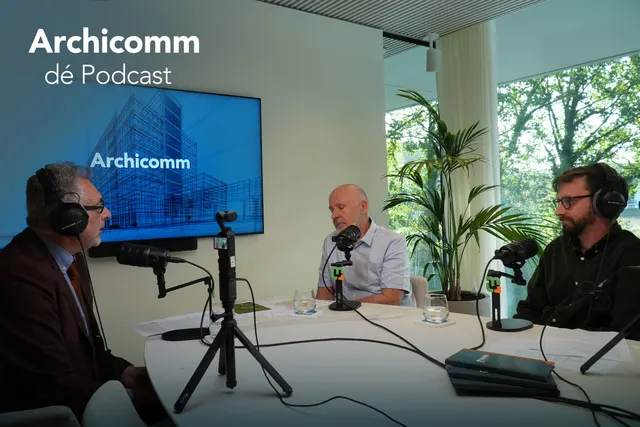
What is the state of the construction sector in Flanders? What are the challenges today and tomorrow? And how can we achieve carbon neutrality in the future? A number of experts from the sector have considered these and other questions. Speakers include Flemish Minister for Finance and Budget, Housing and Immovable Heritage Matthias Diependaele, CEO of Wienerberger België Caroline Van de Velde, Professor Johan Albrecht of Ghent University and Bieke Gepts, managing director of research agency Essencia Marketing.
The construction sector is doing well. Since the end of the first lockdown, construction activity has picked up, and the experts agree that the sector is experiencing a boom. “We are at the levels seen in 2004, 2005 and 2006, which are also referred to as the golden years of the construction sector,” explains Bieke Gepts.
Nevertheless, the sector faces a number of challenges, both in the short and long term.
An ambitious framework of targets for 2050
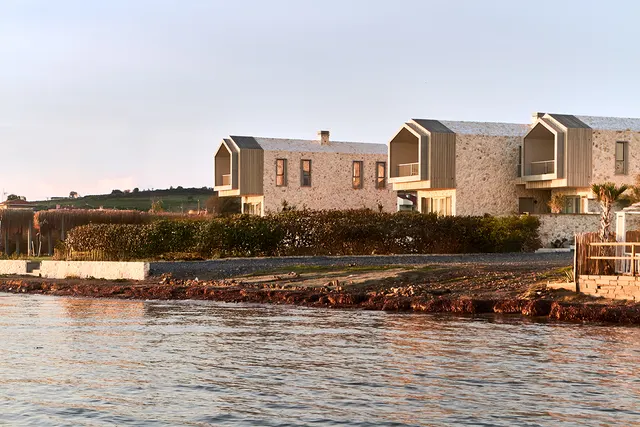
One major challenge is the EU’s ambition to become the first climate-neutral continent by 2050. To achieve this, emissions across all sectors must fall by 80 to 95%, including in the construction and housing sectors. Some time ago, the Flemish Government joined forces with the construction sector to draw up the Renovatiepact 2050. The aim is to move towards a nearly zero-energy housing stock by 2050.
Given the enormous age of our housing stock, this is certainly no easy task.
“In Flanders, 5% of homes meet the standards set for 2050. In Wallonia, the figure is 1%, while in Brussels only 0.5% meet these standards,” Professor Albrecht points out. In concrete terms, 97% of homes will need to be upgraded over the next 30 years.
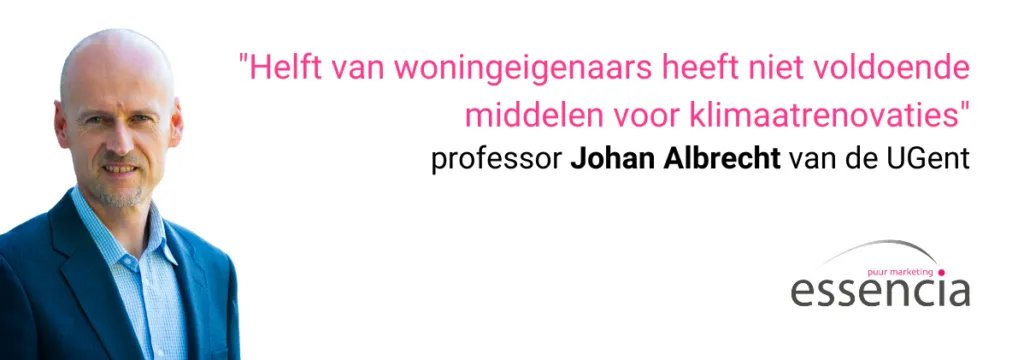
The renovation rate therefore needs to rise significantly. Yet in practice, it has levelled off over the past 10 years. “So we need to ask ourselves why.” One reason is undoubtedly the financial barrier. Professor Albrecht’s research confirms this: “Almost half of Flemish homeowners do not have sufficient funds to carry out the renovations needed to make their homes climate-neutral. 20% of this group say they are short by up to €50,000.”
However, the professor notes that many homeowners do have the financial means, yet still do not renovate. Policy must therefore focus not only on financial support for those who cannot afford to renovate, but also on getting homeowners who can afford it on board with the journey towards 2050.
The value and limitations of grants
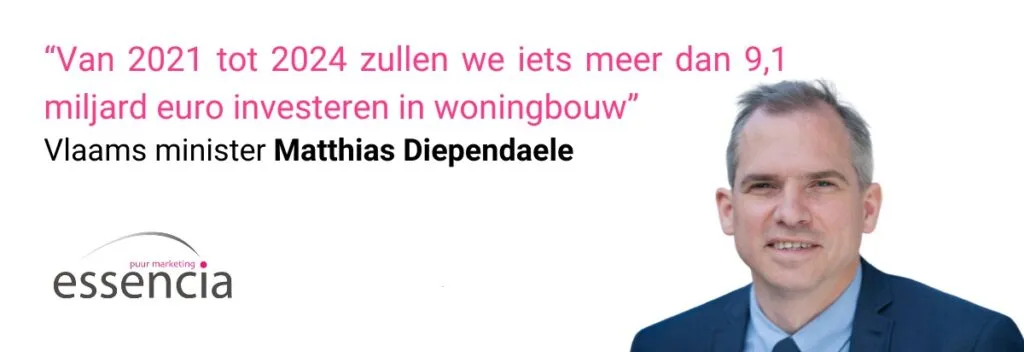
Minister Diependaele agrees with this assessment. “We should certainly not assume too quickly that grants alone will solve the problem.” That is why there is also a strong focus on persuading homeowners who currently see no benefit in carrying out an energy renovation, or who can afford to do so but do not. The minister continues: “The solution lies in raising public awareness so that people understand how important this is. Homeowners need to be willing to invest in their project, for the sake of the environment and their own finances.”
Nevertheless, making grants available remains an important incentive, especially given that prices for lower-quality homes have risen in recent years. This means that many buyers today cannot renovate, or are less able to do so, because the property itself was already very expensive to buy. Financial support is therefore certainly desirable.
The experts also point out that it is important to know the energy performance of a home in order to understand what renovation costs the buyer or owner may still face. The EPC certificate is an important indicator in this respect.
EPC awareness is an important lever
Recognising the need for climate-focused renovations also depends on knowing the condition of the home. And this seems to be where the problem lies. Many homeowners do not currently know their home’s EPC rating. Knowing this rating can encourage them to go ahead with a renovation, especially if they face no financial barrier, and help preserve the property’s value.
Minister Diependaele notes in this context that 2050 still seems a long way off to many homeowners. The long-term perspective is not yet enough to encourage people to take account of the standards and, for example, the value of their property in 2050. This, too, remains a major challenge for the future. If we want to meet the 2050 standards, we need to act now.
Challenges facing the construction sector today
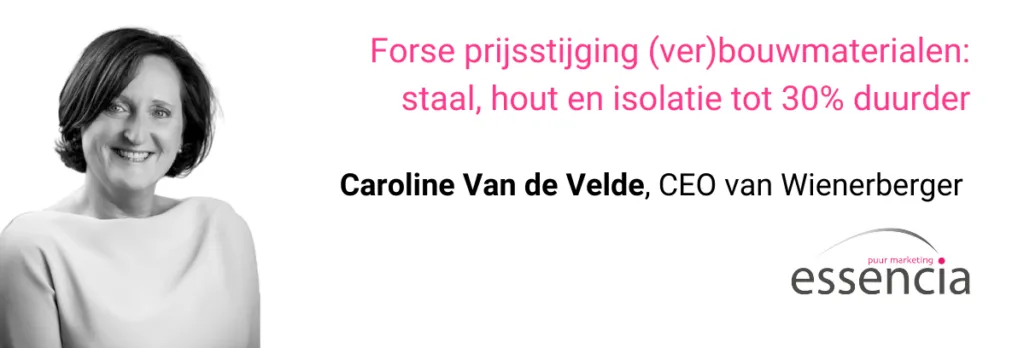
But what about the construction sector itself? Is it ready to get to work? Caroline Van de Velde, CEO of Wienerberger België, confirms that the sector is doing well, but, like many construction companies, is facing ever-worsening shortages of raw materials and products. “And those shortages are only getting worse now that China and the US are recovering from the Covid pandemic. The result? Prices are rising sharply and quickly. The purchase price of timber has doubled, for example, and insulation has also become much more expensive.” This will clearly affect renovation costs, as suppliers will undoubtedly have to pass on these price rises to the end consumer at some point. It will therefore be important to strike a balance between rising prices and avoiding a fall in investment over time. There are concerns, for instance, about inflation rising, with the rate already reaching 5% in the US.
Labour shortages and the challenge of finding suitably qualified staff in construction are also major issues. The construction sector has many occupations in short supply, including bricklayers and roofers, as does industry. In the latter, the shortages are often in technical occupations. Finding the right people for IT, Automation, processing and other areas is proving to be a major problem. Yet with an employment rate of around 75%, there is certainly still untapped labour potential in Flanders. Getting unemployed people back into work and retraining people for construction occupations in short supply are avenues that need to be pursued further.
These shortages also affect how construction companies operate. Bieke Gepts notes that there is an increasing focus on prefabrication and industrialised construction to reduce reliance on staff.
Price trends in the housing market
Finally, there is the current shortage of building plots and the associated rise in house prices. How do the experts see the future? Professor Albrecht says: “I expect there to be an increasing focus on demolishing very poor-quality homes and replacing them with sustainable new-build homes. This will be an important factor in remaining attractive, particularly in cities.”
The reduced VAT rate of 6% (instead of 21%) will play a crucial role here. Minister Diependaele agrees and also supports further reductions in registration duties. “People will then buy and sell homes more readily. This has nothing but advantages. For example, people will be more inclined to live closer to work, which also has positive implications for mobility.”
A preview of the construction sector: conclusion
The experts around the table agree: the construction sector is booming, but faces significant challenges alongside the government. Supporting and raising awareness among homeowners will be crucial to achieving the ambitious carbon-neutral targets. At the same time, the construction sector has an important role to play in keeping pace with growth, given the enormous potential in the renovation market. Attracting workers and ensuring adequate supplies will be vital.
Interested in the full round-table discussion? Watch the recording here.
Question about this story? Ask your question
Keep following this
Get an email when a new story is published. No account needed.
- SubjectGeneral