‘We show how robotics and craftsmanship can reinforce one another’
Text Eva GoossensImage DMOA architecten
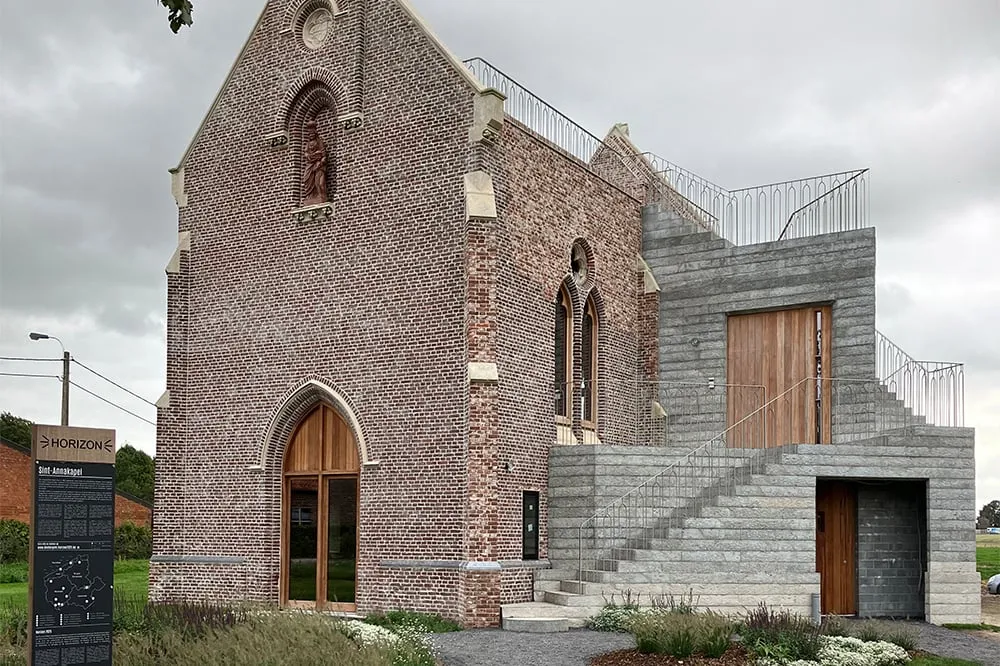
Robotische serendipiteit wins Henry van de Velde Award
Among the winners of the Henry Van de Velde Awards, ‘Robotische serendipiteit’ caught our eye, an entry in the ‘Crafts’ category. The term alone, along with the accompanying images of the pilot project, made us curious. Robotische serendipiteit turns out to be a method for designing and creating unique concrete textures on an architectural scale through craftsmanship and robotics. The result is surprising and leaves us wanting more.
Robotische serendipiteit seems like a contradiction from the outset. While robotics generally focuses on producing identical results, serendipity means accidentally discovering something valuable while searching for something else. Robotics and chance do not usually go together. Or do they?
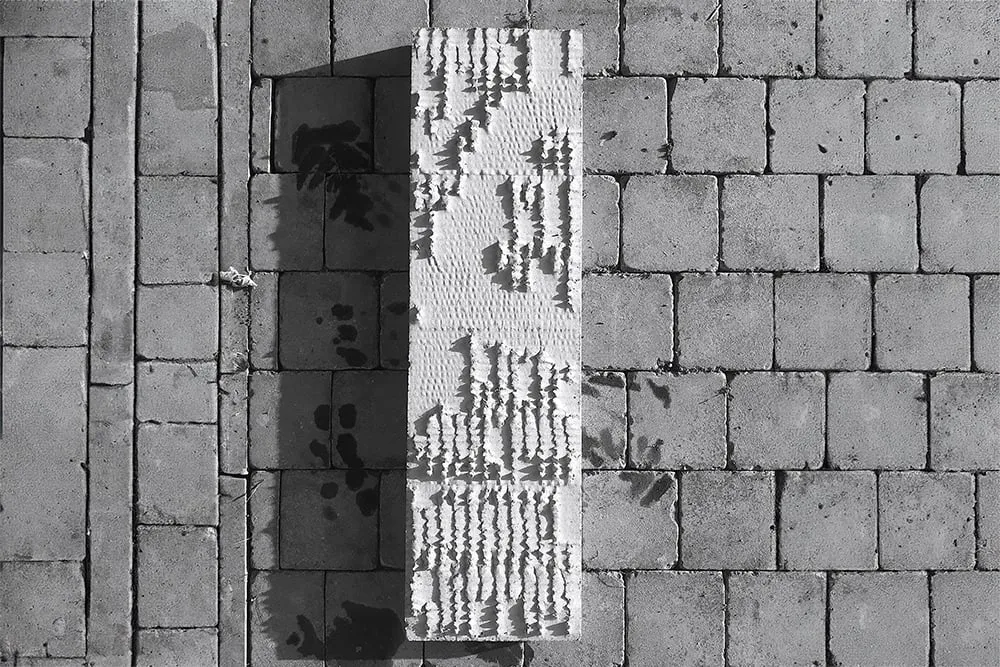
Concrete textures made with cardboard panels
“We were looking for a way to enrich the robotic process with creativity, unpredictability and human ‘imperfections’. The designer enhances the robot, and the robot enhances the designer.” Architect-engineer Lie Bormans explains. The idea of robotische serendipiteit originated during her thesis with the R[x]D team at KU Leuven and was developed further at DMOA architecten. The pilot project is the recently renovated Sint-Annakapel in Dentergem, with a new functional concrete side extension given a unique texture using cardboard panels worked with robotics and placed in the formwork. In other words, robotische serendipiteit enables architects to determine the appearance of concrete surfaces themselves, using unique, bespoke cardboard panels. Lie: “We are currently exploring the further possibilities offered by different formwork materials and their use in future pilot projects.” There is undoubtedly more to come.
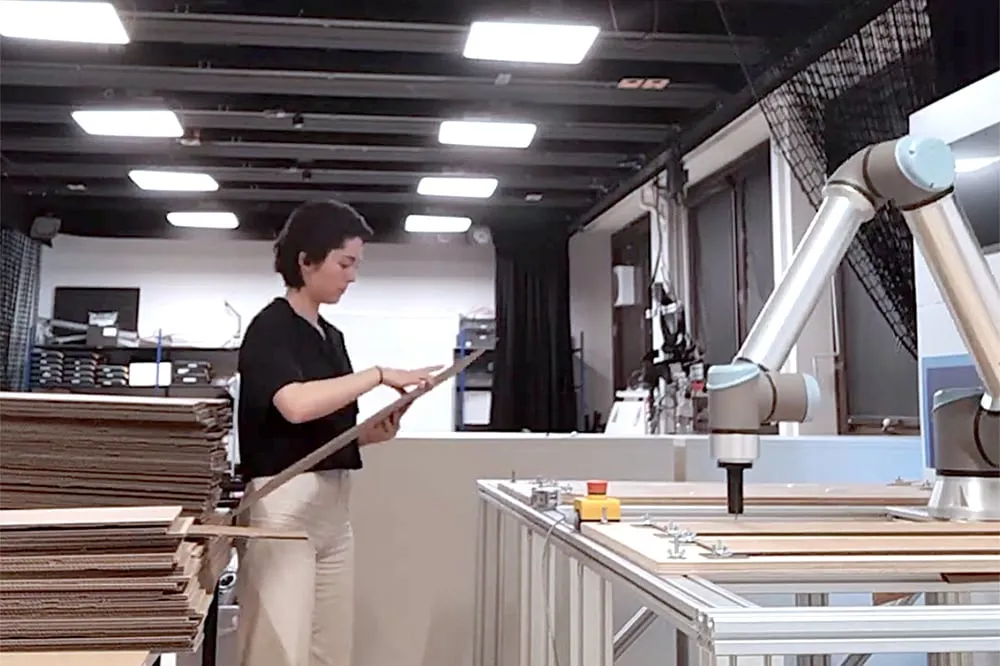
The new and the old in symbiosis
Until recently, Sint-Annakapel was a somewhat mysterious ruin. Today, this chapel, built in 1864 but never consecrated, has been transformed into an event venue, with a new side extension featuring a roof terrace with panoramic views. Matthias Mattelaer and Benjamin Denef, partners at DMOA and also the clients for the chapel, were looking for a suitable concrete texture for the extension that would complement the original ruin’s rough, weathered character. Lie: “It was important to give the new extension the same rough, refined, natural-looking texture, so that the new and the old could merge in symbiosis. That is why this chapel was particularly well suited as a pilot project for robotische serendipiteit.”
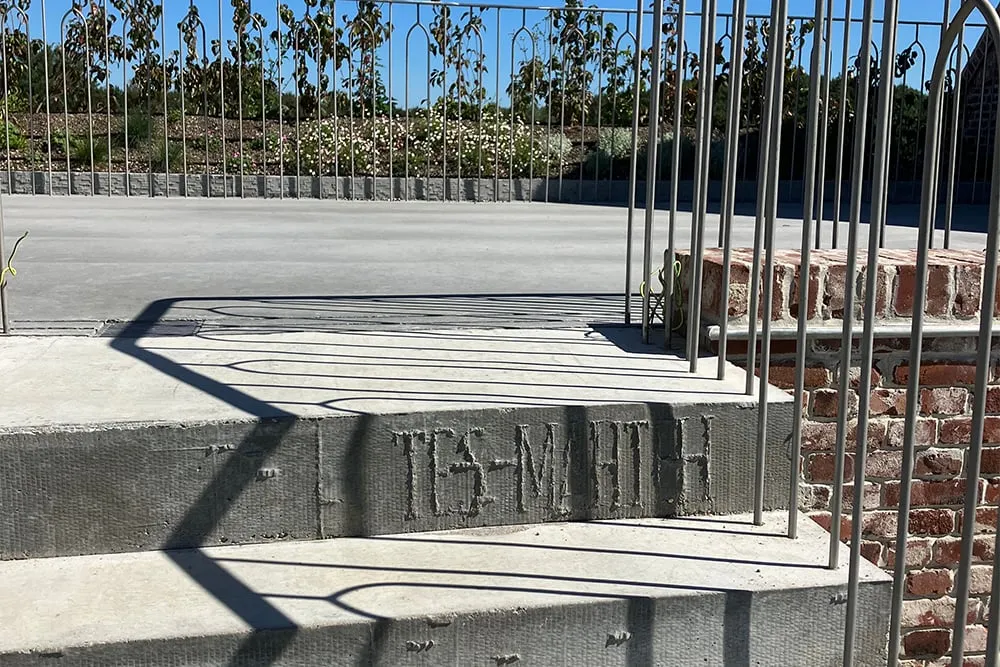
Desired imperfections
The project aimed to challenge the idea that robotics simply delivers identical results passively, and to show that it can also contribute to creative innovation in architecture. Lie: “We attach great importance to the individuality of the textures and the desired imperfections: every texture, every little crack in the cardboard is unique and contributes to a handcrafted, varied appearance with millions of chance variations. We show how robotics and craftsmanship can reinforce one another.” Or, as the Henry van de Velde Awards jury put it: “A robot reproduces or builds on a manual action. Craftsmanship finds its way into a technique that would not normally involve it. Concrete casting is often highly repetitive. The cardboard and the pattern open up many new possibilities, including for others to experiment further.”
PROJECT DETAILS
Project: Sint-Annakapel
Location: Dentergem
Architect: DMOA architecten
Question about this story? Ask your question
Keep following this
Get an email when a new story is published. No account needed.
- SubjectExteriors