The sustainability roadmap
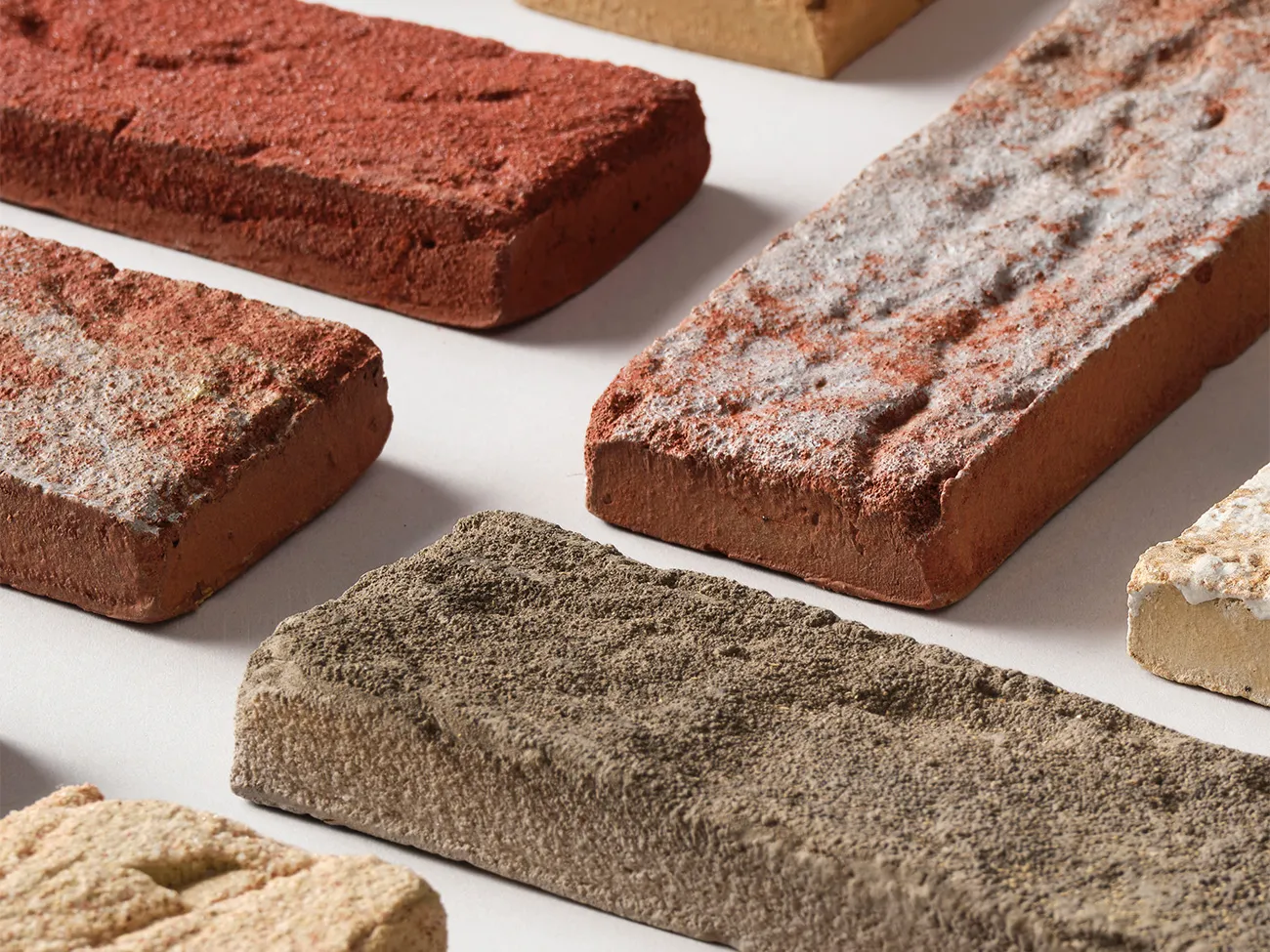
Prevention, reuse and recycling
Wienerberger België, headquartered in Kortrijk, is part of the international Wienerberger Group. Founded in Vienna in 1819, the group has grown into one of the world’s largest brick manufacturers. Wienerberger has eleven production sites in Belgium, with a total workforce of 1,100 employees. Throughout the production process, it takes people, the environment and nature into account.
At a time when the climate crisis is threatening our future, it is crucial to think realistically and critically about the impact our industries have on the world around us. Wienerberger is taking many initiatives to protect the environment. “It starts with the production process,” says Katrien Nottebaert, CCO and director of Wienerberger België. “We aim to close material loops as far as possible. This applies to our clay extraction, where, once extraction is complete, we return the quarries to society as nature reserves or agricultural land. Alongside clay, we use secondary raw materials, such as fired waste and residual streams from other industries. Our sites also discharge no wastewater.”
Wienerberger also takes other factors into account. The company is convinced of the social importance of circular construction, material recycling and decarbonisation. “Our production line in Kortrijk is a unique example of the latter. The in-line production of brick slips is a real showcase for carbon-neutral production. Instead of sawing our slips from conventional bricks, we produce them directly at a thickness of two centimetres. This avoids additional energy consumption and waste. It is a first for the brick industry.”
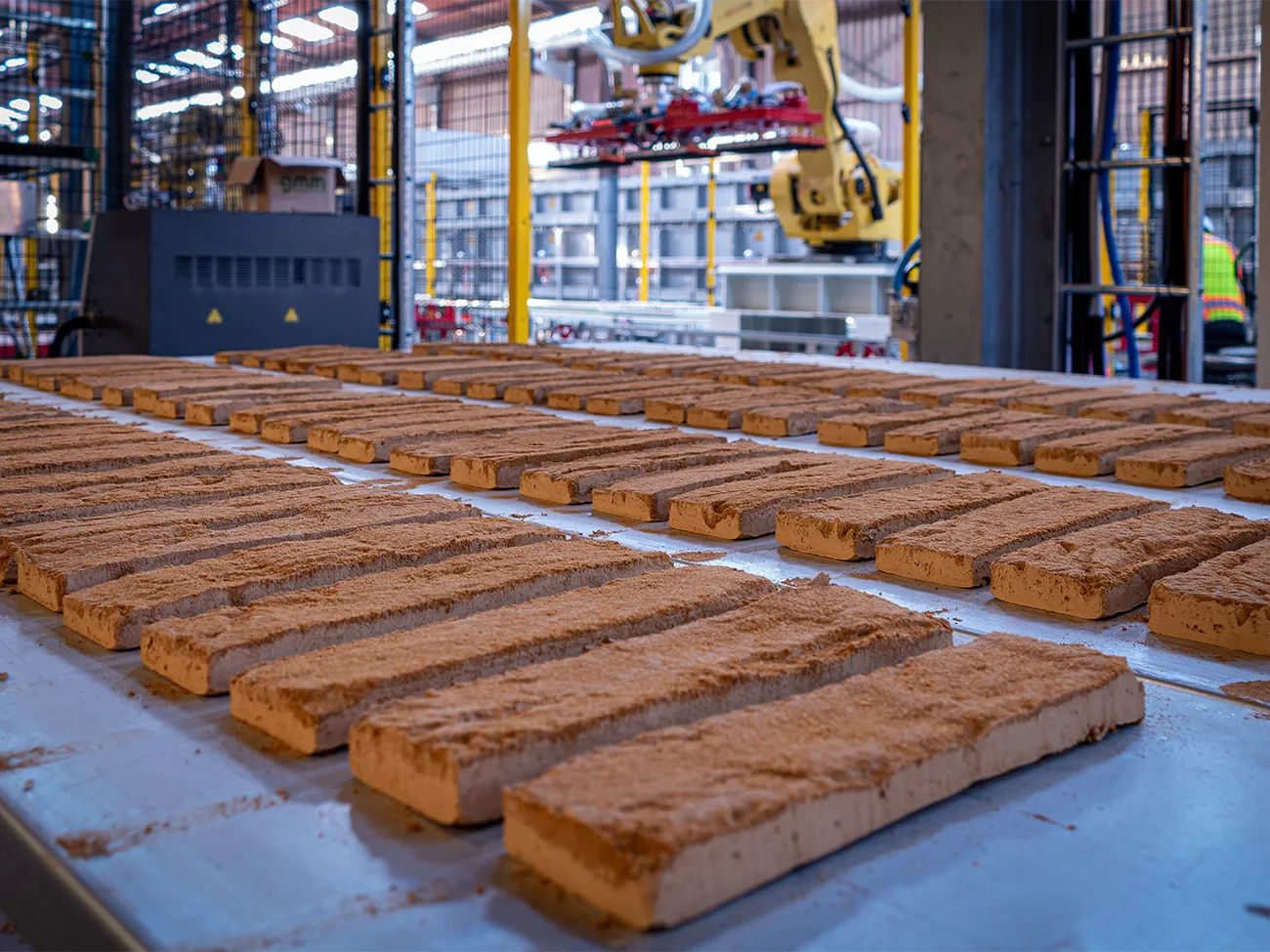
Carbon-neutral process
Wienerberger has developed a concept based entirely on new electric production technologies. Katrien: “The dryer and kiln at the Kortemark site run entirely on electricity. They are powered by an in-house PV installation, supplemented by green electricity. The kiln uses radiant heat, and we recover the waste heat in the dryer. No fossil fuels are needed. Wienerberger is also decarbonising its other sites. At the Beerse site, we are building two wind turbines, which together will save 7,700 tonnes of CO2 a year. All our sites get some of their electricity from solar power.” Wienerberger’s ambition is to be fully carbon-neutral by 2050.
Another way to limit CO2 emissions is to reduce the amount of material required. “We make our hollow clay blocks using less material. Their density is 850 kilograms per cubic metre, up to 150 kilograms less than a standard ceramic building block.” Wienerberger is also making a strong commitment to Eco-brick. It offers the same benefits, properties and appearance as a traditional facing brick, but is up to 3.5 centimetres thinner. “This allows you to use thicker insulation and build an energy-efficient home,” says Katrien.
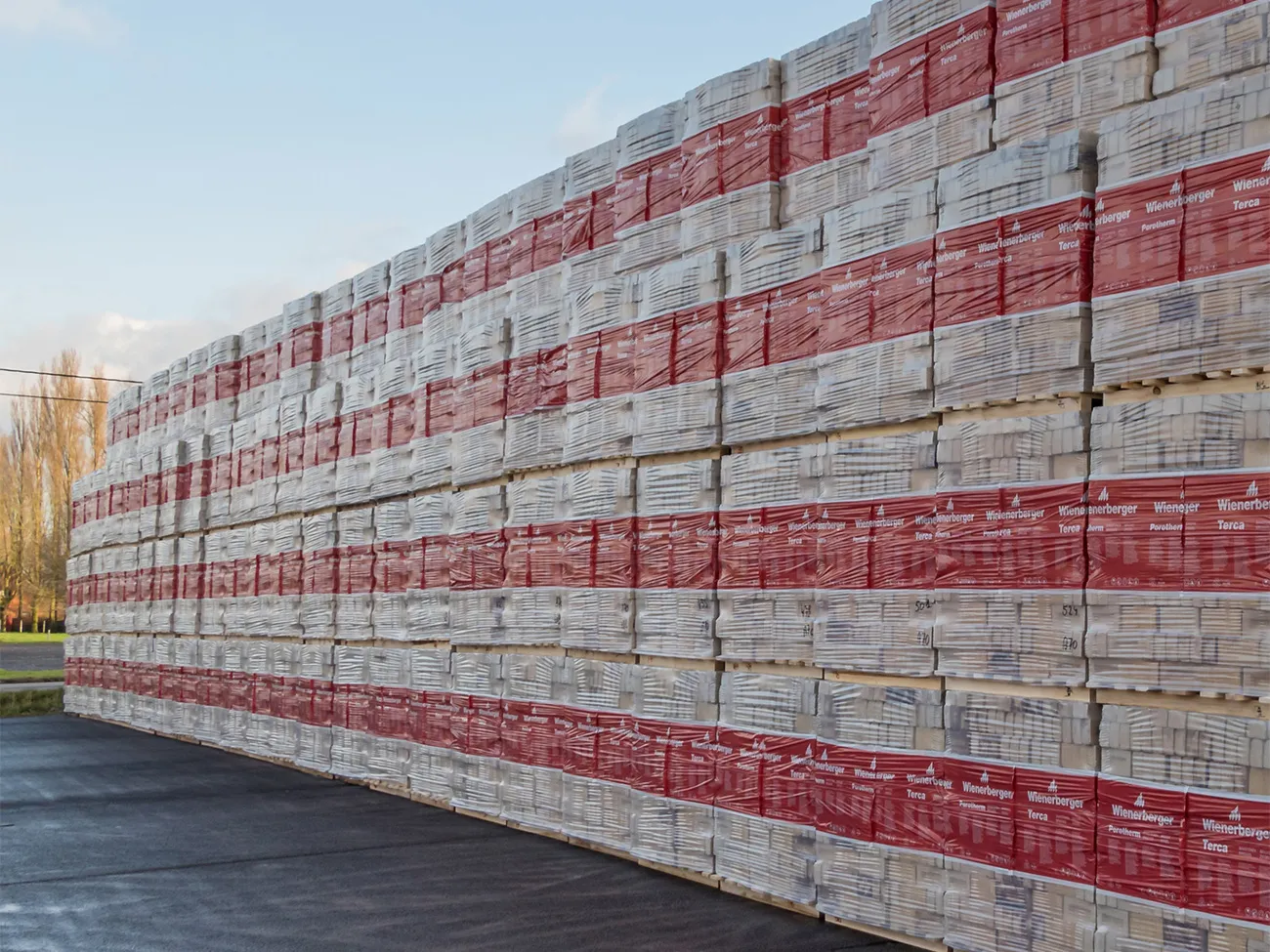
Circular packaging and construction
As part of its commitment to sustainability, Wienerberger has revised its packaging concept. “In our sector, plastic hoods play an important role in transporting our products safely and correctly. To reconcile this need with our sustainability ambitions, we rethought our packaging solution. We now use stretch hoods instead of shrink hoods, which means we need 30 per cent less material. We do not print on the hoods, allowing us to recycle them into new transparent film. We also have a circular solution for pallets in the form of returnable pallets.”
Wienerberger’s vision is based on the top three levels of the Lansink’s Ladder: first prevention, then maximum reuse and, where no other option is available, finding effective recycling opportunities. “In practice, this means we use a building’s layer model as our starting point. It divides building components into different layers according to their function. The lifespan of each layer affects its potential for reuse.” Wienerberger is also researching how to reuse products that are not repurposed in a construction project. “Roof tiles that are not reused are now incorporated into the production of new hollow clay blocks. We want to keep exploring this and increase the circular potential of ceramic products.”
Question about this story? Ask your question
Keep following this
Get an email when a new story is published. No account needed.
- SubjectExteriors