The ‘schöck effect’ in thermal insulation and building comfort
Sustainability, optimal energy management and climate protection are becoming increasingly important in construction projects. As a result, clients and contractors are setting ever higher standards for building insulation. Thermal insulation is therefore becoming increasingly important. For more than sixty years, Schöck has been offering innovative solutions in this field. In this article, we take a closer look at some inspiring projects.
For many decades, Schöck has been synonymous on construction sites around the world with thermal insulation, sound insulation and advanced reinforcement techniques. Since 1962, the company has built a strong reputation among architects, engineers and contractors by offering product solutions for both new-build and renovation projects. Today, Schöck also provides digital support for its customers at every stage of construction, including through the use of BIM and CAD libraries.
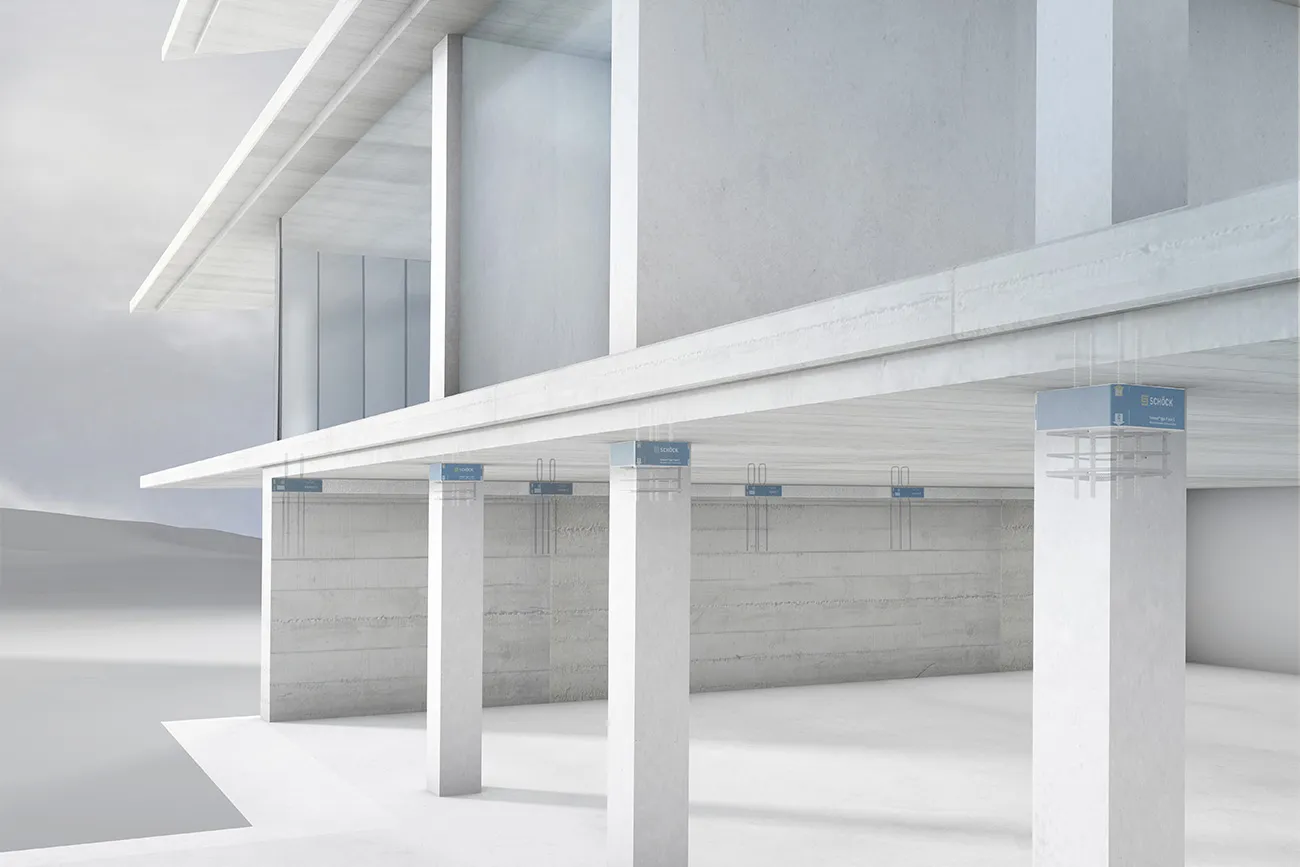
Schöck Sconnex®: effective thermal insulation
Did you know that around 40 per cent of all thermal bridges in a building are found in walls and columns, and that these thermal bridges account for around 10 per cent of heat loss? With Schöck Sconnex®, Schöck offers a powerful solution for exceptionally effective thermal insulation of concrete walls and columns at concrete slab joints.
Existing customers are highly enthusiastic about the many benefits of Schöck Sconnex®. The system creates a continuous thermal break that can be installed around the entire building. What is more, contractors need to install less, or even no, ceiling or flank insulation, and the thickness of the insulation material on the outside of buildings can be kept to a minimum. This saves customers money and gives them more usable floor space.
Innovative application in a school complex
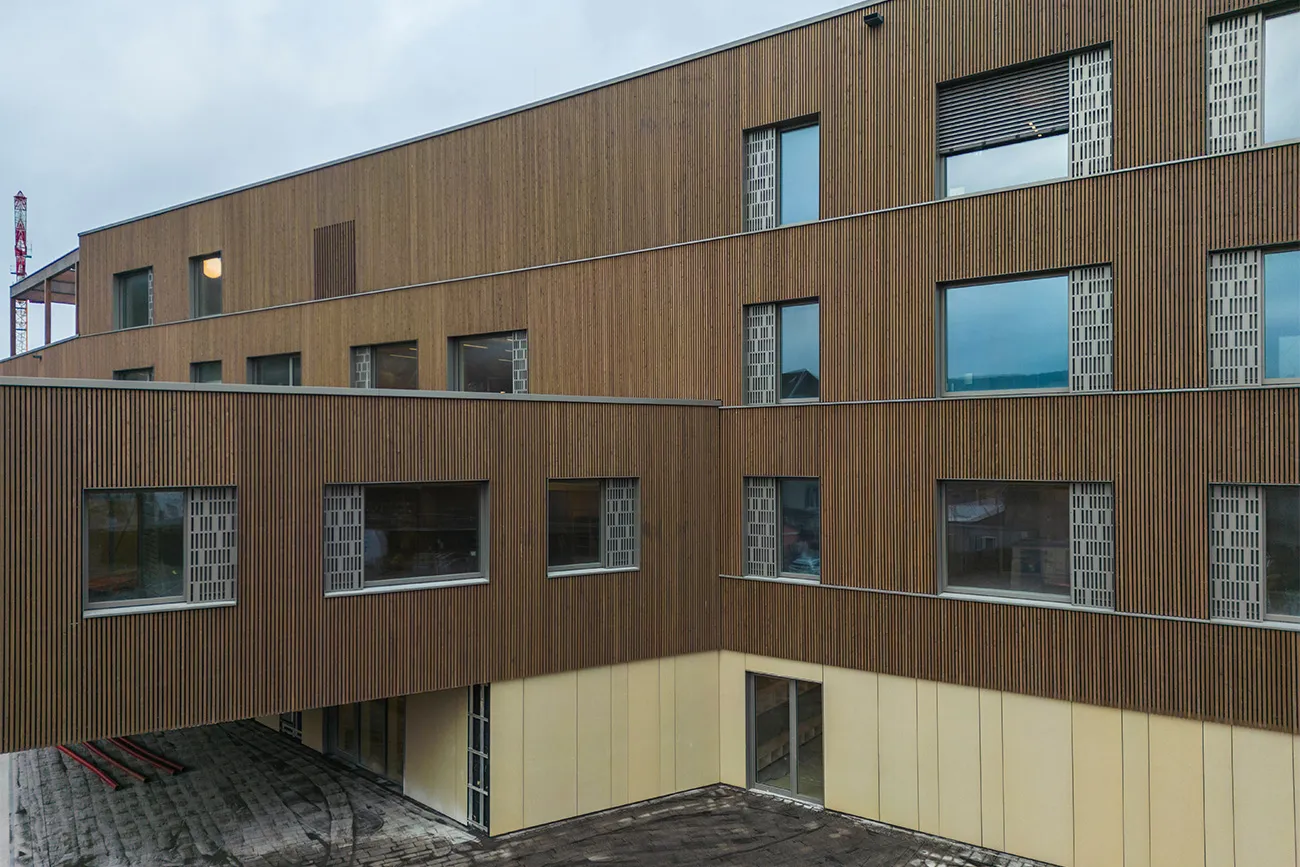
One project that makes the most of the benefits of this innovative, sustainable solution is a school complex in Echternach, Luxembourg. The architects and structural engineers delivered an impressive feat of construction engineering by designing a foundation supported by 160 piles. As a result, the floor slab of the new school building ‘floats’ 70 centimetres above the highest local flood level recorded in more than 100 years. The Schöck Sconnex® thermal break makes this attractive, eco-friendly building even more economical and sustainable by creating a thermal separation between the concrete floor slab and the walls of the ventilated façade system on the ground floor. The result? Significant savings on insulation material, fewer thermal bridges in the building and a better internal energy balance.
Modular wall connections in a modern villa
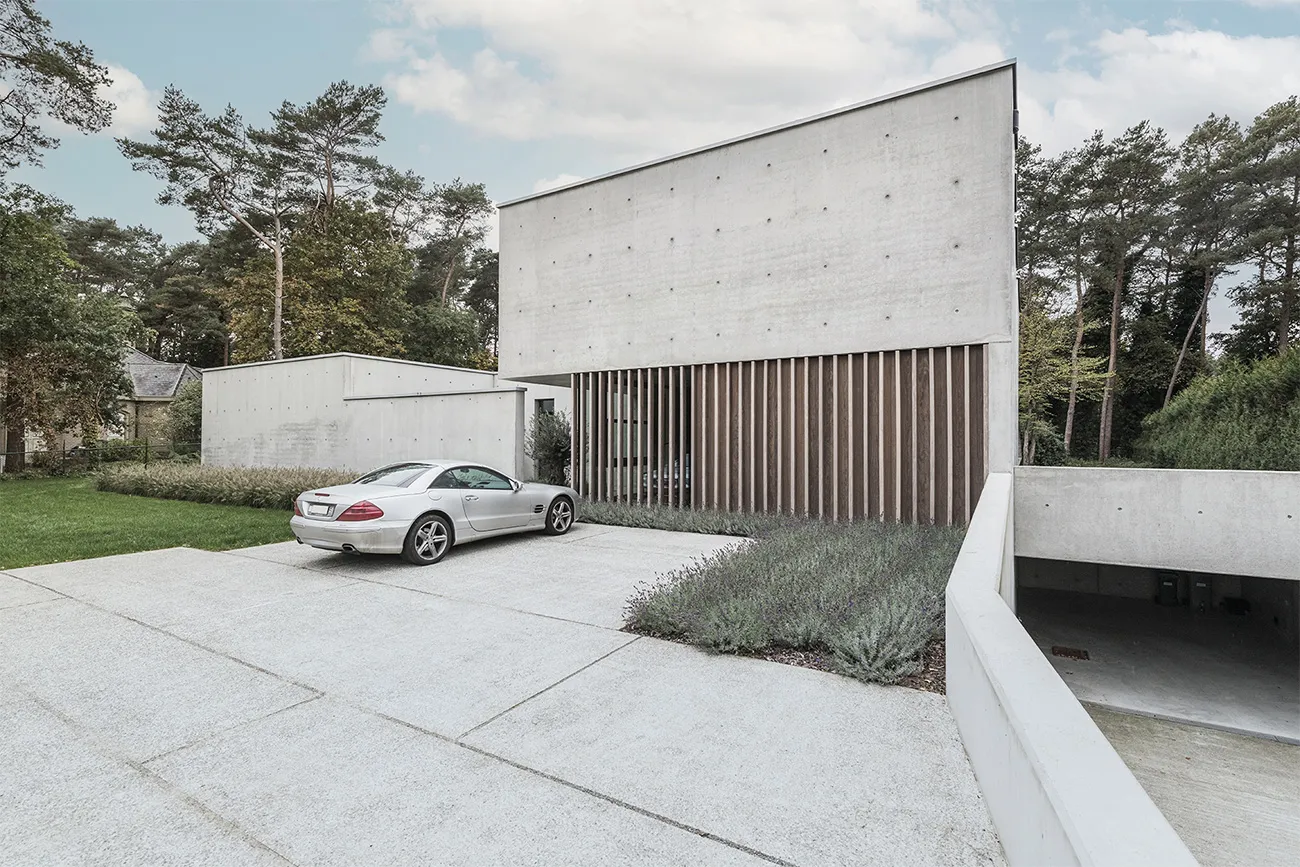
For another inspiring application of Schöck Sconnex®, we head to Maasmechelen. There, PCp Architects shows that energy-efficient construction can go hand in hand with comfortable living. When designing a modern villa, which presents itself as a concrete monolith on the street side and embraces its green surroundings at the rear, the architects pushed the boundaries to reconcile the building programme with urban planning regulations, EPB requirements and a high level of living comfort.
By using Sconnex® elements, PCp Architects was able to design building components capable of withstanding high static loads while still meeting stringent energy requirements. Since the house is built entirely of concrete, with 20-centimetre-thick internal and external walls and 15 centimetres of insulation between them, Schöck Sconnex® was the ideal solution for maintaining a continuous insulation envelope and thereby minimising the number of thermal bridges. The contractor therefore made good use of Sconnex® wall connections to anchor the internal walls and floor slabs. This avoided unnecessary loss of space caused by thick walls.
Question about this story? Ask your question
Keep following this
Get an email when a new story is published. No account needed.
- ThemeBuilding envelopes for a changing climate
- SubjectExteriors