Smart rainwater management as a foundation for spatial quality
Text Petra Broeders/ACOImage ACO
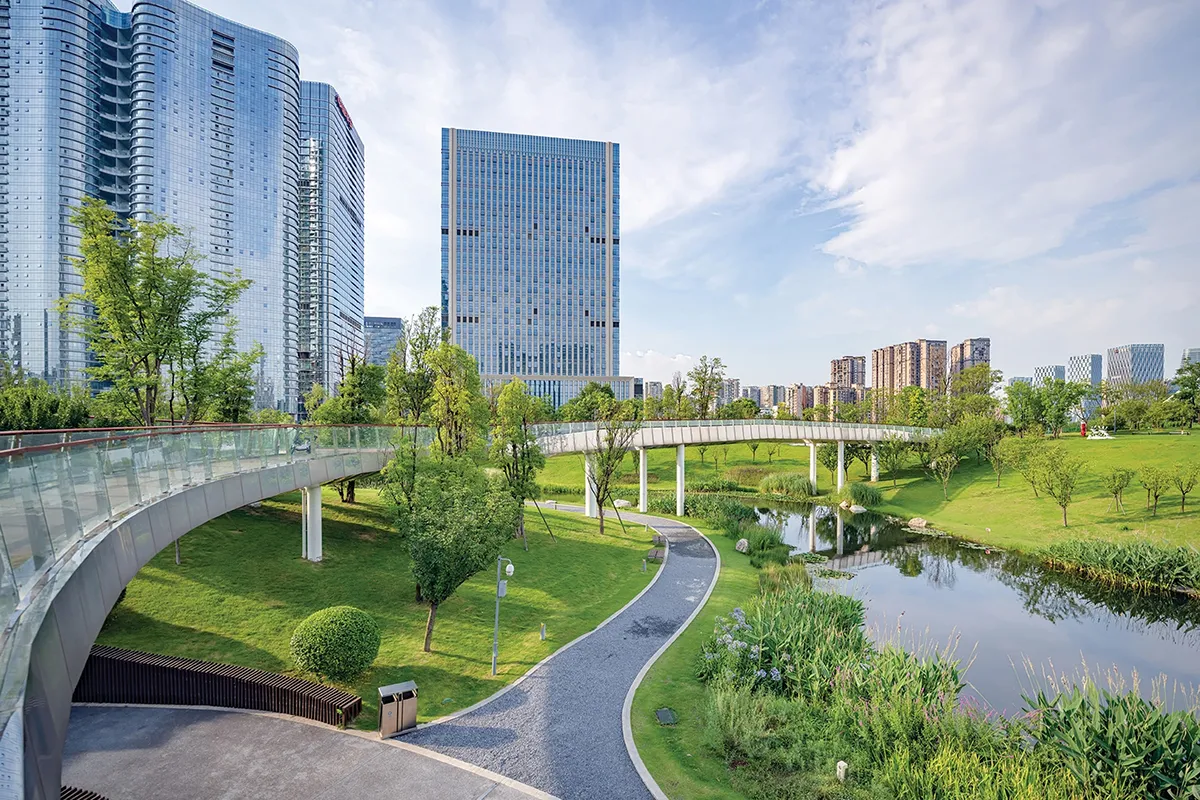
Water as a design element
At a time of increasing drought and heavy rainfall, water management is becoming an essential part of every urban design. Not only from an ecological or regulatory perspective, but also as an integral element of architectural design. With ACO Green City, ACO offers a smart, complete solution for rainwater collection, pre-treatment, storage and reuse, tailored to the needs of public spaces and the design ambitions of urban planners and architects.
For decades, hard surfaces dominated the city: green spaces were often framed by concrete, natural stone and asphalt. Rainwater falling on these surfaces was channelled straight into the sewer through gullies and drains. Today, designers are being challenged to think differently. The Flemish Rainwater Ordinance (October 2023) requires rainwater to be collected, infiltrated or reused on site. But that takes more than an infiltration crate
under the pavement.
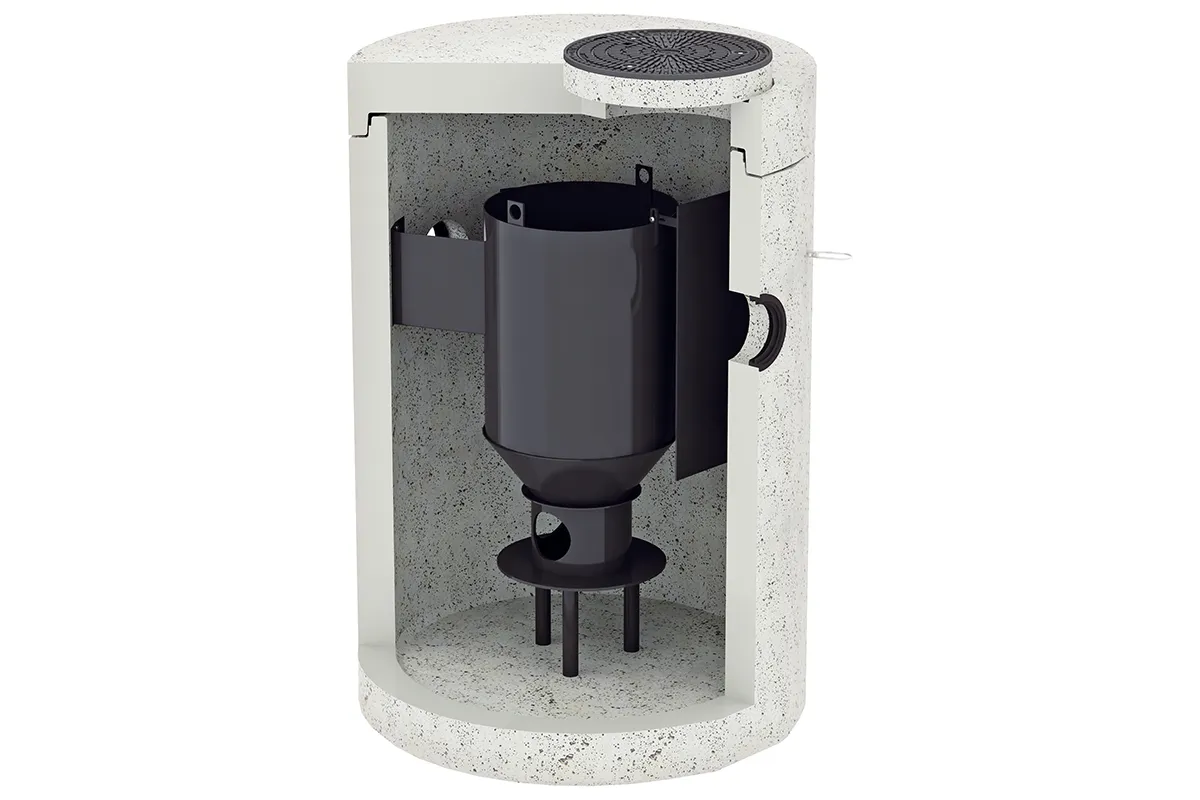
“Rainwater falling on hard surfaces contains pollutants such as heavy metals, hydrocarbons and particulate matter,” says Dries Aerts, product manager at ACO. “You don’t want to channel that water directly to your trees or planting beds without treating it. If you do, the soil becomes more acidic and compacted. The greenery dies, infiltration fails and you soon face remediation costs.”
Raalte as a benchmark
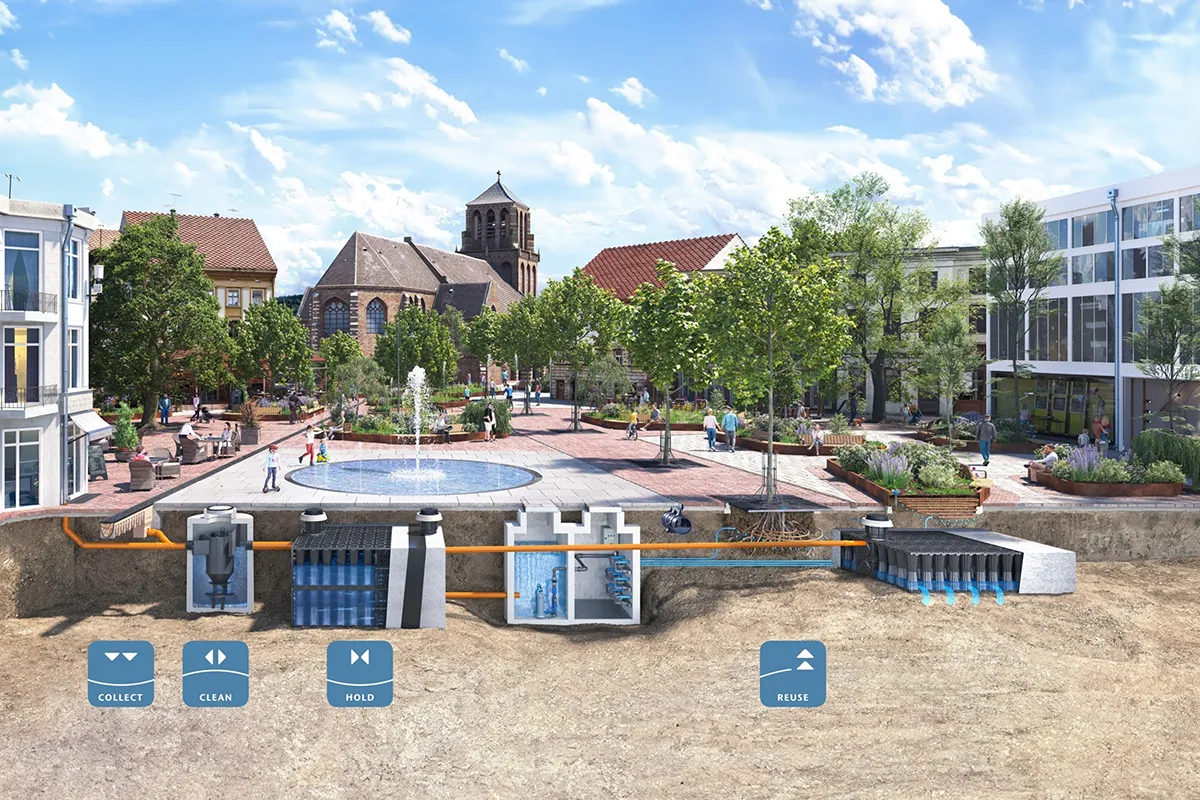
In the Dutch municipality of Raalte, the redevelopment of the town centre became a model project. Working with IAA Architecten, ACO developed a system that combines smart water management with aesthetics. A central corten steel grating, featuring Raalte’s rye symbol, guides rainwater across the square. Underground, the system collects and treats the water, then stores it for reuse. Green spaces are irrigated using real-time sensors that measure soil moisture. Chris Beeren, product expert at ACO, says: “Each green space is linked to a sensor. It checks: is the soil dry, and is no rain expected? The system only activates watering when both conditions are met. This prevents waste and keeps the greenery healthy, even during extended periods of drought.”
From water management to design strategy
For architects, this system offers an opportunity to integrate water management as a fully fledged part of their design vision. It supports biodiversity, creates comfortable public spaces and aligns with climate adaptation policy objectives.
“With ACO Green City, we bring water back into the design,” says Dries Aerts. “We give it a place, not just functionally underground, but in a visible, tangible and meaningful way in public spaces.” The system is modular and can therefore be adapted to a range of settings: town squares, park areas, school grounds or residential neighbourhoods. What’s more, it operates fully autonomously and provides data on consumption, CO₂ savings and maintenance requirements via a digital
dashboard.
Investing in future resilience
The system saves cities money not only on drinking water, but also on staff. Maintenance teams no longer need to go out dozens of times a year to water planting beds by hand. It also avoids the high costs of soil remediation or restoring failing green spaces. Above all, however, the system helps make cities more liveable: mature trees that thrive, plants that flourish even during drought, and children who can play in rain gardens without health risks. “It’s not technology for technology’s sake,” concludes Aerts. “It’s a smart tool that can be integrated aesthetically, enabling designers to address climate challenges with quality.”
Question about this story? Ask your question
Keep following this
Get an email when a new story is published. No account needed.
- ThemeCircular construction and material awareness
- SubjectExteriors