Brick rubble as a raw material for new clay blocks
Text Eva GoossensImage Wienerberger
Innovations in circular construction
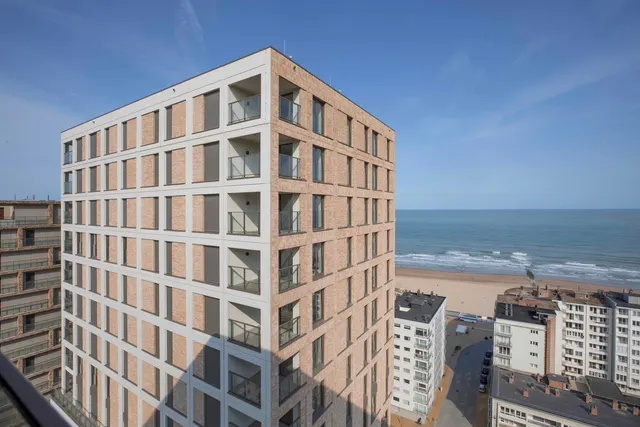
Circularity in construction is a hot topic, and façades are part of the picture too. Alongside the reuse of bricks, research is under way into using brick rubble to make new clay blocks. The first Flemish pilot project of its kind is now a reality.
When we think of a circular brick façade, the first thing that comes to mind is bricks reused elsewhere after demolition to build a new façade. This is a labour-intensive task, and the walls also have to be demolished carefully. Innovative circular construction systems for dry-stacking bricks, for example using a click system, now offer a solution and make it possible to build façades that can be dismantled quickly and easily. Traditional demolition waste is, of course, already used as a base material for applications such as road sub-bases and foundations, in the form of crushed brick aggregate. This is, however, a lower-value application and therefore an example of downcycling.
Circular ambitions
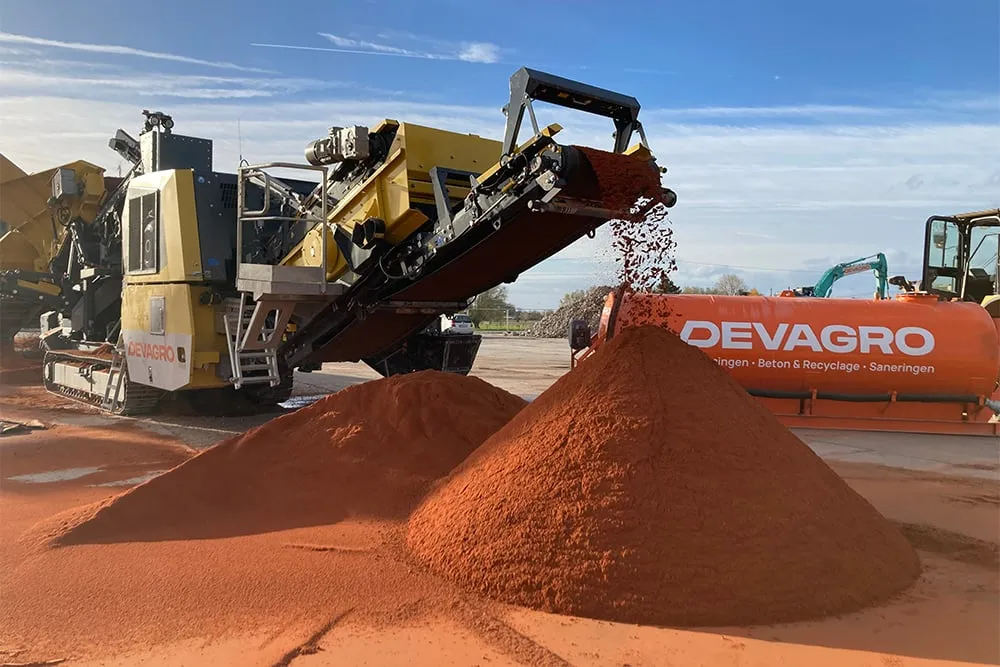
But there is another way. Partners Wienerberger, Devagro, WVI and the municipality of Pittem have joined forces for a pilot project on the former Wienerberger site in Egem: brick rubble from the former brickworks is being used as a raw material to produce new clay blocks. Geert Sanders, managing director of the West-Vlaamse Intercommunale (WVI), says: “We want to set an example of how demolition sites can be used to turn the ambition of circular construction into reality.” In consultation with the contractor and Wienerberger, it was decided to demolish the bricks from the old brickworks selectively, keeping them as a separate fraction. The bricks had been used as infill masonry within the steel structure and were in a clean state, with no concrete residue or other contamination. “The pilot project is a first for Flanders,” says Yves Degezelle, director of Devagro. “Not only because of its scale, but also because the brick rubble was selectively demolished and stockpiled with great precision. The rubble was then finely ground using a mobile crushing plant, to a maximum particle size of 5 millimetres.” Joachim Hollevoet, Project Manager Environment at Wienerberger, concludes: “The recycled crushed brick aggregate will be reused as a raw material for new clay blocks. This replaces part of the raw material mix with high-quality secondary crushed brick aggregate.” •
Question about this story? Ask your question
Keep following this
Get an email when a new story is published. No account needed.
- ThemeCircular construction and material awareness
- SubjectRoofing & facades