Modified timber as a sustainable alternative
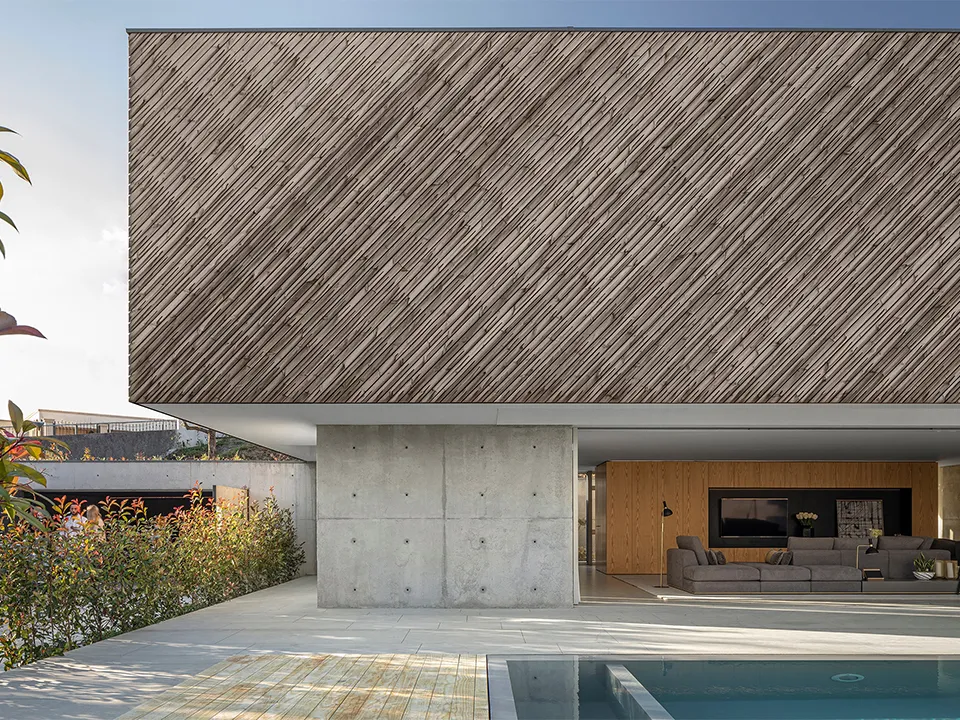
A façade finished partly or entirely in timber has real appeal. Tropical hardwood remains an option, but more sustainable and often more affordable alternatives are increasingly being chosen.
These include thermally modified or heat-treated timber. ThermoWood is a benchmark in this field, but there are other players on the market too. A closer look at sustainable timber and timber treated for durability.
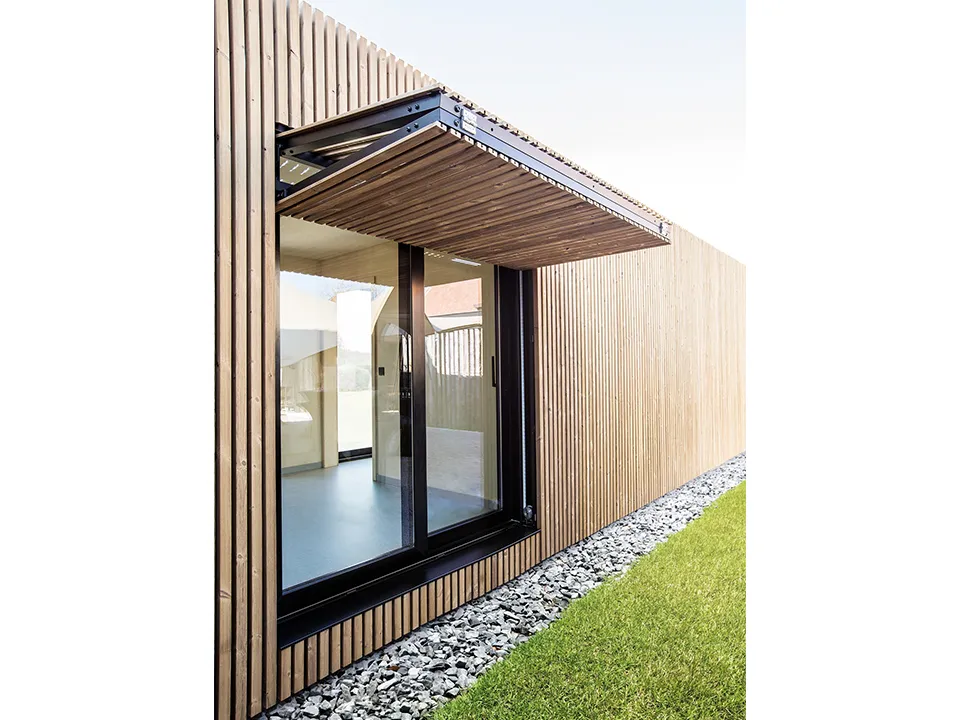
The benefits of thermally modified timber are well known. Treating timber at high temperatures improves its dimensional stability and makes it more resistant to rot. This raises its durability class. As a result, locally sourced thermally modified timber, made from fast-growing European trees grown in sustainably managed forests, is increasingly being used as a more environmentally friendly and affordable alternative to exotic hardwood.
Species and brand names
First, let’s clear up a misconception: heat-treated timber and ThermoWood are often mentioned in the same breath, but that is not entirely accurate. ThermoWood is just one label for heat-treated timber and refers to timber treated using specific processes developed and established in Finland. The temperature used, from 180 to 212 degrees, depends on the desired result, the application and the type of timber, softwood or hardwood. Finnish products sold under the ThermoWood brand are always produced using high-temperature treatment and water vapour in specially adapted kilns. Lunawood Thermowood is one example. Lunawood thermally modifies several timber species, including Scandinavian spruce, pine, aspen and birch.
More than European softwood
Another important point: European softwood is not the only timber suitable for heat treatment. Species such as poplar, birch and ash can also be treated, as can fraké and ayous, both fast-growing hardwoods from West Africa. The latter offer a more exotic appearance. In principle, all timber species are suitable, including cheaper exotic hardwoods, which gain in durability through thermal treatment.
Platonising: boiling, drying and baking
As well as a range of timber species, there are also different processes for improving timber durability through heat. The Dutch company Platowood calls its process platonising. The patented process, carried out in-house in Arnhem, consists of three key stages: hydrothermolysis, drying and curing. The company uses fast-growing timber from certified forests in Europe and West Africa. First, untreated timber (poplar, spruce or fraké) is heated in an autoclave to a maximum of 170 degrees, using steam under increased pressure. The timber is then dried carefully and gradually to prevent it from splitting. Once the moisture content has been reduced to around eight per cent, the timber is ‘baked’ in an oven at a maximum of 180 degrees under dry conditions, in the curing or polymerisation phase. The relatively low temperatures preserve the cell structure and create new stable bonds. This makes the timber less brittle and easy to work with.
‘Heated Outdoor Timber’
Alongside ThermoWood and Platowood, there are several other quality labels for heat-treated timber, including HOTwood (by Carpentier) and Jadiwood (by Jadimex). Under the HOTwood label, Carpentier offers several options as a sustainable alternative to tropical hardwood. HOT stands for ‘Heated Outdoor Timber’. The timber used is heat-treated at a minimum of 215 degrees, again using hot steam only. Clear Pine and Thermisch Grenen are in durability class I/II. Thermisch Essen is in durability class I. Its properties include good resistance to rot, dimensional stability, freedom from defects and low maintenance requirements.
Charred timber with a sought-after black finish
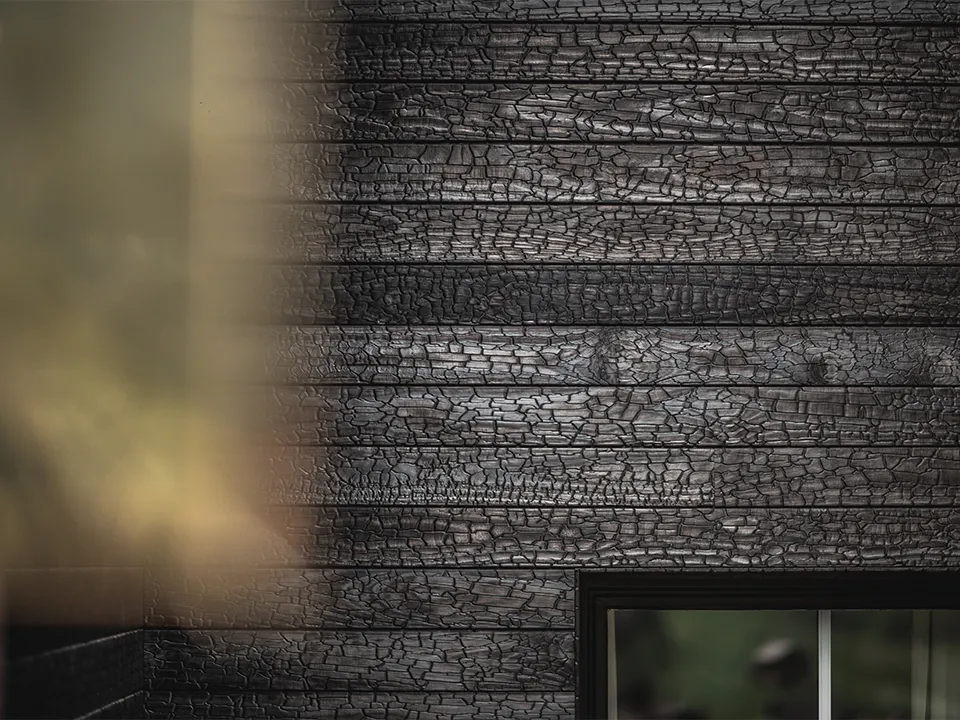
Charred timber is a category in its own right. Its black finish is highly sought after in contemporary architecture. Charring makes timber more resistant to fungi and insects, extending its service life and improving its durability. This technique is based on the centuries-old Japanese method of Shou Sugi Ban, which is now also practised closer to home. One example is the Dutch company Zwarthout, founded by architect Pieter Weijnen, who mastered the technique and now works with a skilled team. They buy in timber and then char it in a purpose-built kiln they developed themselves, in their workshop in Leersum in the Netherlands. Craftsmanship at its finest.
Fixed or unfixed
Zwarthout offers a wide range of modified timber, including Marugame and Sanuki (both made from Accoya), Omiyama (Platowood) and Naoshima (Douglas). Some species are available in a fixed version that does not rub off, an important consideration for interior use. For exterior applications, Zwarthout advises against fixing the timber. This allows the charred timber to retain its natural sheen. Over time, it will rub off less, and with some variants this will eventually stop altogether. An interesting fact: the original reason for charring was, ironically, fire prevention. Japanese houses were mostly made of timber, and fires were a major concern in villages and towns. Charring the façade boards beforehand created a fire-retardant layer of charcoal. In other words, charred timber is also more fire-safe.
Een zakelijke vraag aan Carpentier Hardwood Solutions? Get in touch
Companies in this story
Keep following this
Get an email when a new story is published. No account needed.
- ThemeCircular construction and material awareness
- SubjectExteriors
- CompanyCarpentier Hardwood Solutions