“Many architects lack knowledge of façade materials”
New, innovative façade materials are springing up everywhere. But are they also widely used in new projects?
That is another matter. Architects, clients and contractors each have their own influence on the choice of façade material. Moreover, it seems that not all designers are sufficiently familiar with the options available.
Text: Filip Van der Elst | Images: Eric Bouvier, Luc Roymans, Luca Beel, Wikimedia Commons
In many larger projects, everything starts with the specification. But how difficult is it to get innovative materials included in the specification? “That depends on the type of project,” says Roeland Mondelaers (Kingspan Insulation). “In a social housing project, it is probably difficult to specify an innovative façade material, but prestigious projects tend to be more open to it. The Herman Teirlinckgebouw in Brussels is a great example.” Dirk Driesmans (Q-BUS Architectenbureau) adds: “Public authorities are expected to lead by example in terms of energy performance and sustainability, which gives new materials that score well in these areas a better chance.”
“I know few clients or aldermen’s colleges that get involved in the choice of material used for the building envelope,” says Hubert Bijnens (AROgroup-architectuur). “If you apply it properly and the proposed solution is affordable, there are certainly possibilities. An innovative product does not always have to cost more.”
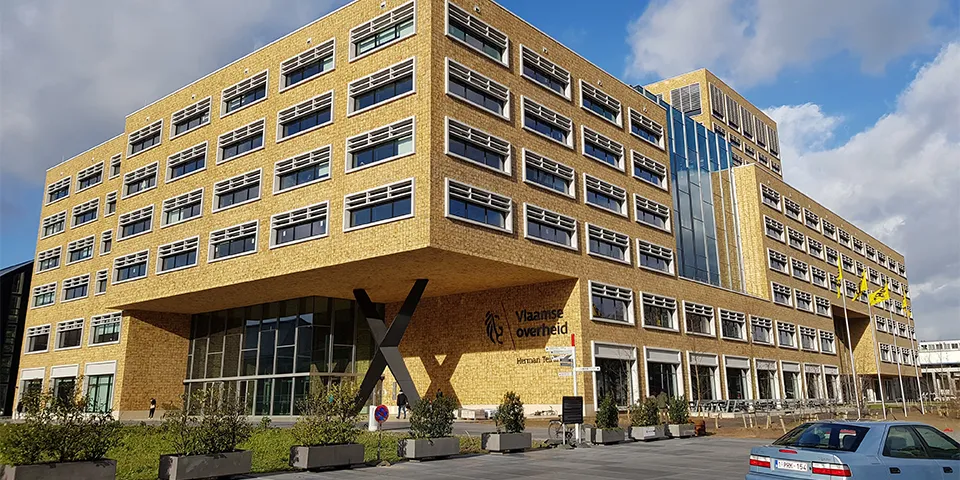
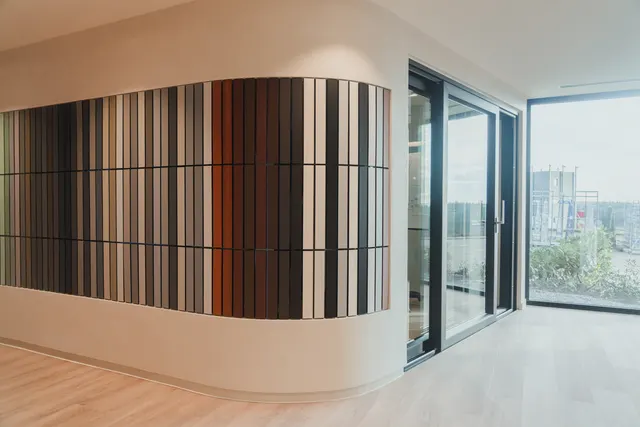
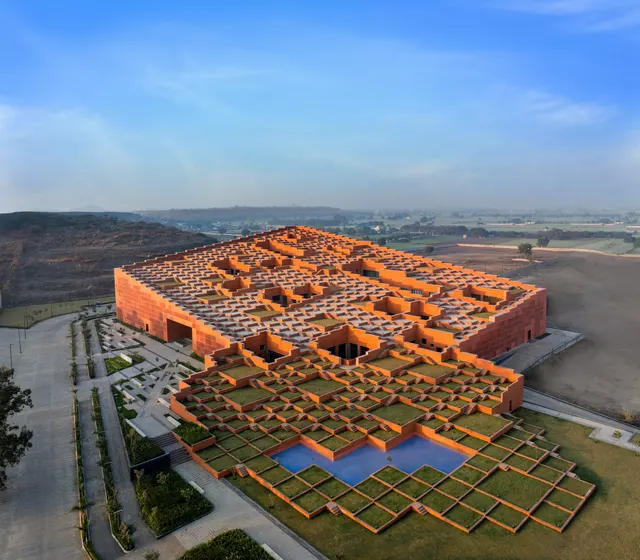
The Herman Teirlinckgebouw in Brussels (Neutelings Riedijk Architecten).
Does the architect have the final say?
Generally speaking, the architect has the final say when it comes to choosing façade materials. “Sometimes, as an architect, you have to stand your ground,” says Peter Cornoedus (PCP Architects). “If a particular material is inseparable from that type of building, the options become more limited. That is inevitable.”
However, the architect’s influence is relative, says Dirk Driesmans (Q-BUS Architectenbureau): “If the client is not convinced by the choice of a particular façade material, I first explain in detail why I am proposing it. But if, despite good arguments, the client is still not in favour, there is no point saddling them with a choice they do not support.” Moreover, the architect is sometimes overruled, points out Roeland Mondelaers (Kingspan Insulation): “In practice, it is often the contractor who decides. They say they have a cheaper alternative to the product proposed by the architect, and the property developer is naturally interested. In that case, as a designer, you have to watch helplessly as the building gets a different look after all.”
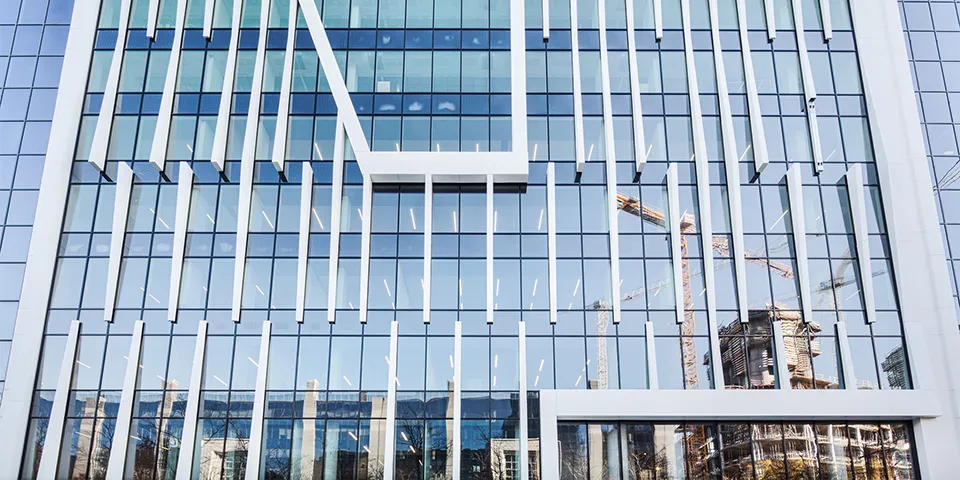
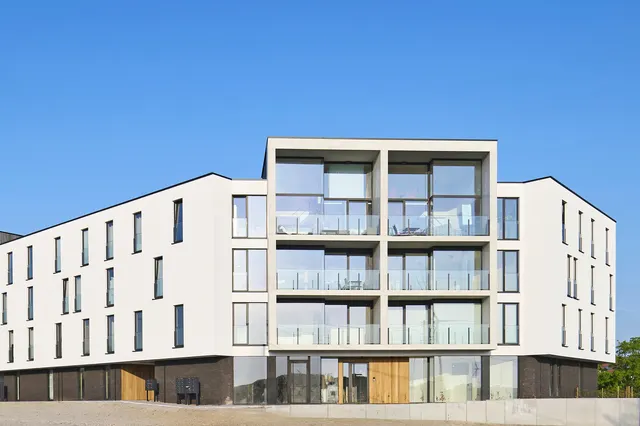
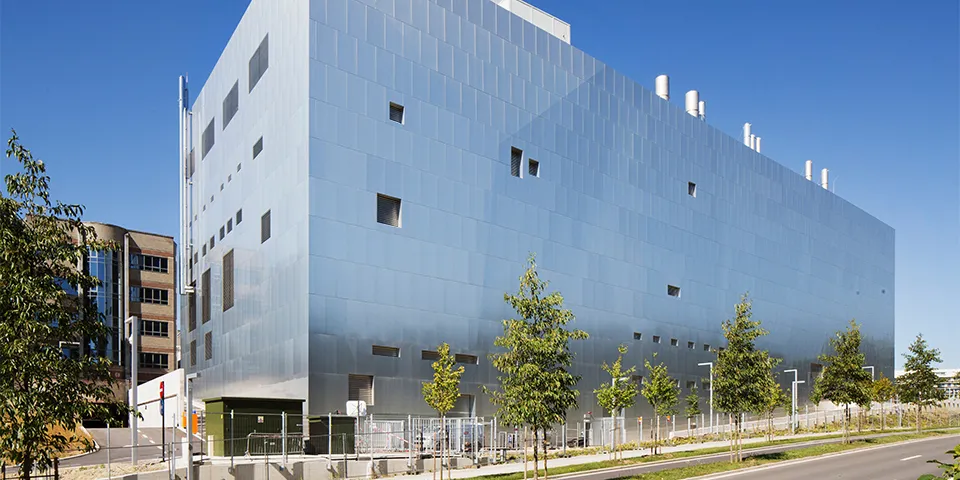
SEVEN in Brussels (ASSAR ARCHITECTS). (Image:Eric Bouvier)
Lack of knowledge?
Despite this, architects have a major impact on the choice of façade material. But are they sufficiently familiar with developments and innovations in this field? Opinions are divided. “Last year, I visited around seventy architects with a range of products, including a double-skin ceramic tile that has been around for years. Many of the architects had never heard of it,” recalls Dominique Coenegrachts (CPE).
According to Maarten Peeters (Vandersanden Group), things often go wrong right from the outset. “In Belgium, the contractor with the lowest tender wins the public contract. As a result, several large class 8 contractors routinely submit bids almost eight per cent below the calculated price. These are often projects worth €30 to €40 million, meaning that €2 to €3 million has to be made up over the course of the construction project from the outset. It is therefore no surprise that every item in the specification is scrutinised for gaps and alternatives (in other words, cheaper materials). In the Netherlands, the contract does not go to the lowest bidder, but is awarded on the basis of the average. That is obviously a much healthier approach.”
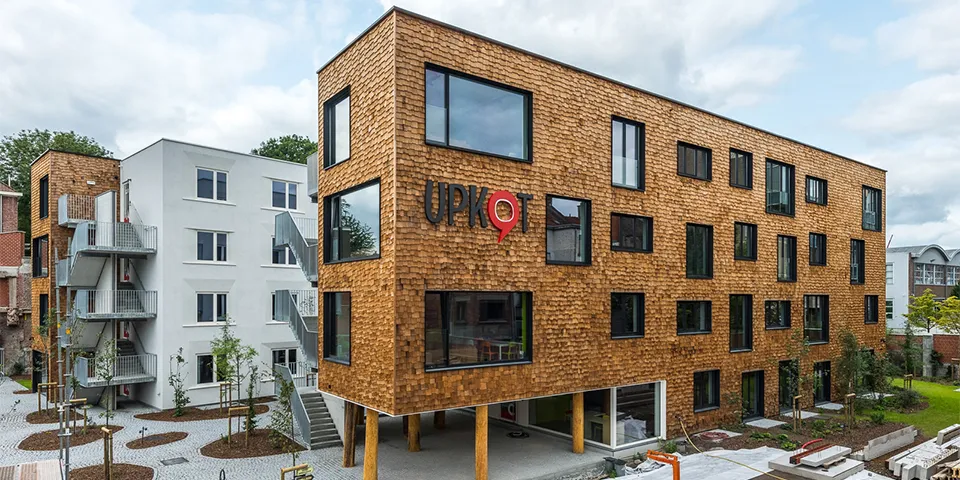
Ganda Upkot in Ghent (a154 architecten). (Image: Luc Roymans Photography)
Small versus large practices
Roeland Mondelaers (Kingspan Insulation) sees a big difference between small and larger practices. “A sole practitioner with no staff or just one employee simply does not have the time to keep up with everything. But practices with six or more architects usually have a specialist on the team who is well informed.”
However, it is not easy for architects to keep up with everything. “As an architect, you are bombarded with information,” says Dirk Driesmans (Q-BUS Architectenbureau). “At our practice, one member of staff reviews all the latest developments every week. If they come across new materials that could be of interest, we discuss them at our weekly team meeting. We may then invite the company in question to give us a more detailed presentation of the product.”
Hubert Bijnens (AROgroup-architectuur) also believes that many architects lack knowledge. “At events, I always see the same fifty or sixty architects, even though there are nine hundred in Limburg in principle. Many architects are guided mainly by other construction partners, and that is sometimes reflected in the architecture you see on the street. Manufacturers also need to realise that even the fifty architects who are interested are unlikely to design a project around one particular material. The whole picture has to work.”
Education
Peter Cornoedus (PCP Architects) believes the lack of knowledge is down to education. “Architecture courses barely discuss materials other than brick. There is still too much of an assumption that aspiring architects will continue their own education. It would therefore be a good idea for a group of manufacturers to visit educational institutions and present some important, innovative products.”
A good suggestion, but not an easy one to put into practice, says Caroline Christiaens (Tata Steel): “We have made a similar proposal to several professors. It has resulted in a few one-off training sessions, but not yet in a lasting collaboration.”
This article is based on a panel discussion organised by architectura.be. The following people took part:
Hubert Bijnens (AROgroup-architectuur)
Dirk Driesmans (Q-BUS Architecten-bureau)
Peter Cornoedus (PCP Architects)
Roeland Mondelaers (Kingspan Insulation)
Dominique Coenegrachts (CPE)
Maarten Peeters (Vandersanden Group)
Caroline Christiaens (Tata Steel)
Question about this story? Ask your question
Keep following this
Get an email when a new story is published. No account needed.
- ThemeBuilding envelopes for a changing climate
- SubjectExteriors